
Roofing Resources for Homeowners in South Florida
Practical roofing guidance for homeowners dealing with repairs, replacements, and real-world issues in South Florida.
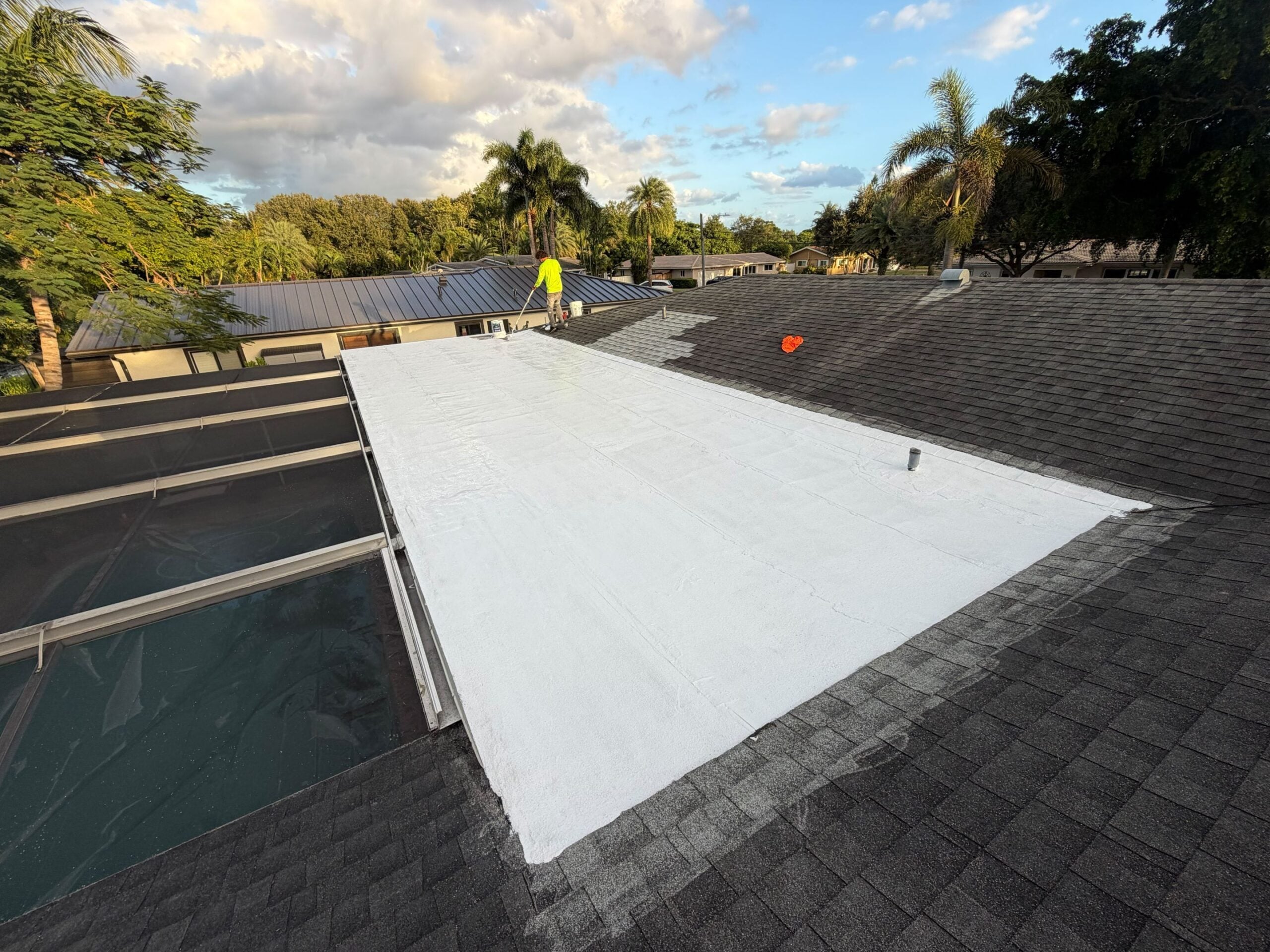

Plantation Silicone Roof Coating: Secluded Gardens Pool Patio Project
This Plantation silicone roof coating project addressed a leaking pool-patio roof in Plantations Secluded Gardens, also listed in some records as Plantations Secluded Gard, in
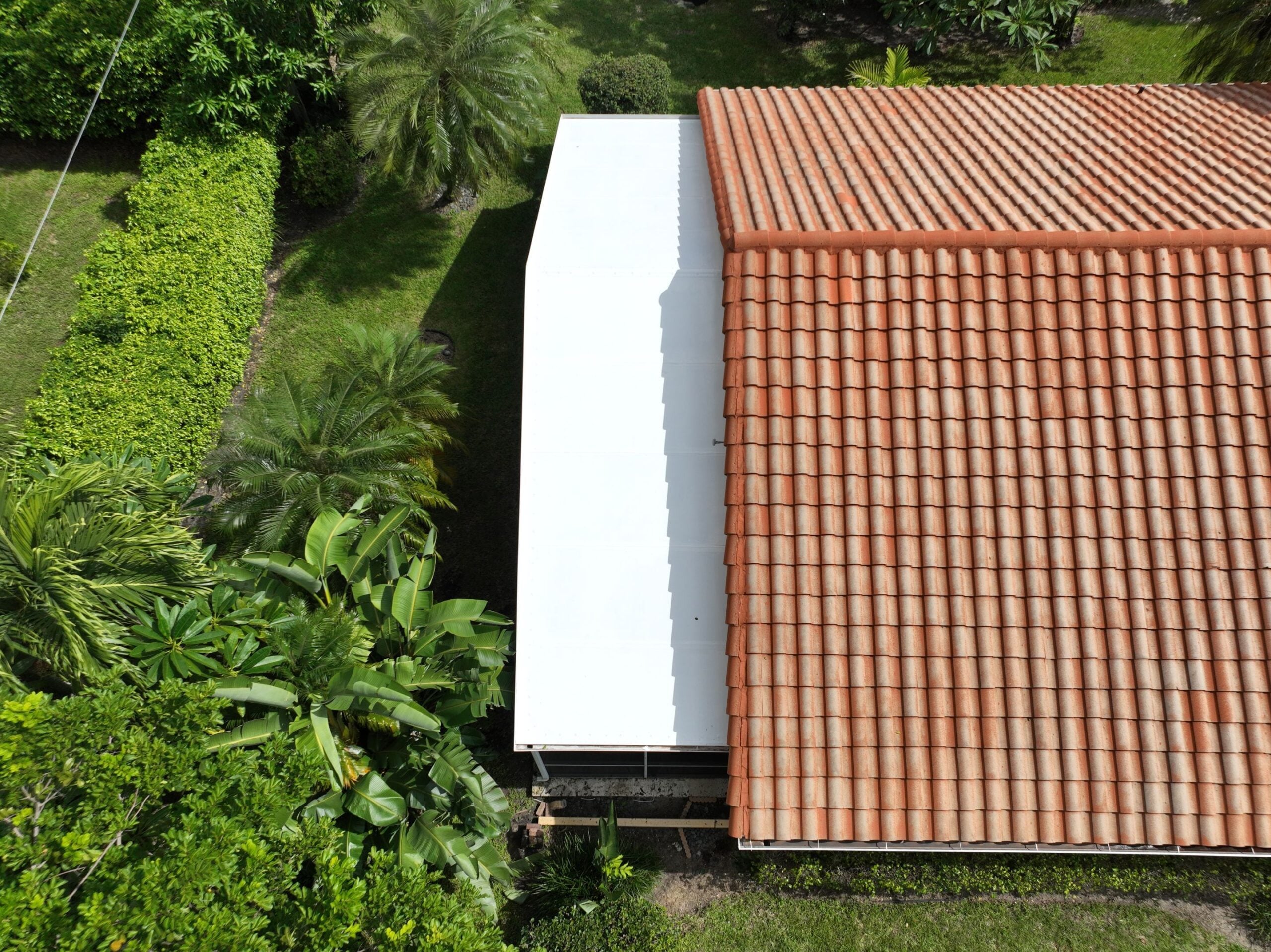
Delray Beach Silicone Roof Coating: Colombo Court Patio Roof Restoration
This Delray Beach silicone roof coating project restored an approximately 400 to 500 square-foot aluminum-panel patio roof at a home in the Bel Air community,
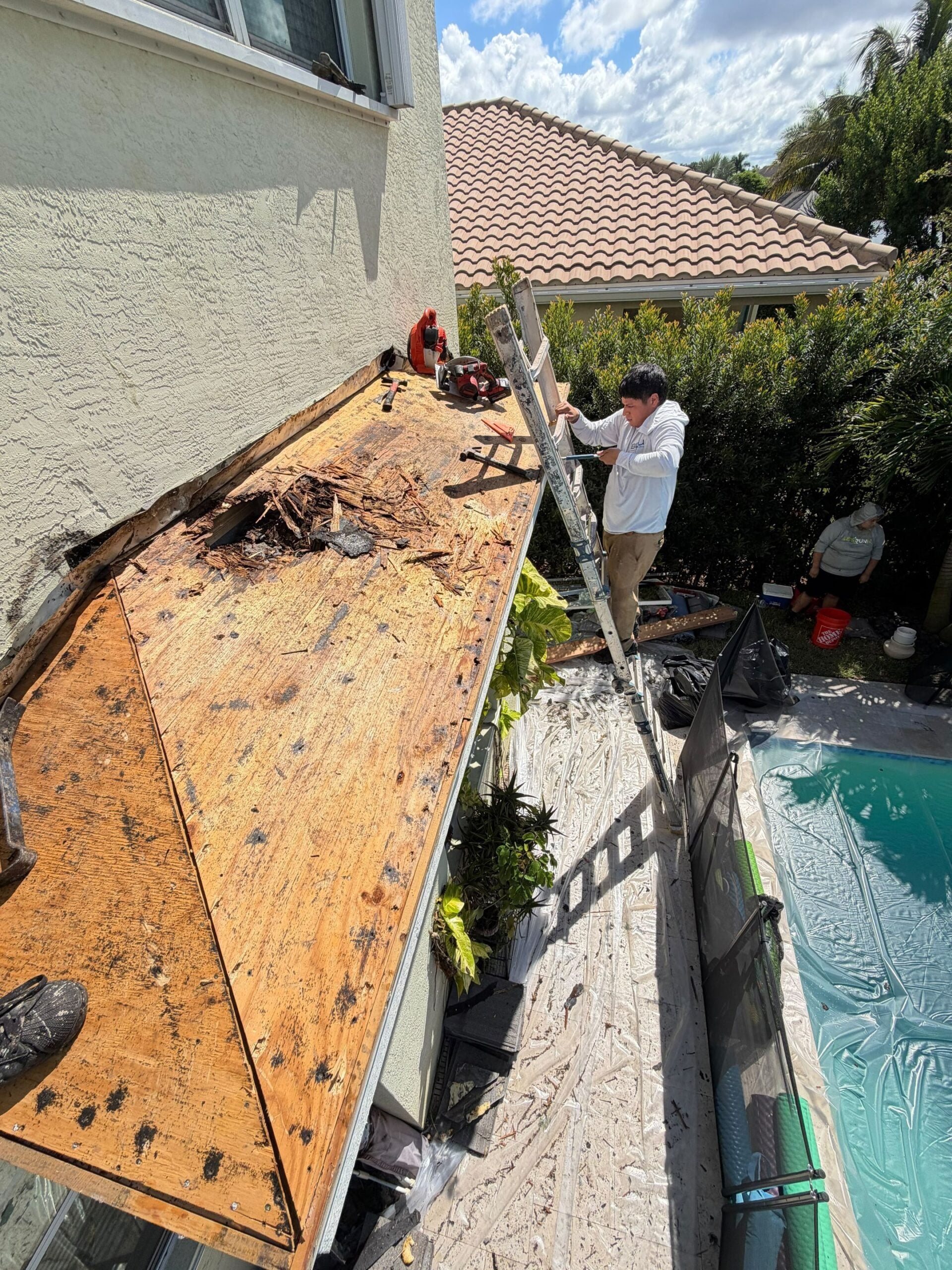
West Palm Beach Tile Roof Repair: PortoSol Eyebrow Roof Repair
This West Palm Beach tile roof repair was completed on a small concrete tile eyebrow roof at a home in the gated PortoSol community, ZIP
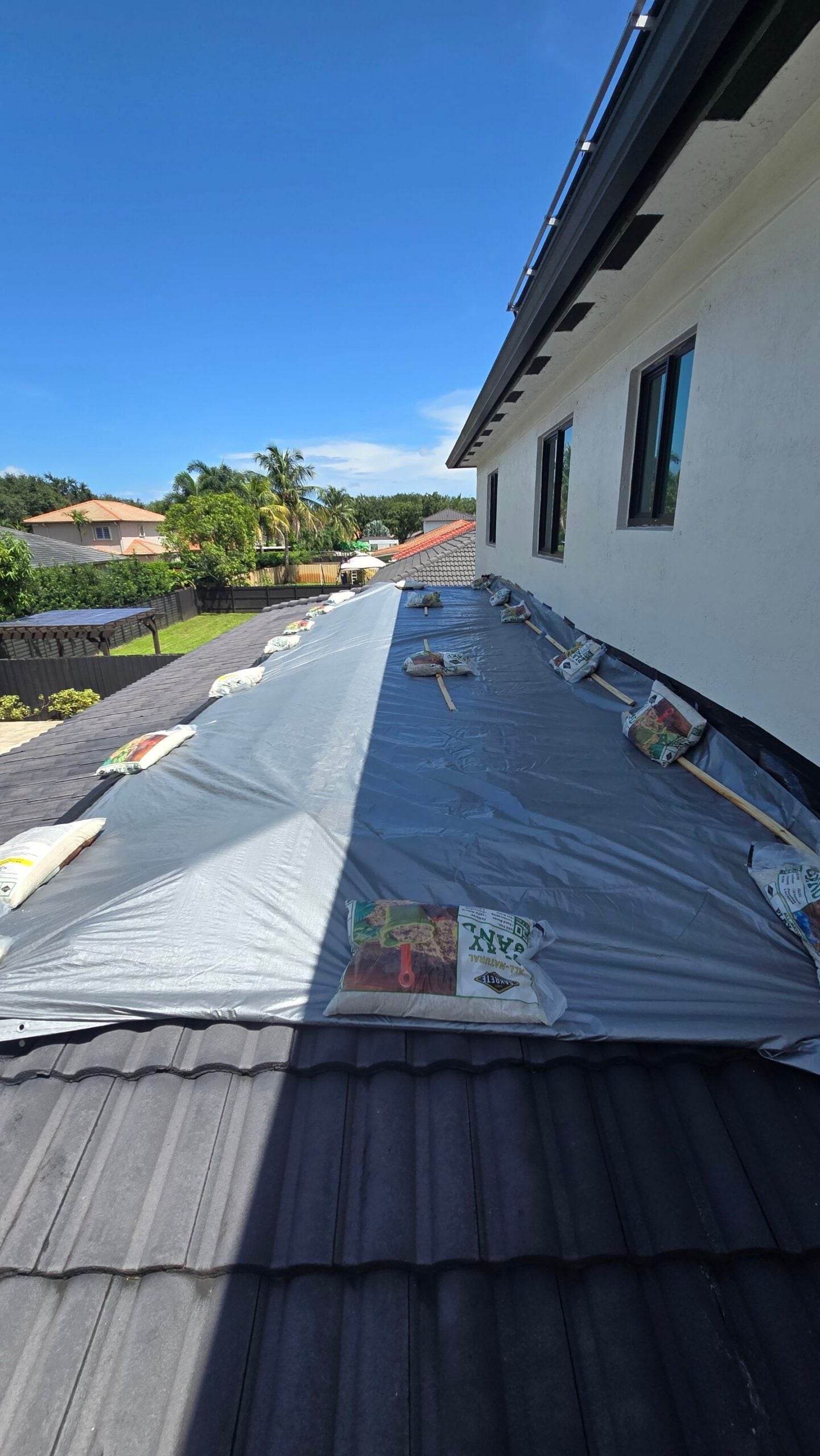
Emergency Roof Tarp Installation for Insurance Mitigation
This emergency roof tarp installation was completed for insurance mitigation at a single-family home in Miami Lakes, Florida. The active leak was at the connection
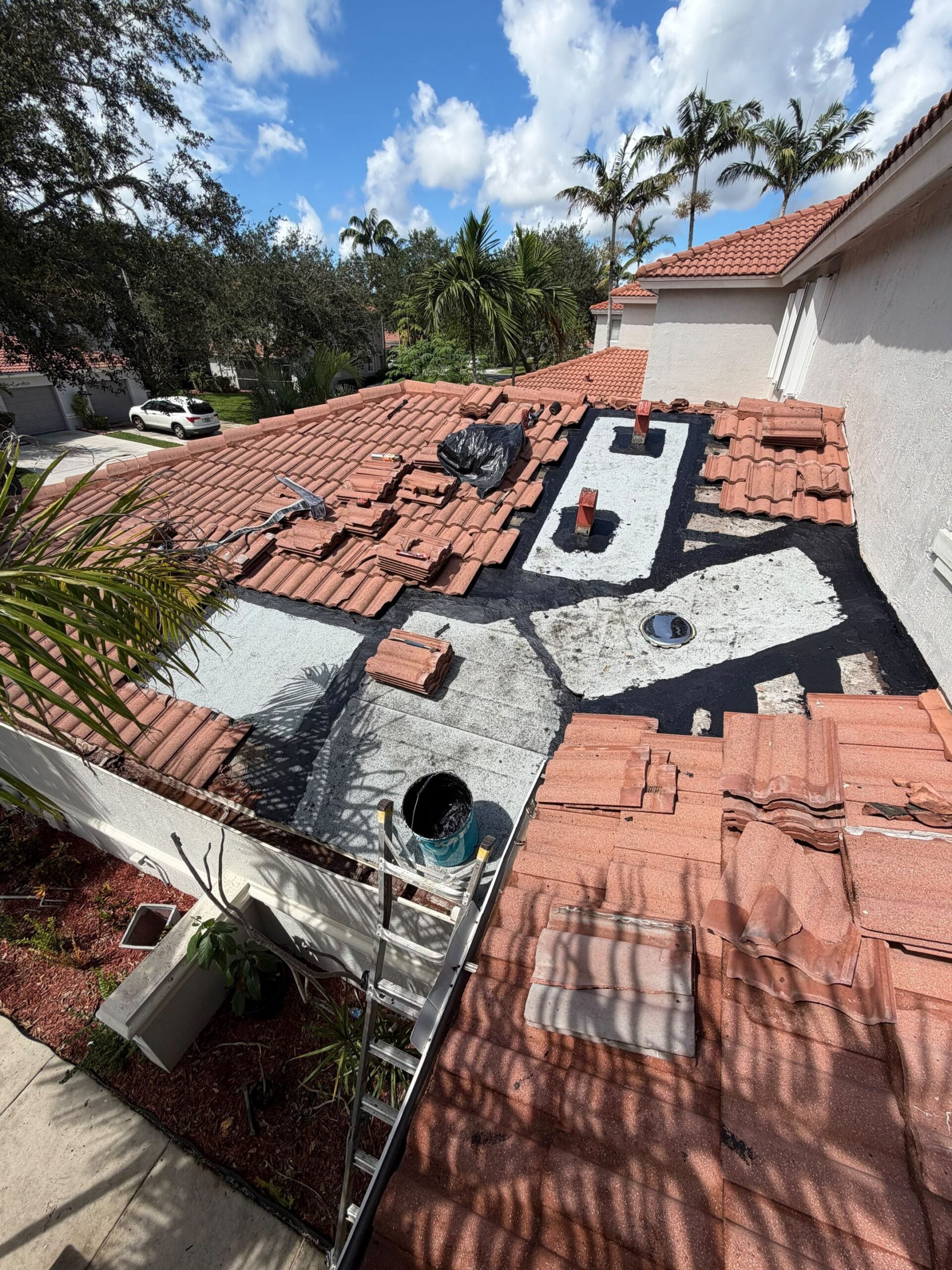
Riviera Beach Tile Roof Repair: Multiple Leaks at a Turtle Cay Townhouse
This Riviera Beach tile roof repair addressed multiple leak areas on a concrete tile townhouse roof in Turtle Cay, Riviera Beach, Florida. The rental property
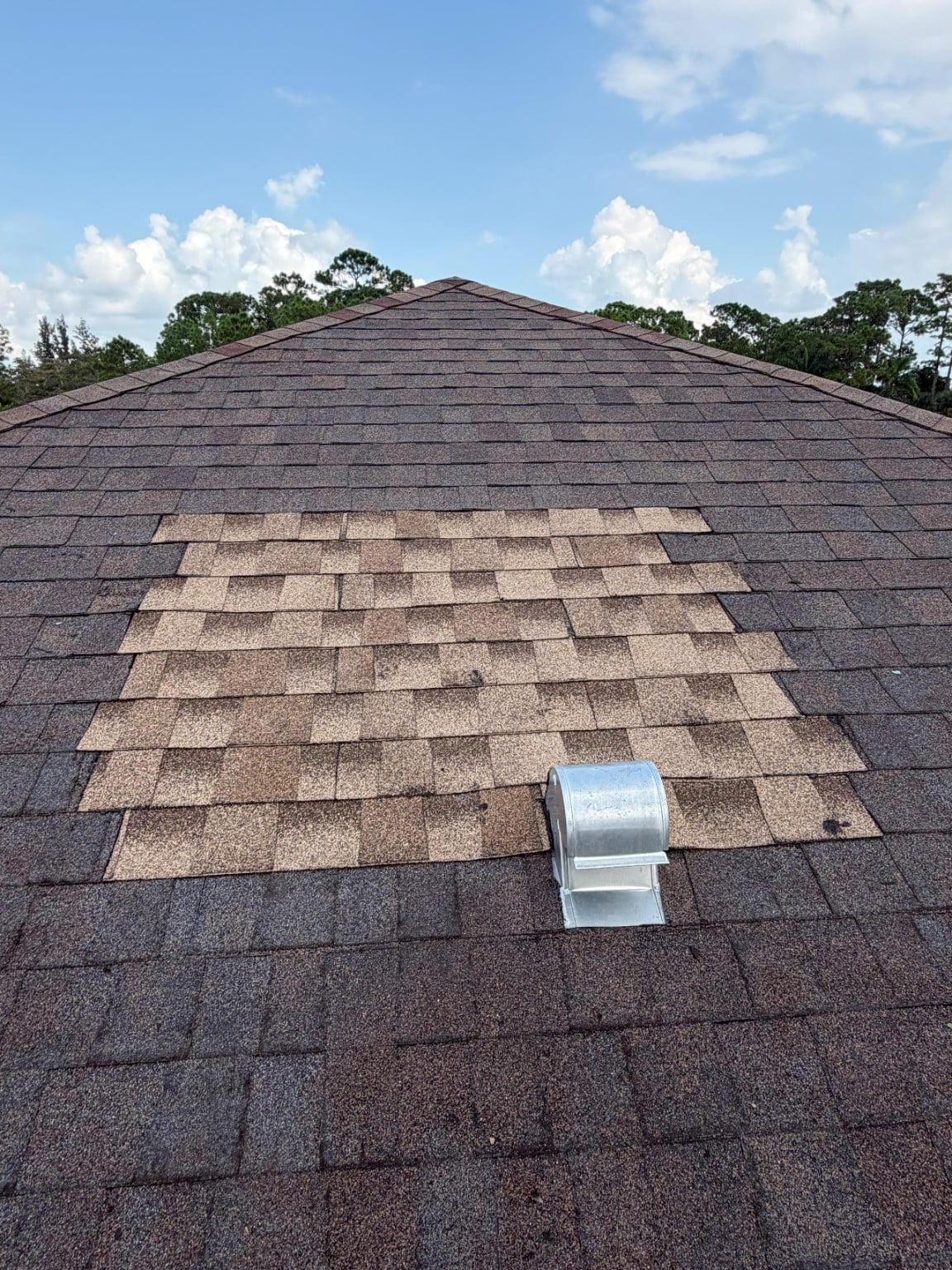
Heritage Farms Shingle Roof Repair: Finding a Leak in a Spray-Foam Attic
This Heritage Farms shingle roof repair involved a difficult-to-locate leak on an eight-year-old asphalt shingle roof in the Heritage Farms equestrian community near Lake Worth
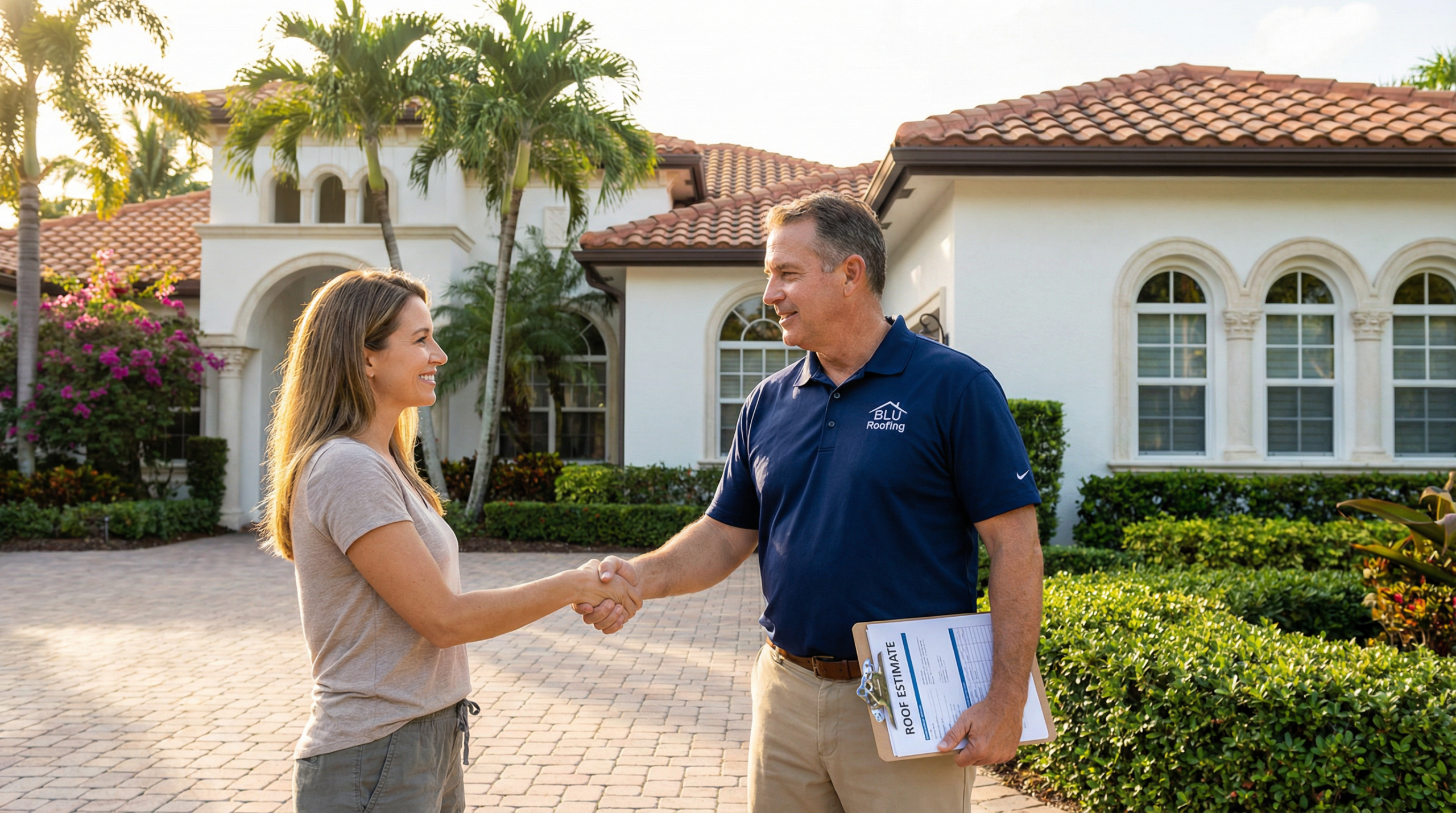
A roof replacement is one of the largest investments you will make in your home. According to industry data, a full roof replacement can average $11,500, and often much more in South Florida depending on the materials used. The roofing contractor Palm Beach Gardens homeowners choose determines whether that investment holds up against Florida’s brutal sun and hurricane-force winds for 25 years, or becomes a source of leaks, callbacks, and disputes within the first few years.
Palm Beach Gardens has no shortage of roofing companies, but not all are created equal. This guide covers everything you need to know to find a qualified roofing contractor in Palm Beach Gardens and separate the roofers worth hiring from the ones worth avoiding.
1. Verify the Roofing License Before Anything Else
Florida requires roofing contractors to hold a state-issued license. There are two relevant license types: the Certified Roofing Contractor (CCC) license, which allows work statewide, and the Registered Roofing Contractor license, which is county-specific.
You can verify any contractor’s license status in seconds at the Florida Department of Business and Professional Regulation website. If a contractor cannot provide a license number or their license comes back inactive, suspended, or non-existent, stop the conversation there. An unlicensed contractor cannot legally pull a permit in Palm Beach County. Unpermitted roofing work creates serious problems when you sell your home and can void your homeowners insurance coverage.
2. Confirm Insurance Coverage
Any legitimate roofing contractor in Palm Beach Gardens should carry two types of insurance: general liability insurance and workers’ compensation coverage.
General Liability Insurance protects your property if the contractor causes damage during the project. Workers’ Compensation covers their employees if someone is injured on your roof. Ask for certificates of insurance and verify that the coverage is current, not expired. If a contractor’s employees are injured on your property and the contractor does not carry workers’ comp, you can be held liable.
3. Look for Local Presence and Verifiable History
A company with a verifiable history of completed projects in Palm Beach Gardens and surrounding communities, and real reviews from real customers, is a fundamentally different proposition than a company that appeared after the last hurricane and has no local track record.
Check Google reviews, look at how the company responds to negative feedback, and ask for references from recent projects in your area. Be particularly cautious of out-of-state contractors who arrive after major storms. Some do quality work, but many are storm chasers who take deposits, do substandard work, and are unreachable when problems surface months later.
4. Ask the Right Questions
Treat the evaluation process like a job interview. Here are the critical questions to ask any roofing contractor Palm Beach Gardens homeowners should consider before signing:
- Do you use subcontractors? If they do, ensure the subcontractors are also properly insured and vetted.
- How will you protect my property? Ask how they plan to protect your landscaping, driveway, and the interior of your home from debris and vibrations.
- What is your plan for waste removal? The contractor should be responsible for removing all old materials and using magnetic sweepers to clear stray nails from your property.
- Will you perform a thorough inspection? A proper inspection should include the deck, attic, flashing, and ventilation, not just the surface material.
5. Get a Written, Itemized Estimate
A legitimate roofing estimate should specify the materials being used (manufacturer, product line, and specifications), the scope of work including tear-off and disposal, the underlayment system, any decking replacement allowance, permit fees, and the warranty terms.
A one-page estimate that says “re-roof, $28,000” is not sufficient. You need to know exactly what you are paying for so you can compare estimates accurately and hold the contractor accountable to what was agreed. For more context on what a full replacement costs in our market, see our guide on roof replacement cost in Palm Beach Gardens.
6. Understand the Warranty Types
There are two types of warranties on a roofing project: the manufacturer’s material warranty and the contractor’s workmanship warranty.
Material Warranties cover defects in the roofing products themselves and are issued by the manufacturer. Workmanship Warranties cover installation errors and are issued by the contractor. Ask specifically about both, and get them in writing. A contractor who is confident in their work will stand behind it with a meaningful workmanship warranty, typically at least two to five years for a reputable company.
7. Red Flags to Watch For
Unfortunately, the roofing industry is susceptible to scams. Be on the lookout for these warning signs:
- High-Pressure Sales: Pressure to sign immediately or accept a “today only” price is a manipulation tactic, not a legitimate business practice.
- Large Upfront Payments: Requests for full payment upfront before work begins are a red flag. A standard payment structure involves a deposit at signing (typically 15% or less), progress payments during the project, and a final payment upon satisfactory completion and passing inspection.
- Skipping Permits: Any suggestion to skip the permit process should end the conversation immediately.
- Insurance Fraud: Be wary of contractors who offer to pay your insurance deductible or ask you to sign an Assignment of Benefits (AoB) right away, as this gives them control over your insurance claim. For more on how insurance and roofing intersect, see our guide on homeowners insurance and roof replacement in Florida.
Why BLU Roofing
BLU Roofing is a licensed, insured roofing contractor Palm Beach Gardens homeowners and surrounding Palm Beach County communities trust. Every project includes direct owner involvement, transparent pricing, and a structured five-step process called the BLU Blueprint, designed to take the uncertainty out of a major home investment. We pull our own permits, use quality materials, and stand behind our work. Schedule a free estimate to get started.
Frequently Asked Questions
How do I verify a roofing contractor’s license in Palm Beach Gardens?
You can verify any Florida roofing contractor’s license at the Florida Department of Business and Professional Regulation (DBPR) website at myfloridalicense.com. Search by the contractor’s name or license number. A valid Certified Roofing Contractor (CCC) license is required for any roofing work in Palm Beach County.
What should a roofing estimate include in Palm Beach Gardens?
A complete roofing estimate should include the specific materials and manufacturer, scope of work (tear-off, underlayment, decking allowance), permit fees, disposal costs, and both material and workmanship warranty terms. Avoid any contractor who provides a single lump-sum number without itemization.
How long does a roof replacement take in Palm Beach Gardens?
The physical installation typically takes one to three days for most residential roofs. The full timeline from contract signing to final permit close-out is typically three to six weeks, with Palm Beach County permit approval being the biggest variable. See our full guide on how long a roof replacement takes in Palm Beach Gardens.
What are the biggest red flags when hiring a roofer in Palm Beach Gardens?
The biggest red flags are: no verifiable Florida license, no workers’ compensation insurance, pressure to sign same-day, requests for full payment upfront, suggestions to skip the permit process, and offers to cover your insurance deductible (which is insurance fraud under Florida law).
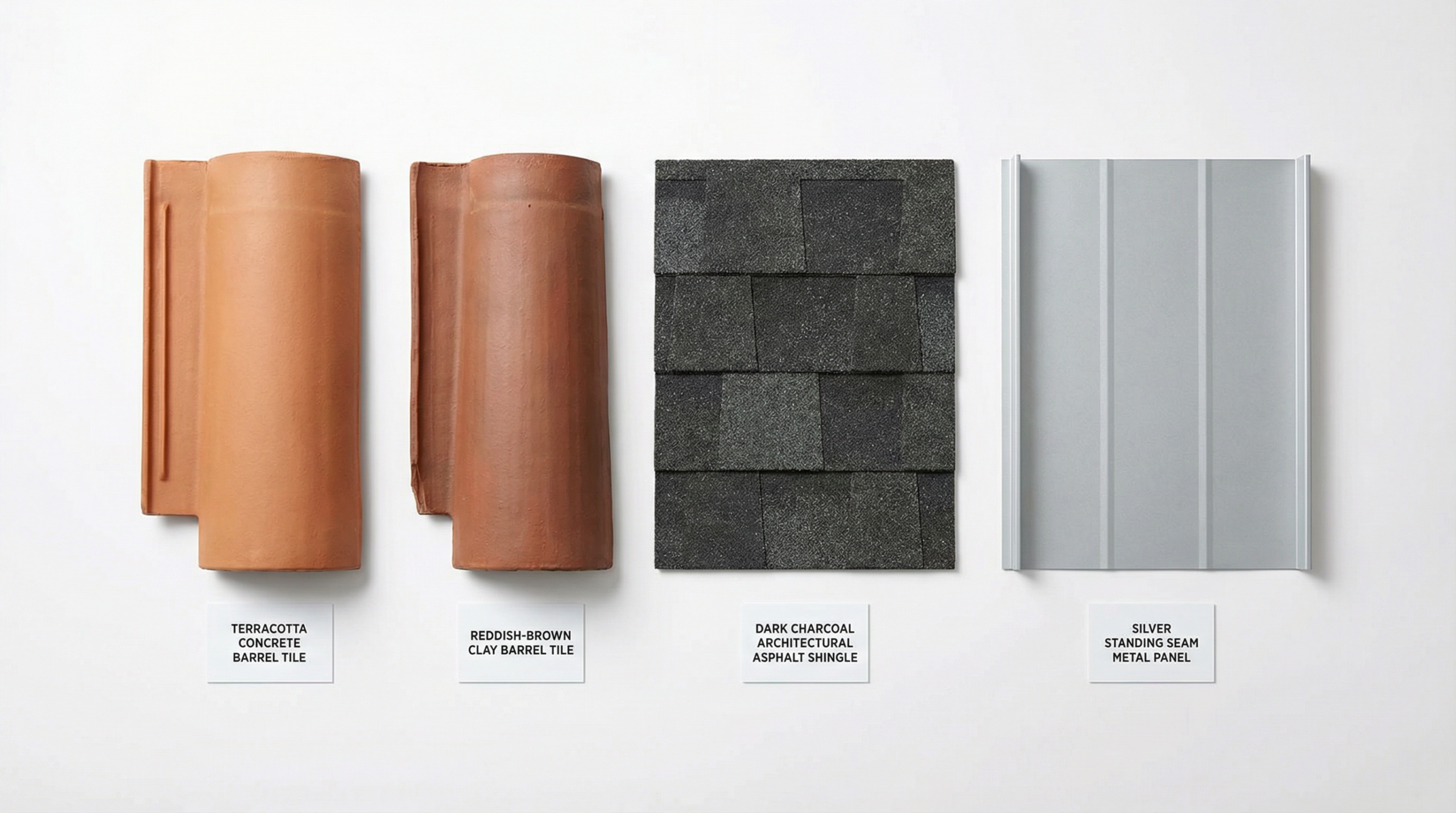
Choosing roofing materials in Palm Beach Gardens is not the same decision it would be in Atlanta or Chicago. South Florida’s climate, HOA requirements, and insurance landscape all shape what works here and what does not. Here is a practical guide to the best roofing materials used in this market and how they perform.
Concrete Tile Roofing in Palm Beach Gardens
Concrete tile is the most common roofing material in Palm Beach Gardens and across South Florida for good reason. It performs well in our climate, satisfies HOA requirements in virtually every established community, and offers a lifespan of 25 to 35 years on the tile itself. It is heavy, which means your home’s structure needs to support it, but most homes in this market were built with tile in mind. The key variable with concrete tile is the underlayment system beneath it, which typically needs replacement every 22 to 35 years regardless of how the tile looks. If you are wondering about the financial side, you can read our guide on how much a new roof costs in Palm Beach Gardens.
Clay Tile Roofing
Clay tile is the premium option in the tile category. It is more expensive than concrete tile, but the tile itself can last 50 years or more. The underlayment beneath it, like concrete tile, is the limiting factor for the system’s waterproofing life at 22 to 35 years. Clay tile is the material of choice for higher-end homes in communities like Frenchman’s Creek and Mirasol where the visual standard is elevated.
Metal Roofing in South Florida
Metal roofing, particularly standing seam systems, has become increasingly popular in South Florida over the past decade. It offers exceptional hurricane resistance, a lifespan of 35 to 50 years, and significant energy efficiency benefits from its reflective properties. Standing seam metal roofs have no exposed fasteners, which eliminates one of the most common failure points in high-wind conditions. The upfront cost is comparable to tile, and some HOAs that restrict asphalt shingles will approve metal as an alternative. For homeowners who want a long-term, low-maintenance solution with strong storm performance, metal is a compelling choice.
Architectural Shingles
Architectural shingles are the most affordable roofing option and are appropriate for Palm Beach Gardens homes not subject to HOA restrictions requiring tile. Modern impact-resistant architectural shingles perform reasonably well in hurricane conditions and carry a lifespan of 15 to 20 years in South Florida’s climate. They are lighter than tile, faster to install, and significantly less expensive. For homeowners in non-HOA areas or those on a tighter budget, quality architectural shingles are a legitimate option, with the understanding that they will need replacement sooner than tile or metal. You can read our full breakdown of tile roof vs. shingle roof for a deeper comparison.
What Actually Matters Most When Choosing a Roof
The material category matters, but installation quality and the underlayment system matter more. A properly installed concrete tile roof with a high-quality synthetic underlayment will outperform a poorly installed clay tile roof with a standard felt underlayment. When evaluating roofing options, ask your contractor specifically about the underlayment system they use and why. It is the component that most directly determines how long your roof keeps water out of your home. If you are already experiencing an underlayment failure, read our guide on what to do when your roof is leaking.
Frequently Asked Questions
What is the best roofing material for South Florida?
There is no single “best” material, but concrete tile and standing seam metal are the top performers in South Florida. Tile offers excellent durability and meets strict HOA requirements, while metal provides superior hurricane resistance and longevity.
How long does a concrete tile roof last in Florida?
While the concrete tiles themselves can last 50 years, the critical underlayment beneath them typically lasts 22 to 35 years in South Florida’s climate. When the underlayment fails, the entire roof system must be replaced to maintain waterproofing.
Does my Palm Beach Gardens HOA allow metal roofing?
Many established HOAs in Palm Beach Gardens strictly require tile roofing to maintain neighborhood aesthetics. However, some communities are beginning to approve standing seam metal roofs due to their high performance. You must check your specific HOA architectural guidelines before making a decision.
BLU Roofing works with all major roofing materials and can help you choose the right system for your home, your HOA requirements, and your budget. Contact us to schedule a free consultation today.
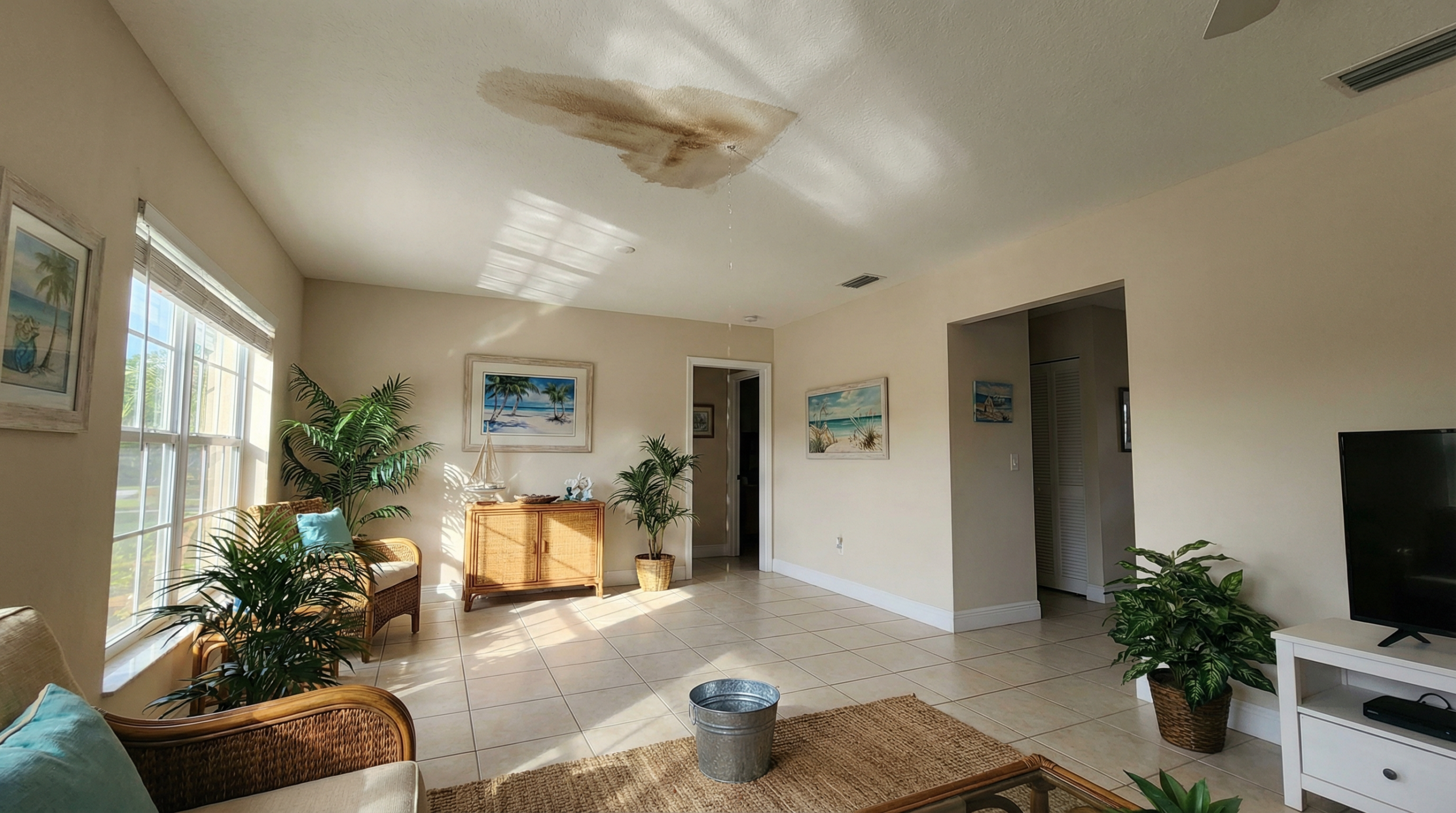
A leaking roof is one of those problems that demands immediate action but also rewards calm, methodical thinking. Panicking leads to bad decisions: calling the first contractor you find, signing documents you do not understand, or making temporary fixes that create bigger problems later. Here is exactly what to do when your roof is leaking, in order.
Step 1: Contain the Immediate Damage
Before anything else, protect your interior. Place buckets or containers under active drips. Move furniture, electronics, and valuables away from the affected area. If water is pooling on the floor, lay down towels or use a wet/dry vacuum. If you have a ceiling that is visibly bulging or sagging from water accumulation, carefully puncture it in the center with a screwdriver to release the water in a controlled way. A ceiling that collapses under water weight causes significantly more damage than a controlled release.
Step 2: Document Everything Before Touching the Roof
Take photos and video of all visible damage: water stains, drips, damaged ceiling material, and any exterior damage you can see safely from the ground. Do this before any repairs are made and before your insurance adjuster visits. This documentation is your evidence for an insurance claim and your baseline for assessing whether a contractor’s repair scope is accurate.
Note the date and time, and if the leak occurred during or after a storm, document the weather event as well. Screenshots of weather reports or storm alerts can support a claim.
Step 3: Call a Licensed Roofing Contractor in Palm Beach, Not a Handyman
Roof repairs in Florida require a licensed roofing contractor. A handyman or general contractor is not licensed to perform roofing work, and unpermitted repairs can create problems with your insurance coverage and with future sales of your home. Call a licensed roofer in Palm Beach, explain the situation, and ask for an emergency inspection.
Be cautious of storm chasers, contractors who appear in your neighborhood immediately after a storm going door to door. Some are legitimate, but the practice is also common among contractors who do substandard work and move on before problems surface. Stick with local, established companies with verifiable licenses and reviews.
Step 4: Contact Your Insurance Company
If the leak is storm-related, contact your homeowners insurance carrier to report the damage and begin the claims process. Do this after you have documentation and after you have spoken with a contractor, not before. Having a contractor’s assessment of the damage before the adjuster visits gives you a more complete picture of what is claimable and ensures nothing gets overlooked.
Do not sign any document that assigns your insurance benefits to a third party (Assignment of Benefits) without understanding exactly what you are agreeing to. Florida law has specific rules around AOB, and signing one can complicate your claim significantly.
Step 5: Understand Whether You Need a Roof Repair or a Full Replacement
Once a licensed contractor has inspected your roof, they should give you a clear assessment: is this an isolated repair, or is the leak a symptom of broader roof system failure? The answer depends on the age of your roof, the condition of the underlayment, and the extent of the damage. A trustworthy contractor will tell you honestly when a repair is sufficient and when it is not.
Under the Florida Building Code, if more than 25 percent of your roof or any roof section is damaged, that section must be fully replaced rather than repaired. This is not a contractor’s preference. It is a code requirement that affects your permit and your insurance coverage.
Step 6: Get the Roof Repair Permitted and Inspected
Any significant roof repair in Palm Beach County requires a permit. A licensed contractor pulls the permit and schedules the required inspection. Unpermitted work creates serious problems when you sell your home or file a future insurance claim. If a contractor suggests skipping the permit to save time or money, that is a red flag.
BLU Roofing Responds to Roof Leaks in Palm Beach
If your roof is leaking, BLU Roofing provides prompt inspections and honest assessments. We will tell you exactly what is happening, what it will take to fix it, and whether a repair or a replacement is the right call for your situation. Contact us to schedule an emergency roof inspection in Palm Beach.
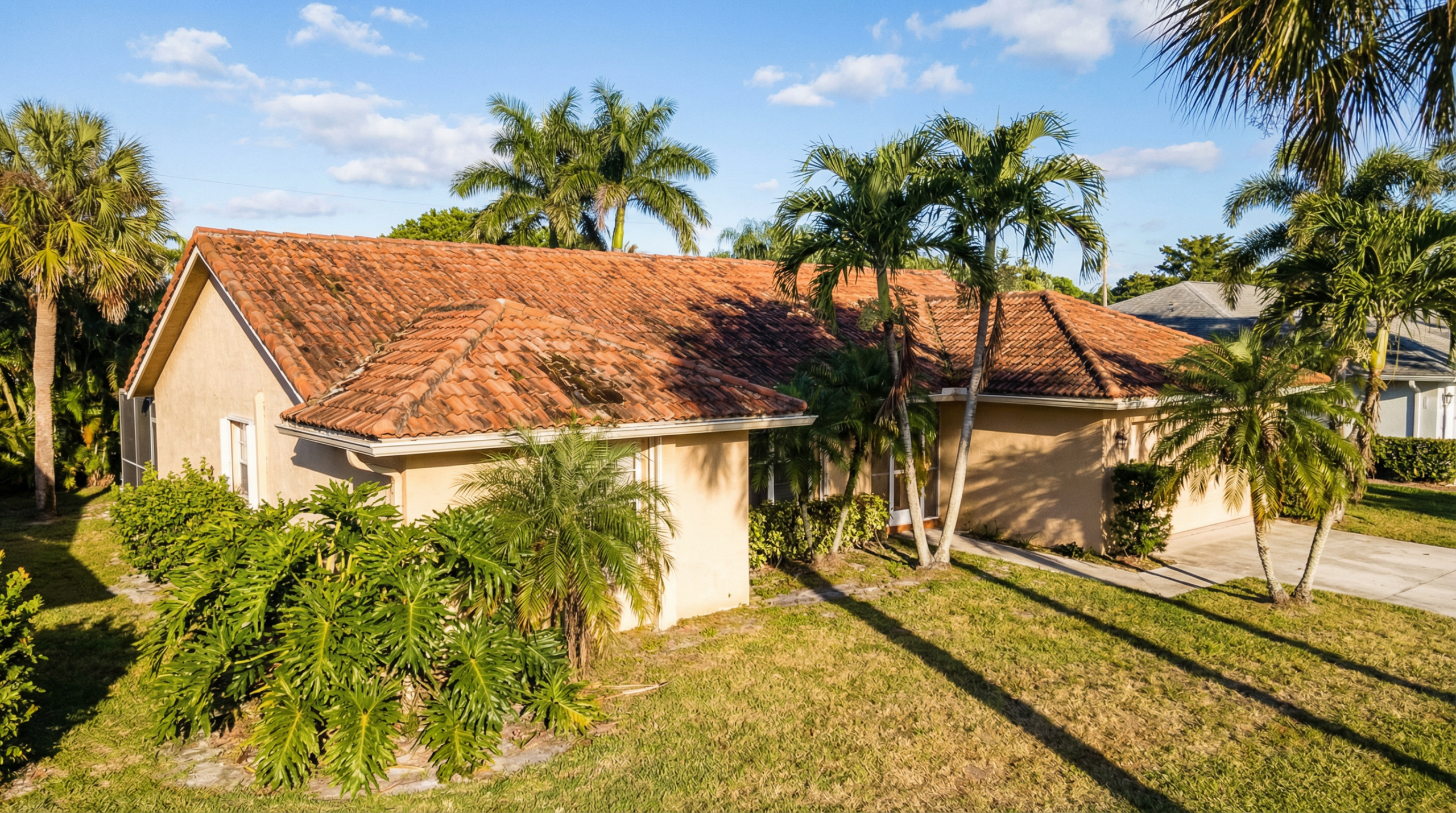
The lifespan estimates printed on roofing material packaging are written for average North American conditions. South Florida is not average. The combination of intense UV radiation, extreme heat, high humidity, salt air, and annual hurricane season creates one of the most demanding roofing environments in the country. Understanding how long a roof really lasts in South Florida, rather than relying on the manufacturer’s marketing number, is essential for planning and budgeting your next replacement.
Roof Lifespan by Material in South Florida
| Material | National Average | South Florida Reality | Primary Limiting Factor |
|---|---|---|---|
| Asphalt shingles (3-tab) | 20–25 years | 15–20 years | UV degradation, heat cycling |
| Architectural shingles | 20–25 years | 15–20 years | UV, humidity, algae growth |
| Concrete tile | 40–50 years | 22–35 years (tile) | Underlayment failure |
| Clay tile | 40–50 years | 22–35 years (tile) | Underlayment failure |
| Metal (standing seam) | 40–70 years | 35–50 years | Corrosion near coast, fastener integrity |
| Flat / TPO / modified bitumen | 15–25 years | 12–20 years | UV, ponding water, heat |
Why South Florida Ages Roofs Faster
UV radiation. South Florida receives more intense solar radiation than virtually anywhere else in the continental United States. UV exposure breaks down roofing materials at a molecular level, degrading asphalt binders in shingles, drying out underlayment membranes, and causing color fade and brittleness in tile. This process is continuous and cumulative, and it happens significantly faster here than in northern climates.
Heat cycling. Roof surface temperatures in South Florida regularly exceed 160°F on summer afternoons and drop to ambient temperature at night. This daily expansion and contraction cycle stresses fasteners, seams, and material bonds over time. Over 15 to 20 years, this thermal cycling causes cumulative fatigue that shortens material life.
Humidity and moisture. South Florida’s year-round humidity creates conditions where moisture infiltration, even minor, slow infiltration, causes wood rot, mold growth, and structural deterioration faster than in drier climates. A small underlayment failure that might go unnoticed for years in Arizona becomes a significant moisture problem here within months.
Salt air. Homes within several miles of the coast, which includes much of Palm Beach Gardens, are exposed to salt-laden air that accelerates corrosion of metal components including fasteners, flashing, and gutters. This is a factor that is easy to overlook until a flashing failure causes a leak.
Hurricane season. Even storms that do not make direct landfall create sustained wind loads that stress roof systems. Repeated exposure to tropical-force winds over years, even without a single catastrophic event, causes cumulative fatigue in fasteners and material bonds.
The Tile Roof Misconception
Many Palm Beach Gardens homeowners believe their tile roof will last indefinitely because the tile itself is extremely durable. This is a costly misconception. The tile is not the waterproofing layer, the underlayment beneath it is. Concrete and clay tile can last 22 to 35 years in South Florida’s climate. When the underlayment fails, water gets in regardless of how intact the tile looks.
This means that most tile roofs in Palm Beach Gardens communities built in the 1990s and early 2000s are due for a full re-roof, not because the tile has failed, but because the underlayment has reached the end of its useful life. The tile is often reused or replaced selectively; the underlayment is always replaced in a re-roof. If you are wondering about the financial side of this, you can read our guide on how much a new roof costs in Palm Beach Gardens.
How to Know Where Your Roof Stands
The only reliable way to know your roof’s actual remaining useful life is a professional inspection by a licensed roofing contractor who physically walks the roof and assesses the underlayment, flashing, fasteners, and decking, not just the visible surface. If your home is approaching 15 years old and you have not had this done, it is worth doing before the next hurricane season. You might also want to check if homeowners insurance covers roof replacement in Florida in case you discover storm damage.
BLU Roofing provides free, no-pressure roof inspections for Palm Beach Gardens homeowners. Contact us to schedule yours today.
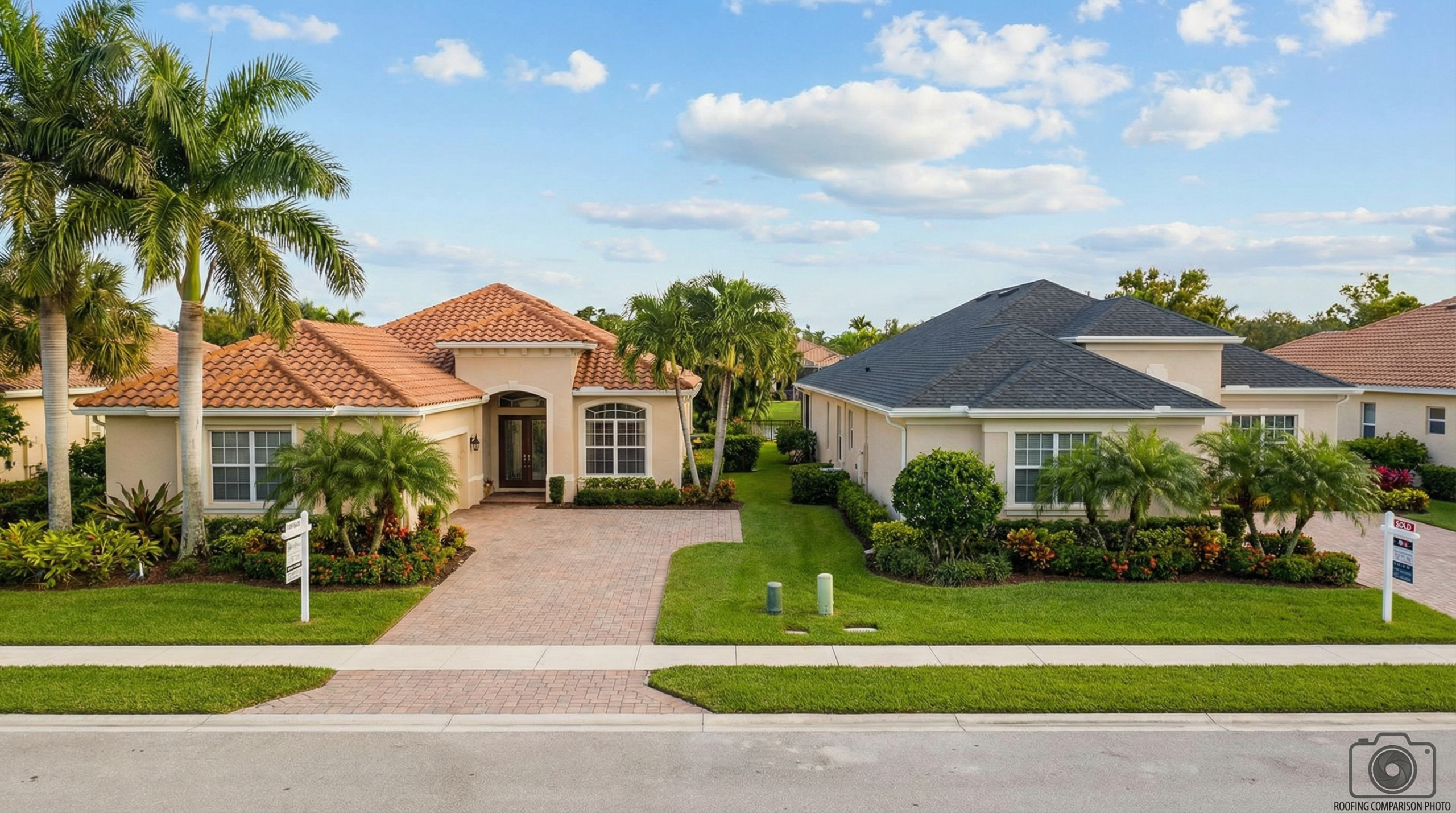
If you are replacing your roof in Palm Beach Gardens, you are going to face this decision: stay with tile, or switch to architectural shingles? Both are legitimate options. Both have real advantages and real trade-offs. The right answer depends on your home, your HOA, your budget, and how long you plan to stay in the house. Here is an honest comparison of a tile roof vs. shingle roof in Palm Beach Gardens.
Side-by-Side Comparison
| Factor | Concrete / Clay Tile | Architectural Shingles |
|---|---|---|
| Upfront cost | $22,000 – $60,000+ | $12,000 – $25,000 |
| Lifespan in South FL | 22–30 years (tile) | 15–20 years |
| Hurricane resistance | Excellent (when properly installed) | Good (with impact-rated products) |
| HOA approval | Required in most PBG communities | Often restricted in tile communities |
| Weight on structure | Heavy requires structural support | Lightweight works on any structure |
| Energy efficiency | Moderate natural air gap under tile | Moderate depends on underlayment |
| Maintenance | High (broken tile) | Low |
| Resale value impact | Higher in this market | Lower in tile-dominant neighborhoods |
The HOA Reality in Palm Beach Gardens
This is the factor that settles the debate for most homeowners in this market. The majority of established communities in Palm Beach Gardens, PGA National, Mirasol, Frenchman’s Creek, BallenIsles, Alton, and most others, require tile roofing as part of their architectural standards. If you live in one of these communities, switching to shingles is not an option regardless of your personal preference or budget. Your HOA will require you to match the existing material or use an approved alternative.
If you live in a non-HOA area or a community without roofing material restrictions, you have a genuine choice to make.
The Case for Tile
Tile is the dominant roofing material in South Florida for good reasons. Concrete and clay tile are exceptionally durable in our climate, resistant to UV degradation, salt air, and the impact of hurricane-force winds when properly installed and fastened. The natural air gap created by the profile of barrel tile also provides passive cooling benefits that reduce attic heat load. In a market where homes are valued in part by their curb appeal and neighborhood conformity, tile maintains and enhances resale value in a way that shingles typically do not in established Palm Beach Gardens communities.
The important nuance with tile is that the tile itself is not the waterproofing layer, the underlayment beneath it is. A tile roof that looks perfect from the street can be leaking because the underlayment has failed. When budgeting for a tile re-roof, you are paying for both the tile and a new underlayment system, and the quality of the underlayment matters enormously for long-term performance. If you are weighing your options, you can learn more about how much a new roof costs in Palm Beach Gardens.
The Case for Shingles
Where HOA restrictions allow it, architectural shingles offer a compelling value proposition. The upfront cost is significantly lower than tile, installation is faster, and modern impact-resistant shingle products perform well in hurricane conditions. For homeowners on a tighter budget, planning to sell within 10 years, or living in a non-HOA property, shingles can be the smarter financial choice. They are also lighter than tile, which matters on older homes where the structural framing was not designed to carry the weight of a full tile roof. If you are dealing with storm damage, you might also wonder does homeowners insurance cover roof replacement in Florida?
What About Metal Roofing?
Metal roofing is a third option worth considering, particularly for homeowners who want the longevity of tile with superior hurricane performance. Standing seam metal roofs can last 40 to 50 years in South Florida’s climate and are among the best-performing roofing systems in high-wind conditions. The upfront cost is comparable to tile, and some HOAs that restrict asphalt shingles will approve metal roofing. It is worth asking if you are considering a premium, long-term investment.
The Bottom Line for Palm Beach Gardens Homeowners
For most Palm Beach Gardens homeowners, the decision is tile, either because your HOA requires it or because it is the right long-term investment for a home in this market. The real decision is which tile product, which underlayment system, and which contractor. Those choices matter more than the material category itself.
BLU Roofing works with all major roofing materials and can walk you through the options that make sense for your specific home and community. Whether you are comparing a tile roof vs. shingle roof or looking into metal options, we are here to help. Learn more about our roofing services or contact us to schedule a free consultation and estimate today.
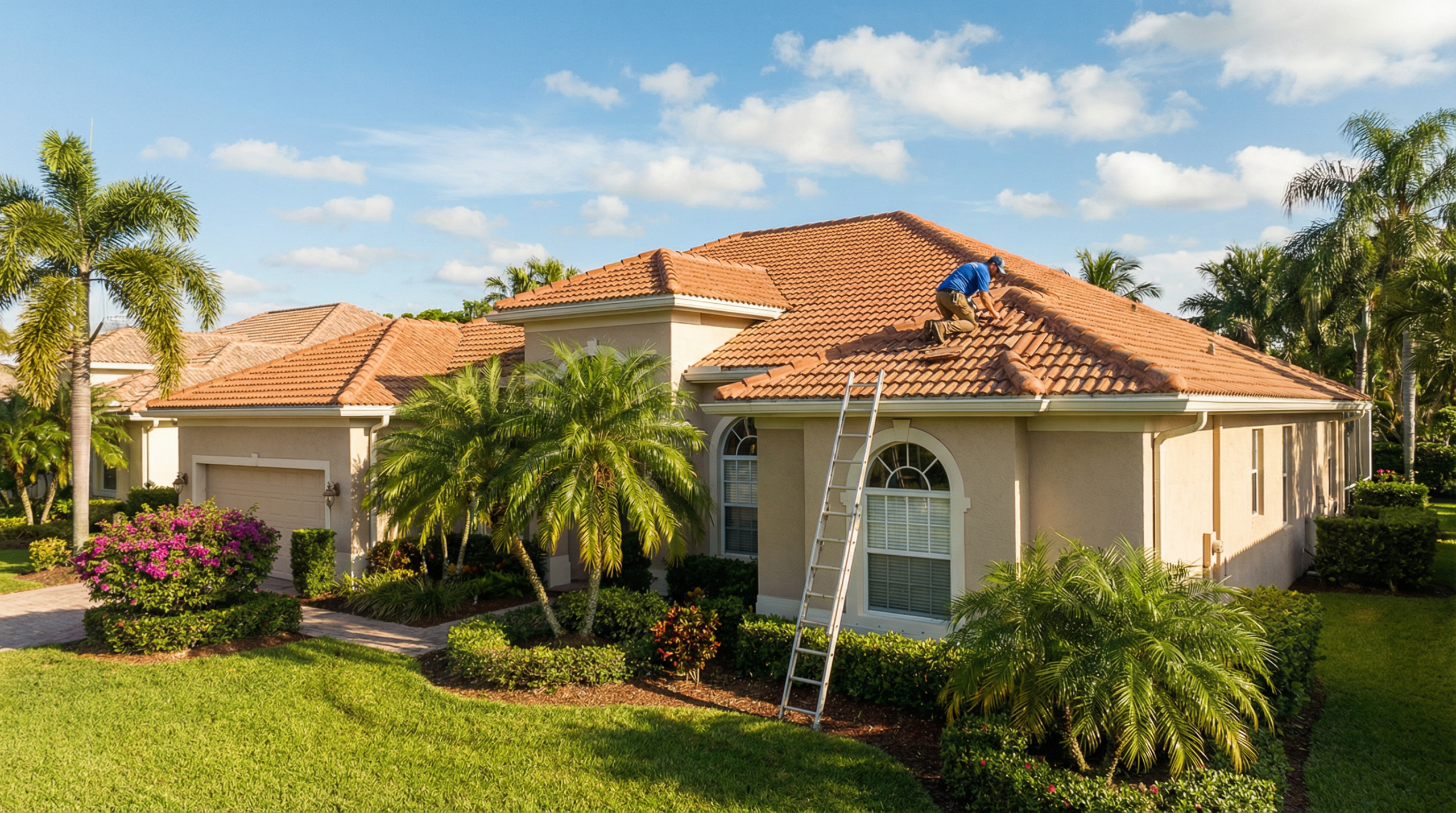
Not every roofing problem requires a full replacement. Sometimes a targeted repair is the right call, and knowing what the roof repair cost in Palm Beach Gardens should be helps you make a smarter decision and avoid overpaying. Roof repair costs in Palm Beach Gardens vary widely depending on the type of damage, the roofing material, and how accessible the affected area is. Here is a straightforward breakdown of what you can expect to pay for common repairs in our area.
Typical Roof Repair Costs in Palm Beach Gardens (2026)
| Repair Type | Typical Cost Range | Notes |
|---|---|---|
| Tile replacement (per tile) | $50 – $60 per tile | Includes labor and material matching. Some companies have minimum trip charges |
| Underlayment repair (section) | $1,500 – $2,500 | Depends on area size and access |
| Flashing repair or replacement | $1,500 – $3,000+ | Around vents, skylights, walls |
| Valley leak repair | $2,000 – $3,500 | Depends on the length of the valley |
| Ridge cap repair | $700 – $1,500 | Common after wind events |
| Fascia and soffit repair | $700 – $2,000 | Often storm-related |
These ranges reflect the Palm Beach Gardens market. Costs vary based on roof height, pitch, material availability, and the extent of damage discovered once work begins.
When a Repair Makes Sense and When It Doesn’t
A repair is the right call when the damage is isolated, the rest of your roof has meaningful life remaining, and the repair cost is a small fraction of what a full replacement would cost. Replacing a handful of cracked tiles on a 10-year-old roof with a healthy underlayment is a sensible maintenance decision.
A repair stops making financial sense when the roof is approaching the end of its useful life, when the same areas keep leaking despite repeated repairs, or when the repair cost is more than 30 to 40 percent of what a full replacement would cost. At that point, you are spending money to delay the inevitable, and each repair cycle typically costs more than the last. If you are unsure, you can learn more about how much a new roof costs in Palm Beach Gardens.
There is also the Florida Building Code 25 percent rule to consider. If the damage to your roof or any section of it exceeds 25 percent of that area, the code requires full replacement of that section rather than a repair. A licensed contractor will assess this before recommending a course of action. If the damage is storm-related, you might wonder whether homeowners insurance covers roof replacement in Florida.
The Underlayment Problem Specific to Palm Beach Gardens
Many homes in Palm Beach Gardens communities were built in the 1990s and early 2000s. The tile on these roofs often looks acceptable from the street, but the underlayment beneath it, the actual waterproofing membrane, has a typical lifespan of 25 to 30 years in South Florida’s climate. When the underlayment fails, water gets in regardless of how intact the tile looks.
Once a roof reaches a certain age, the underlayment deteriorates to the point where repairs are no longer a viable solution. Patching one area simply shifts the problem to the next weakest section. At that stage, a full re-roof is not just the better option, it is the only option that will actually stop the leaking. This is one of the most common situations where homeowners spend money on repeated repairs that do not solve the underlying problem. If your home is in that age range and you are experiencing leaks that cannot be traced to obvious tile damage, the underlayment is the likely culprit.
What to Watch Out For
Be cautious of any contractor who quotes a repair without getting on the roof and physically inspecting the area. Accurate repair pricing requires seeing the actual damage, not just a photo or a description. Be equally cautious of contractors who immediately recommend full replacement without explaining why a repair is not sufficient. A trustworthy contractor will tell you honestly when a repair is the right call.
BLU Roofing Serves Palm Beach Gardens
Whether you need a targeted repair or a full assessment to determine the right path forward, BLU Roofing provides honest evaluations with no pressure and no upselling. We will tell you exactly what your roof needs, and what it does not. If you have questions about roof repair cost in Palm Beach Gardens or want to know whether your roof is a candidate for repair or replacement, we are happy to walk you through it. Learn more about our roofing services or contact us to schedule your free inspection today.
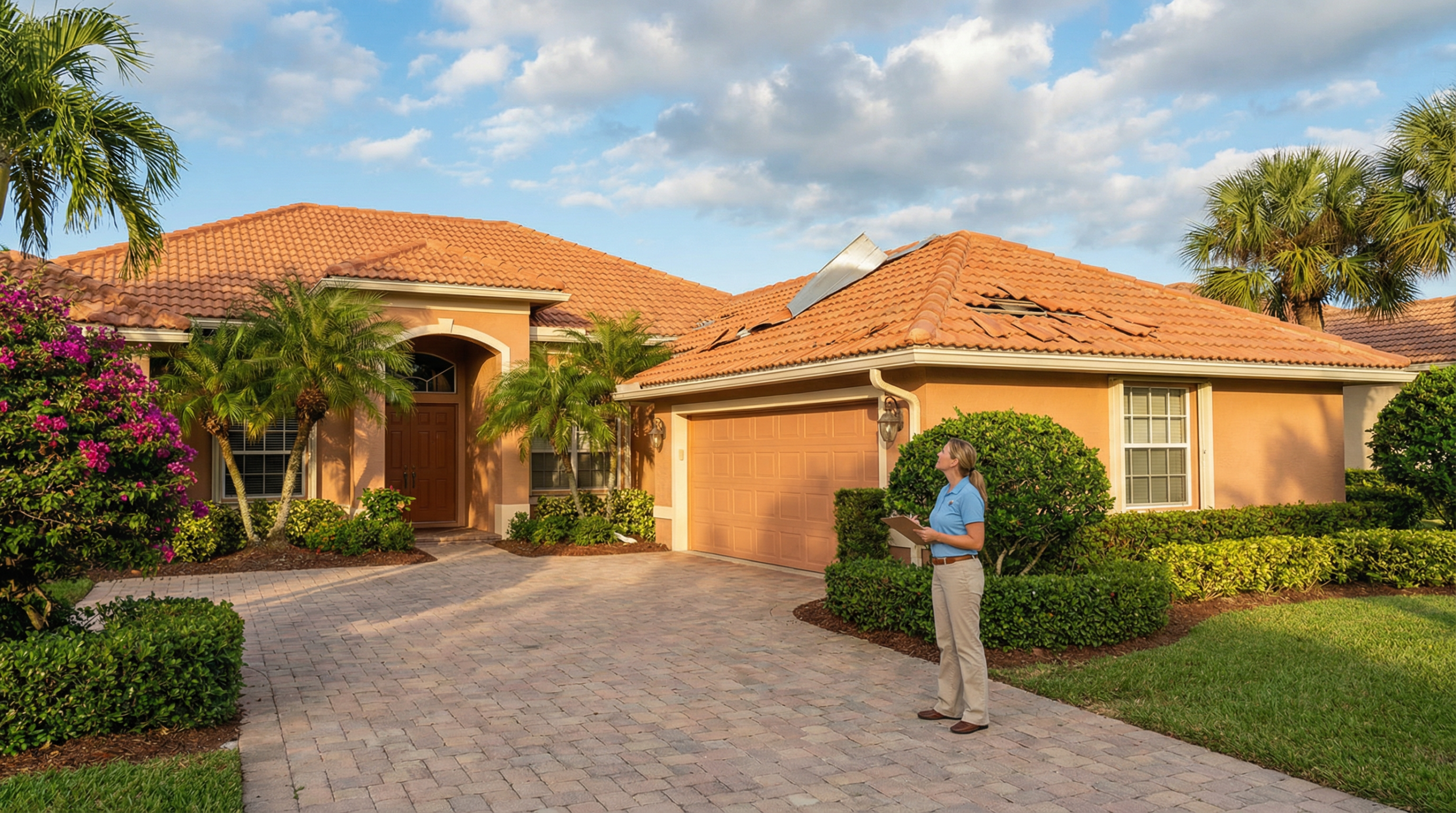
Florida homeowners ask this more than almost any other roofing question, and for good reason. The state’s insurance market has been in turmoil for years, carriers have tightened their policies significantly, and the rules around what’s covered versus what isn’t are genuinely confusing. If you’re wondering whether homeowners insurance covers roof replacement in Florida, here’s a straight answer.
It Depends on the Cause of the Damage
Homeowners insurance in Florida is designed to cover sudden, accidental damage from specific covered perils — not the gradual deterioration that comes with age and normal wear. That distinction is the key to understanding what your policy will and won’t pay for.
What Is Typically Covered
Hurricane and windstorm damage is the most common covered cause in South Florida. If a named storm, tropical system, or severe windstorm damages your roof — missing tiles, torn underlayment, structural damage from wind pressure — your policy should cover the replacement cost minus your deductible. Florida policies typically carry a separate hurricane deductible calculated as a percentage of your home’s insured value rather than a flat dollar amount, so it can be significantly higher than your standard deductible.
Fallen trees and impact damage are also typically covered. If a tree falls on your roof, or flying debris during a storm causes direct impact damage, that generally qualifies as a covered loss.
Fire damage is covered under virtually all standard homeowners policies.
What Is Not Covered
Normal wear and tear is not covered. If your roof has simply reached the end of its useful life — underlayment that has deteriorated over 20 years, tiles that have become brittle from UV exposure, or flashing that has corroded from salt air — that is considered a maintenance issue, not a covered loss. Insurance is not a home maintenance plan. If you’re unsure whether your roof’s condition is wear-and-tear or storm damage, a professional roof inspection can give you a clear, documented answer.
Pre-existing damage is not covered. If damage was present before your current policy was issued, or before a storm occurred, and you attempt to include it in a claim, that can result in claim denial and policy cancellation.
Neglect is not covered. If your roof leaked for years without being addressed and that deferred maintenance led to structural damage, your carrier can deny the claim outright. This is one of the most common reasons claims are denied in Palm Beach County — and one of the strongest arguments for getting ahead of problems early. Knowing the signs your roof needs immediate repair can protect both your home and your coverage.
What Florida Homeowners Need to Know Specifically
Roof age restrictions. Many Florida carriers now limit coverage on roofs older than 15 to 20 years, or will only pay actual cash value rather than replacement cost on older roofs. Some carriers won’t write or renew policies on homes in that age range at all. If your roof is approaching 15 years, review your policy language now — not after a storm. Understanding the cost of roof replacement in Palm Beach County ahead of time puts you in a much stronger position when that conversation with your insurer comes.
The 25 percent rule. Under the Florida Building Code, if more than 25 percent of your roof sustains damage, the entire roof or that section must be replaced rather than repaired. This rule can work in your favor during a claim. Damage that might otherwise be treated as a repair can cross that threshold and become a full replacement covered by your policy.
Carrier scrutiny is higher than it used to be. Florida has dealt with widespread fraudulent roofing claims over the past several years. As a result, insurers are more aggressive about reviewing and contesting claims than they were five years ago. The best protection against a disputed or underpaid claim is a licensed contractor who documents damage thoroughly, honestly, and in detail from the start.
How to Handle a Claim the Right Way
After any storm event, document the damage yourself with photos and video before anyone touches the roof. Then contact a licensed roofing contractor to assess the damage before your insurance adjuster visits. A knowledgeable contractor will identify damage that a non-roofing adjuster can miss and make sure the full scope of the loss is properly represented. Do not sign any document that assigns your insurance benefits to a third party without understanding exactly what you are signing.
Frequently Asked Questions
Do you help with insurance claims for storm damage?
Storms happen, and Florida insurance laws and claim procedures are always changing. If you believe your roof may have storm damage, BLU Roofing can inspect and document the condition of your roof. When insurance involvement is appropriate, we work alongside licensed public adjusters and insurance attorneys who can legally review your policy, consult on coverage, and assist with handling the insurance claim.
BLU Roofing Helps Palm Beach County Homeowners Through the Claims Process
We work alongside homeowners from the first inspection through the completed repair, making sure damage is properly documented and the scope of work is accurately represented to your carrier. If you’ve had storm damage or you’re not sure what your roof’s current condition means for your coverage, reach out for a free inspection and we’ll walk you through it.
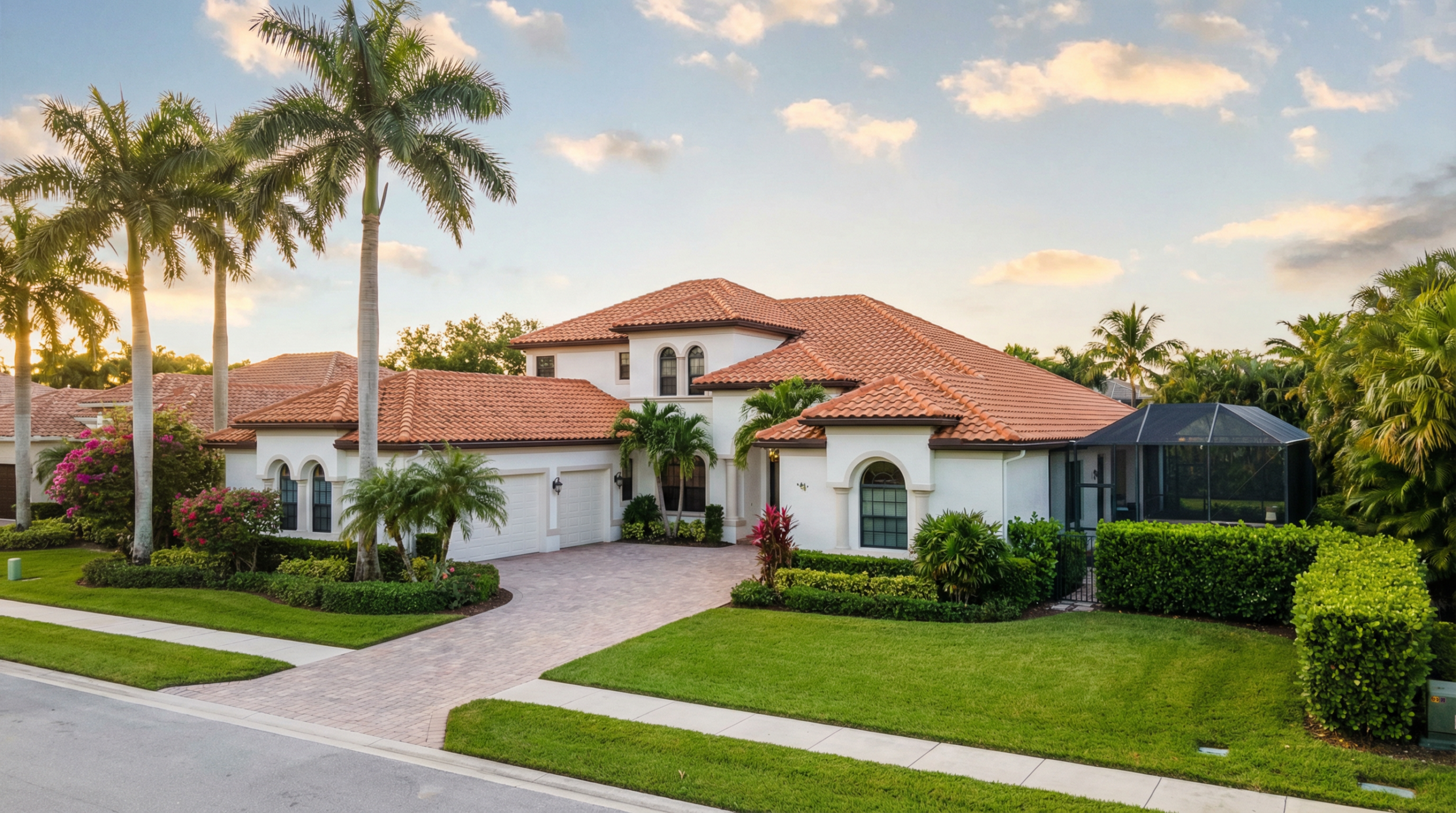
If you own a home in Palm Beach Gardens, you already know this area doesn’t come cheap — and neither does protecting it. When your roof starts showing its age or takes damage from a storm, the first thing you want to know is what a replacement is actually going to cost. Not a ballpark. Not a range so wide it’s useless. A real number based on your home, your neighborhood, and your specific situation.
Here’s what you need to know about roof replacement cost in Palm Beach Gardens in 2026.
What Drives Roof Replacement Cost in Palm Beach Gardens?
Palm Beach Gardens is a tile-roof market. The majority of homes in communities like PGA National, Mirasol, Frenchman’s Creek, and BallenIsles were built with concrete or clay barrel tile, and replacing a tile roof is a fundamentally different project than replacing an asphalt shingle roof — in terms of labor, materials, and code requirements.
Every roof is different, and your price should reflect that. Contractors who quote a flat rate per square are working off a baseline that doesn’t account for the real variables in your specific project. That approach tends to overprice simple roofs and underbid complex ones. At BLU Roofing, we use software that calculates labor and material costs based on your actual roof, so the number you get is accurate to your home — not a generic estimate.
The factors that move the price most are:
Roof size and complexity. Larger roofs cost more. Homes in Palm Beach Gardens tend to run larger than average — 2,500 to 5,000 square feet of living space often means 3,000 to 6,000 square feet of actual roof surface once you account for pitch and overhangs. Steep pitches, multiple levels, and architectural features like turrets or complex valleys all add labor time and material waste.
Material choice. Concrete tile is the most common replacement material in this market and offers the best combination of durability and cost. Clay tile is a premium upgrade with a longer lifespan and a more refined look. Metal roofing is increasingly popular for its hurricane performance and energy efficiency. Asphalt shingles are the most affordable option but are less common in Palm Beach Gardens due to HOA restrictions in many communities.
Condition of the decking and flashing underneath. Once your old roof comes off, we inspect every sheet of wood decking beneath it. South Florida’s humidity and occasional slow leaks cause rot that isn’t visible from the outside. Any damaged decking must be replaced before the new roof goes on. We also inspect the roof-to-wall flashing and replace it if it’s corroded. This is non-negotiable for passing inspection and for the integrity of your new roof. A reputable contractor identifies as much of this as possible before work begins and prices it transparently.
Florida Building Code compliance. Palm Beach County enforces strict hurricane protection standards. Your new roof must use hurricane-rated materials, approved underlayment systems, and reinforced fastening patterns. These requirements are not optional upgrades — they are mandatory for passing the county inspection that closes out your permit. Any estimate that doesn’t account for full code compliance is an incomplete estimate.
Typical Cost Ranges for Palm Beach Gardens Homes (2026)
| Roofing Material | Typical Cost Range | Lifespan in South FL | Best For |
|---|---|---|---|
| Concrete Tile | $25,000 – $45,000+ | 25–35 years | HOA communities, classic Florida look |
| Clay Tile | $30,000 – $50,000+ | 30–50 years | Premium homes, long-term investment |
| Metal Roofing | $25,000 – $50,000+ | 35–50 years | Hurricane performance, energy savings |
| Asphalt Shingles | $12,000 – $22,000 | 15–20 years | Budget-conscious, non-HOA properties |
These ranges reflect the Palm Beach Gardens market specifically. Homes in gated communities with larger footprints and more complex rooflines will typically fall in the upper half. A straightforward single-story home on a standard lot will generally fall in the lower half, while larger roofs can easily fall into the $60,000–$100,000 range.
When to Repair vs. Replace
Most homeowners reach the replacement decision one of three ways: a proactive choice to replace on their own terms before a problem forces their hand, active leaks in multiple areas that point to systemic failure rather than isolated damage, or an insurance carrier requiring replacement to maintain coverage after a storm. Getting ahead of it is always the better financial and logistical outcome. Replacing your roof on your schedule is a planned investment — dealing with emergency water damage and insurance pressure is not. If you’re seeing early warning signs, our post on 5 signs your roof needs immediate repair can help you assess where you stand.
Under the Florida Building Code, if more than 25 percent of your roof or any roof section sustains damage, that section must be fully replaced rather than patched. This catches many homeowners off guard after hurricane season. What looks like a manageable repair can cross the 25 percent threshold quickly once a licensed inspector assesses the full scope. If you’re unsure where you stand, have a contractor assess it before deciding.
Age is also a factor Palm Beach Gardens homeowners often underestimate. Concrete tile roofs in South Florida typically last 25 to 35 years, but the underlayment beneath the tile — which is the actual waterproofing layer — typically fails in 15 to 20 years. Many homeowners are surprised to learn their tile looks fine but their roof is leaking because the underlayment has reached the end of its life. If your home was built in the late 1990s or early 2000s, this is worth having assessed regardless of how the tile looks from the street.
Does Homeowners Insurance Cover Roof Replacement in Palm Beach Gardens?
If your roof was damaged by a named storm, hurricane, windstorm, or falling tree, your homeowners insurance policy may cover the replacement cost minus your deductible. Damage from normal wear and tear, age, or lack of maintenance is not covered. After any storm event, document the damage thoroughly and contact your roofing contractor before your insurance adjuster visits. A contractor who knows the claims process can help ensure the full scope of damage is properly documented and nothing gets missed.
Frequently Asked Questions
Do you help with insurance claims for storm damage?
Yes. We work alongside homeowners through the claims process to make sure the damage is properly documented and the scope of work is accurately represented.
Do I need a permit for roof replacement in Palm Beach Gardens?
Yes. All roof replacements in Palm Beach Gardens require a permit from Palm Beach County. A licensed roofing contractor pulls the permit on your behalf and schedules the required inspections. Skipping the permit process creates serious liability when you sell your home or file an insurance claim. Be cautious of any contractor who suggests it.
How long does a roof replacement take in Palm Beach Gardens?
Most residential roof replacements take one to three days for the physical installation, depending on roof size and material. Tile roofs take longer than shingle roofs due to the weight and precision required. Permitting and inspection scheduling adds time before and after installation.
Do you offer financing?
Yes. BLU Roofing offers flexible financing options so you can protect your home without paying the full cost out of pocket at once. Ask us about your options when you reach out.
BLU Roofing Serves Palm Beach Gardens
We are a local roofing company serving Palm Beach Gardens and the surrounding communities. Every project includes direct owner involvement, transparent pricing, and a structured process — the BLU Blueprint — designed to take the uncertainty out of one of the most significant investments you will make in your home. If you want to know exactly what your roof will cost and how much life it has left, schedule your free inspection and estimate here.
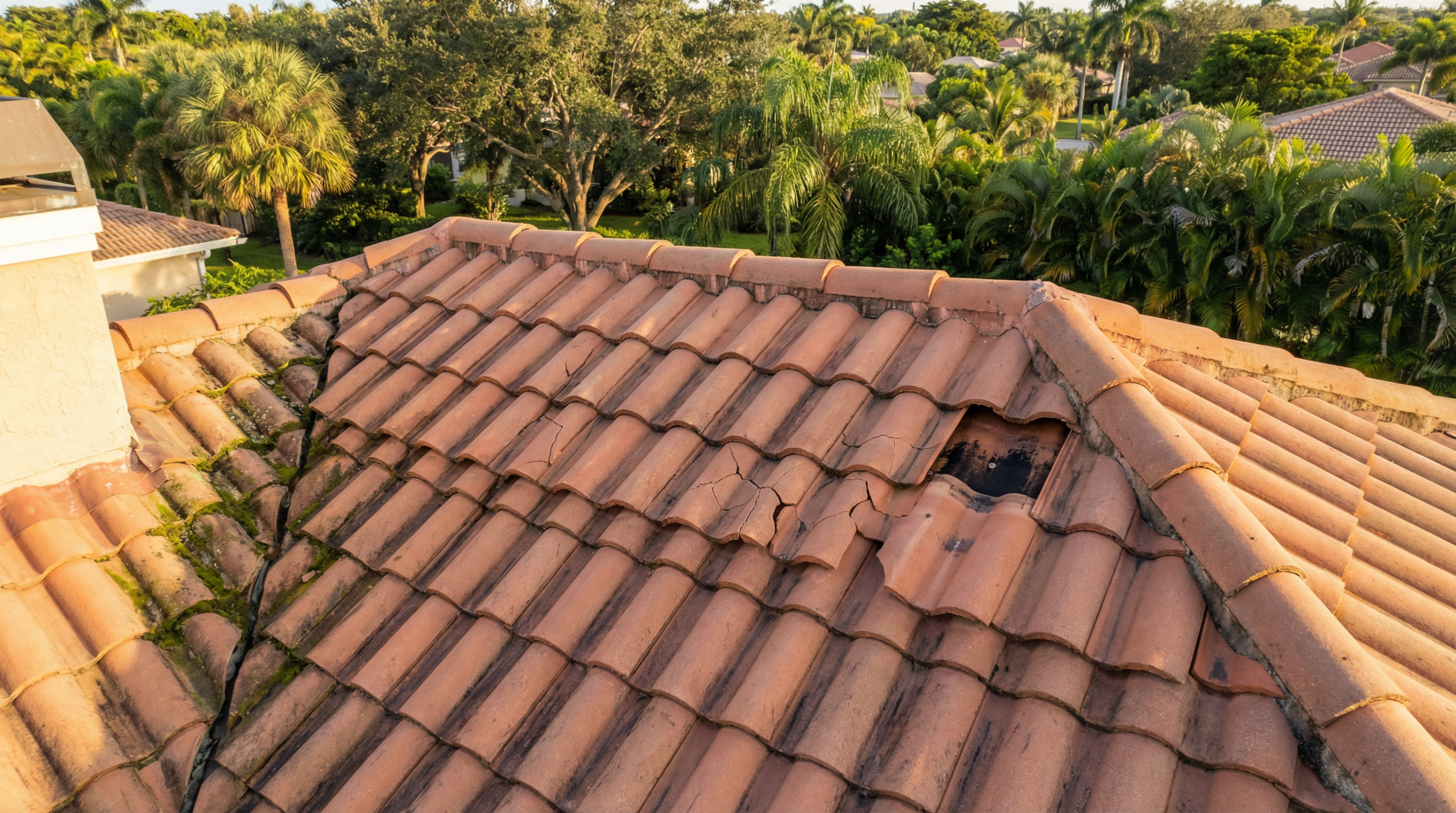
If you’re noticing signs you need a new roof in Palm Beach Gardens, it’s important to act early before small issues turn into costly damage. Most homeowners do not think about their roof until something goes wrong. That is understandable. When everything is working, there is no reason to look up. But by the time a roof failure becomes obvious, the damage is often already significant. Knowing what to look for early can save you thousands of dollars and a lot of stress.
Here are five signs your roof may be telling you it is time for a replacement.
1. Your Underlayment Is Near the End of Its Life
This is one of the most important signs, and one most homeowners never think to check. The underlayment is the true waterproofing layer of your roof system. This applies to both tile and shingle roofs. The outer material protects the underlayment, but the underlayment is what actually keeps water out.
In South Florida, most modern underlayments are designed to last 20 to 30 years. In many cases, they last about as long as the roof system itself. An exception is standing seam metal, where the metal panels also serve as a primary waterproofing layer.
Many homes in Palm Beach Gardens communities like PGA National, Mirasol, and BallenIsles were built in the late 1990s and early 2000s. That means a large portion of these roofs are now approaching or exceeding that 20 to 30 year range. Even if everything looks fine from the ground, the system underneath may be at the end of its useful life.
2. Active Leaks in Multiple Areas
A single isolated leak after a major storm can often be repaired. Multiple leaks showing up in different areas, especially after normal rain, usually point to a system-wide issue.
Pay attention to ceiling stains, attic moisture, and discoloration around penetrations like vents or skylights. These are often the first places water enters.
When leaks are widespread, repairs tend to become temporary fixes rather than long-term solutions.
3. Cracked, Broken, or Slipping Tiles
Minor tile damage is usually a maintenance issue and can often be repaired without replacing the entire roof.
However, widespread cracking, slipping tiles, or tiles that break easily under light pressure can indicate deeper problems. This may point to aging materials, failing fasteners, or deterioration underneath the surface.
After any hurricane or tropical storm, it is worth having a professional inspection. What looks minor from the ground can be more significant up close.
4. Your Insurance Company Is Asking Questions
This is becoming more common across Florida. Insurance carriers are paying close attention to roof age and condition.
If your insurer has requested an inspection, asked for photos, or raised concerns about your roof, it is a strong signal that your roof may be nearing the end of its insurable life.
Many carriers will not renew policies on roofs older than 15 to 20 years. Others may require replacement to maintain coverage. Understanding how long roofs last in Florida can help you anticipate these requirements before they become an emergency.
Getting ahead of this gives you control over timing, contractor selection, and budgeting.
5. Your Neighbors Are Replacing Their Roofs
In planned communities, homes are often built around the same time. That means roofs tend to age at a similar pace.
If you are seeing multiple homes in your neighborhood getting new roofs, especially after a storm season, there is a good chance your roof is in a similar stage.
This is often one of the most practical early indicators homeowners overlook.
What to Do Next
If you are seeing any of these signs, or if your home is approaching 20 to 30 years old and has not been assessed, the next step is a professional inspection.
BLU Roofing serves Palm Beach Gardens and the surrounding communities. We offer free inspections and straightforward assessments with no obligation. Reach out to schedule yours.