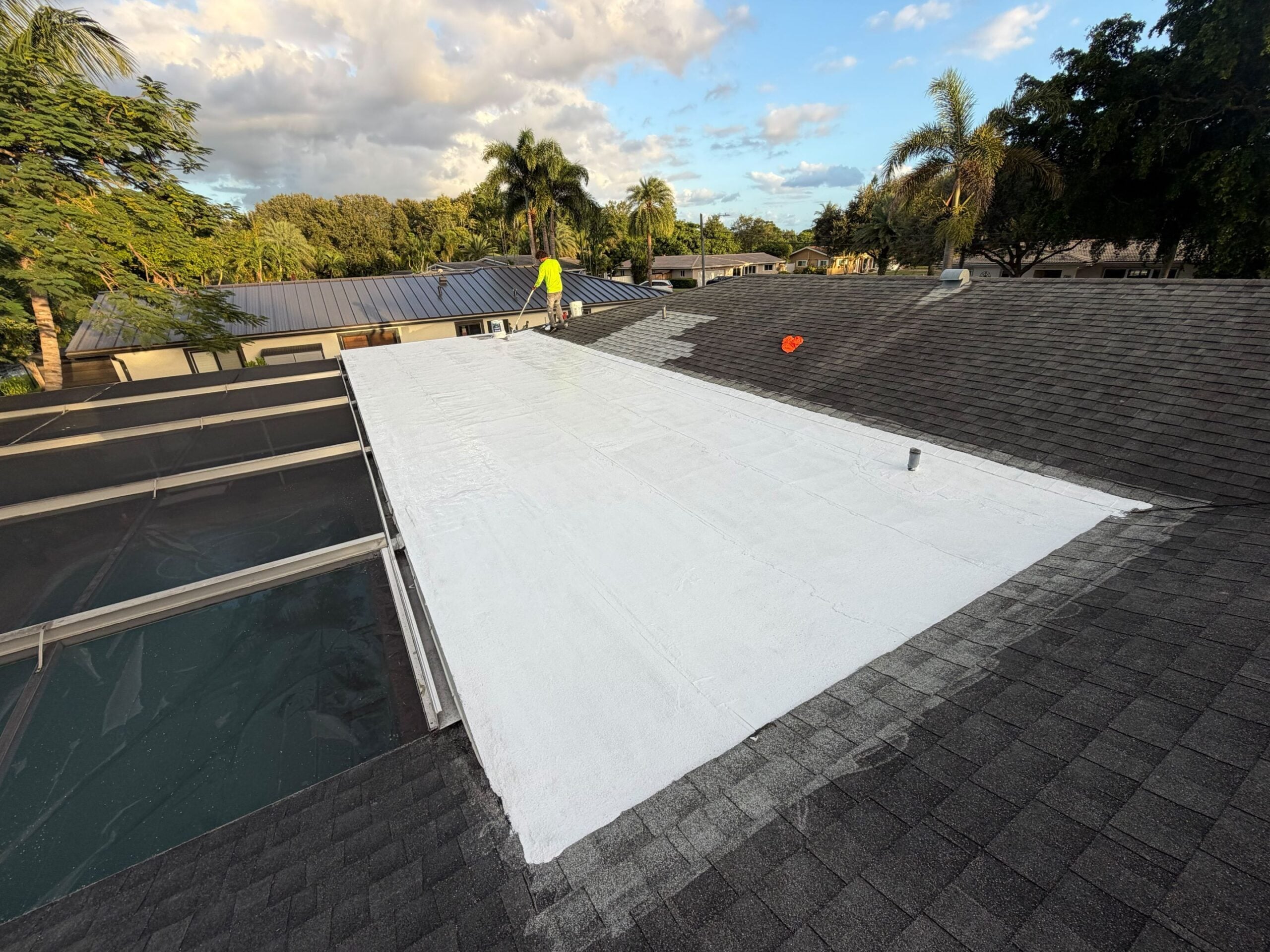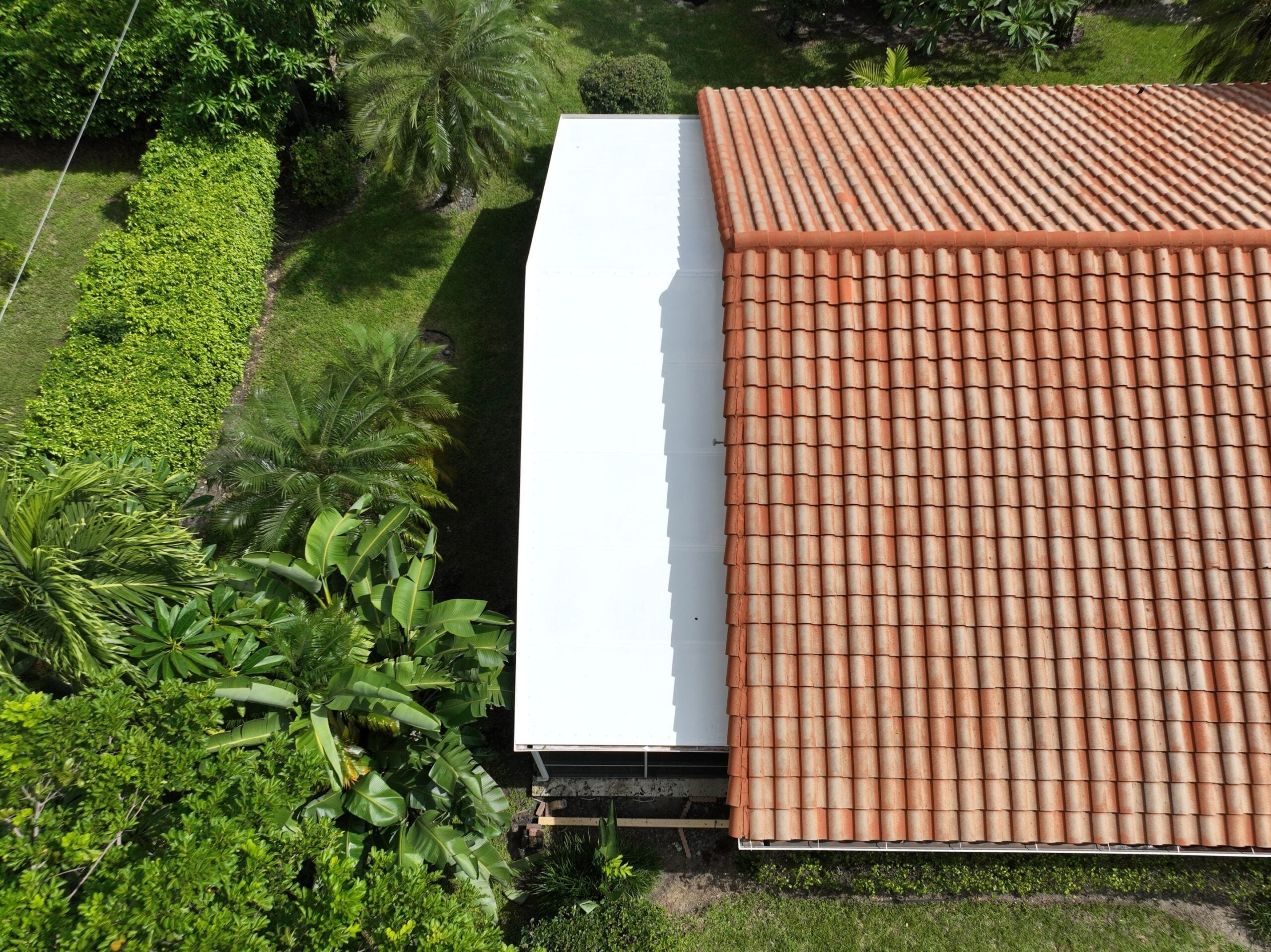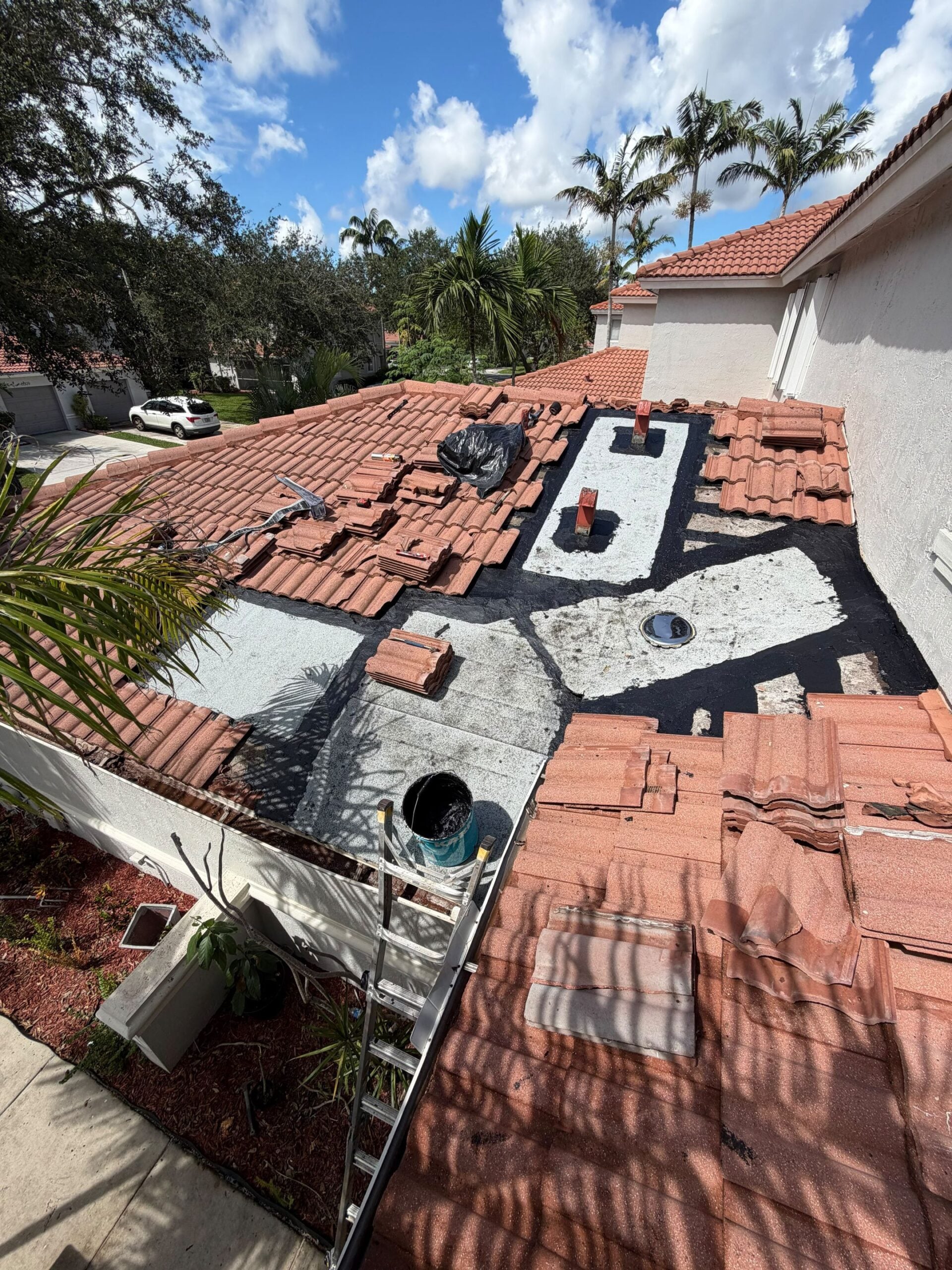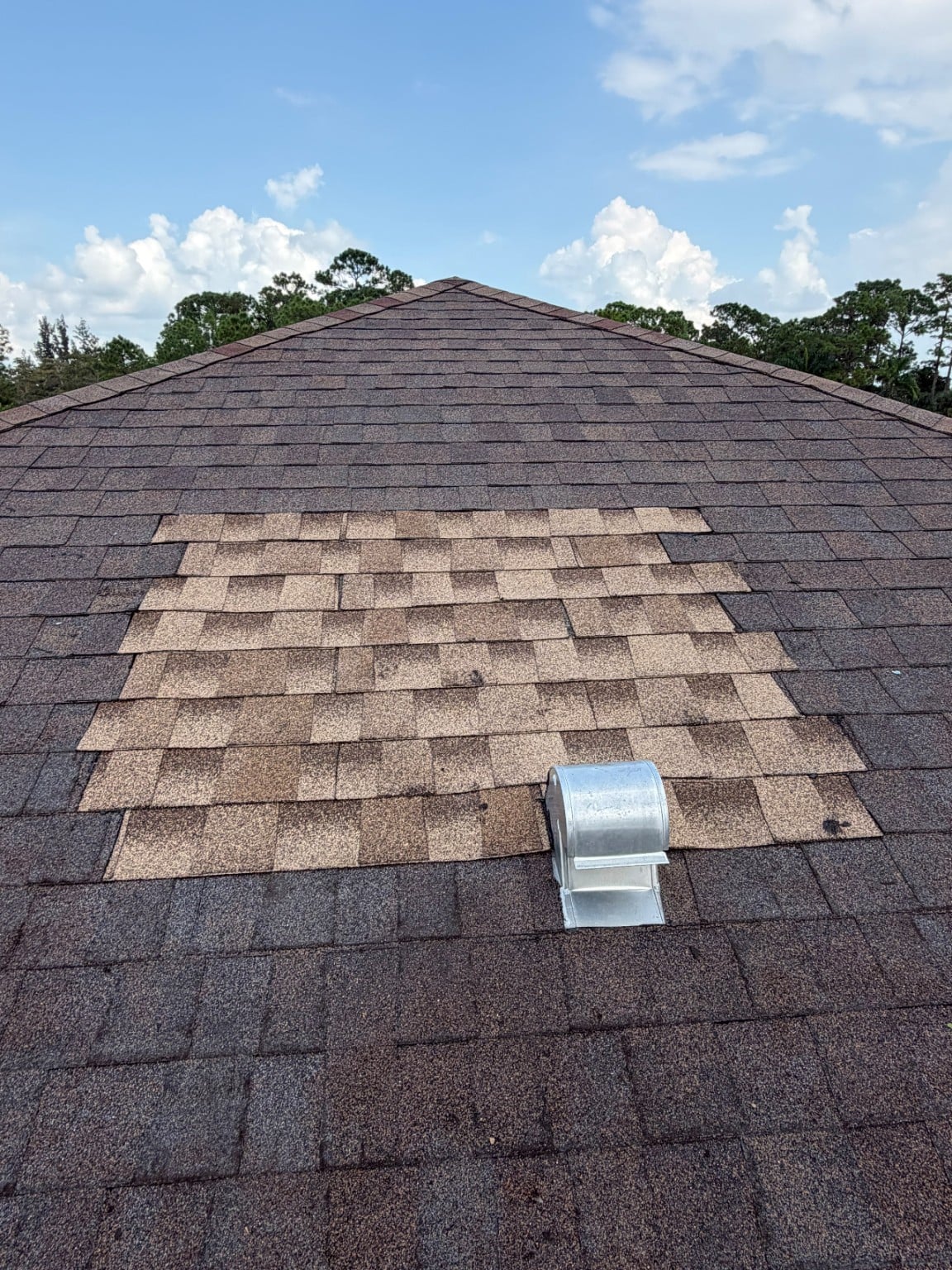
This Riviera Beach tile roof repair addressed multiple leak areas on a concrete tile townhouse roof in Turtle Cay, Riviera Beach, Florida. The rental property had water entering through the garage ceiling, with a ceiling stain and mold visible on the wall. The initial inspection found a leak at a roof return and bottom valley, and additional inspection identified leaking gooseneck vents. When the roof was opened, another leak was found to the side, bringing the project to approximately four separate leak areas.
Quick Summary
BLU Roofing repaired approximately four leak areas on a concrete tile townhouse roof in Turtle Cay, Riviera Beach. The leak entered through the garage ceiling and included a roof return and bottom valley, two gooseneck vents, and an additional side area discovered after the roof was opened. The crew replaced rotted decking at the return, rebuilt the affected roofing system with CertainTeed SA granulated cap sheet, resealed the valley and roof-to-wall flashing with Polyglass PG 500 and APOC 470 reinforcing fabric, reflashed the gooseneck vents, reused the existing tiles, repaired broken tiles, and reset the tiles with ICP Polyset AH-160 adhesive foam.
Table of Contents
- Project Facts
- The Initial Leak and Attic Inspection
- Multiple Leak Areas
- Rebuilding the Return and Valley
- Reflashing the Vents and Roof-to-Wall Detail
- Completing the Repair
- One Price Despite Additional Findings
Project Facts
| Community | Turtle Cay, Riviera Beach, Florida 33407 |
| Property | Townhouse and rental property |
| Roof system | Older concrete tile roof, still considered repairable |
| Interior symptom | Garage ceiling leak, ceiling staining, and mold on the wall |
| Confirmed areas | Roof return and bottom valley, two gooseneck vents, and an additional side leak |
| Decking | Rotted plywood at the return area was replaced; no other rotted decking was found |
| Waterproofing materials | CertainTeed SA granulated cap sheet, Polyglass PG 500, and four-inch APOC 470 reinforcing fabric |
| Tile installation | Existing tiles reused where possible, broken tiles repaired, and tiles reset with ICP Polyset AH-160 adhesive foam |
| Timeline | Two days with a two- to three-person crew because additional leaks were found after opening the roof |
| Follow-up | Completed approximately one month before publication, with substantial rain and no callbacks reported |
The Initial Leak and Attic Inspection
The rental property’s tenant or occupants were dealing with water entering through the garage ceiling. By the time BLU Roofing was called, there was a ceiling stain and mold visible on the wall. The property had attic access, which allowed the leak to be traced from inside rather than relying only on the visible roof surface.
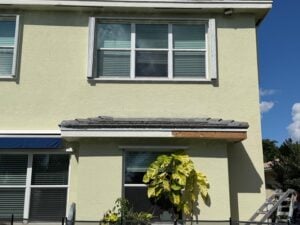
The initial leak was located at the roof return and bottom valley area. This was a useful example of why returns, valleys, and roof-to-wall transitions deserve careful attention. They are areas where water can concentrate or change direction, and they often include several connected details that must work together.
BLU Roofing’s roof repair service includes investigating localized leaks, damaged decking, flashing details, and water entry around roof penetrations. The correct repair depends on what is found during the inspection rather than assuming that the first visible symptom identifies the complete problem.
Multiple Leak Areas Found During the Repair
The attic inspection identified the return and bottom valley leak, along with leaks at two gooseneck vents. The roof was opened so the affected areas could be inspected down to the decking. Once the tiles and underlayment were removed, another leak was found off to the side.
That brought the project to approximately four separate leak areas:
- The roof return and bottom valley area
- One leaking gooseneck vent
- A second leaking gooseneck vent
- An additional side leak discovered after opening the roof
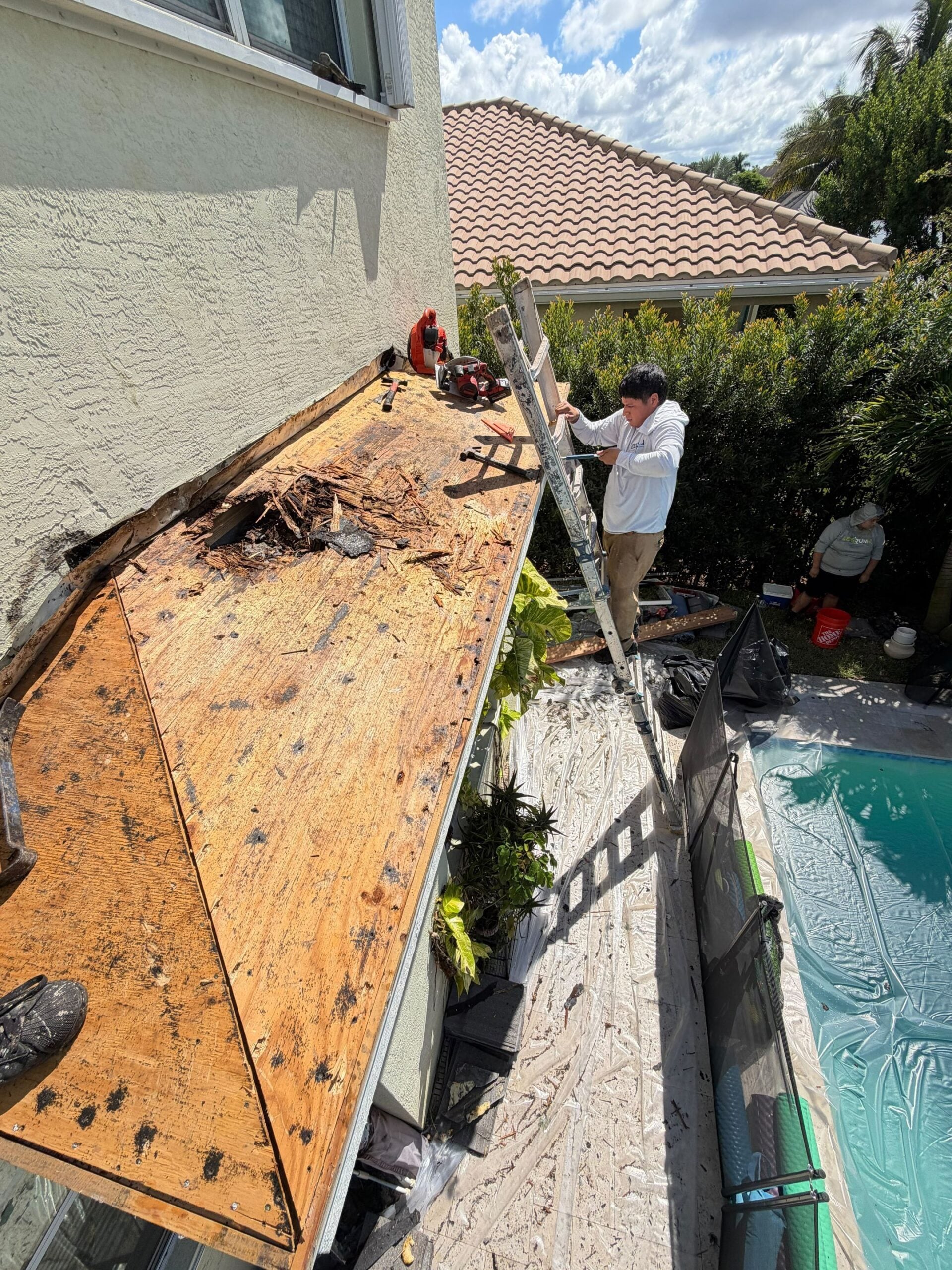
Rotted plywood was found at the return area and replaced. Outside that return location, no other rotted decking was found. The other leaks were newer and had not caused the same level of deterioration. This is one reason opening a localized repair area can reveal information that is not visible from the roof surface or from the interior of the building.
Rebuilding the Return and Valley
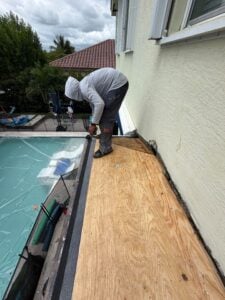
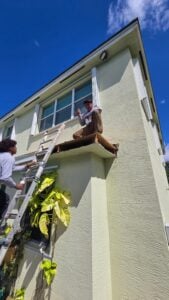
The crew removed the concrete tiles and cut out the existing underlayment down to the roof decking. The damaged decking at the return was removed and replaced. The affected roofing system was then rebuilt using CertainTeed SA granulated cap sheet, tied into the existing roof system with Polyglass PG 500 modified cement and four-inch APOC 470 asphalt-saturated reinforcing fabric.
The return and bottom valley were resealed with the same waterproofing materials. The valley above the return was also addressed, along with the roof-to-wall flashing above the valley. This allowed the repair to address the connected water-shedding details instead of treating only the point where the leak became visible inside the garage.
Polyglass identifies PG 500 as a trowel-grade modified cement used for flashing details, membrane attachment, and waterproofing repairs. APOC 470 is an asphalt-saturated cotton reinforcing fabric used to reinforce roof repair areas. Product selection and installation remain dependent on the specific roof assembly and field conditions.
Reflashing the Vents and Roof-to-Wall Detail
The two leaking gooseneck vents were reflashed and tied into the roof system with roofing cement and reinforcing membrane. The roof-to-wall flashing was also resealed using the same PG 500 and APOC 470 membrane approach.
The vent repairs were included because the attic inspection identified water entering at those locations. They were not treated as a generic add-on. Each area was addressed based on what was observed during the inspection and after the surrounding roof materials were opened.
This type of repair can involve several connected details. A valley can direct water toward a return, a wall transition can receive concentrated runoff, and a vent can leak independently within the same roof section. A durable repair requires separating those conditions and rebuilding each affected area correctly.
Completing the Repair
After the underlayment and flashing work was completed, the existing concrete tiles were reinstalled wherever they could be reused. Broken tiles found during the work were repaired. The tiles were reset with ICP Polyset AH-160 two-part polyurethane adhesive foam rather than relying on unnecessary penetrations through the tile surface.
The project took two days with a two- to three-person crew. The additional time was needed because more leaks were discovered after the roof was opened. The repair was completed at the originally agreed price, even though the opened roof revealed more work than was visible during the initial inspection.
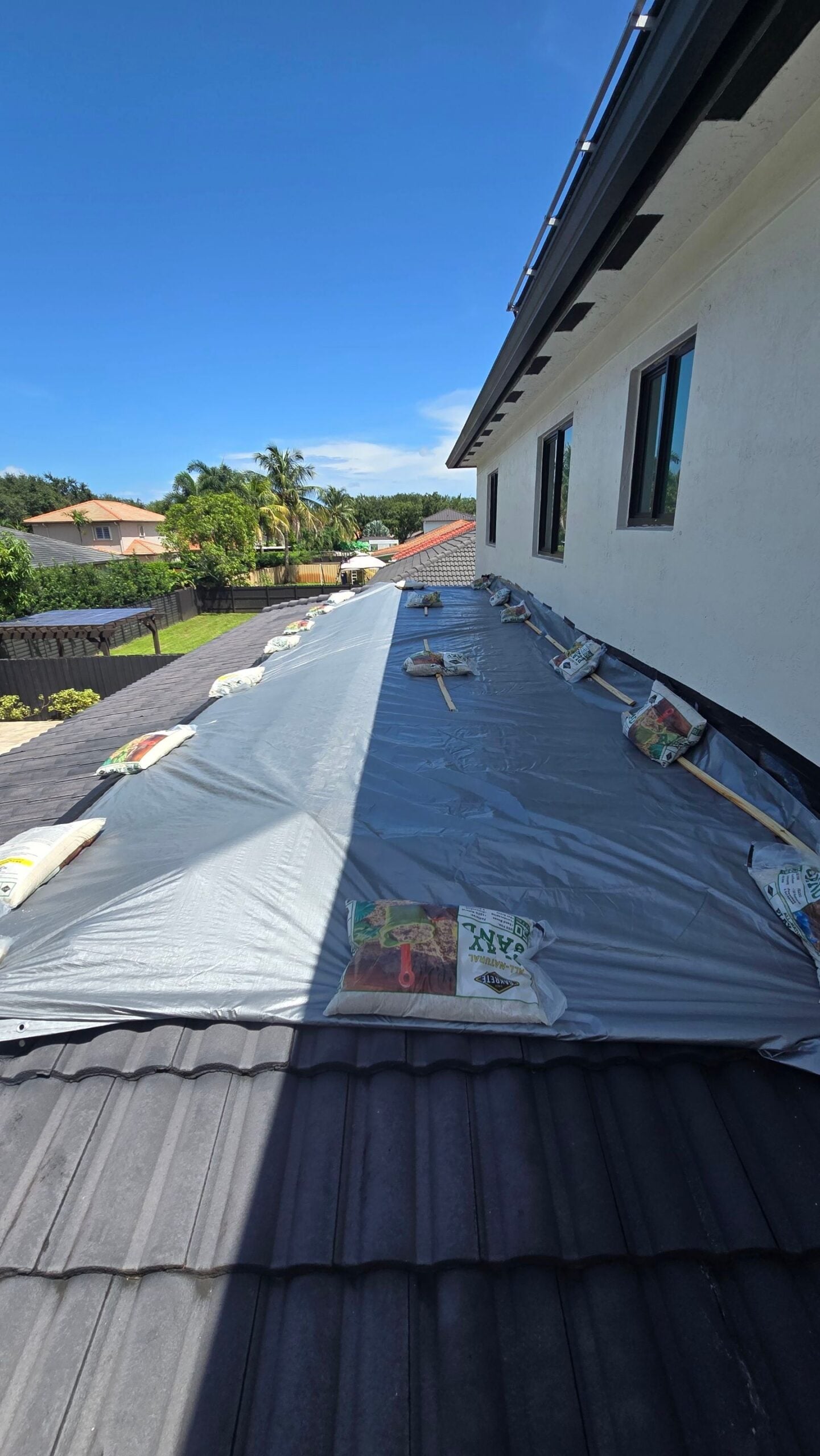
Weather was monitored throughout the project, as it is with South Florida roofing work, especially during the August and September rainy season. The crew completed the work with the necessary weather conditions in mind and meticulously cleaned the property when finished. A complete before, during, and after photo report was created in CompanyCam.
One Price Despite Additional Findings
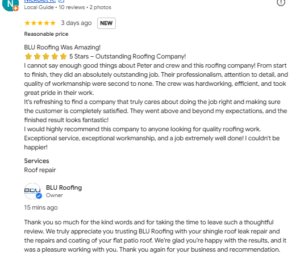
Roof repairs sometimes change once the affected area is opened. In this Turtle Cay project, the attic inspection found the main return leak and the vent leaks, but the roof opening revealed an additional side leak and rotted decking at the return. BLU Roofing handled the added repair work without increasing the original price.
The repairs were completed approximately one month before this Project Spotlight was prepared. The roof has received substantial rain since then, and there have been no callbacks. That follow-up does not replace a long-term roof inspection, but it is a useful field outcome for this documented repair project.
This Riviera Beach tile roof repair shows why a leak should be traced through the attic and roof assembly instead of treating only the first visible stain. Returns, bottom valleys, roof-to-wall flashing, gooseneck vents, underlayment, and decking can all be part of the same water-entry investigation.
Written By: Peter Menke
Peter Menke is the owner of BLU Roofing and has been serving the South Florida roofing industry for over 6 years. He founded BLU Roofing to provide homeowners with transparent, accurate information grounded in real Florida roofing conditions and building practices. License #CCC1337285.
BLU Roofing provides roof inspections, repairs, restoration, and replacement for shingle, tile, metal, and flat or low-slope roof systems across Palm Beach, Martin, and Broward Counties.