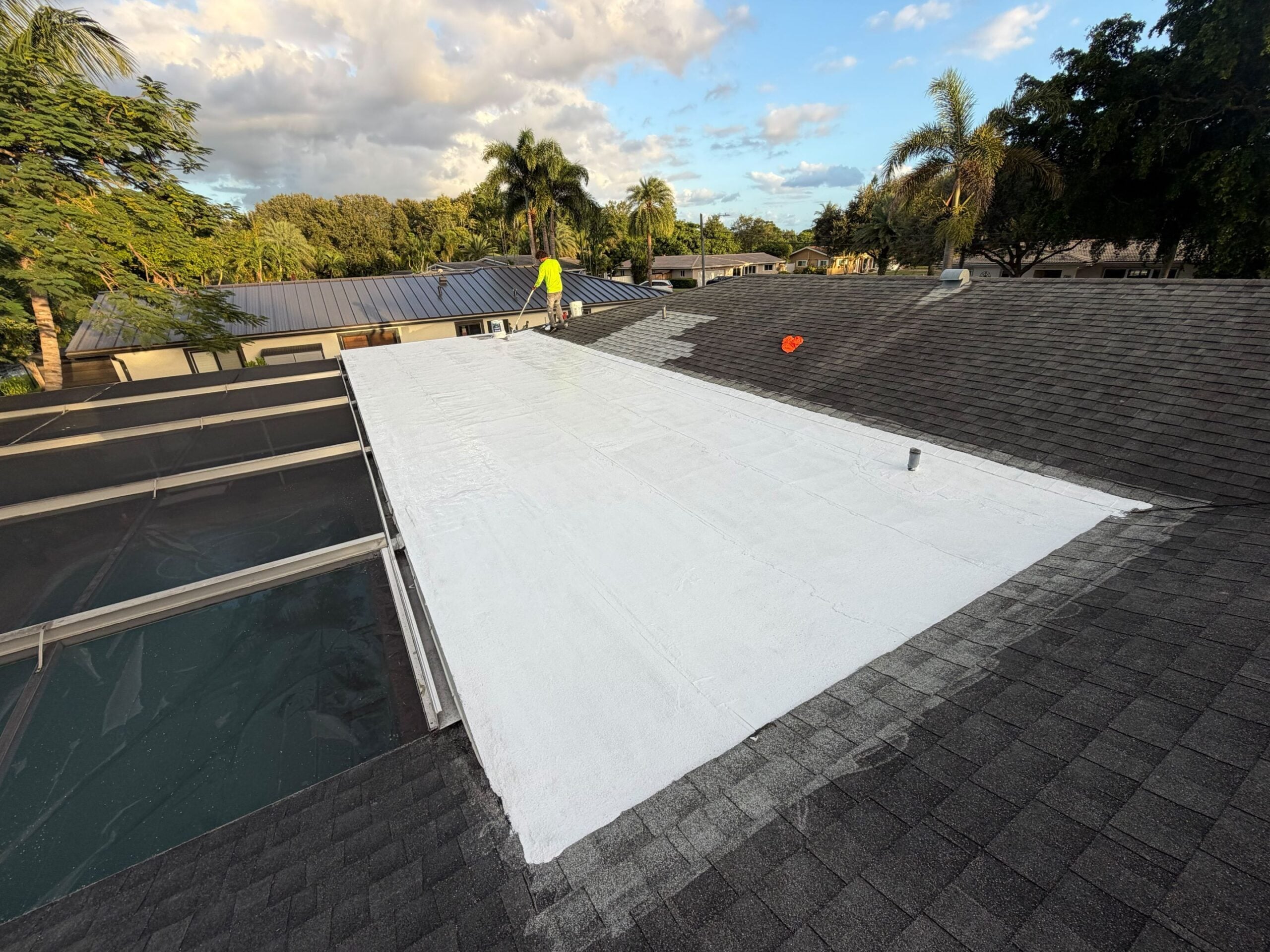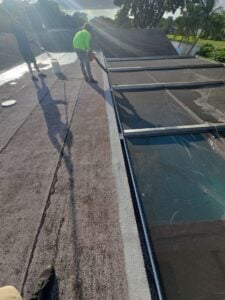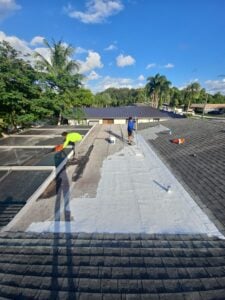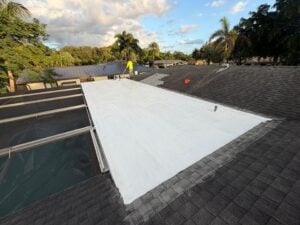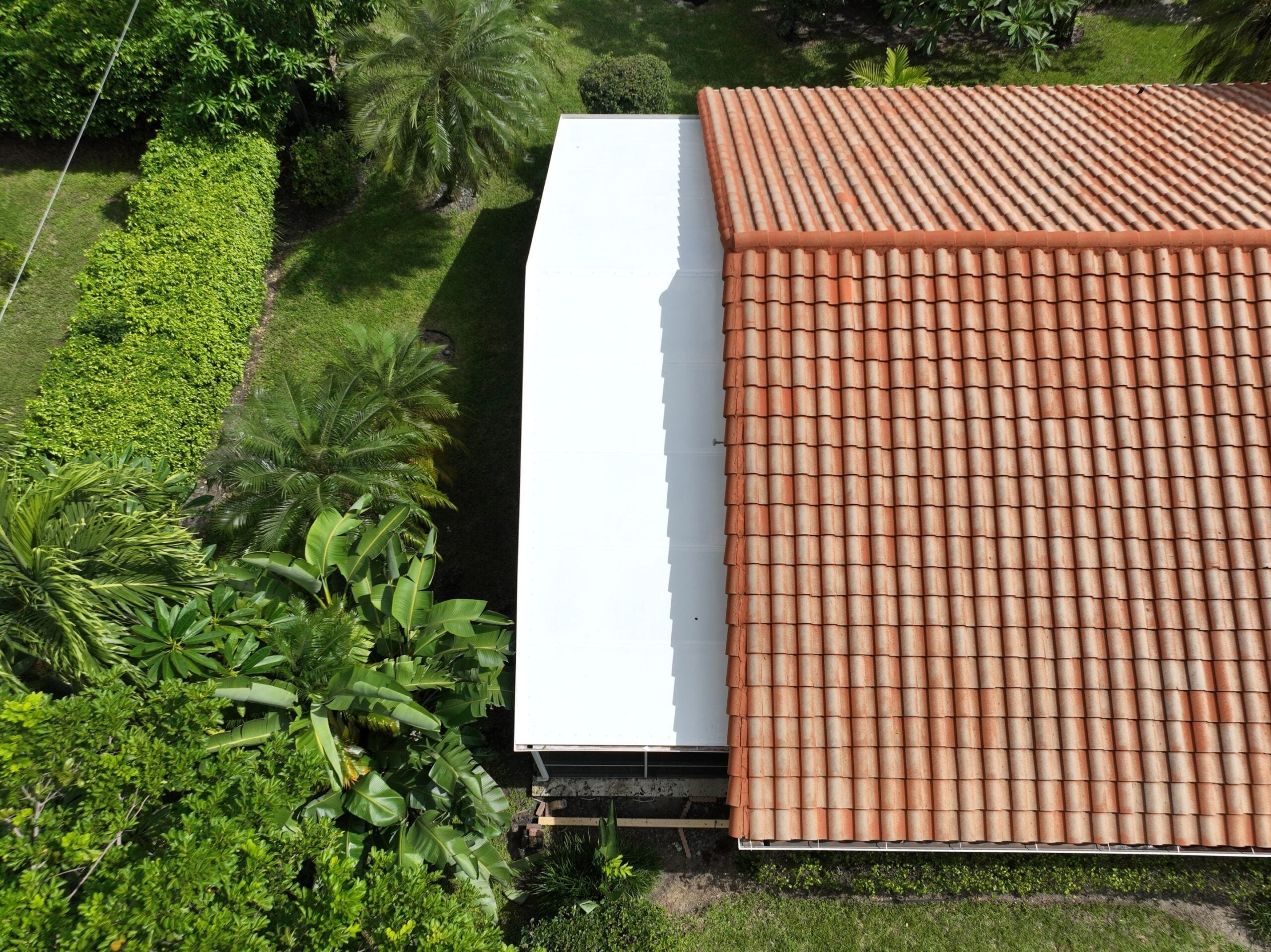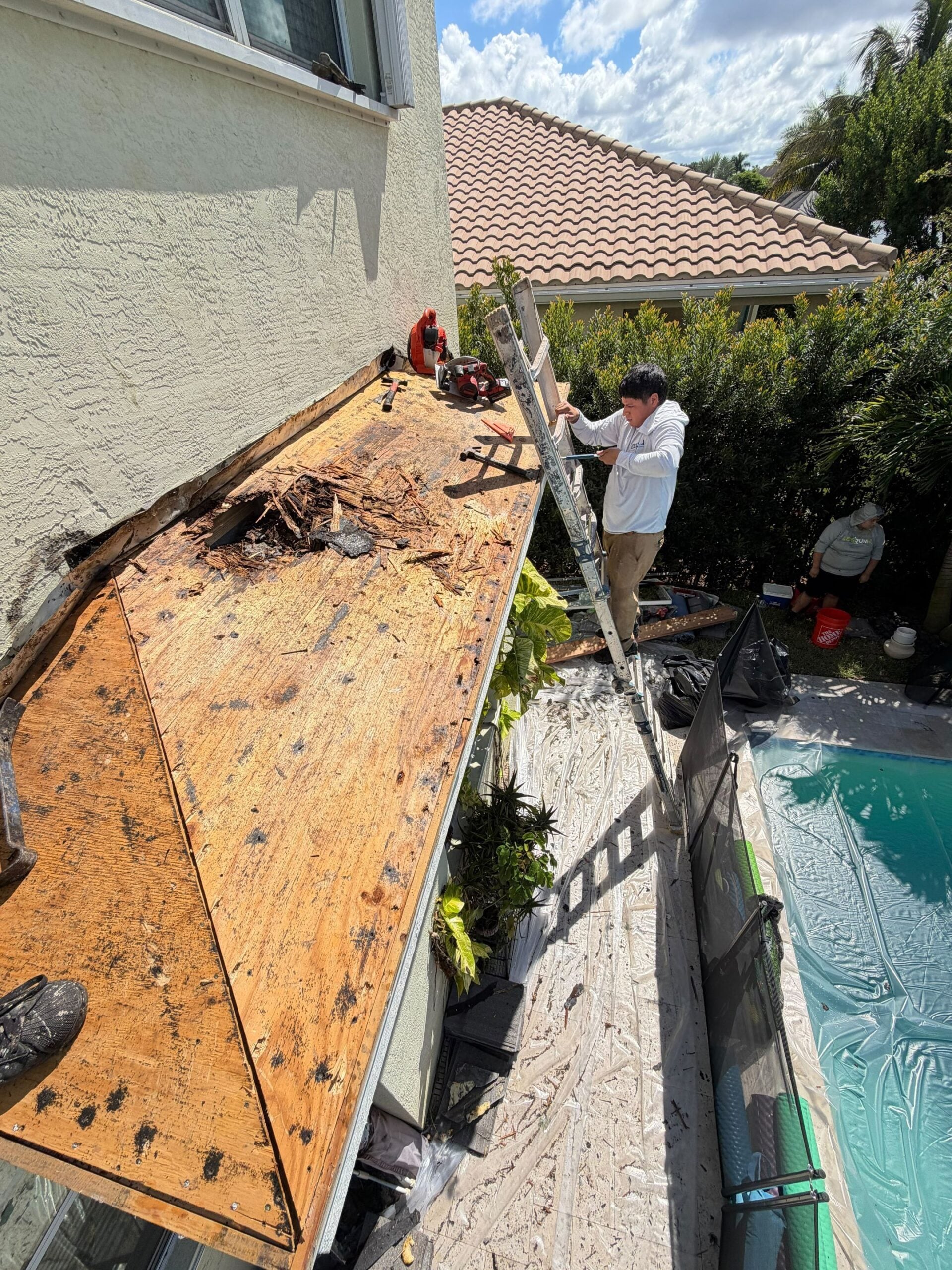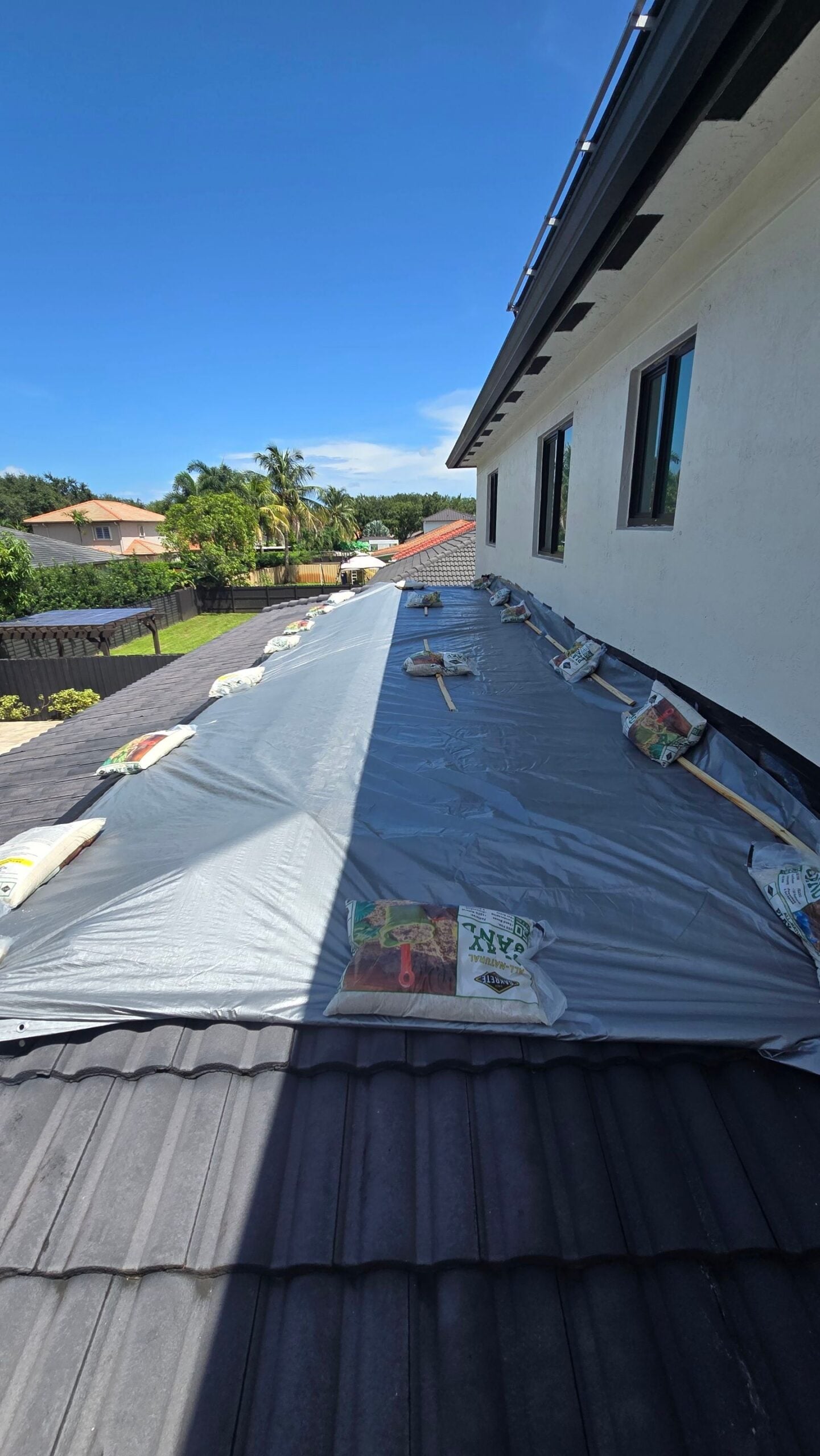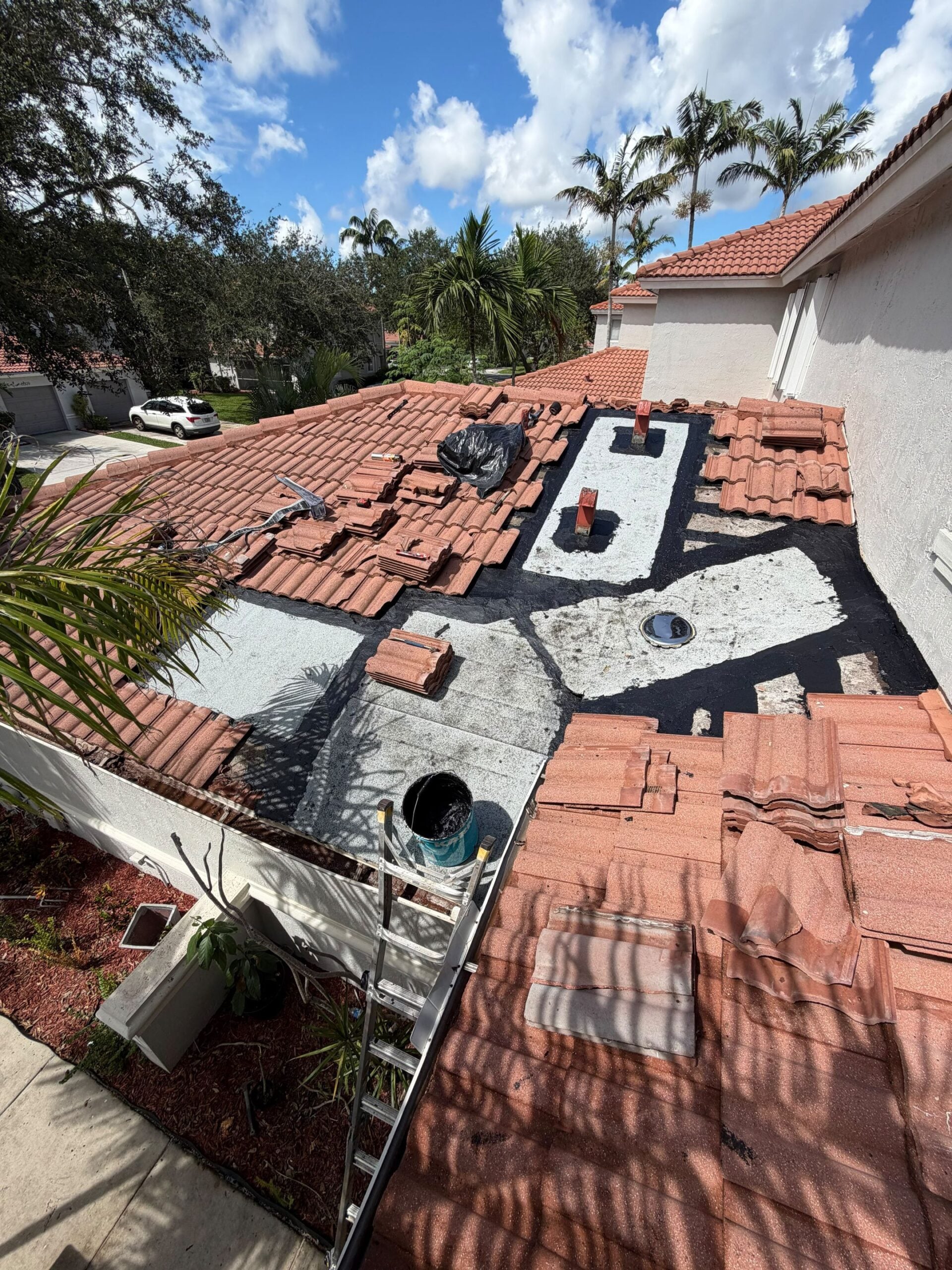
This emergency roof tarp installation was completed for insurance mitigation at a single-family home in Miami Lakes, Florida. The active leak was at the connection between a built-up modified flat roof and an exterior wall. BLU Roofing installed a large, heavy-duty 10-mil tarp over the affected area using a non-penetrating method designed to provide temporary protection while the insurance claim and related case were being handled.
Quick Summary
BLU Roofing inspected and temporarily protected an actively leaking roof-to-wall connection on a built-up modified flat roof in Miami Lakes. The work included installing a 36-inch-wide strip of peel-and-stick membrane several inches up the wall and securing it with tape, then covering the affected area with a heavy-duty 10-mil tarp. Rolled furring strips were placed around the tarp perimeter and held down with 50-pound sandbags. No nails, screws, staples, or other fasteners penetrated the roof. The homeowner reported no further leaking for approximately five weeks after installation.
Table of Contents
- Project Facts
- Why the Tarp Was Needed
- Inspecting the Active Leak
- Temporary Roof Protection at the Wall
- Non-Penetrating Tarp Installation
- Insurance Mitigation Documentation
- Service Area Note
Project Facts
| Project location | Miami Lakes, Florida |
| Property | Single-family home |
| Roof system | Built-up modified flat roof connected to a tile roof area |
| Confirmed problem | Active water entry at the connection between the flat roof and exterior wall |
| Purpose | Temporary roof protection for insurance mitigation |
| Membrane detail | Approximately 36-inch-wide peel-and-stick membrane installed several inches up the wall and taped |
| Tarp | Large heavy-duty 10-mil tarp |
| Perimeter system | Rolled furring strips and 50-pound sandbags |
| Installation method | Non-penetrating, with no nails, screws, staples, or other roof fasteners |
| Timeline | Inspection and installation completed during one visit |
| Reported result | No reported leaking for approximately five weeks after installation |
Why the Tarp Was Needed
The homeowner had an active leak at the point where the rear flat roof met the exterior wall. If rain occurred before permanent roof work could be completed, water could continue entering through that roof-to-wall connection. The immediate goal was not to perform a permanent roof replacement or represent the tarp as a final repair. The goal was to reduce additional water exposure while the insurance claim and related case were being handled.
The referral came through a public adjusting firm. The insurance claim process was already underway, and adjusters and engineers had been involved. Because the roof condition was part of an ongoing claim and litigation, the temporary protection and supporting documentation were important parts of the mitigation work.
Inspecting the Active Leak
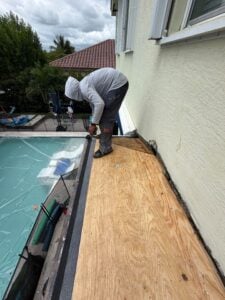
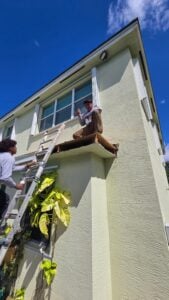
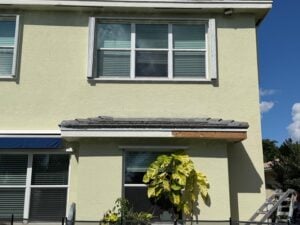
BLU Roofing inspected the roof area before installing the temporary protection. The affected section was a built-up modified roof that was holding water. The water-entry vulnerability was at the transition where the flat roof met the wall. Based on the condition observed, the temporary protection needed to cover the transition and manage water from the wall side of the detail.
The work was completed on a dry visit rather than during active rainfall. The leak itself was active, meaning rain would have allowed water to enter the home, but the installation was scheduled when the roof could be accessed and protected safely.
The completed installation also had to account for the nearby tile roof surface. Thin, lightweight tarps can tear when they are dragged across or weighted on roofing materials, especially around tile profiles. A heavy-duty 10-mil tarp was selected for this temporary application.
Temporary Roof Protection at the Wall
Before the tarp was placed, BLU Roofing installed a 36-inch-wide strip of peel-and-stick membrane at the wall. The membrane extended several inches up the wall and was taped off. This helped cover the immediate roof-to-wall transition before the larger tarp was positioned over the affected area.
The peel-and-stick membrane was part of the temporary mitigation assembly. It was not presented as a permanent reconstruction of the built-up roof system. The tarp remained the primary temporary covering, while the wall membrane helped address the vulnerable transition underneath it.
Non-Penetrating Tarp Installation
The tarp was installed without driving fasteners through the roof. No nails, screws, staples, or similar penetrations were used. Instead, the tarp perimeter was rolled up around furring strips. The furring strips were placed around the full perimeter and held down with 50-pound sandbags.
This arrangement helps keep the tarp perimeter in place without creating additional holes in the roof membrane. The sandbags were positioned over the rolled furring strips so the perimeter remained weighted down if the area experienced wind or heavy rain. The method was selected for temporary protection and was not intended to replace permanent roof repairs.
Because the tarp covered an active roof leak, the installation needed to protect the wall transition while also avoiding unnecessary disturbance to the existing roof. The result was a temporary, non-invasive covering that could remain in place while the insurance-related process continued.
Insurance Mitigation Documentation
BLU Roofing completed the inspection and tarp installation during one visit. The homeowner did not have an out-of-pocket charge for this mitigation work. BLU Roofing billed the insurance carrier and submitted the work documentation to the attorneys handling the case.
The property is located in an HOA, but no permit was required for this temporary tarp installation. The work was performed by one person, and the property was left clean after the installation.
The homeowner later reported that the area had not leaked for approximately five weeks after the tarp was installed. That result is a field report about the temporary covering during that period. It is not a guarantee of future performance and does not change the temporary nature of the installation.
Service Area Note
Miami Lakes is outside BLU Roofing’s normal roofing service area, which primarily includes Palm Beach County, Martin County, and Broward County. This project came through an existing professional relationship with a public adjusting firm, so BLU Roofing was able to assist with this specific insurance-mitigation need.
For homeowners outside the normal service area, the best first step is to contact BLU Roofing and describe the situation. If the project is not practical for BLU Roofing to handle directly, Peter can refer the homeowner to qualified roofing professionals in the appropriate area when possible. BLU Roofing’s roof repair service page provides additional information about the inspection and repair work typically handled within the regular service area.
This emergency roof tarp installation was a temporary protection measure for a documented active leak. A tarp can help reduce additional water exposure while a claim or permanent repair is being addressed, but it should not be confused with a completed roof repair or replacement.
Written By: Peter Menke
Peter Menke is the owner of BLU Roofing and has been serving the South Florida roofing industry for over 6 years. He founded BLU Roofing to provide homeowners with transparent, accurate information grounded in real Florida roofing conditions and building practices. License #CCC1337285.
BLU Roofing provides roof inspections, repairs, restoration, and replacement for shingle, tile, metal, and flat or low-slope roof systems across Palm Beach, Martin, and Broward Counties.