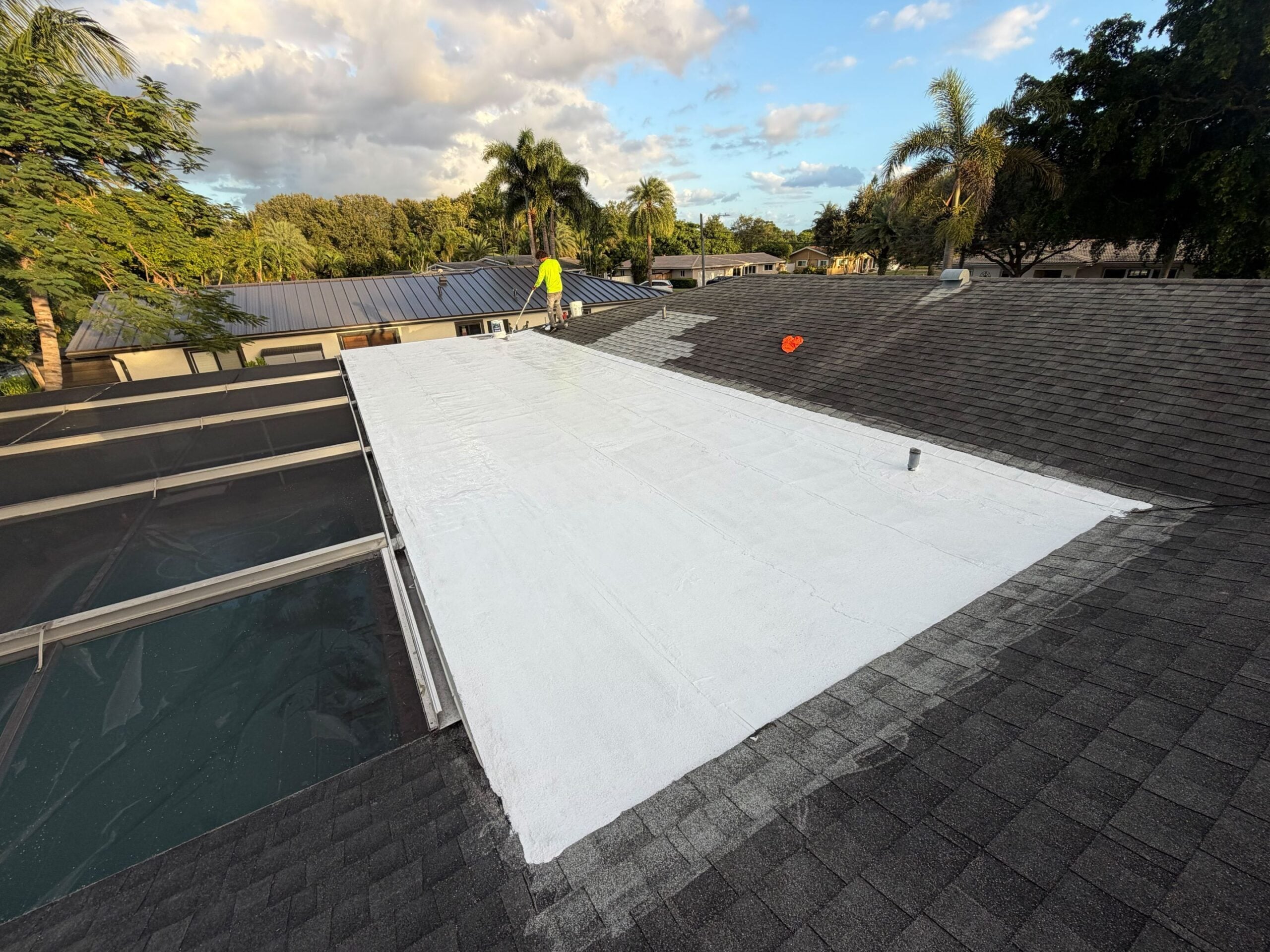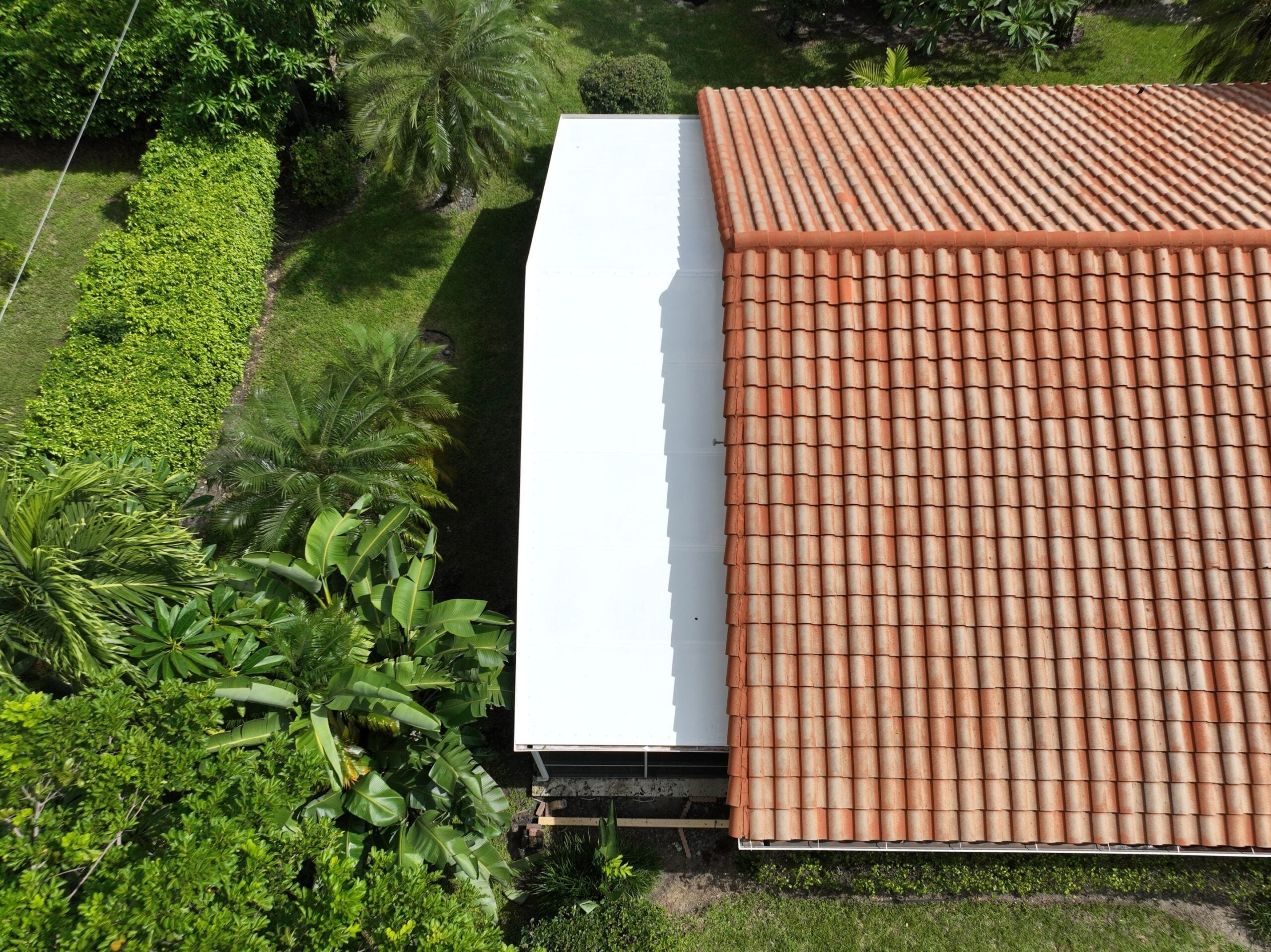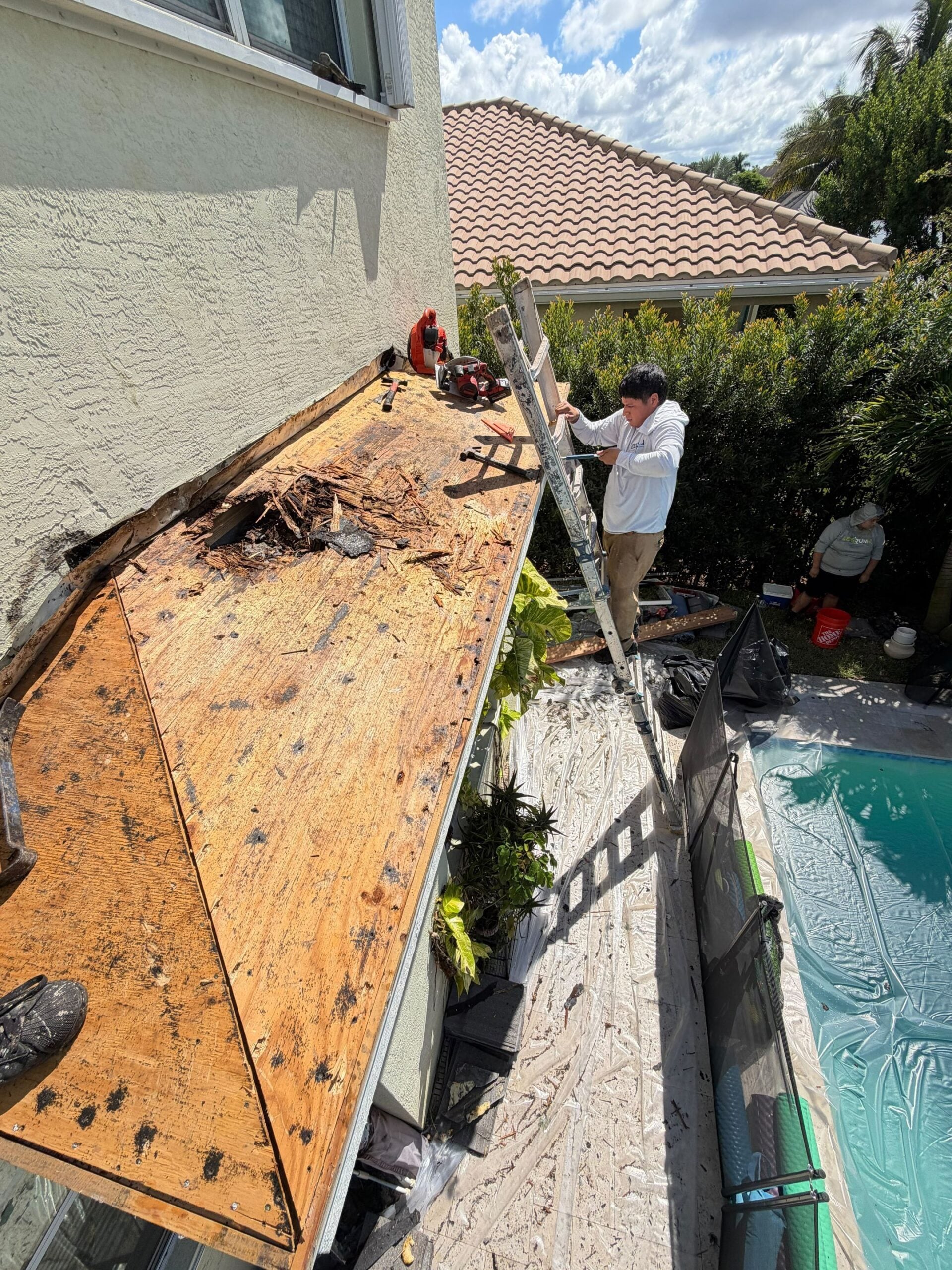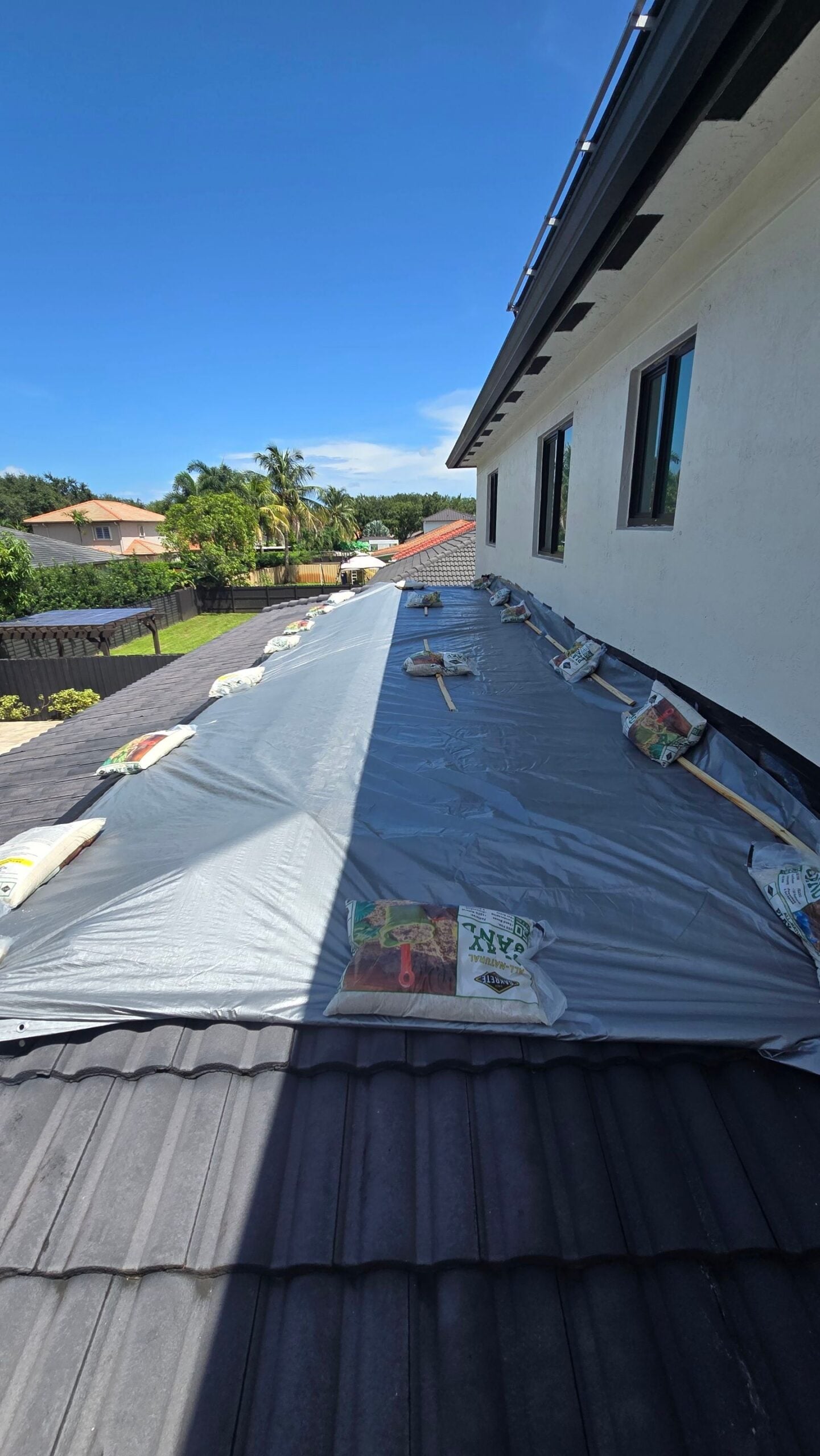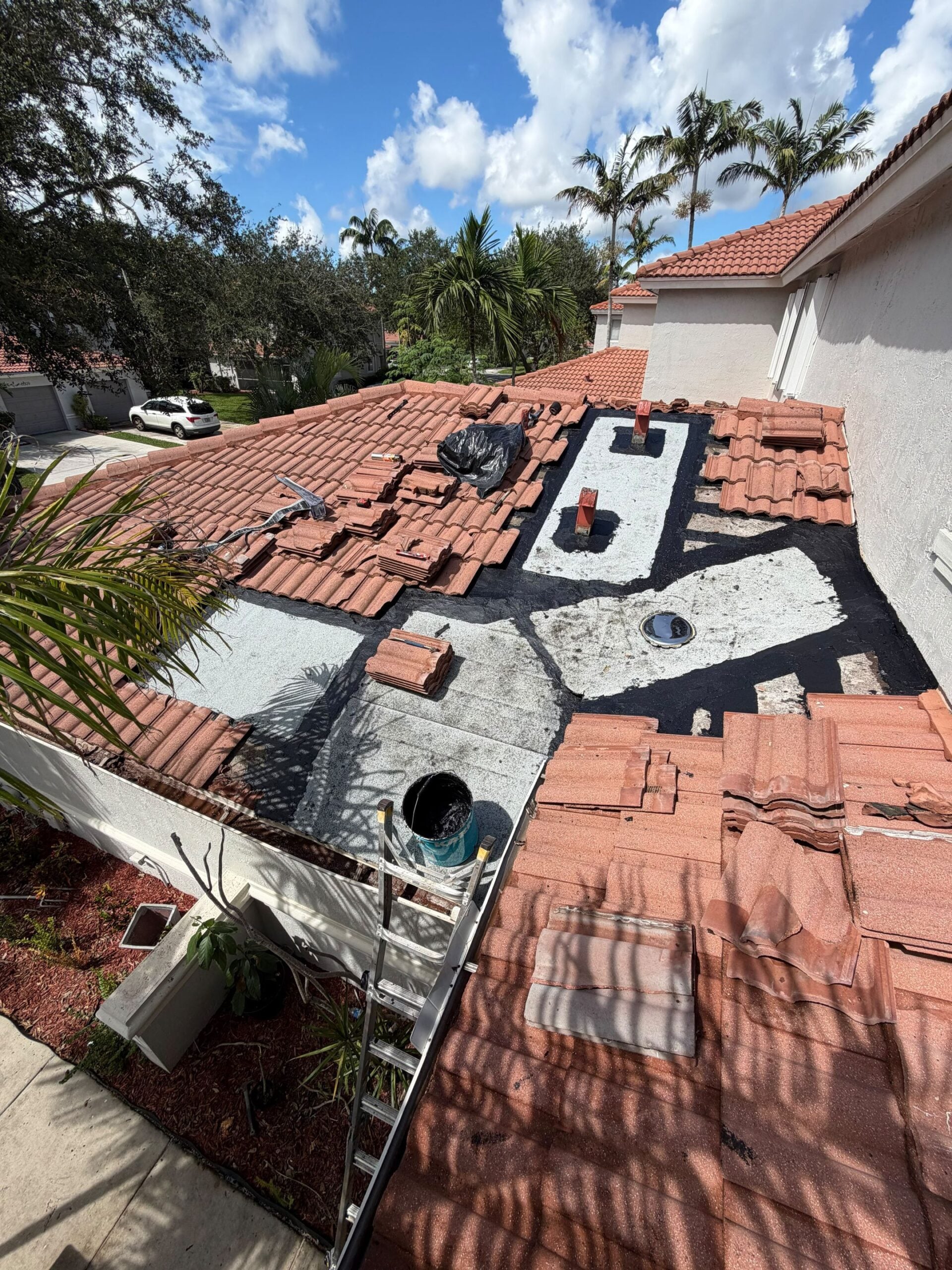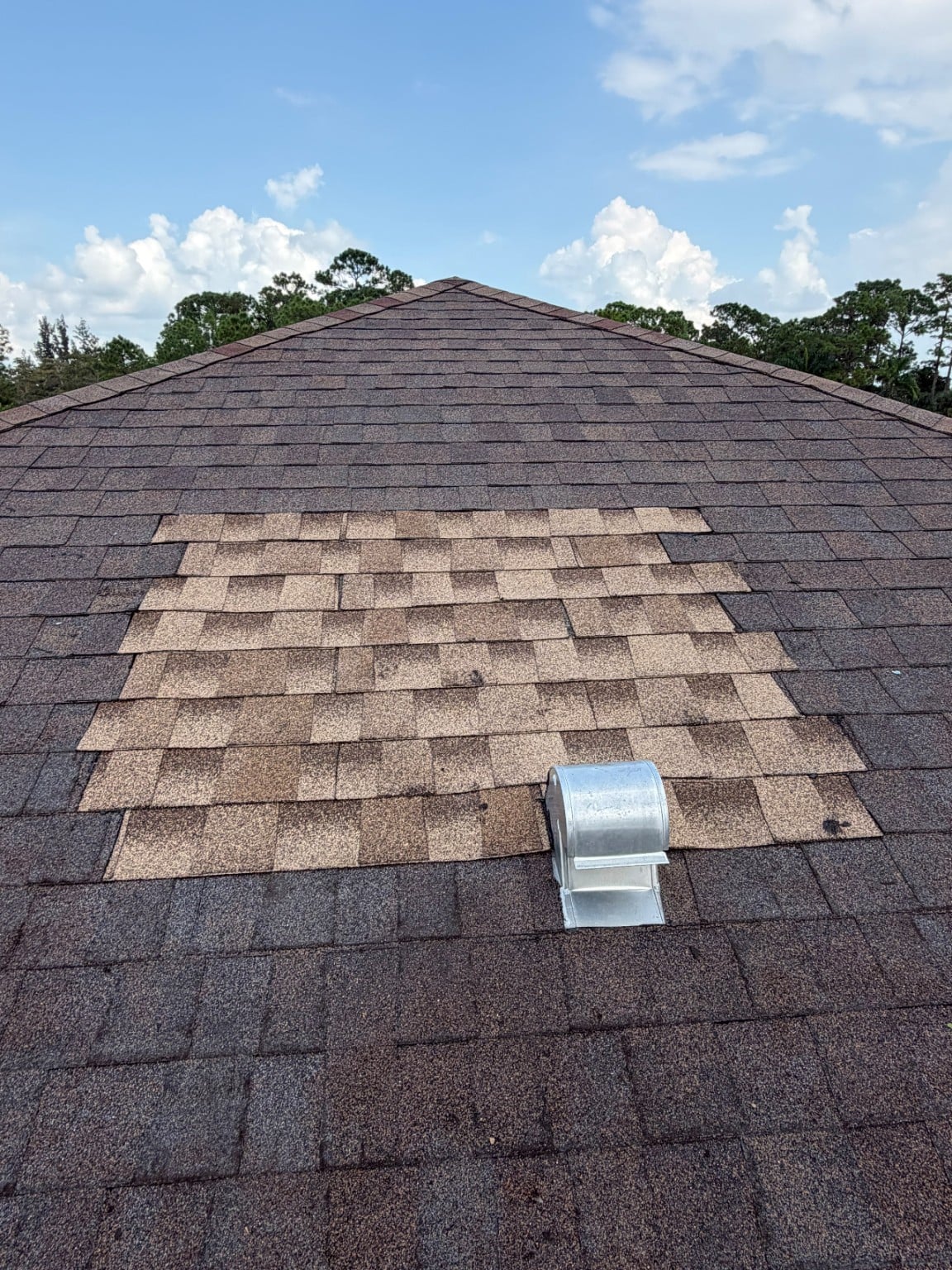
This West Palm Beach tile roof repair was completed on a small concrete tile eyebrow roof at a home in the gated PortoSol community, ZIP code 33411. The homeowner noticed water coming through a kitchen light, and an interior restoration company used an infrared moisture scan to identify where moisture was present in the wall. The scan pointed to the rear eyebrow roof, where BLU Roofing found a significant area of deteriorated plywood and a separate rotted fascia section.
Quick Summary
BLU Roofing repaired a leaking concrete tile eyebrow roof in PortoSol, West Palm Beach. The approximately 12-year-old roof had a small interior leak but a much larger area of damaged plywood than expected, along with rotted cedar fascia at the right corner. The crew removed and reused the concrete tiles, replaced the damaged decking and fascia, installed a six-inch peel-and-stick perimeter strip, new white drip edge, eave enclosure, and CertainTeed SA granulated cap sheet, then reinstalled the tiles with ICP Polyset AH-160 adhesive foam and color-matched mortar. The pool and patio were fully protected during the work.
Table of Contents
- Project Facts
- How the Leak Was Located
- Opening the Eyebrow Roof
- Replacing the Decking and Cedar Fascia
- Rebuilding the Roof System
- Protecting the Pool and Patio
- Completion and Follow-Up
Project Facts
| Community | PortoSol, West Palm Beach, Florida 33411 |
| Property | Single-family home in a gated community |
| Roof section | Small rear concrete tile eyebrow roof overhang |
| Approximate roof age | Approximately 12 years |
| Interior symptom | Water coming through a kitchen light |
| Leak location | Middle-to-left side of the rear eyebrow roof |
| Wood repairs | Damaged roof decking and the entire right corner of the cedar fascia |
| Underlayment | CertainTeed SA granulated cap sheet over a six-inch perimeter peel-and-stick membrane strip |
| Edge details | New white drip edge and eave enclosure, also called bird stop |
| Tile installation | Existing tiles reused and reset with ICP Polyset AH-160 adhesive foam |
| Timeline | Full-day repair with Peter, two crew members, and one helper |
| Follow-up | Completed almost one month before publication, with substantial rain and no callbacks reported |
How the Leak Was Located
The homeowner noticed water coming through a kitchen light. An interior restoration company that has worked with BLU Roofing for years was involved first and used an infrared moisture scan to identify where moisture was present in the wall. The scan helped point the investigation toward the small rear eyebrow roof overhang.
There was no attic in this roof section, so an attic inspection was not possible. A hose test was not needed because the moisture scan identified the affected area and the roof condition could be inspected directly. The leak was on the middle-to-left side of the eyebrow roof.
BLU Roofing’s roof repair service focuses on tracing the actual water-entry area and determining what must be opened to complete the repair correctly. In this case, the visible interior symptom was small, but the roof opening showed that the underlying damage was more extensive than the kitchen leak suggested.
Opening the Eyebrow Roof
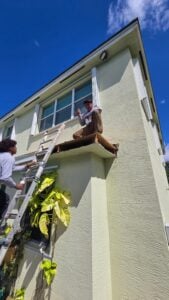
To repair the leak properly and replace the fascia, the crew removed the concrete tiles and the existing underlayment system down to the roof decking. The team worked carefully and successfully removed the tiles without breaking them, allowing the existing tile to be reused.
The roof was approximately 12 years old, so the tile covering was still suitable for reuse. The damaged area was not a reason to replace the entire main roof. Instead, the small eyebrow roof section was opened so the decking, fascia, perimeter edge, and underlayment could be inspected and rebuilt.
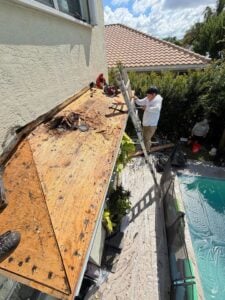
The crew was surprised by the size of the damaged plywood area compared with the relatively small amount of water that had entered the kitchen. A small interior leak does not always indicate a small roof problem. Water can travel through a roof assembly and continue affecting the decking before the interior symptom becomes obvious.
Replacing the Decking and Cedar Fascia
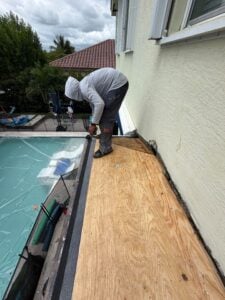
The deteriorated plywood was cut out and replaced with new roof decking. The new decking was nailed according to the applicable requirements for the repair. The damaged fascia was also removed from the entire right corner of the eyebrow roof and replaced with cedar.
The fascia repair was part of the reason the entire small roof section needed to be opened. Replacing the fascia while leaving the surrounding roof system closed would not have allowed the damaged edge and adjacent decking to be properly inspected. Completing both repairs together allowed the crew to rebuild the roof edge as one connected system.
Rebuilding the Roof System
Once the damaged plywood and fascia were replaced, BLU Roofing rebuilt the roof system in sequence:
- A six-inch-wide peel-and-stick membrane strip was installed around the roof edge as added protection beneath the drip edge.
- New white drip edge was installed over the perimeter membrane strip.
- The drip edge was primed before the next membrane layer was applied.
- CertainTeed SA granulated cap sheet was installed as the new tile-roof underlayment.
- The new underlayment was integrated with the existing roof-to-wall flashing, which was in excellent condition.
- The separate eave enclosure, also called bird stop, was reinstalled along the eave.
- The existing concrete tiles were placed back in position with ICP Polyset AH-160 two-part polyurethane adhesive foam.
- Color-matched mortar was installed to finish the tile details and match the existing roof.
The eave enclosure includes small weep openings that allow water beneath the tile covering to escape at the eave. Concrete tile is water-shedding rather than the primary waterproofing layer, so the underlayment and properly detailed edge components are important parts of the roof system beneath the tiles.
The roof-to-wall flashing did not need to be replaced. It was inspected and found to be in excellent condition, so the new repair was tied into the existing flashing rather than disturbing a sound component unnecessarily.
Protecting the Pool and Patio
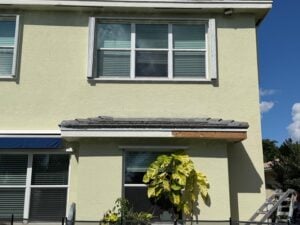
The eyebrow roof was directly above a pool and patio area, so the crew protected the entire pool and the patio below before removing tile, decking, fascia, and underlayment. This preparation helped contain roofing debris and protect the homeowner’s property while the work was underway.
Protection is especially important when a localized tile roof repair is performed above a pool, patio, landscaping, or other finished areas. The work area was cleaned carefully after the roof and fascia repairs were completed.
Completion and Follow-Up
This was a full-day repair completed with Peter, two crew members, and one helper. The work was scheduled for a sunny day, and the weather cooperated. The completed roof section was checked, the existing tiles were successfully reused, and the property was cleaned before the crew left.
The repair was completed almost one month before this Project Spotlight was prepared. The area has received substantial rain since the work was finished, and there have been no callbacks.
PortoSol repairs of this type did not require HOA approval, and a permit was not required for this localized repair. The work addressed a specific eyebrow roof section rather than replacing the home’s entire concrete tile roof.
This West Palm Beach tile roof repair shows why a small interior leak can require a broader roof opening. Once the tiles were removed, BLU Roofing could inspect the decking and fascia, replace the damaged wood, protect the roof edge, reconnect the new underlayment to sound existing flashing, and reinstall the tile covering as part of a complete repair.
For homeowners comparing repair and replacement options, BLU Roofing’s broader roofing service information explains the types of shingle, tile, metal, and flat or low-slope roofing work provided across South Florida.
Written By: Peter Menke
Peter Menke is the owner of BLU Roofing and has been serving the South Florida roofing industry for over 6 years. He founded BLU Roofing to provide homeowners with transparent, accurate information grounded in real Florida roofing conditions and building practices. License #CCC1337285.
BLU Roofing provides roof inspections, repairs, restoration, and replacement for shingle, tile, metal, and flat or low-slope roof systems across Palm Beach, Martin, and Broward Counties.