
Roofing Resources for Homeowners in South Florida
Practical roofing guidance for homeowners dealing with repairs, replacements, and real-world issues in South Florida.
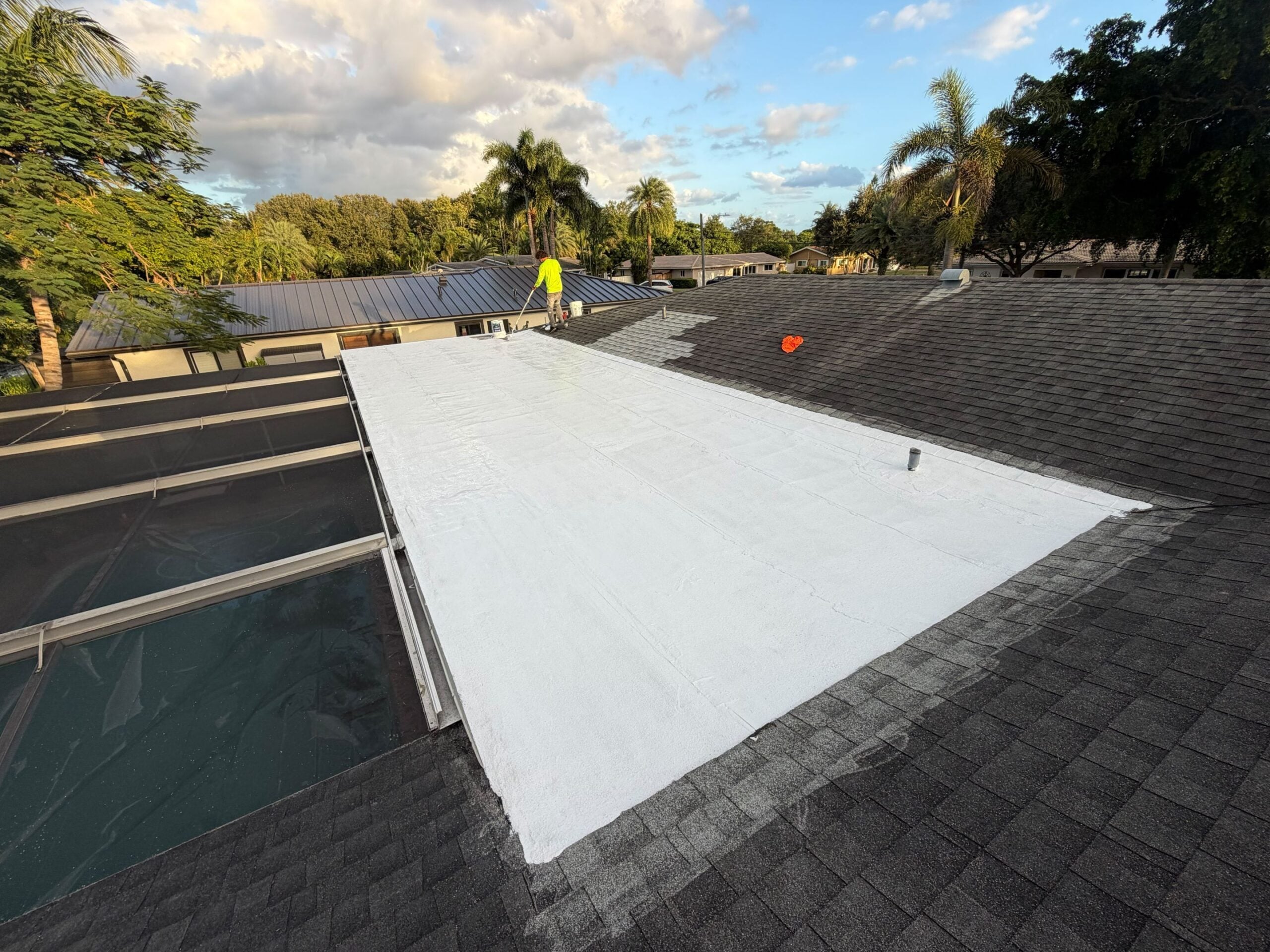

Plantation Silicone Roof Coating: Secluded Gardens Pool Patio Project
This Plantation silicone roof coating project addressed a leaking pool-patio roof in Plantations Secluded Gardens, also listed in some records as Plantations Secluded Gard, in
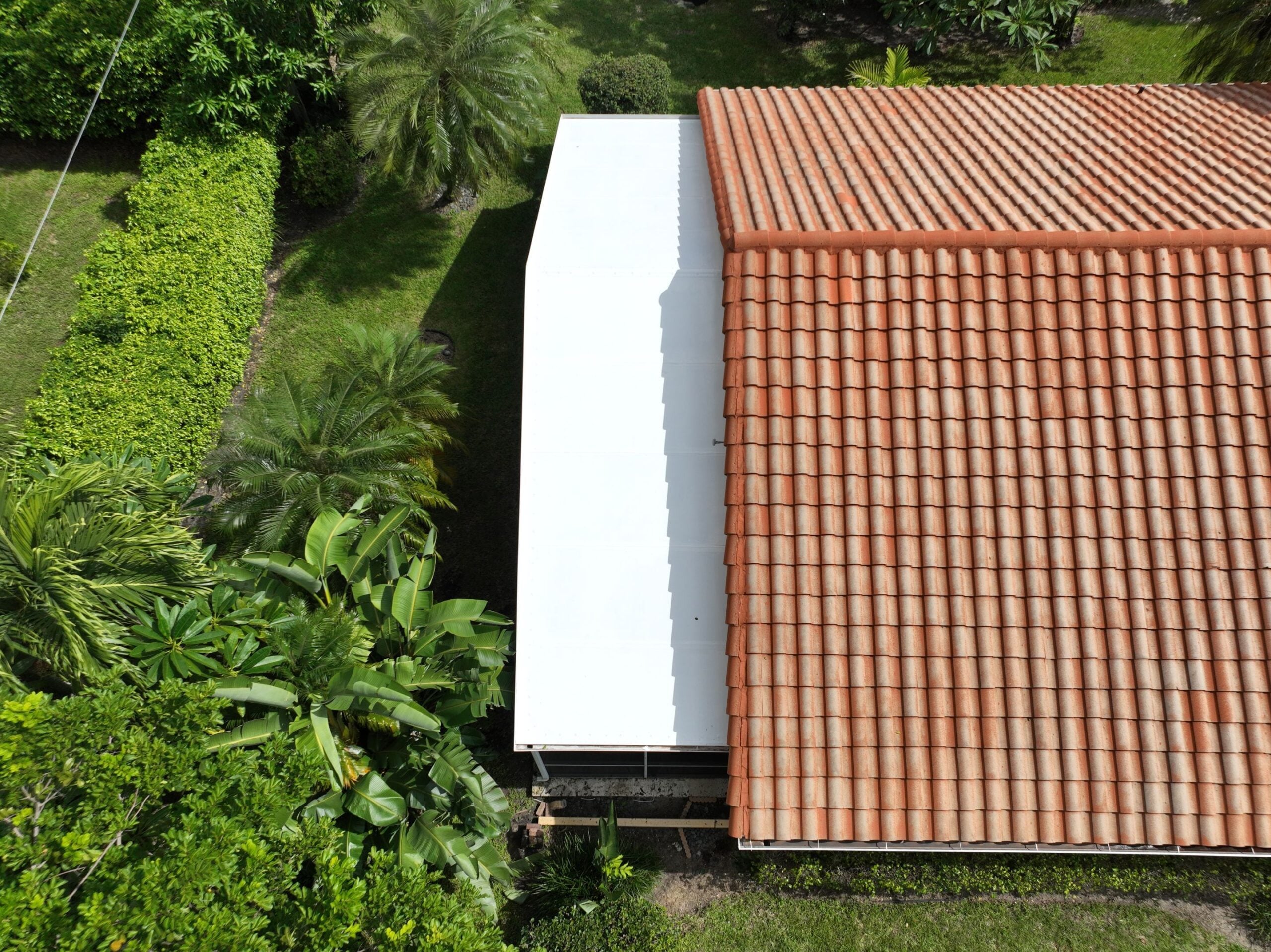
Delray Beach Silicone Roof Coating: Colombo Court Patio Roof Restoration
This Delray Beach silicone roof coating project restored an approximately 400 to 500 square-foot aluminum-panel patio roof at a home in the Bel Air community,
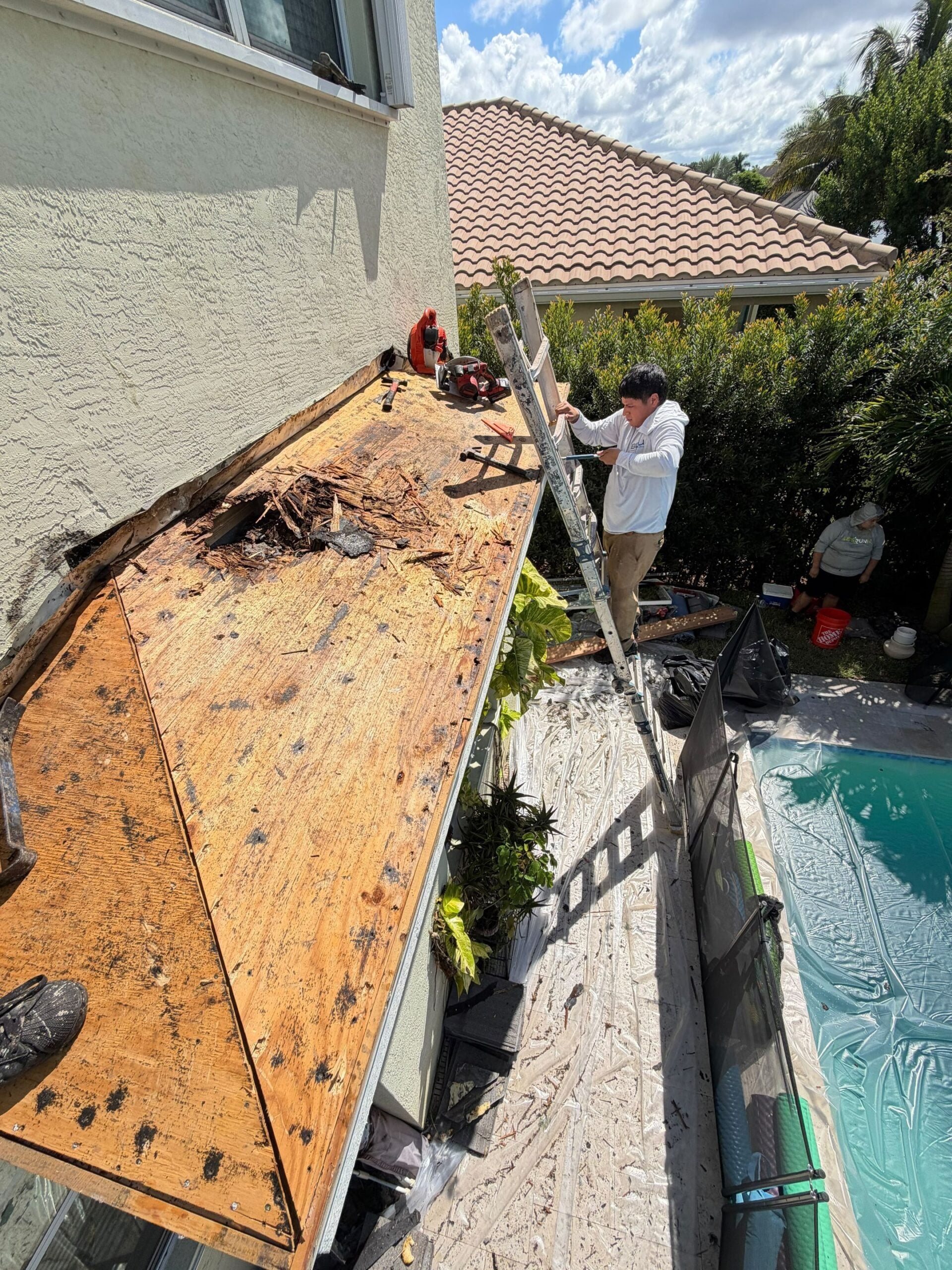
West Palm Beach Tile Roof Repair: PortoSol Eyebrow Roof Repair
This West Palm Beach tile roof repair was completed on a small concrete tile eyebrow roof at a home in the gated PortoSol community, ZIP
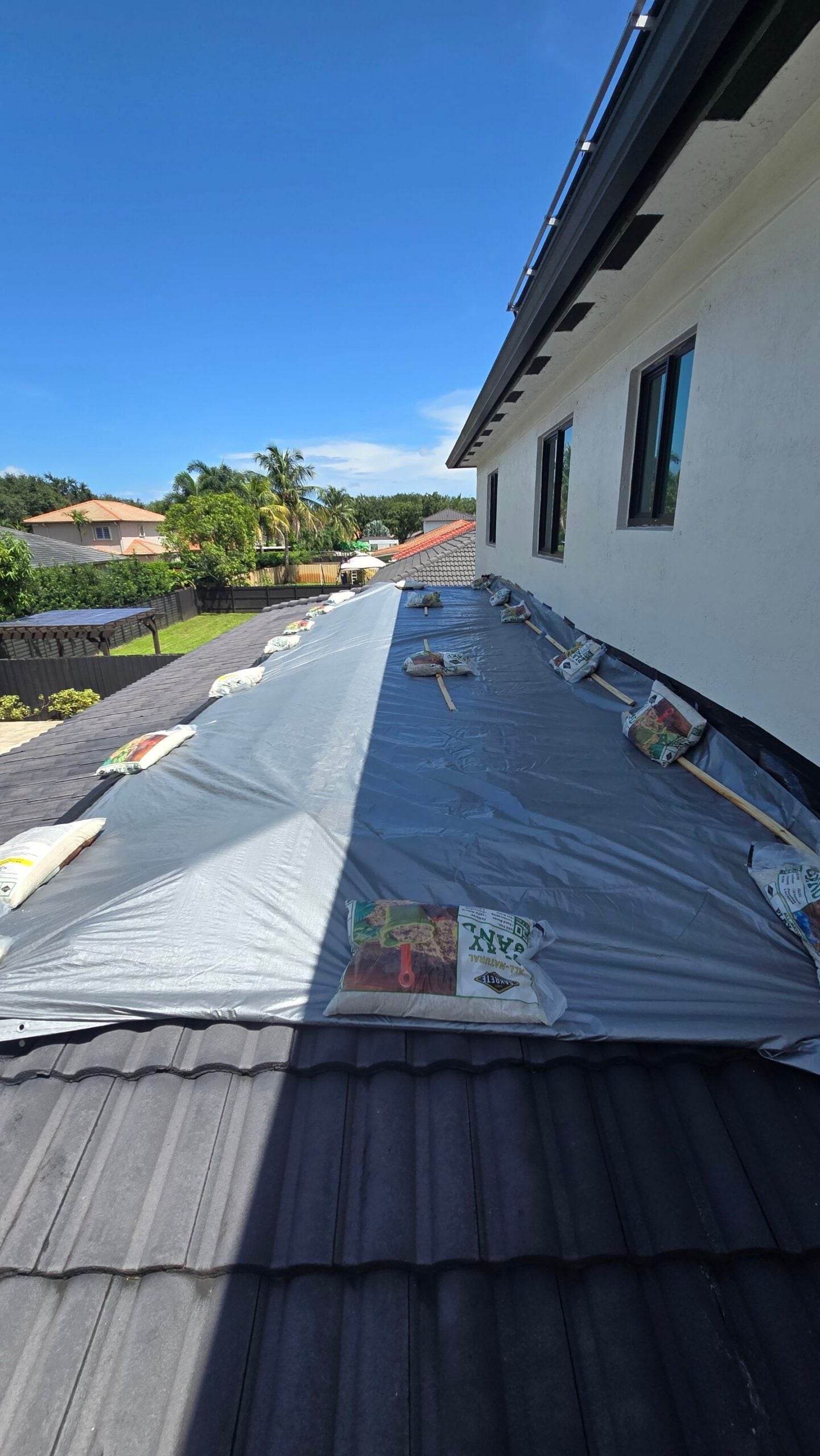
Emergency Roof Tarp Installation for Insurance Mitigation
This emergency roof tarp installation was completed for insurance mitigation at a single-family home in Miami Lakes, Florida. The active leak was at the connection
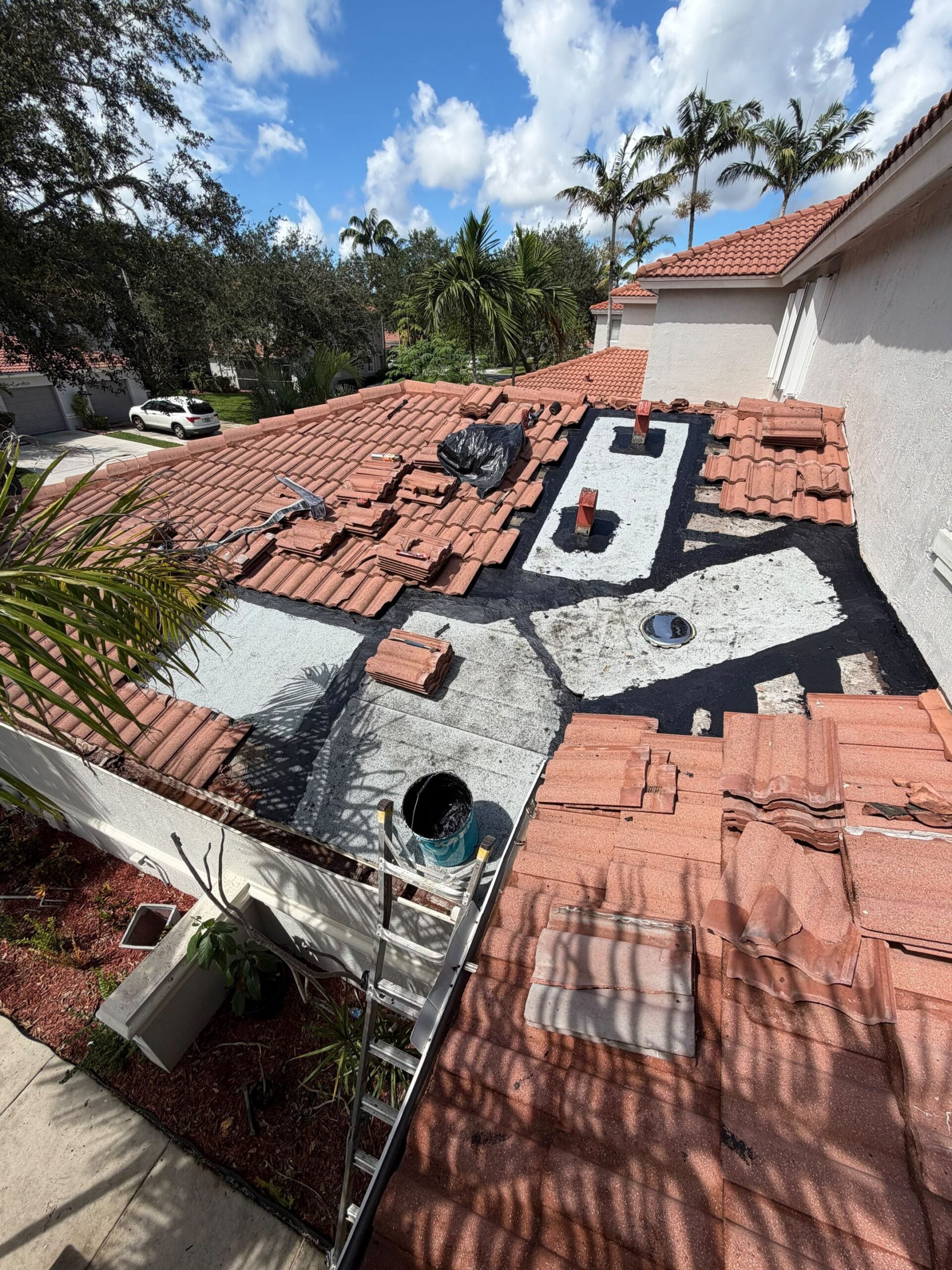
Riviera Beach Tile Roof Repair: Multiple Leaks at a Turtle Cay Townhouse
This Riviera Beach tile roof repair addressed multiple leak areas on a concrete tile townhouse roof in Turtle Cay, Riviera Beach, Florida. The rental property
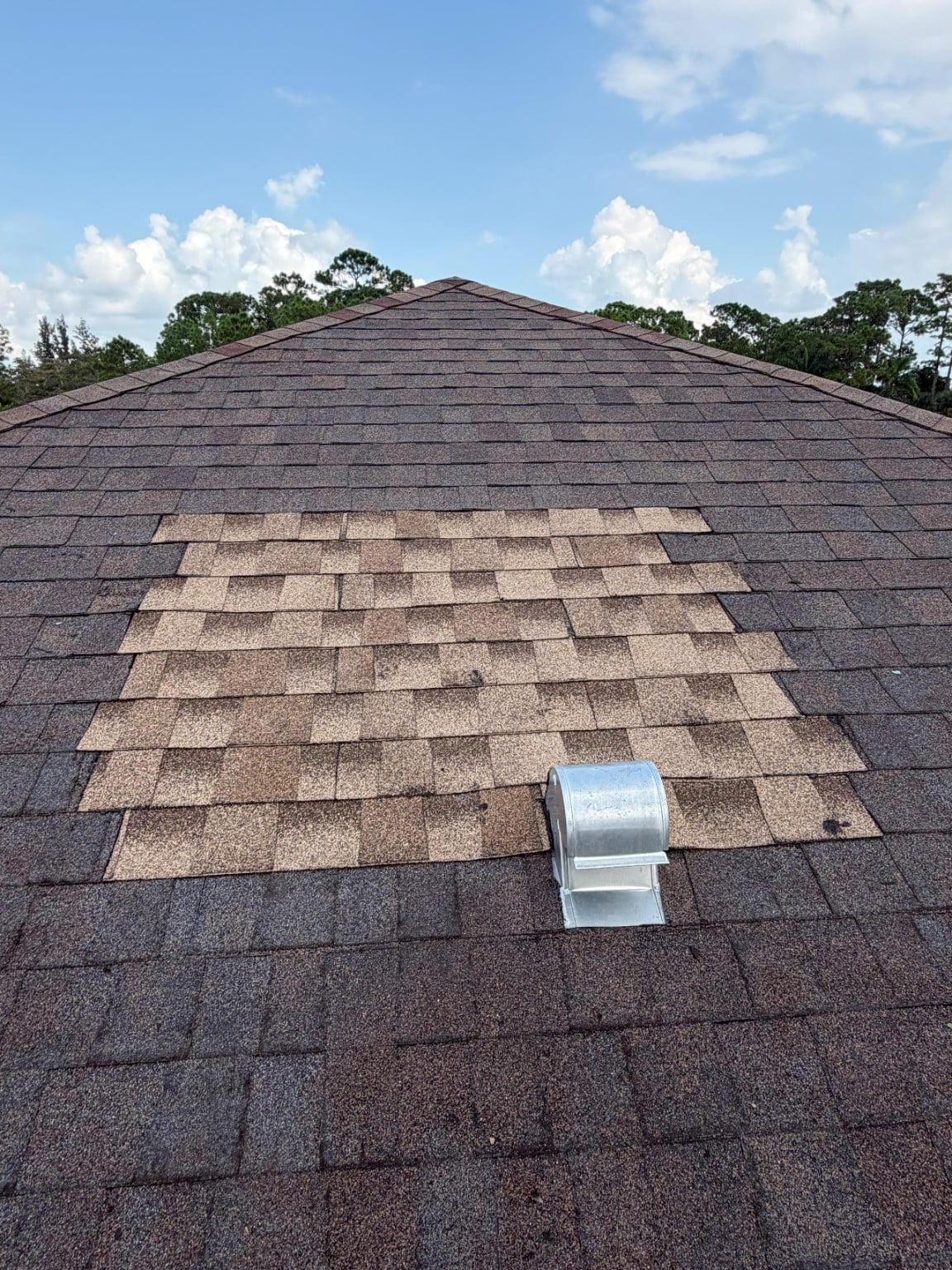
Heritage Farms Shingle Roof Repair: Finding a Leak in a Spray-Foam Attic
This Heritage Farms shingle roof repair involved a difficult-to-locate leak on an eight-year-old asphalt shingle roof in the Heritage Farms equestrian community near Lake Worth
Quick Summary
Roof repair costs in West Palm Beach typically range from $700 for minor ridge cap fixes to over $3,500 for complex valley leak repairs. Because the city features a mix of historic Mediterranean Revival homes and modern coastal properties, repair costs vary heavily based on material matching and wind mitigation requirements. Always ensure your contractor pulls the necessary permits through the City of West Palm Beach Development Services.
When a severe afternoon thunderstorm rolls off the Atlantic and exposes a leak in your roof, the immediate question is always about cost. In West Palm Beach, roof repair pricing is rarely a one-size-fits-all number.
The city’s diverse architecture, ranging from historic Mediterranean Revival estates in El Cid to modern CBS homes in the western suburbs, means that repairing a roof requires specific local expertise. Furthermore, West Palm Beach’s location in a High-Velocity Hurricane Zone (HVHZ) dictates strict building codes that affect how repairs must be executed.
Based on our 2026 project data at BLU Roofing, the most common repairs in West Palm Beach involve slipped concrete tiles, deteriorated underlayment in roof valleys, and flashing failures around vents. Here is a detailed breakdown of what you can expect to pay for roof repairs in West Palm Beach this year.
Average Roof Repair Costs in West Palm Beach (2026)
The cost of your repair will depend heavily on the type of material on your roof and the extent of the water damage beneath the surface. Below are the typical cost ranges for the most common roof repairs in Palm Beach County.
| Type of Roof Repair | Typical Cost Range | What It Includes |
|---|---|---|
| Emergency Roof Tarping | $700 – $2,500 | Securing the roof immediately after a storm to prevent further interior water damage. |
| Ridge Cap Repair | $700 – $1,500 | Re-securing or replacing the mortar and tiles along the peak of the roof, common after high wind events. |
| Fascia and Soffit Repair | $700 – $2,000 | Replacing rotted wood at the roof’s overhang, usually caused by clogged gutters or edge leaks. |
| Underlayment Patching | $1,500 – $2,500 | Removing tiles or shingles to replace a section of failed waterproofing membrane. |
| Flashing Replacement | $1,500 – $3,000+ | Resealing the vulnerable areas around chimneys, skylights, and roof-to-wall transitions. |
| Valley Leak Repair | $2,000 – $3,500 | Rebuilding the metal valley and surrounding underlayment where two roof slopes meet. |
Note: Individual tile replacement typically costs $50 to $60 per tile, though most licensed roofing contractors have a minimum trip charge for small repairs.
Factors That Increase Repair Costs in West Palm Beach
Several local factors can push your repair costs toward the higher end of the spectrum.
1. Historic Material Matching
If you live in one of West Palm Beach’s historic districts, such as Flamingo Park or Grandview Heights, your roof likely features specific clay tile profiles. Sourcing reclaimed or custom-matched tiles to satisfy the Historic Preservation Board is significantly more expensive than buying standard concrete tiles off the shelf.
2. The Coastal Salt Air Factor
For homes located east of Olive Avenue or near the Intracoastal Waterway, salt spray corrosion is a constant threat. If your home has a metal roof or exposed metal flashing, standard galvanized steel will rust quickly in this environment. Repairs in these coastal zones often require upgrading to aluminum or stainless steel components, which increases material costs.
3. Hidden Decking Damage
A roof leak rarely stays isolated to the surface. By the time water stains appear on your ceiling, the plywood decking beneath the roof has likely been soaking up moisture for weeks. Replacing rotted plywood is a common hidden cost that cannot be fully assessed until the roof is opened up.
The 25 Percent Rule: Repair vs. Replace
Florida building codes include a strict regulation known as the 25 Percent Rule. If a roof repair encompasses more than 25 percent of the total roof area within a 12-month period, the entire roof must be replaced to bring it up to current HVHZ standards.
If your roof is an architectural shingle roof older than 15 years, or a tile roof older than 20 years, investing thousands of dollars into a repair is often a poor financial decision. The underlayment across the rest of the roof is likely nearing the end of its useful life, meaning another leak is imminent. In these cases, a full roof replacement is the more cost-effective long-term solution.
Permitting Requirements for Roof Repairs
Do not let a contractor tell you that a permit is not required for a roof repair. In West Palm Beach, significant repairs require a permit pulled through the City of West Palm Beach Development Services Department (wpb.org).
Having a finalized permit protects you when it comes time to sell your home. Savvy buyers and their inspectors will check the city’s permit portal, and unpermitted roofing work can derail a real estate transaction or force you to pay for the repair twice.
Frequently Asked Questions
Will my homeowners insurance cover the cost of a roof repair?
If the damage was caused by a sudden, covered peril, such as a fallen tree branch or a severe windstorm, your insurance may cover the repair. However, if the leak is due to age, wear and tear, or lack of maintenance, the cost will be entirely out of pocket.
How long does a typical roof repair take?
Most standard roof repairs, such as fixing a valley leak or replacing flashing, can be completed in one to two days once the materials are secured and the permit is approved.
Can you match the color of my faded roof tiles?
Contractors can source tiles from the same manufacturer and product line, but an exact color match is nearly impossible. The sun in South Florida causes significant UV fading over time, meaning new tiles will almost always look slightly different than the surrounding older tiles.
Get a Free Roof Estimate in West Palm Beach
If you have noticed water stains on your ceiling or found broken tiles in your yard, do not wait for the next storm to take action. BLU Roofing provides honest, transparent assessments of roof damage. We will tell you exactly what needs to be fixed and whether a repair or a full replacement makes the most financial sense. Contact us today to schedule a free roof estimate in West Palm Beach.
Written By: Peter Menke
Peter Menke is the owner of BLU Roofing and has been serving the South Florida roofing industry for over 6 years. He founded BLU Roofing to provide homeowners with transparent, accurate data grounded in the reality of Florida’s unique climate and building codes, information that is often missing from generic national roofing advice. License #1337285
Quick Summary
Choosing a roofing contractor in West Palm Beach requires verifying local experience, not just a state license. You need a roofer who understands the City of West Palm Beach, the permit process, historic preservation board requirements in neighborhoods like El Cid, and the specific wind mitigation codes for coastal properties. Always demand a written estimate, verify workers’ compensation insurance, and check for a physical local presence.
West Palm Beach is a uniquely complex roofing market. The city features historic districts with strict preservation boards, modern high-rises, and sprawling suburban neighborhoods, all packed into a High-Velocity Hurricane Zone (HVHZ).
Because the housing stock is so diverse, hiring a roofing contractor in West Palm Beach requires more diligence than simply picking the first name that appears on Google. A contractor who excels at slapping shingles on a new build in Wellington might be completely unqualified to restore a 1920s clay tile roof in El Cid or navigate the coastal wind requirements for a home near Flagler Drive.
Based on our 2026 project data at BLU Roofing, the most common reason West Palm Beach roofing projects face delays is contractors failing to properly navigate the local permitting and historic review processes. Here is exactly how to find a qualified roofing contractor in West Palm Beach, FL, and what to verify before you sign a contract.
1. Verify Their Florida License and Local Experience
The first step is non-negotiable: verify the contractor’s license. Florida requires roofing contractors to hold either a Certified Roofing Contractor (CCC) license (statewide) or a Registered Roofing Contractor license (county-specific). You can check this instantly on the Florida Department of Business and Professional Regulation (DBPR) website.
However, a license only proves they passed a test. You also need to verify their local experience in West Palm Beach. A contractor from Orlando might be licensed, but they likely do not understand the nuances of West Palm Beach’s historic districts or the specific requirements of the city’s building department. Look for a company with a verifiable history of completed projects in your specific neighborhood.
2. Check Their Permitting Track Record
In West Palm Beach, roofing permits are pulled through the City of West Palm Beach Development Services Department (wpb.org). A reputable local contractor will have an established relationship with this office and understand exactly what documentation is required for a smooth approval.
Ask the contractor how many permits they have successfully closed in West Palm Beach over the past year. A contractor who frequently works in the city will know that West Palm Beach inspectors are particularly strict about roof-to-wall connection documentation and secondary water resistance (SWR) underlayment inspections.
3. Confirm Insurance Coverage (General Liability and Workers’ Comp)
A legitimate roofing contractor must carry two types of insurance:
- General Liability Insurance: This protects your property if the contractor causes damage during the project, such as dropping a bundle of shingles on your AC unit.
- Workers’ Compensation: This covers the contractor’s employees if someone is injured on your roof.
Do not just take their word for it. Ask for certificates of insurance and verify that the coverage is current. If a worker is injured on your property and the contractor does not have workers’ comp, you can be held financially liable.
4. Ask About Their Experience with Historic Preservation Boards
If you live in one of West Palm Beach’s historic districts, such as El Cid, Flamingo Park, or Grandview Heights, your roofing project will require approval from the Historic Preservation Board before work can begin. This process often involves submitting material samples, color swatches, and detailed project plans to ensure the new roof matches the historical character of the home, which often features Mediterranean Revival architecture.
A contractor experienced in West Palm Beach will be familiar with this process and can often handle the board submission on your behalf. They will know which materials and profiles are typically approved, saving you time and frustration. If a contractor seems unfamiliar with historic requirements, they are likely not the right fit for your project.
5. Demand a Detailed, Written Estimate
A professional roofing estimate should be a comprehensive document, not a single number scribbled on a notepad. When comparing quotes, ensure each estimate clearly outlines:
| Estimate Component | What to Look For |
|---|---|
| Materials | The specific brand, product line, and color of the shingles, tile, or metal being used. |
| Underlayment | The type of waterproofing underlayment, such as peel-and-stick, being installed. |
| Scope of Work | Details on tear-off, disposal, and daily cleanup procedures. |
| Wood Replacement | The cost per sheet for replacing rotted plywood decking, which is almost always necessary in older West Palm Beach homes. |
| Permit Fees | The cost of pulling the required city permits. |
| Warranties | Clear terms for both the manufacturer’s material warranty and the contractor’s workmanship warranty. |
6. Watch Out for the “Storm Chaser” Red Flags
After a major storm, West Palm Beach often sees an influx of out-of-state contractors looking for quick work. While some may be legitimate, many are “storm chasers” who do substandard work and disappear before problems arise.
Be wary of contractors who knock on your door uninvited offering a free inspection, pressure you to sign a contract immediately, or ask for full payment upfront. A standard deposit is 10 to 15 percent. Furthermore, never work with a contractor who offers to pay your insurance deductible, as this is insurance fraud in Florida, or asks you to pull the permit yourself. A licensed contractor will always pull their own permits.
Frequently Asked Questions
Should I hire a contractor who offers the lowest price?
Not necessarily. In roofing, the lowest price often means the contractor is cutting corners on materials, lacking proper insurance, or using unskilled labor. Focus on value, reputation, and the comprehensiveness of their estimate rather than just the bottom-line number.
How long does a roof replacement take in West Palm Beach?
Once the permit is approved and materials are delivered, the actual physical replacement usually takes 2 to 5 days, depending on the size of the home and the material being installed. However, the entire process from contract signing to final inspection can take 3 to 6 weeks.
Do I need to be home during the roof replacement?
You do not need to be home for the entire process, but it is highly recommended that you are available by phone. The contractor may need to reach you if they uncover unexpected issues, such as extensive rotted wood decking, that require your approval before proceeding.
Get a Free Roof Estimate in West Palm Beach
If you are looking for a reliable, local roofing contractor, BLU Roofing is here to help. We understand the specific demands of roofing in this city, from navigating historic preservation boards to installing materials that withstand hurricane-force winds. Contact us today to schedule a free, no-obligation inspection and estimate for your West Palm Beach home.
Written By: Peter Menke
Peter Menke is the owner of BLU Roofing and has been serving the South Florida roofing industry for over 6 years. He founded BLU Roofing to provide homeowners with transparent, accurate data grounded in the reality of Florida’s unique climate and building codes, information that is often missing from generic national roofing advice. License #1337285
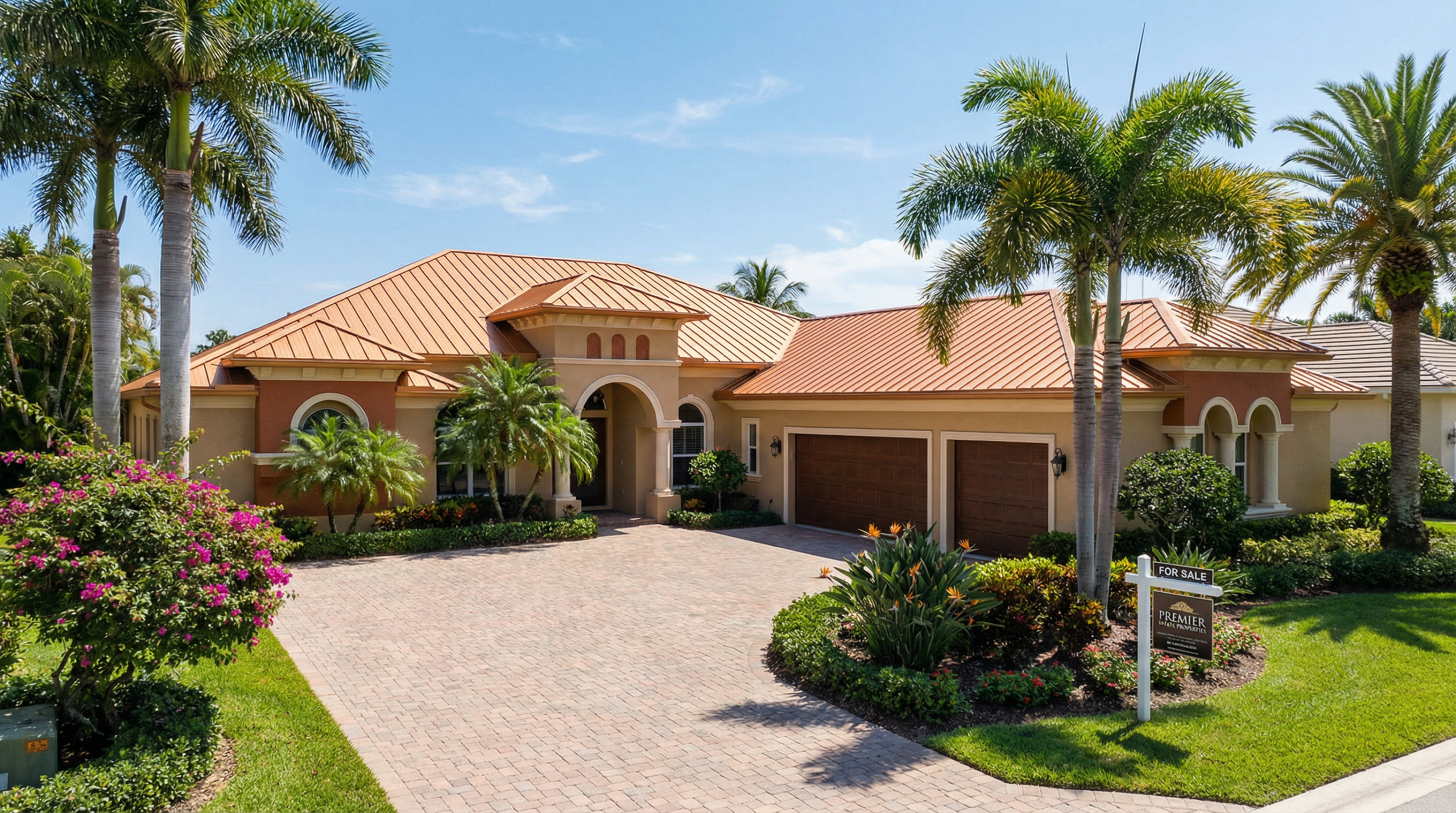
Quick Summary: Yes, a new roof significantly increases home value in Florida, often yielding an ROI of 20% to 30% at resale. More importantly, a roof older than 15 years can kill a sale entirely because buyers cannot secure homeowners insurance. In Palm Beach County, upgrading to impact-rated metal or concrete tile not only boosts curb appeal but also provides critical wind mitigation credits that lower insurance premiums for the new buyer.
When homeowners in Palm Beach County consider a roof replacement, the first question is usually about cost. The immediate second question is, “Will I get this money back when I sell my house?” In many parts of the country, a new roof is just a maintenance item. In South Florida, however, a new roof is a major financial asset that directly impacts a home’s marketability, insurance eligibility, and final sale price.
Based on our 2026 project data at BLU Roofing, homes with new, HVHZ-compliant roofs sell faster and closer to asking price than homes with roofs nearing the end of their useful life. Here is exactly how a new roof affects your home’s value in the current Florida real estate market.
The Insurance Factor: Why Old Roofs Kill Real Estate Deals
In Florida, the relationship between your roof and your home’s value is dictated almost entirely by the insurance industry. If a buyer cannot insure the home, they cannot get a mortgage. If they cannot get a mortgage, the sale falls through.
Currently, most Florida insurance carriers will not write a new policy on a home with a shingle roof older than 15 years, or a tile roof older than 20 years. Even if the roof has no active leaks and looks fine from the street, the age alone makes the home uninsurable for a new buyer.
If you are trying to sell a home in a neighborhood like Abacoa in Jupiter or Wellington’s equestrian communities with a 17-year-old roof, you will likely be forced to either replace the roof before closing or offer a massive credit to the buyer. In these scenarios, replacing the roof yourself is almost always the better financial move, as buyers tend to overestimate repair costs and demand credits larger than the actual price of a new roof.
ROI by Roofing Material in South Florida
Not all roofs return the same value at resale. The material you choose plays a significant role in how much equity you build.
| Roofing Material | Average Cost (2,500 sq ft) | Estimated ROI at Resale | Buyer Appeal in South Florida |
|---|---|---|---|
| Architectural Shingles | $12,000 – $25,000+ | 20% | Good. Cost-effective, but buyers know they will need replacement in 15-20 years. |
| Concrete Tile | $25,000 – $40,000+ | 25% | Excellent. The standard for premium HOA communities; highly desirable for aesthetics and durability. |
| Standing Seam Metal | $30,000 – $50,000+ | 30% | Exceptional. Buyers pay a premium for the 30-50 year lifespan and maximum hurricane protection. |
Note: Costs vary based on roof complexity, pitch, and specific material choices. All products installed in Palm Beach and Broward counties must have a valid Miami-Dade Notice of Acceptance (NOA).
Wind Mitigation Credits: The Hidden Value Booster
A new roof adds value not just through equity, but through ongoing savings. When BLU Roofing installs a new roof, we ensure it meets the latest Florida Building Code (FBC) standards for the High-Velocity Hurricane Zone (HVHZ).
This includes upgrading roof-to-wall connections, installing secondary water resistance (SWR) underlayment, and using NOA-approved materials. These upgrades qualify the home for substantial wind mitigation credits. When you list your home, advertising that the new roof will save the buyer thousands of dollars a year on their insurance premium is a massive selling point that justifies a higher asking price.
South Florida Technical Considerations for Resale
If you are replacing your roof with the intent to sell, keep these South Florida-specific factors in mind:
The Coastal Aluminum Rule: If your home is located within 1,500 to 3,000 feet of the Atlantic Ocean or Intracoastal Waterway (such as properties in Juno Beach, Palm Beach Shores, or oceanfront Boca Raton), you must specify aluminum metal roofing rather than steel. Steel will corrode quickly in the salt air, and a savvy buyer’s inspector will catch this, potentially derailing the sale.
Tile Weight Restrictions: If you are upgrading from shingles to concrete or clay tile to boost curb appeal, be aware that tile weighs 900 to 1,200 pounds per square. Your home will require a structural inspection to ensure the trusses can support the weight.
Permit Documentation: Buyers will want to see the closed permit. Permits are pulled through local municipal offices, such as the City of West Palm Beach Building Services or the Palm Beach County Permit Portal. Having the finalized permit and warranty paperwork ready at your open house builds immediate trust.
Frequently Asked Questions
Should I replace my roof before selling or offer a credit?
In the current Florida market, replacing the roof before listing is usually better. A new roof attracts more buyers, allows for conventional financing, and prevents buyers from using an old roof as leverage to lowball your asking price.
Does a metal roof add more value than a tile roof?
Both add significant value, but metal roofs often yield a slightly higher ROI due to their 30-50 year lifespan and zero-maintenance appeal. However, in many Palm Beach County HOA communities, concrete tile is required by the architectural review board.
Can I transfer my new roof warranty to the buyer?
Yes, most premium roofing warranties are transferable to the next homeowner one time. This is a major selling feature. BLU Roofing provides all necessary documentation to make this transfer seamless during your closing process.
Talk to a Palm Beach County Roofing Expert Before You Sell
If you are planning to list your home and are unsure if your roof will pass a buyer’s inspection, do not wait until you are under contract to find out. Get a Free Roof Estimate in Palm Beach County from BLU Roofing. We can assess your roof’s condition, provide an honest recommendation, and help you maximize your home’s value before it hits the market.
Written By: Peter Menke
Peter Menke is the owner of BLU Roofing and has been serving the South Florida roofing industry for over 6 years. He founded BLU Roofing to provide homeowners with transparent, accurate data grounded in the reality of Florida’s unique climate and building codes, information that is often missing from generic national roofing advice. License #1337285
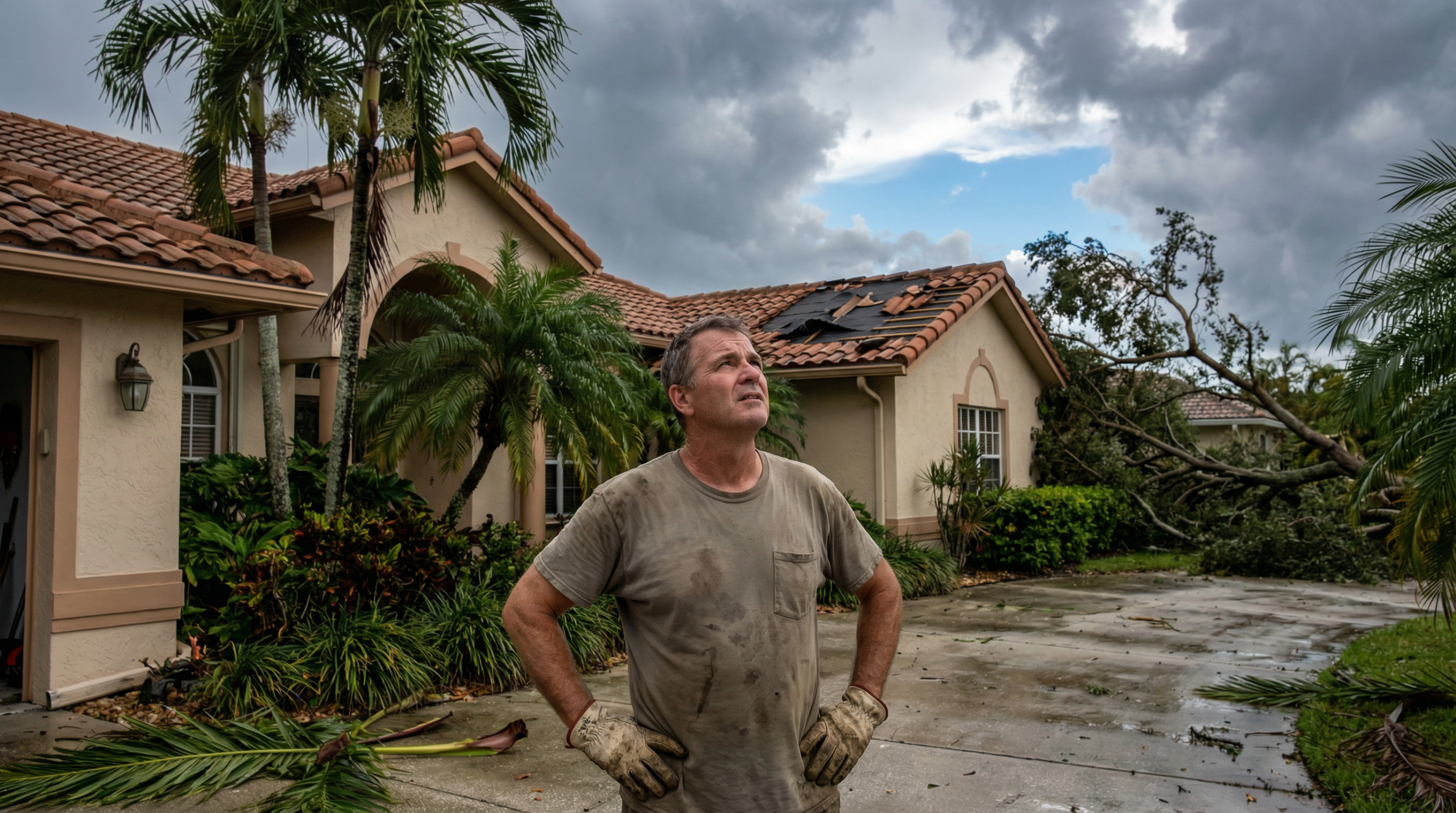
Filing a roof insurance claim in Florida is notoriously complex. Between recent legislative changes, aggressive insurance adjusters, and the sheer volume of claims after a major storm, homeowners in Palm Beach County often find themselves fighting for the coverage they pay for every month.
If your roof has suffered sudden, accidental damage from a hurricane, tropical storm, or severe wind event, you have the right to file a claim. Based on our 2026 project data in Palm Beach County, homeowners who follow a structured, documented process are significantly more likely to receive a fair settlement than those who rush the process.
Here is a step-by-step guide on how to file a roof insurance claim in Florida without getting your claim denied or underpaid.
Table of Contents
- Review Your Deductibles
- Document the Damage
- Get a Professional Inspection
- File the Claim
- Meet the Adjuster
- Review the Settlement
- FAQ
1. Review Your Deductibles
Before you call your insurance company, you need to know exactly what your policy covers and what your deductibles are. In Florida, most homeowners policies have two separate deductibles.
All Other Perils (AOP) Deductible: This applies to standard damage, like a tree falling on your roof during a typical thunderstorm. It is usually a flat dollar amount, such as $1,000 or $2,500.
Hurricane Deductible: This applies only when damage is caused by a named storm declared by the National Weather Service. It is typically a percentage of your home’s insured value, usually 2%, 5%, or 10%.
If your home in Jupiter is insured for $500,000 and you have a 5% hurricane deductible, you are responsible for the first $25,000 of damage before your insurance pays a dime. Knowing this number upfront helps you decide if filing a claim is even worth the potential premium increase.
2. Document the Damage Immediately
Do not wait for an adjuster to arrive before documenting the damage. As soon as it is safe to do so, take extensive photos and videos of your property.
- Exterior: Photograph missing shingles, cracked tiles, dented metal panels, damaged flashing, and any debris that caused the damage. Take wide shots of the entire roof and close-ups of specific damage points.
- Interior: Photograph any water stains on ceilings or walls, bubbling paint, or active leaks. If water is entering your home, document the damage to your personal property.
- Mitigation: Florida law requires you to mitigate further damage. If you have an active leak, place buckets, move furniture, and lay down tarps. Photograph these mitigation efforts to prove you took reasonable steps to protect your property.
3. Get a Professional Inspection
Before you file the claim, get a professional assessment from a licensed, local roofing contractor in Palm Beach County.
An experienced roofer will inspect your roof, identify all storm-related damage, and provide a detailed, written estimate for the repairs or replacement. This estimate is critical evidence for your claim.
Warning: Do not sign an Assignment of Benefits (AoB) agreement with a roofing contractor at this stage. Recent Florida legislation has heavily restricted AoBs, but some contractors still attempt to use them. An AoB transfers your insurance claim rights to the contractor, giving them control over the process and the payout. A reputable contractor will provide an estimate without requiring an AoB.
4. File the Claim with Your Insurance Company
Once you have your documentation and a contractor’s estimate, contact your insurance company to formally file the claim.
Be prepared to provide your policy number, the date and time the damage occurred, a detailed description of the damage, the photos and videos you took, and the roofing contractor’s estimate. Your insurance company will assign a claim number and an adjuster to your case.
5. Meet with the Insurance Adjuster
The insurance company will send an adjuster to inspect your roof and assess the damage. It is highly recommended that your roofing contractor is present during this inspection.
The adjuster works for the insurance company; their goal is to minimize the payout. Your roofing contractor works for you; their goal is to ensure all damage is identified and properly accounted for in the estimate. Having your contractor present ensures the adjuster sees the full scope of the damage, especially in complex systems like concrete tile or standing seam metal roofs.
6. Review the Settlement Offer
After the inspection, the adjuster will provide an estimate of the damages and a settlement offer. Compare this offer carefully against your roofing contractor’s estimate.
If the insurance company’s offer is significantly lower than your contractor’s estimate, do not accept it immediately. You have the right to dispute the offer. Your contractor can provide additional documentation, photos, or Florida Building Code requirements to justify their estimate and negotiate with the adjuster on your behalf.
Once you and the insurance company agree on a settlement amount, you will typically receive an initial payment representing the Actual Cash Value of your roof minus your deductible. You can then authorize your roofing contractor to begin the repairs or replacement. Once the work is completed and passes the final county inspection, your contractor will submit a final invoice to the insurance company, which will then release the remaining funds to cover the full cost of the project.
For more information on what to expect during the replacement process, see our Palm Beach County homeowner’s guide to roof replacement.
Frequently Asked Questions
How long do I have to file a roof insurance claim in Florida?
Under recent Florida law changes, you generally have one year from the date of the storm or hurricane to file a new or reopened claim, and 18 months to file a supplemental claim. However, it is always best to file as soon as possible after the damage occurs.
Will my insurance company drop me if I file a roof claim?
Florida law prohibits insurance companies from canceling or non-renewing a policy solely because you filed a claim for an Act of God, such as a hurricane or severe storm. However, they can choose not to renew your policy for other reasons, such as the age of your roof.
Does insurance cover the cost of bringing my roof up to current building codes?
If you have “Ordinance or Law” coverage in your policy, your insurance will cover the additional costs required to bring your new roof up to the current Florida Building Code standards. This is crucial in South Florida, where building codes are frequently updated for hurricane resilience.
Written By: Peter Menke
Peter Menke is the owner of BLU Roofing and has been serving the South Florida roofing industry for over 6 years. He founded BLU Roofing to provide homeowners with transparent, accurate data grounded in the reality of Florida’s unique climate and building codes, information that is often missing from generic national roofing advice.
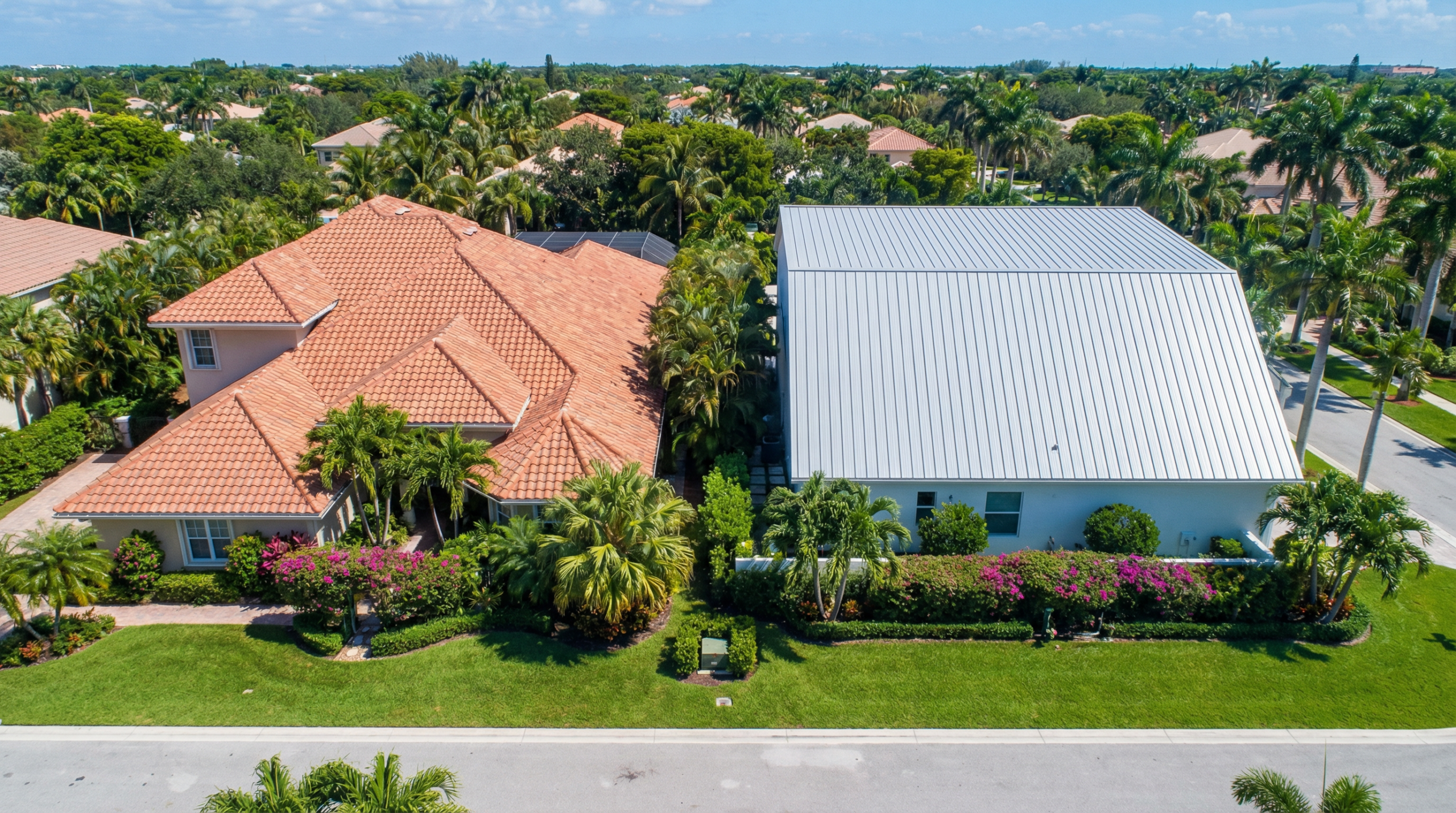
When Palm Beach County homeowners invest in a new roof, the two premium options that come up most often are metal and tile. Both outlast asphalt shingles by decades, both handle South Florida’s hurricane season, and both carry significant upfront costs. Based on our 2026 project data across Palm Beach Gardens, Jupiter, and Wellington, metal and tile together account for more than 70 percent of all premium roof replacements we complete. But they serve different homeowners for different reasons.
This guide breaks down the real differences between metal and tile roofs in South Florida so you can make an informed decision before committing to either.
Table of Contents
- Lifespan and Durability
- Hurricane and Wind Resistance
- Miami-Dade NOA Requirements
- Salt Air and Coastal Corrosion
- Tile Weight and Structural Requirements
- Energy Efficiency
- Aesthetics and HOA Restrictions
- Cost Comparison
- Which Is Right for You?
- FAQ
South Florida Material Lifespan Guide
The single most important factor for most homeowners is how long the roof will last. Both materials are long-lived, but they age differently in South Florida’s climate.
Tile Roofs: Concrete and clay tiles are extremely durable. The tiles themselves can last 50 years or more. However, the waterproof underlayment beneath the tiles is the weak point. In South Florida, the intense heat and UV exposure cause underlayment to fail between 20 and 30 years. When the underlayment fails, the entire roof must be removed and re-underlaid, even if the tiles are still intact. This is a significant mid-life expense that many homeowners do not anticipate.
Metal Roofs: A high-quality standing seam metal roof lasts 30 to 50 years in South Florida. Unlike tile, metal does not rely on a separate heat-sensitive underlayment for its primary waterproofing. The interlocked panels shed water directly. While the finish may fade over decades of UV exposure, the structural integrity of a metal roof typically outlasts the homeowner’s time in the property.
| Material | Tile Lifespan | Underlayment Lifespan | Metal Lifespan |
|---|---|---|---|
| Concrete Tile | 20-30 years | 20-30 years | N/A |
| Clay Tile | 20-30 years | 20-30 years | N/A |
| Standing Seam Metal | N/A | N/A | 30-50 years |
The practical takeaway: tile roofing systems require a mid-life underlayment replacement, while metal systems typically do not.
Hurricane and Wind Resistance
South Florida roofs must withstand hurricane-force winds. Both metal and tile are excellent choices, but they perform differently under extreme stress.
Tile Roofs: The weight of a tile roof makes it highly resistant to wind uplift. Properly installed concrete or clay tiles can withstand winds of 130 to 150 mph. However, tiles are brittle. Flying debris during a hurricane can crack or shatter individual tiles, leading to water intrusion even if the overall roof structure holds.
Metal Roofs: Standing seam metal roofs are engineered to withstand winds up to 160 mph. Because the panels are interlocked and fastened directly to the roof deck, they resist uplift effectively. Metal is also impact-resistant. Flying debris may dent a panel, but it is unlikely to puncture it or cause a leak.
Both materials meet Florida Building Code requirements for High-Velocity Hurricane Zones (HVHZ), which apply to Miami-Dade and Broward counties and influence standards across Palm Beach County as well.
Miami-Dade Notice of Acceptance (NOA) Requirements
One detail that separates a knowledgeable South Florida roofing contractor from a generic one is familiarity with the Miami-Dade Notice of Acceptance, commonly called the NOA. In South Florida, any roofing product installed in Broward or Palm Beach County must carry a valid Miami-Dade NOA, which certifies that the product has been tested and approved to meet the region’s extreme wind and impact standards.
This applies to both metal roofing systems and tile products. Before any installation, your contractor should be able to provide the NOA documentation for the specific product being installed on your home. If a contractor cannot produce this document or is unfamiliar with the requirement, that is a significant red flag. BLU Roofing installs only NOA-approved products on every project in Palm Beach County.
Salt Air and Coastal Corrosion
For homeowners within approximately 1,500 to 3,000 feet of the Atlantic Ocean or the Intracoastal Waterway, the choice of metal roofing material matters more than most contractors will tell you. Salt air accelerates corrosion on standard steel roofing products, including some Galvalume-coated panels that perform well in inland areas.
In coastal Palm Beach County communities such as Juno Beach, Palm Beach Shores, and oceanfront sections of Boca Raton and Delray Beach, we recommend aluminum roofing panels over steel. Aluminum does not rust and is naturally resistant to salt air corrosion, making it the correct specification for homes near the water. A metal roof installed with the wrong alloy in a coastal environment can begin showing surface rust within 10 to 15 years, well short of the 30 to 50 year lifespan you are paying for. Always ask your contractor specifically what alloy they are proposing for your location.
Tile Weight and Structural Requirements
Concrete and clay tile are among the heaviest roofing materials available. A standard concrete tile roof can weigh 900 to 1,200 pounds per square (100 square feet), compared to roughly 150 to 300 pounds per square for metal. Before installing tile on any South Florida home, a structural inspection is required to confirm that the roof framing and wall systems can support the added load.
This is especially relevant for older homes in Palm Beach Gardens, Lake Worth Beach, and West Palm Beach that were originally built with lighter roofing materials. If a structural upgrade is needed, it adds cost and time to the project. BLU Roofing always conducts a structural assessment before recommending tile on any home where the original roofing material was asphalt shingles or metal.
Energy Efficiency
Keeping a home cool in Palm Beach County is a year-round expense. Your roof material plays a meaningful role in your HVAC system’s efficiency.
Tile Roofs: The curved shape of barrel tiles creates a natural air gap between the tile and the roof deck. This ventilation gap reduces heat transfer into the attic and helps keep the home cooler. Tile also has natural thermal mass, absorbing heat slowly during the day and releasing it slowly at night.
Metal Roofs: Light-colored metal roofs reflect the majority of the sun’s radiant heat away from the home. Many modern metal roofing systems use specialized cool-roof coatings that maximize this reflectivity. Homes in Boca Raton and Delray Beach with light-colored metal roofs often see measurable reductions in cooling costs compared to dark-colored shingle roofs.
Both materials are significantly more energy-efficient than standard asphalt shingles in South Florida conditions.
Aesthetics and HOA Restrictions
In Palm Beach Gardens, Jupiter, and Wellington, your roofing choice is often dictated by your Homeowners Association.
Tile Roofs: Tile is the quintessential South Florida roofing material. It defines the Mediterranean and Spanish architectural style found throughout upscale communities like PGA National, Mirasol, and Ibis Golf and Country Club. If you live in an HOA community in Palm Beach County, there is a high probability that tile is the only approved roofing material.
Metal Roofs: Metal roofs offer a sleek, modern, or coastal aesthetic that is becoming more popular. However, many established HOAs in Palm Beach County still prohibit metal roofing or restrict it to specific profiles and colors. Always verify with your HOA before selecting metal.
Cost Comparison
Both materials represent a significant investment. Based on our 2026 project data for a 2,000 to 3,000 square foot home in Palm Beach County:
| Material | Typical Cost Range | Lifespan | Maintenance Level |
|---|---|---|---|
| Asphalt Shingles | $12,000 – $25,000+ | 15-20 years | Moderate |
| Concrete Tile | $25,000 – $40,000+ | System: 20-30 yrs | Moderate-High |
| Clay Tile | $25,000 – $40,000+ | System: 20-30 yrs | Moderate-High |
| Standing Seam Metal | $30,000 – $50,000+ | 30-50 years | Low |
Tile is generally less expensive upfront than standing seam metal. However, tile requires more maintenance over time: mortar and adhesive can degrade, tiles crack from foot traffic, and concrete tile is prone to algae growth requiring periodic soft washing. Metal is virtually maintenance-free once installed.
When you factor in the cost of a mid-life underlayment replacement on a tile roof (typically $8,000 to $15,000 or more), the long-term cost difference between tile and metal narrows considerably.
Which Is Right for Your Home?
If you live in an HOA community in Palm Beach Gardens, Boca Raton, or Jupiter, your decision may already be made for you. Verify your HOA’s approved materials list before moving forward.
If you have the freedom to choose, consider these factors:
- Choose tile if you want the classic South Florida aesthetic, your HOA requires it, or you prefer a lower upfront cost and are comfortable with periodic maintenance.
- Choose metal if you want maximum longevity, minimal maintenance, and the best impact resistance during hurricane season. If your home is near the coast, specify aluminum panels rather than steel.
BLU Roofing installs both premium tile and metal roofing systems throughout Palm Beach County. We can help you evaluate your home’s architecture, your HOA requirements, and your long-term goals to determine the best material for your specific situation. For more context on overall replacement costs, see our guide to roof replacement cost in Palm Beach Gardens.
For permit timelines and what to expect during the installation process, see our Palm Beach County homeowner’s guide to roof replacement.
Frequently Asked Questions
Can I put a metal roof over my existing tile roof in Florida?
No. Florida Building Code does not permit installing a new roof over an existing tile roof. The old tiles must be removed before a new roofing system can be installed. This is true for both metal and tile replacements.
Does a metal roof increase home value in Palm Beach County?
Yes, in most cases. Metal roofs are viewed favorably by buyers and appraisers because of their long lifespan and low maintenance requirements. However, in HOA communities where tile is the standard, a metal roof may not command the same premium.
How long does a tile roof underlayment replacement take in Palm Beach County?
A full underlayment replacement on a tile roof typically takes 3 to 5 days for a standard single-family home, plus 1 to 4 weeks for permit approval from Palm Beach County. The total project timeline from contract to completion is usually 3 to 6 weeks.
Do I need a structural inspection before installing tile on my home?
Yes, if your home was previously covered with asphalt shingles or metal. Concrete and clay tile can weigh 900 to 1,200 pounds per square, significantly more than lighter materials. A structural assessment confirms your roof framing can support the load before installation begins.
Written By: Peter Menke
Peter Menke is the owner of BLU Roofing and has been serving the South Florida roofing industry for over 6 years. He founded BLU Roofing to provide homeowners with transparent, accurate data grounded in the reality of Florida’s unique climate and building codes, information that is often missing from generic national roofing advice.
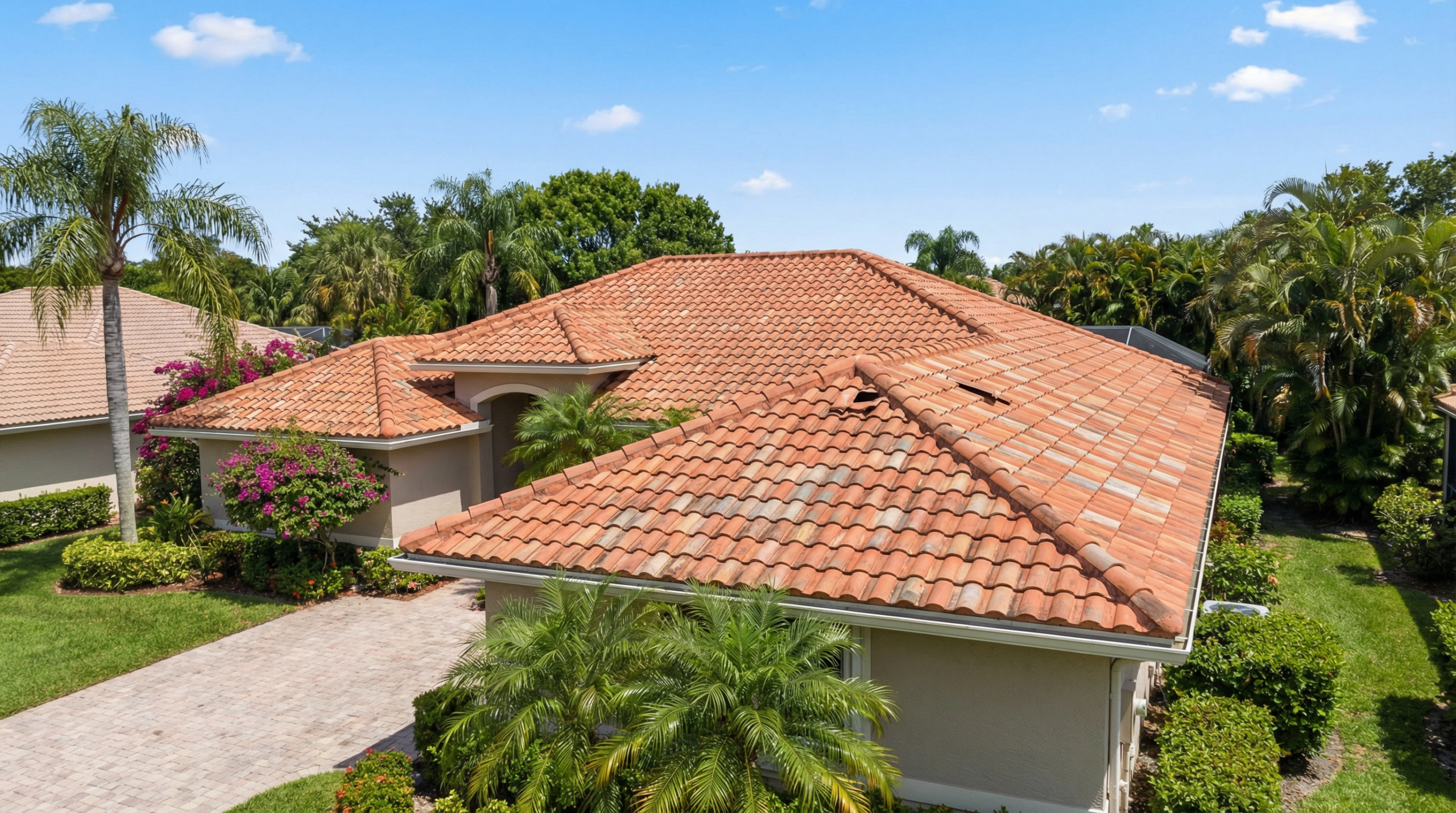
For homeowners in Palm Beach Gardens, Florida, the roof is more than just a cover; it’s the primary defense against relentless sun, heavy rains, and hurricane-force winds. Knowing when it’s time for a new roof in Palm Beach Gardens isn’t always obvious, but recognizing the early warning signs can save you from costly damage and ensure your home remains a safe haven in Palm Beach County.
Quick Summary
In Palm Beach Gardens, key signs you need a new roof include widespread granule loss, curling or cracked shingles, visible leaks, and a roof exceeding 15-20 years in age. While minor repairs can extend life, these indicators, especially after severe weather, often point to the need for a full replacement to protect your home from Florida’s harsh climate and maintain insurance compliance. Proactive replacement can prevent more extensive and expensive structural damage.
Table of Contents
- The Age of Your Roof
- Visible Damage and Wear
- Interior Signs of Trouble
- Insurance and Code Compliance
- FAQ: New Roof in Palm Beach Gardens
1. The Age of Your Roof
One of the most straightforward indicators that you need a new roof in Palm Beach Gardens is its age. While material lifespans vary, Florida’s intense sun and humidity accelerate wear and tear. Most asphalt shingle roofs in our climate last 15-20 years, while tile and metal roofs can last 22-50 years or more. If your roof is approaching or has exceeded its typical lifespan, even without obvious damage, it’s wise to consider a replacement. Older roofs are more susceptible to storm damage and may not meet current building codes, making them a liability during hurricane season.
2. Visible Damage and Wear
Walk around your home in Palm Beach Gardens and look for these tell-tale signs of roof deterioration:
- Missing or Damaged Shingles/Tiles: High winds, common in Palm Beach County, can lift or remove shingles and tiles. Even small missing sections expose your underlayment to UV rays and water.
- Curling, Buckling, or Cracking Shingles: This is a clear sign of advanced aging and moisture absorption. Curling edges or buckling in the middle indicate the shingles are losing their effectiveness.
- Granule Loss: Asphalt shingles lose their protective granules over time, especially with intense sun exposure. You might find granules in your gutters. This exposes the asphalt to UV, accelerating deterioration.
- Sagging Roof Deck: A sagging roof deck, visible from the ground or attic, indicates structural issues that require immediate attention. This could be due to water damage or improper installation.
- Moss or Algae Growth: While common in humid Florida, excessive moss or algae can trap moisture, leading to rot and premature aging of roofing materials.
3. Interior Signs of Trouble
Don’t forget to check inside your home for clues that your roof is failing:
- Water Stains on Ceilings or Walls: Even small, discolored spots can indicate a leak. These often appear in the attic first, so check there regularly.
- Peeling Paint or Wallpaper: Moisture seeping through the roof can cause paint to peel or wallpaper to bubble, especially on exterior walls or near the ceiling.
- Mold or Mildew: Persistent dampness from a leaky roof creates an ideal environment for mold and mildew growth, which can pose health risks.
- High Energy Bills: A compromised roof can lead to poor insulation, allowing conditioned air to escape and increasing your energy consumption, particularly in the hot Palm Beach Gardens summers.
4. Insurance and Code Compliance
In 2026, insurance companies in Florida are increasingly scrutinizing older roofs. If your roof is over 15 years old, you may find it difficult to obtain or renew homeowner’s insurance without a certified inspection. Furthermore, building codes are regularly updated to enhance hurricane resistance. A new roof ensures your home meets the latest standards, providing superior protection and potentially lowering your insurance premiums. For more information on local regulations, you can consult the Florida Building Code.
FAQ: New Roof in Palm Beach Gardens
Q: How often should I have my roof inspected in Palm Beach Gardens?
A: We recommend a professional roof inspection at least once every 1-2 years, and always after a significant storm. Proactive inspections can catch minor issues before they become major problems, extending your roof’s lifespan.
Q: What is the average lifespan of a roof in Palm Beach Gardens?
A: The lifespan varies by material: asphalt shingles typically last 15-20 years, metal roofs 30-50 years, and tile roofs 22-35 years. However, South Florida’s harsh climate can reduce these averages.
Q: Will a new roof lower my insurance premiums?
A: Often, yes. A new roof, especially one installed to current Florida Building Codes with proper wind mitigation features, can qualify you for significant discounts on your homeowner’s insurance. Be sure to get a Wind Mitigation Inspection after installation.
Q: How do I choose a reliable roofing contractor in Palm Beach Gardens?
A: Look for a licensed and insured contractor with a strong local reputation. Check their reviews, ask for references, and ensure they are familiar with Palm Beach County building codes and permitting processes. A reputable contractor will provide a detailed estimate and warranty.
Protect Your Investment with a New Roof in Palm Beach Gardens
Recognizing the signs you need a new roof in Palm Beach Gardens is the first step toward protecting your most valuable asset. Don’t wait for a small leak to become a major structural issue. At BLU Roofing, we specialize in providing durable, code-compliant roofing solutions designed to withstand the unique challenges of the South Florida climate. We’re proud to serve homeowners across Palm Beach County, from the vibrant communities along PGA Boulevard to the serene neighborhoods of BallenIsles and PGA National.
If you’ve noticed any of these signs, or if your roof is simply nearing the end of its life, call Peter Menke at 561-379-5364 for a comprehensive, no-obligation roof assessment. We’ll provide a transparent evaluation and help you understand your options for a lasting, high-quality roof replacement in Palm Beach Gardens.
Written By: Peter Menke
Peter Menke is the owner and operator of BLU Roofing LLC. With a focus on transparent communication and technical precision, Peter has managed hundreds of roof replacements across Palm Beach County, ensuring every home is “Wind-Ready and Water-Tight.” Florida License: CCC1337285.
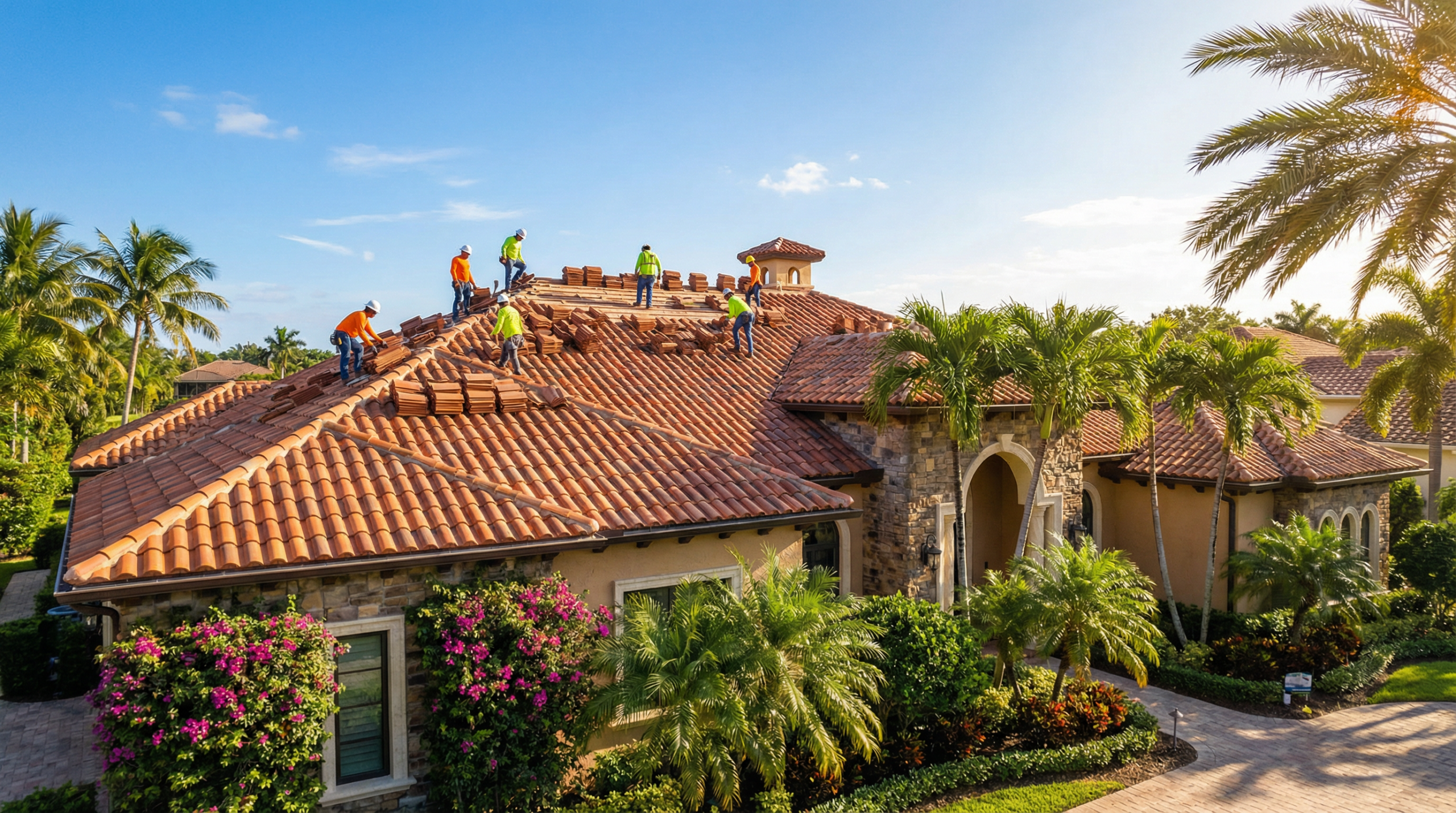
West Palm Beach is a city of contrasts. You have historic 1920s Spanish Mission homes in El Cid, mid-century ranches in SoSo, and modern construction pushing westward. Because the housing stock is so diverse, the cost of a roof replacement in West Palm Beach varies more widely than in almost any other city in Palm Beach County.
If you are a homeowner in West Palm Beach facing a roof replacement in 2026, here is a realistic breakdown of what you can expect to pay, the factors that drive those costs, and why you cannot rely on national averages.
Average Roof Replacement Costs in West Palm Beach
The cost of a new roof is primarily determined by the square footage of your home, the pitch (steepness) of the roof, and the material you select. Here are the average cost ranges for a typical 2,000 to 2,500 square foot home in West Palm Beach:
| Roofing Material | Average Cost Range (West Palm Beach) | Expected Lifespan |
|---|---|---|
| Architectural Shingles | $12,000 – $25,000+ | 15 – 20 years |
| Concrete Tile | $25,000 – $40,000+ | 20 – 25 years (underlayment limit) |
| Standing Seam Metal | $30,000 – $50,000+ | 40 – 70 years |
Note: Historic homes with complex rooflines, steep pitches, or multiple dormers will fall on the higher end of these ranges due to increased labor and material waste.
Why West Palm Beach Roofs Cost More Than the National Average
If you search online for “average roof replacement cost,” you will likely see numbers between $8,000 and $12,000. Those numbers do not apply to South Florida. Here is why a roof in West Palm Beach costs more:
1. High-Velocity Hurricane Zone (HVHZ) Codes
West Palm Beach is located in a High-Velocity Hurricane Zone. The Florida Building Code requires roofs here to withstand significantly higher wind speeds than roofs in other parts of the country. This means contractors must use more fasteners, stronger adhesives, and specialized underlayment systems (like peel-and-stick Secondary Water Resistance) to meet code. These upgraded materials and the extra labor required to install them increase the overall cost. For a deeper dive into these requirements, see our homeowner’s guide to roofing in Palm Beach County.
2. Historic District Requirements
If you live in one of West Palm Beach’s historic districts (like El Cid, Flamingo Park, or Grandview Heights), your roof replacement must be approved by the Historic Preservation Board.
The Board often requires homeowners to replace existing roofs with historically accurate materials, such as specific profiles of clay barrel tile or historically appropriate metal roofing. You rarely have the option to downgrade to a cheaper architectural shingle. Sourcing and installing these historically accurate materials significantly increases the project cost.
3. The “Hidden” Cost of Wood Replacement
When a contractor tears off your old roof, they expose the wooden decking underneath. In older West Palm Beach homes, it is incredibly common to find rotted or water-damaged plywood, especially around the eaves and valleys.
The Florida Building Code requires all damaged wood to be replaced before the new roof can be installed. This is typically billed per sheet of plywood (often $80 to $120 per sheet, including labor). If your home has extensive wood rot, this can add thousands of dollars to the final bill. If you suspect you have wood rot, you may want to review the signs you need a new roof before the damage spreads further.
How to Get an Accurate Estimate
The ranges above give you a baseline, but the only way to know exactly what your roof replacement will cost is to get a professional inspection and a detailed, written estimate.
Be wary of any contractor who gives you a price over the phone without stepping foot on your property or inspecting your attic. An accurate estimate requires measuring the roof, assessing the pitch, inspecting the ventilation, and identifying any potential structural issues or wood rot. This is a critical step when choosing a roofing contractor.
BLU Roofing provides transparent, itemized estimates for homeowners in West Palm Beach and throughout Palm Beach County. We explain exactly what you are paying for, from the underlayment to the final inspection, with no hidden fees or surprise charges. Contact us today to schedule your free roof inspection and estimate.
Frequently Asked Questions
Does homeowners insurance cover roof replacement in West Palm Beach?
Insurance typically covers a roof replacement if the damage was caused by a sudden, accidental event like a hurricane or severe storm. It does not cover replacement due to age, normal wear and tear, or maintenance neglect.
How long does a roof replacement take in West Palm Beach?
The physical installation usually takes 1 to 3 days. However, the entire process from signing the contract to final permit close-out typically takes 3 to 6 weeks, largely depending on the city’s permit approval timeline.
Can I put a metal roof on my house in West Palm Beach?
Yes, standing seam metal roofs are highly recommended for their hurricane resistance and longevity. However, if you live in a historic district or an HOA community, you must get approval first, as some areas restrict metal roofing.
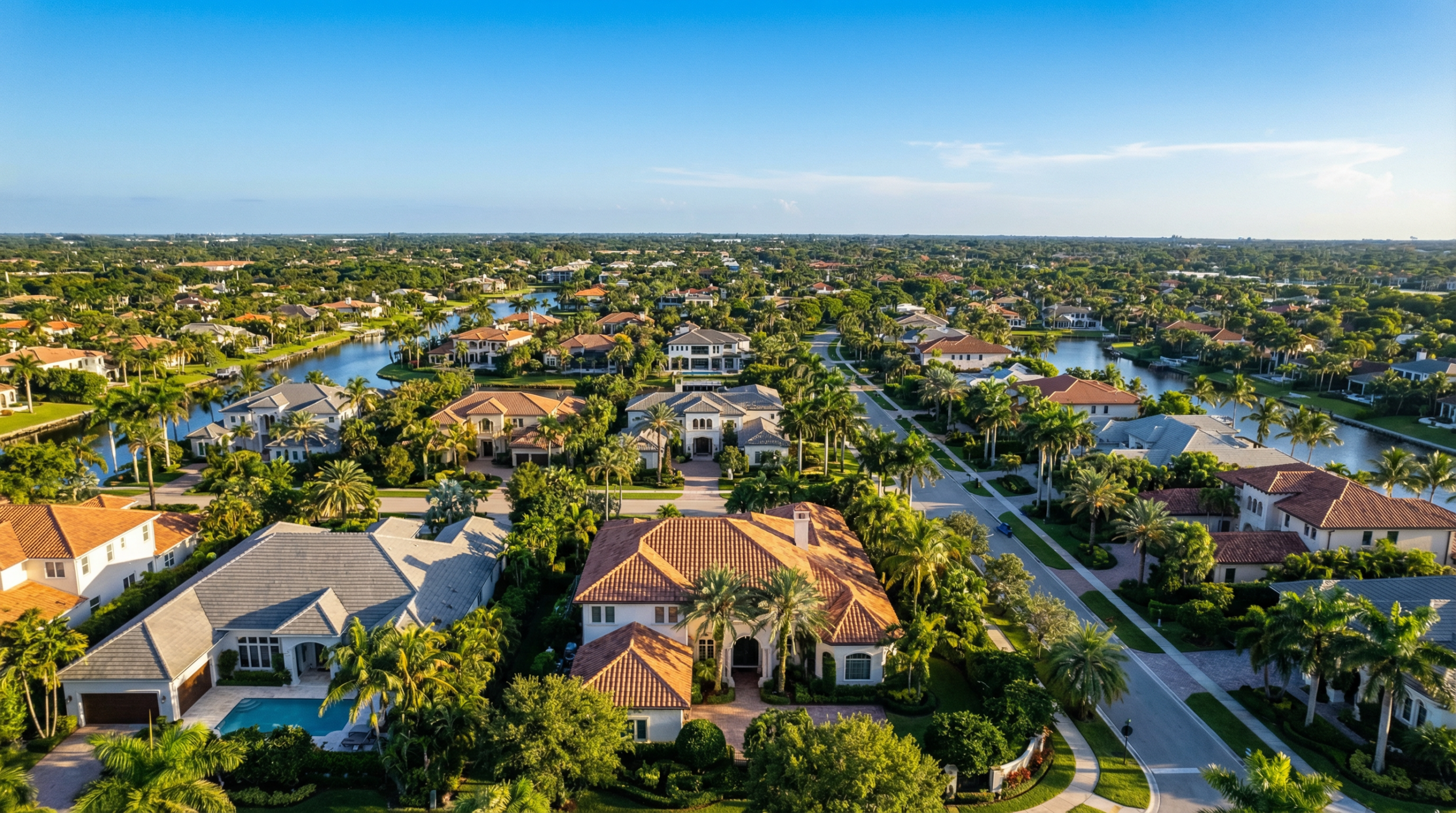
Owning a home in Palm Beach County comes with incredible benefits, but maintaining a roof here is not one of them. Between the relentless UV radiation, the corrosive salt air near the coast, and the annual threat of hurricane-force winds, South Florida is arguably the harshest roofing environment in the United States.
Whether you live in a historic home in West Palm Beach, a new construction in Westlake, or an HOA community in Jupiter, replacing or repairing your roof requires navigating a complex web of building codes, permit requirements, and material choices. This guide covers everything Palm Beach County homeowners need to know about roofing in 2026.
1. Understanding Palm Beach County Building Codes
The most important thing to understand about roofing in Palm Beach County is that we are located in a High-Velocity Hurricane Zone (HVHZ). This designation means that the Florida Building Code imposes significantly stricter requirements here than in Central or North Florida.
When you replace a roof in Palm Beach County, the contractor cannot simply nail down new shingles. They must adhere to stringent wind mitigation standards designed to keep the roof attached to the house during a Category 4 or 5 hurricane. This includes:
- Enhanced Fastening: Using more nails per shingle or tile, and specific types of corrosion-resistant fasteners.
- Secondary Water Resistance (SWR): Installing a specialized, self-adhering underlayment (often called “peel-and-stick”) directly to the roof deck. If the primary roof covering (tiles or shingles) blows off, the SWR prevents water from entering the home.
- Deck Attachment: Re-nailing the plywood roof deck to the trusses using specific nail patterns and sizes to ensure structural integrity.
These code requirements are non-negotiable, and they are the primary reason a roof replacement in Palm Beach County costs more than the national average.
2. The Permitting Process in Palm Beach County
You cannot legally replace a roof in Palm Beach County without a permit. The permitting process is designed to protect homeowners by ensuring that the work meets the HVHZ building codes.
Who Pulls the Permit?
A licensed roofing contractor must pull the permit. Never hire a contractor who asks you to pull the permit as an “owner-builder.” This is a massive red flag that the contractor is unlicensed or uninsured, and it makes you legally and financially responsible for any code violations or injuries on the job. Learn more about how to choose a roofing contractor without getting burned.
The Inspection Process:
Once the permit is issued, the county requires multiple inspections throughout the project. Typically, an inspector must sign off on the “dry-in” phase (when the underlayment is installed) before the final roofing material can be applied. A final inspection is required when the job is complete.
Timeline:
In 2026, the permit approval process in Palm Beach County typically takes between one and four weeks, depending on the municipality and the current backlog.
3. Choosing the Right Roofing Material for South Florida
The climate and your Homeowners Association (HOA) will largely dictate your material choices.
- Concrete and Clay Tile: The quintessential South Florida look. Tiles are incredibly durable and offer excellent wind resistance. However, the underlayment beneath them typically fails after 20 to 30 years, requiring a full replacement. They are also the most common requirement for HOAs in Palm Beach Gardens, Boca Raton, and Wellington.
- Standing Seam Metal: The ultimate choice for hurricane resistance and longevity. Metal roofs can last 30 to 50 years and are highly energy-efficient. They are becoming increasingly popular in coastal areas like Jupiter and Delray Beach, though some HOAs still restrict them.
- Architectural Shingles: The most cost-effective option upfront. High-quality architectural shingles are rated for high winds, but they have the shortest lifespan in our climate, typically needing replacement every 15 to 20 years due to UV degradation.
If you are unsure which option is best for your specific neighborhood, read our detailed comparison of tile roofs vs. shingle roofs.
4. Average Roof Replacement Costs in Palm Beach County (2026)
Roofing costs vary widely based on the size of the home, the pitch of the roof, and the material selected. However, here are the realistic ranges for a standard 2,000 to 2,500 square foot home in Palm Beach County in 2026:
- Architectural Shingles: $12,000 to $25,000
- Concrete Tile: $25,000 to $40,000+
- Standing Seam Metal: $30,000 to $50,000+
Remember that these estimates often do not include the cost of replacing rotted plywood decking or repairing damaged fascia, which are common discoveries once the old roof is removed.
5. The Insurance Factor
In Florida, your roof’s age directly impacts your homeowners insurance. Many carriers will drop coverage or refuse to write a new policy if a shingle roof is older than 15 years or a tile roof is older than 20 years. If you are struggling to secure insurance, a roof replacement is often the only solution. Read more about how homeowners insurance covers roof replacements in Florida.
Furthermore, a new roof installed to current HVHZ codes with Secondary Water Resistance will qualify you for significant wind mitigation discounts on your insurance premiums, helping to offset the cost of the replacement over time.
Trust the Local Experts
Navigating a roof replacement in Palm Beach County requires a contractor who understands the local codes, the permitting process, and the specific demands of the South Florida climate. BLU Roofing is a licensed, insured, and locally owned roofing contractor serving all of Palm Beach County. We provide transparent pricing, expert craftsmanship, and a stress-free experience from the initial inspection to the final permit close-out. Contact us today to schedule your free consultation.
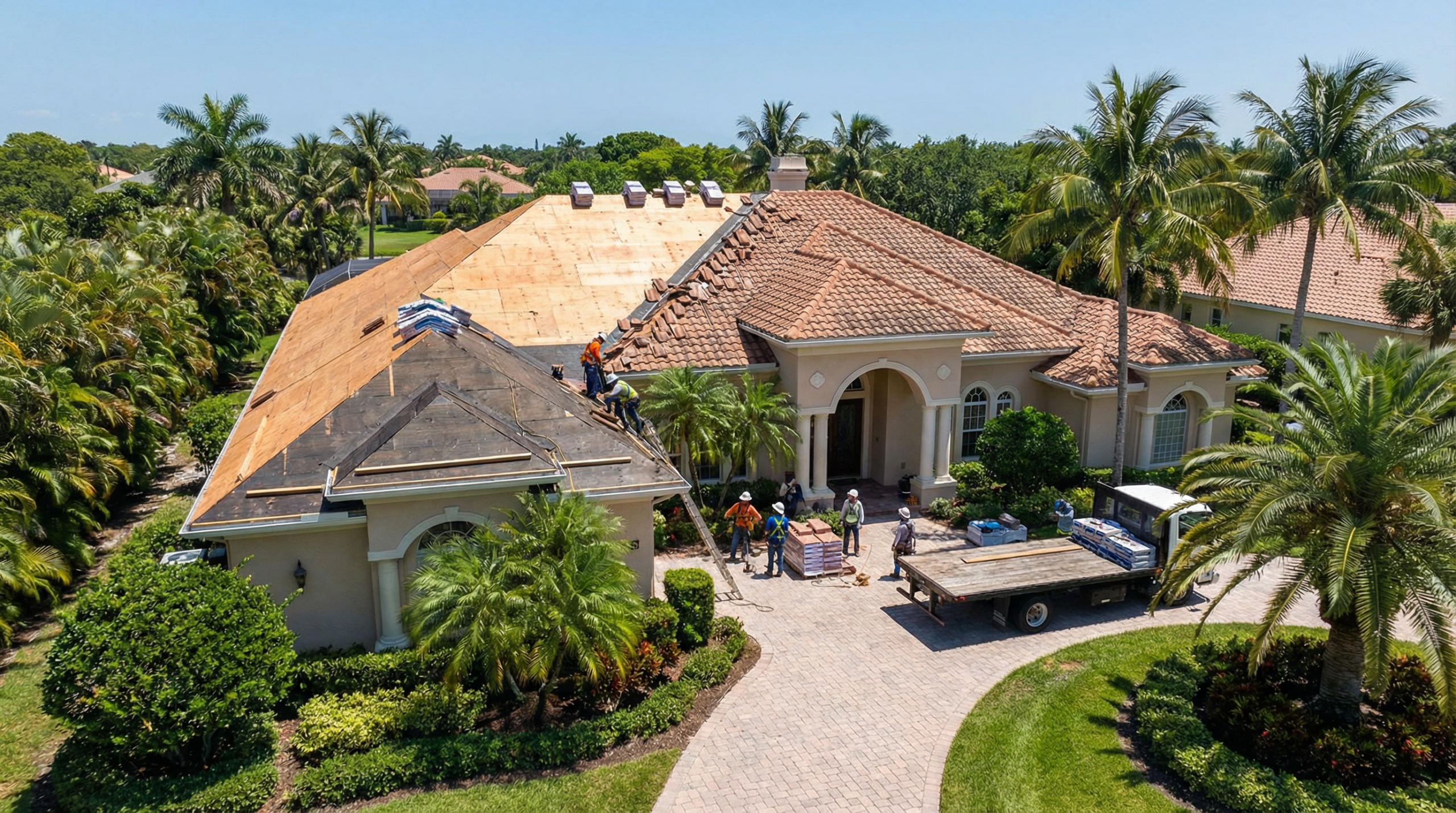
If you’re noticing leaks after a heavy Florida downpour, your first question is likely: “How fast can we get this done?” In Palm Beach Gardens, the speed of your project depends on more than just how fast a crew can nail down shingles. For homeowners considering a roof replacement Palm Beach Gardens, understanding the timeline is crucial. Between the City of Palm Beach Gardens Building Department requirements and our unpredictable South Florida weather, a “Built Florida Strong” roof requires a strategic timeline.
Quick Summary
A standard roof replacement in Palm Beach Gardens, FL usually takes 14 to 30 days in total. The physical installation for an asphalt shingle roof typically lasts 2–3 days, while tile or metal can take 5–8 days. However, the 2026 permitting process with the City of Palm Beach Gardens adds 1–4 weeks of lead time, and mandatory “In-Progress” inspections can pause work for 24–48 hours. Understanding the roof replacement Palm Beach Gardens timeline is crucial for planning your project and protecting your home in areas like PGA National or BallenIsles.
Table of Contents
- Phase 1: Pre-Construction & Permitting (1–2 Weeks)
- Phase 2: The Tear-Off and Dry-In (Days 1–2)
- Phase 3: Inspections and Final Layer (Days 3–7)
- Timeline by Material: Palm Beach Gardens, FL (2026)
- FAQ: Palm Beach Gardens Reroofing Timelines
Phase 1: Pre-Construction & Permitting (1–2 Weeks)
In 2026, you cannot start a reroof in Palm Beach Gardens without an approved permit from the City of Palm Beach Gardens Building Department. This is often the most variable part of the roof replacement Palm Beach Gardens timeline.
- Engineering & Paperwork: We must submit your “Notice of Commencement” and Florida Product Approval numbers for all materials. This ensures compliance with the latest Florida Building Code.
- Review Time: Depending on the season and the City of Palm Beach Gardens Building Department’s workload, the city typically takes 5–10 business days to issue the permit. Peak hurricane preparation season (April–June) can extend these timelines, especially for homes along PGA Boulevard or near The Gardens Mall.
- Material Delivery: Once the permit is in hand, we coordinate the delivery of materials (tiles, metal panels, or shingles) to your driveway. This is carefully timed to minimize disruption and ensure materials are on-site when needed.
Phase 2: The Tear-Off and Dry-In (Days 1–2)
Once the permit is posted and materials are on-site, the physical work begins. We remove your old roofing material down to the wooden deck. This is the “moment of truth” where we inspect for rotten wood or structural issues that must be repaired to meet 2026 building codes. Any necessary repairs are addressed immediately to ensure a solid foundation for your new roof.
By the end of Day 2, your home is typically “dried-in” with a secondary water barrier. This critical step ensures that even if an afternoon thunderstorm rolls through, your attic and home interior stay dry and protected from water intrusion.
Phase 3: Inspections and Final Layer (Days 3–7)
Palm Beach Gardens inspectors must verify the “deck-nailing” and underlayment installation before the final roofing material goes on. This is a mandatory step to ensure your roof meets all safety and code requirements.
- In-Progress Inspection: Work often pauses for 24–48 hours while we wait for the City of Palm Beach Gardens inspector to sign off on the structural fastening and secondary water barrier.
- Final Installation: Once cleared, we install your shingles, tiles, or metal. Asphalt shingles are generally the fastest to install (1–2 days), while tile roofs require custom fitting and mortar/foam sets that can take 3–5 additional days. Metal roofing, such as standing seam, also requires precise installation over several days.
Timeline by Material: Palm Beach Gardens, FL (2026)
| Roof Type | Installation Time (Physical Work) | Total Project Span (Including Permitting) |
|---|---|---|
| Asphalt Shingle | 2 – 3 Days | ~3 Weeks |
| Metal (Standing Seam) | 4 – 6 Days | ~4 Weeks |
| Concrete/Clay Tile | 6 – 9 Days | ~5 Weeks |
FAQ: Palm Beach Gardens Reroofing Timelines
Q: Can rain delay my roof replacement?
A: Yes. In South Florida, we constantly monitor the weather radar. If there is more than a 30% chance of rain, we may delay the “tear-off” phase to ensure your home is never exposed to the elements. However, once the underlayment (dry-in) is properly installed, rain will not stop the project, as your home is protected.
Q: Do I need to leave my house during the replacement?
A: No. You can typically stay in your home during a roof replacement. However, be prepared for high noise levels and vibration during the tear-off and nailing phases. We recommend moving sensitive electronics away from exterior walls and parking cars in the street or a safe distance from the work area to prevent damage.
Q: How long does the Palm Beach Gardens building permit take in 2026?
A: On average, the permit review and issuance process with the City of Palm Beach Gardens Building Department takes between 7 to 28 days. At BLU Roofing, we handle all the necessary paperwork and communication to ensure there are no “corrections” or delays that could push back your project start date.
Q: Does a tile roof really take two weeks to install?
A: The physical tiling process itself can take about a week. However, tile roofs often require a “loading” period where the heavy tiles sit on the roof for a few days to allow the structure to settle before the final installation. This ensures proper adhesion and longevity, contributing to the overall roof replacement timeline in Palm Beach Gardens, FL.
Built Florida Strong: Respecting Your Time
At BLU Roofing, we know that a roof replacement is a significant undertaking and can be a major disruption to your daily life. That’s why we focus on aggressive project management and transparent communication. By meticulously coordinating with Palm Beach Gardens inspectors and staging materials in advance, we aim to shave days off the standard roof replacement timeline in Palm Beach Gardens, FL without ever cutting corners on quality or compliance. Our goal is to get your home protected efficiently and effectively.
Ready to get your project on the calendar and ensure your home is “Built Florida Strong”? Whether you need a roof replacement Palm Beach Gardens or a repair in a neighboring city, call Peter 561-379-5364 for a consultation and a detailed estimate. We serve homeowners across Palm Beach County, including Palm Beach Gardens and Jupiter, providing reliable roofing solutions.
Not sure if you need a full replacement? Check out our guide on Roof Inspection Costs in Palm Beach Gardens to see if a repair is still an option.
Written By: Peter Menke
Peter Menke is the owner and operator of BLU Roofing LLC. With a focus on transparent communication and technical precision, Peter has managed hundreds of roof replacements across Palm Beach County, ensuring every home is “Wind-Ready and Water-Tight.” Florida License: CCC1337285.