
Roofing Resources for Homeowners in South Florida
Practical roofing guidance for homeowners dealing with repairs, replacements, and real-world issues in South Florida.
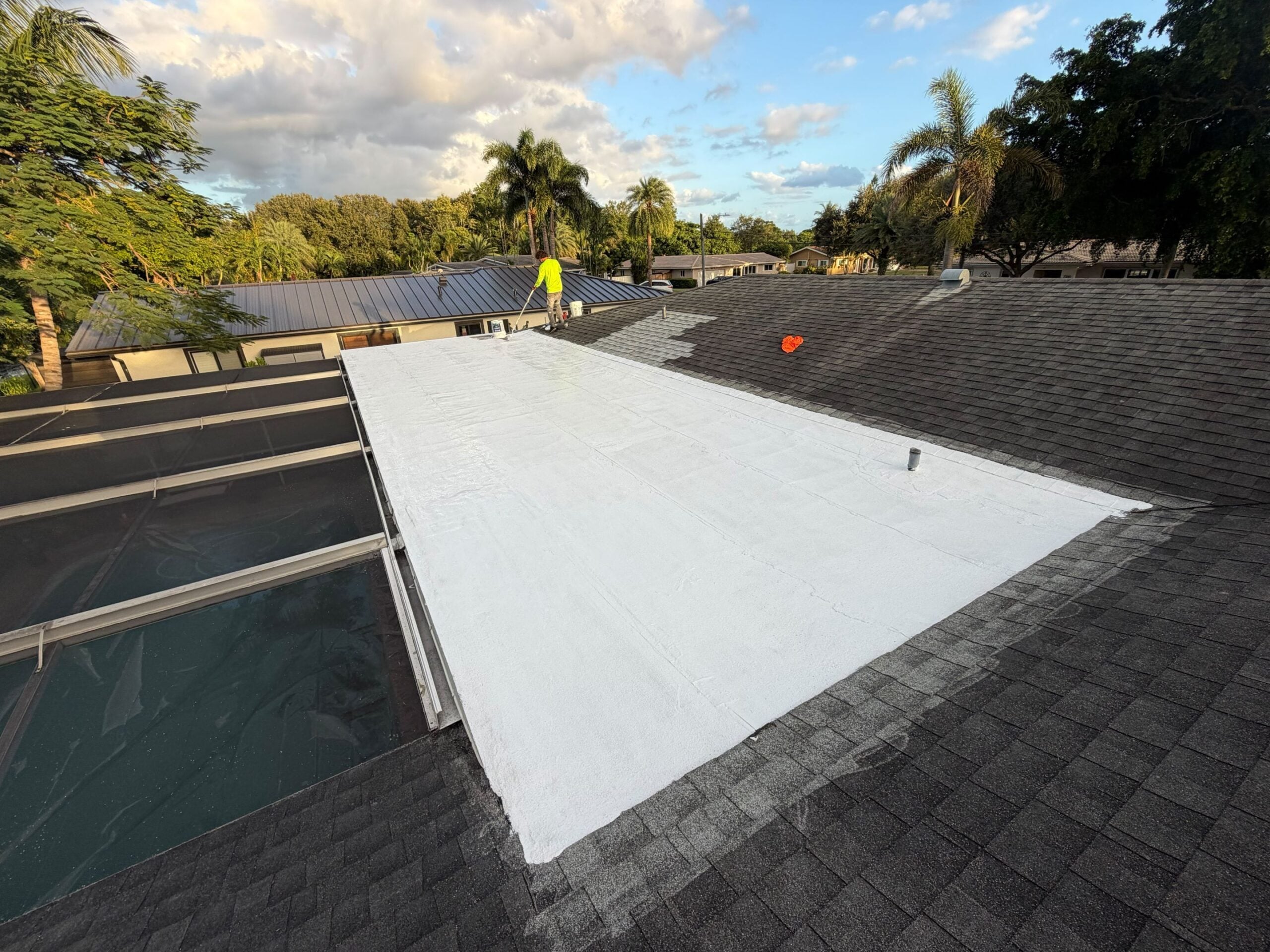

Plantation Silicone Roof Coating: Secluded Gardens Pool Patio Project
This Plantation silicone roof coating project addressed a leaking pool-patio roof in Plantations Secluded Gardens, also listed in some records as Plantations Secluded Gard, in
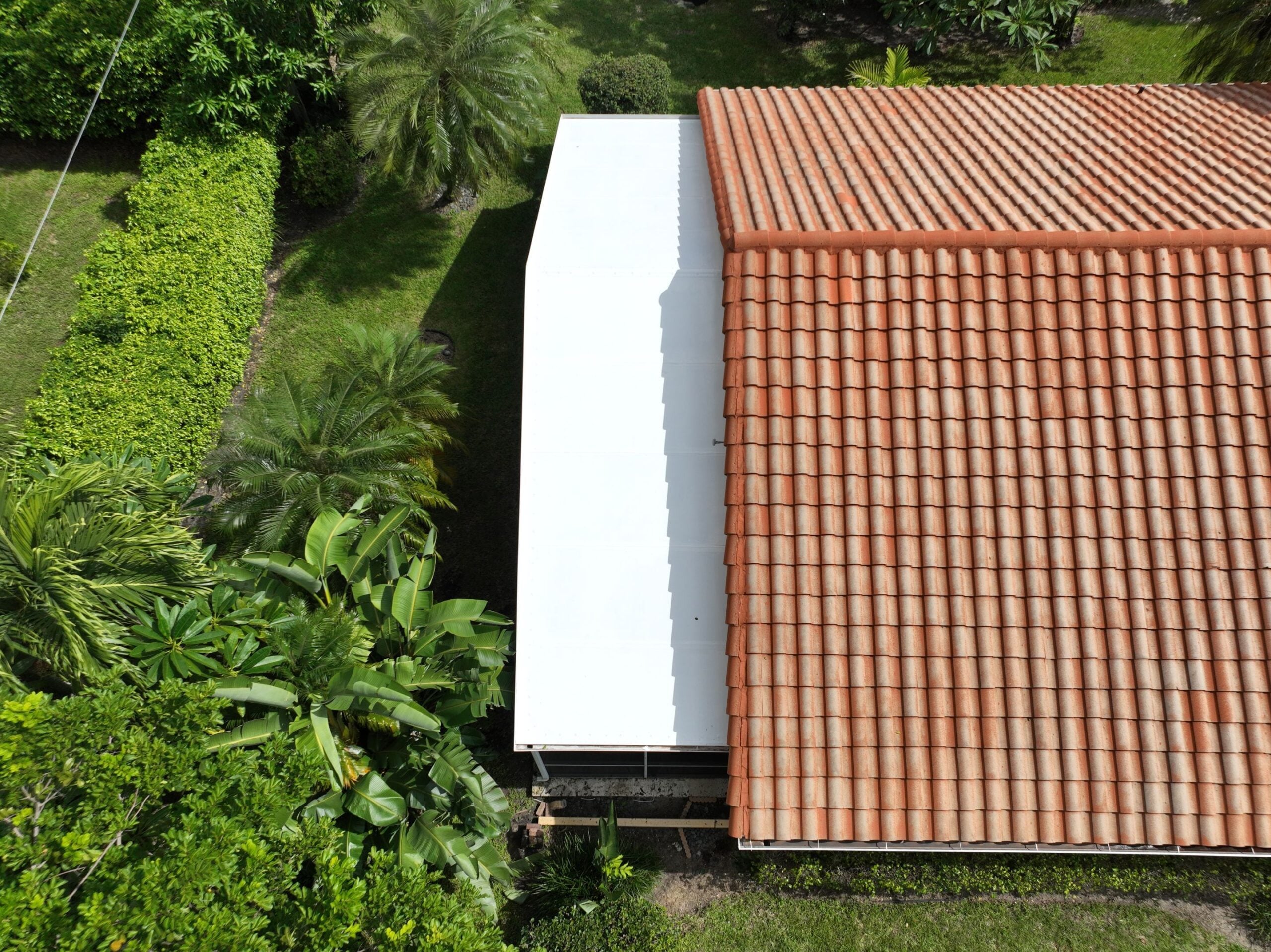
Delray Beach Silicone Roof Coating: Colombo Court Patio Roof Restoration
This Delray Beach silicone roof coating project restored an approximately 400 to 500 square-foot aluminum-panel patio roof at a home in the Bel Air community,
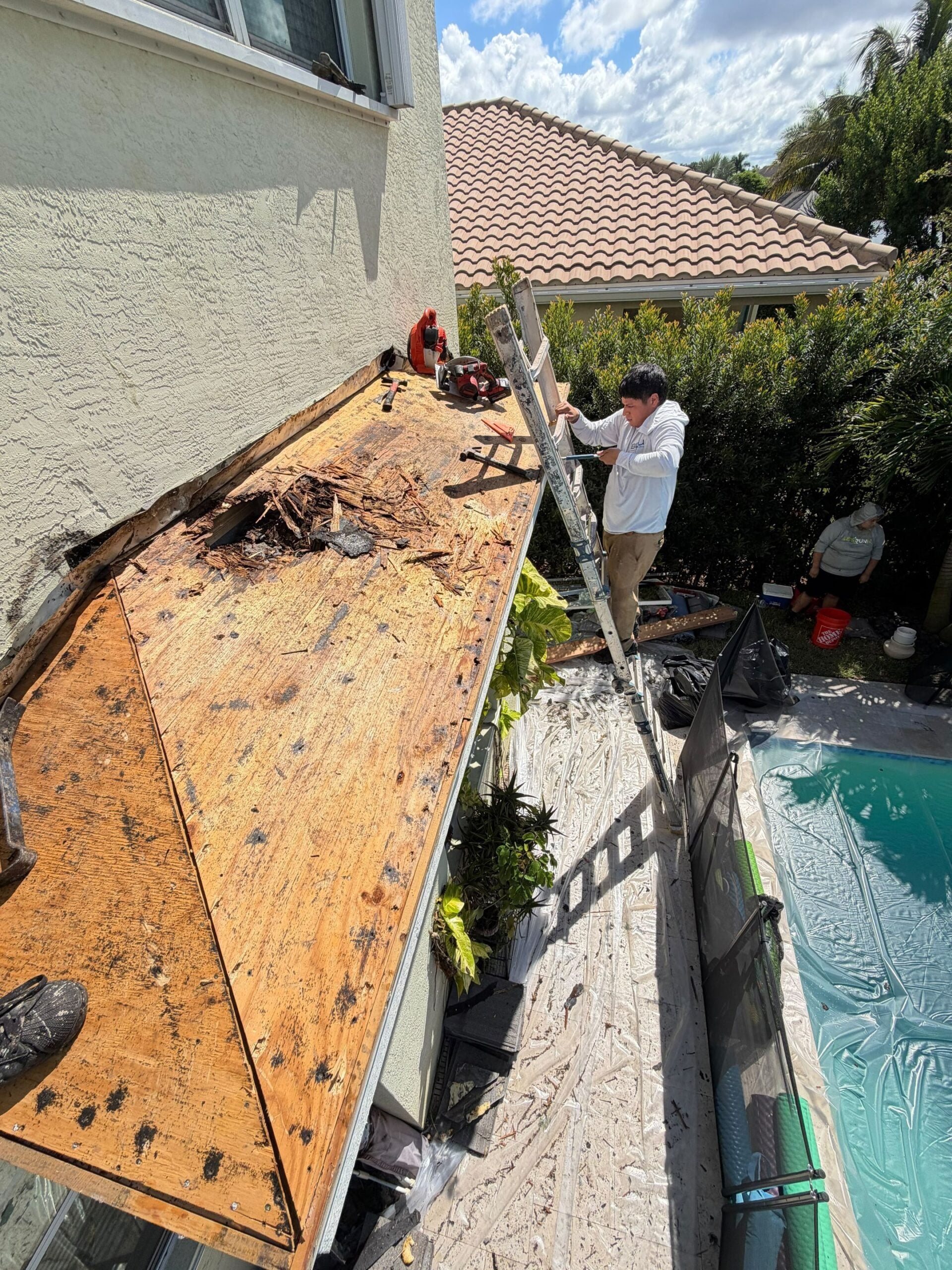
West Palm Beach Tile Roof Repair: PortoSol Eyebrow Roof Repair
This West Palm Beach tile roof repair was completed on a small concrete tile eyebrow roof at a home in the gated PortoSol community, ZIP
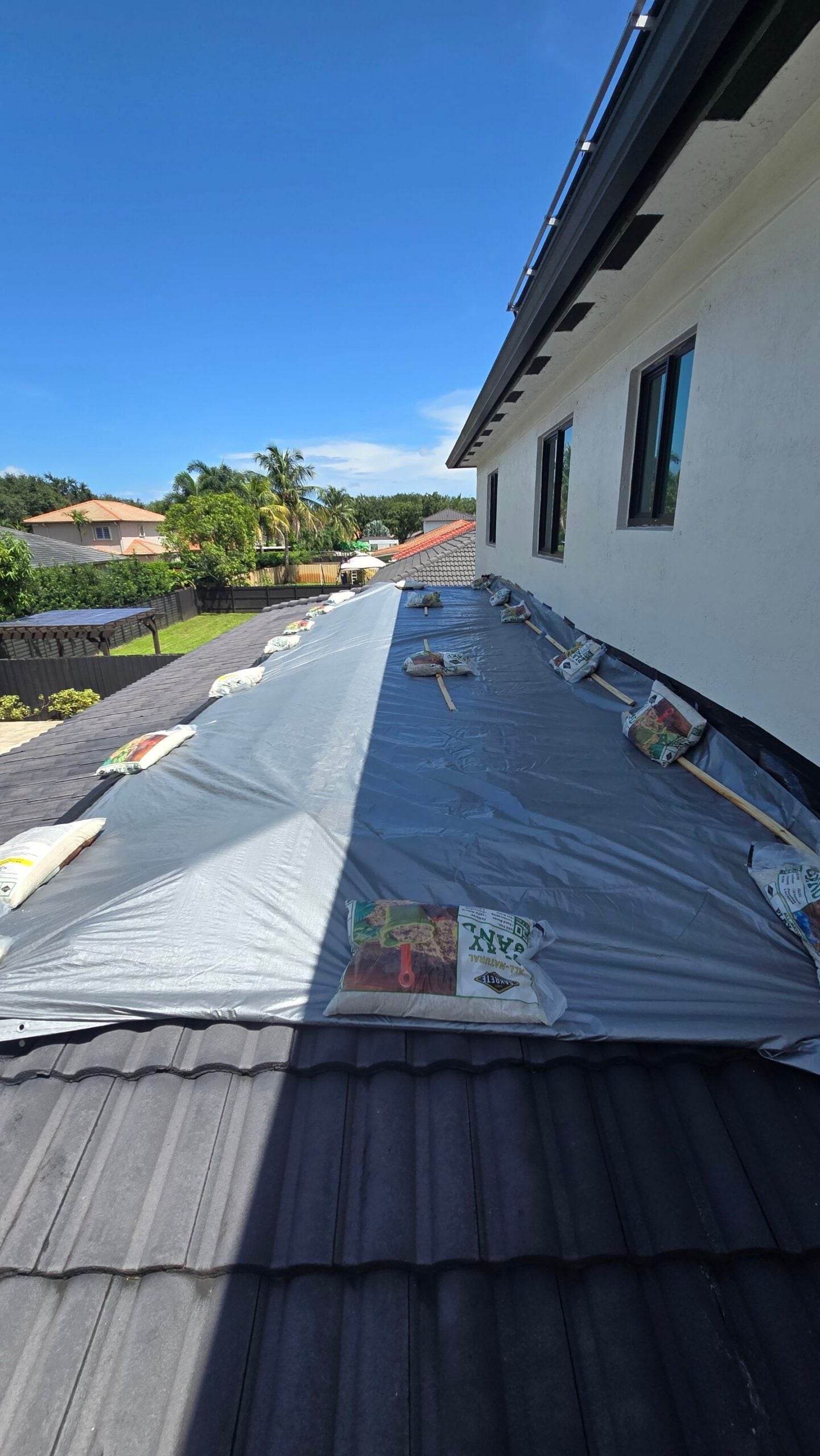
Emergency Roof Tarp Installation for Insurance Mitigation
This emergency roof tarp installation was completed for insurance mitigation at a single-family home in Miami Lakes, Florida. The active leak was at the connection
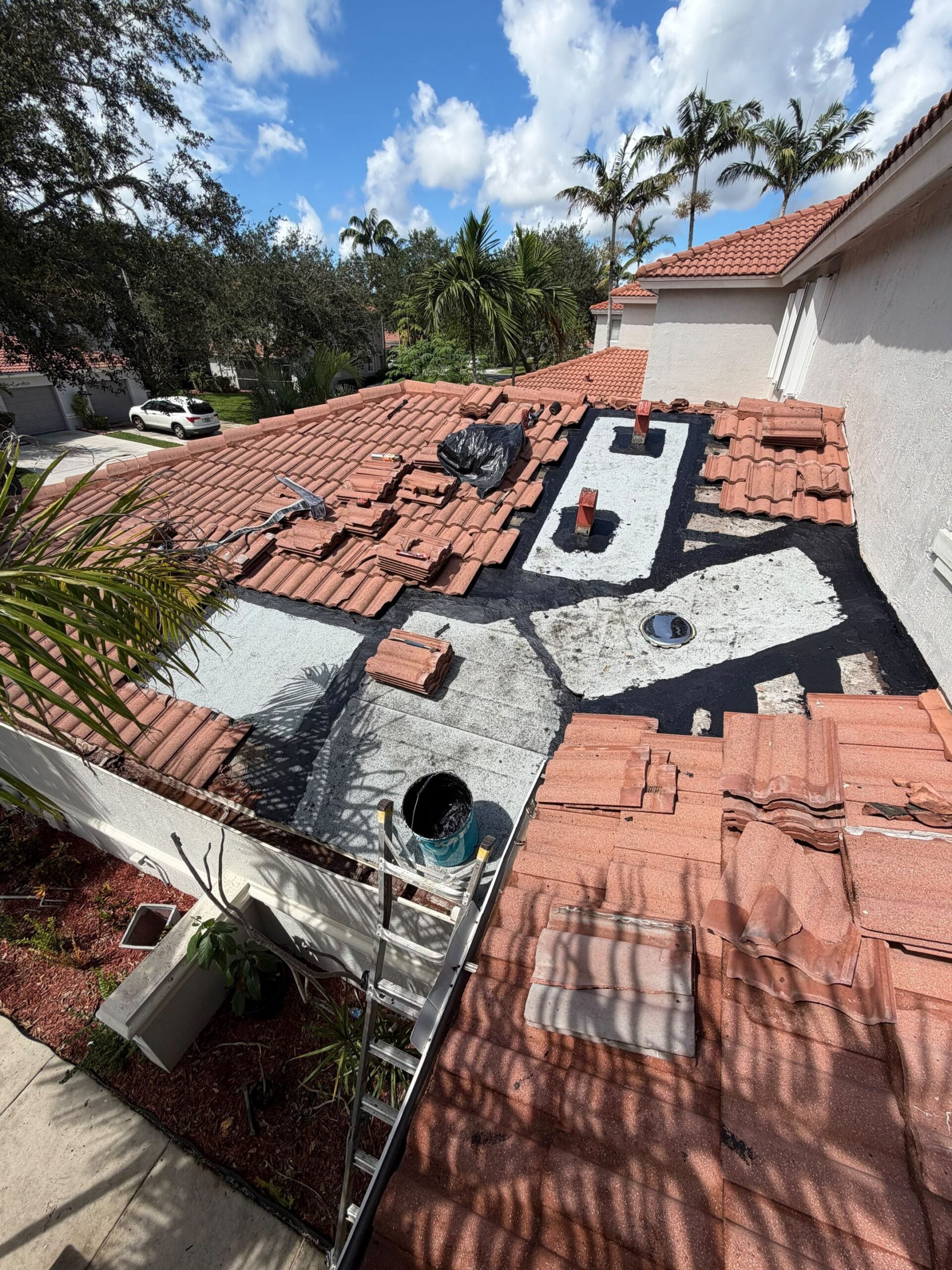
Riviera Beach Tile Roof Repair: Multiple Leaks at a Turtle Cay Townhouse
This Riviera Beach tile roof repair addressed multiple leak areas on a concrete tile townhouse roof in Turtle Cay, Riviera Beach, Florida. The rental property
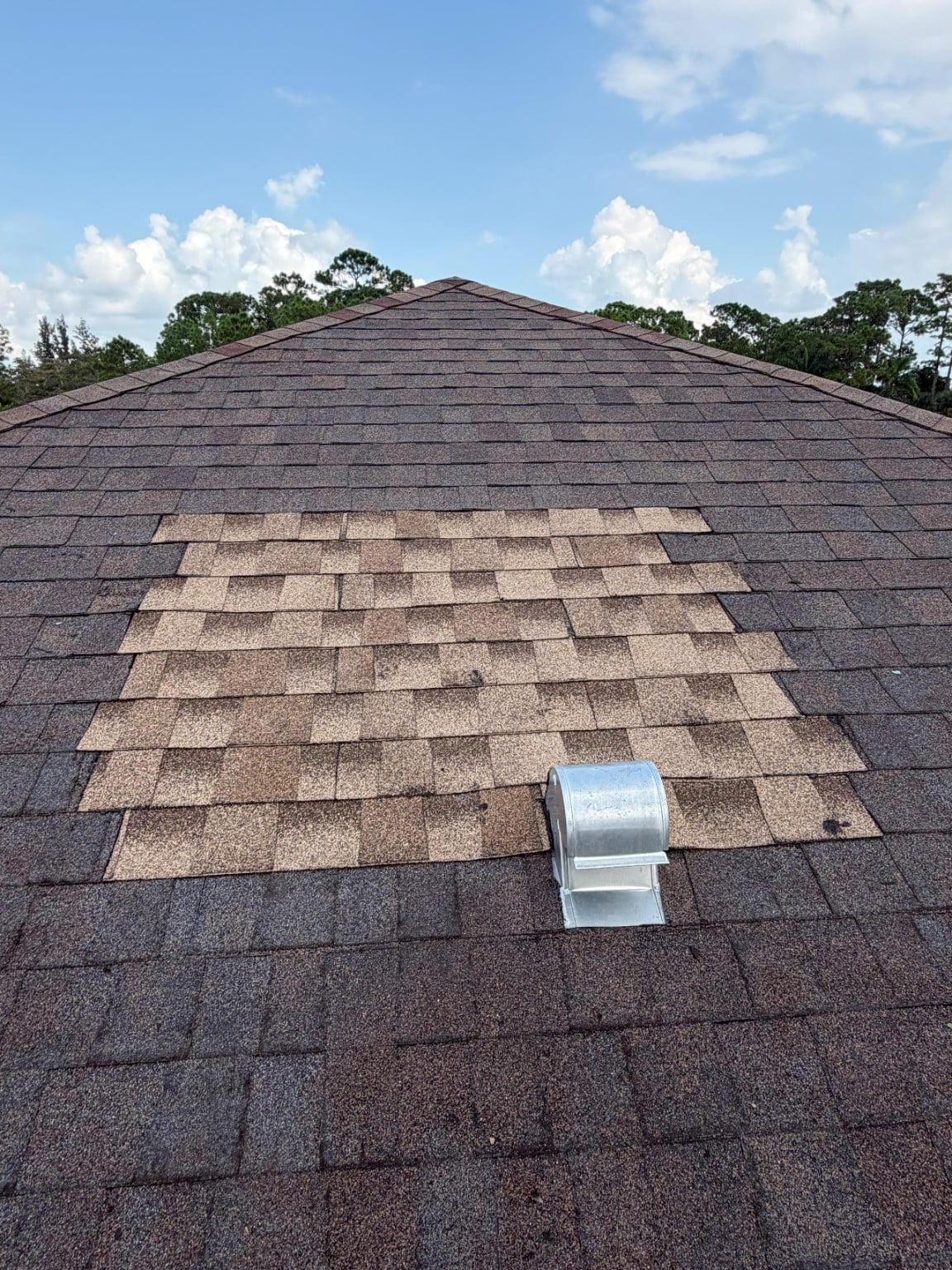
Heritage Farms Shingle Roof Repair: Finding a Leak in a Spray-Foam Attic
This Heritage Farms shingle roof repair involved a difficult-to-locate leak on an eight-year-old asphalt shingle roof in the Heritage Farms equestrian community near Lake Worth
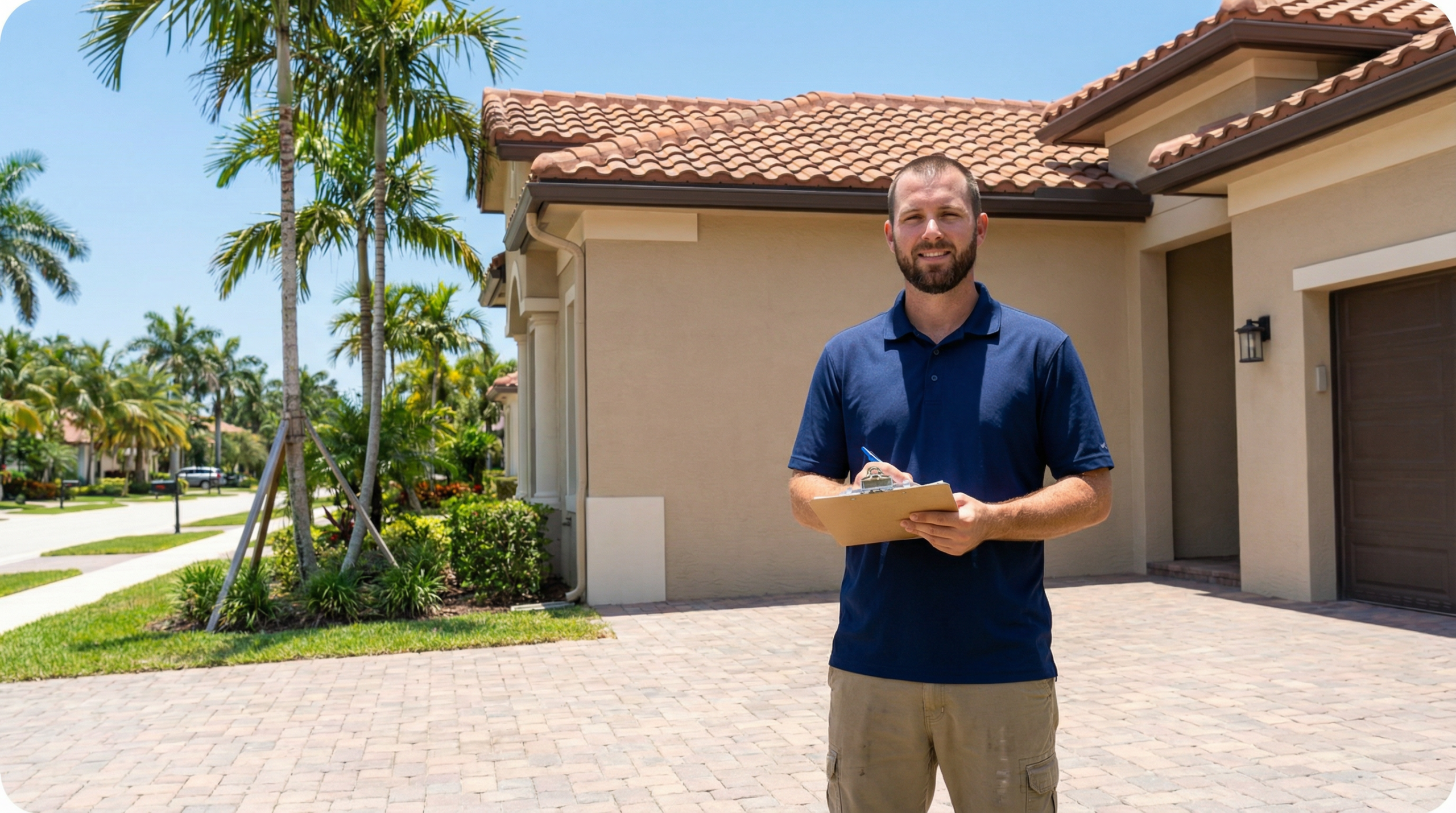
Your roof is the most expensive and important component of your West Palm Beach home. Whether you are protecting a modern suburban residence in The Villages or a coastal estate near the Intracoastal, hiring the wrong contractor can lead to years of structural issues, insurance headaches, and financial loss. In 2026, the South Florida roofing market is more complex than ever, with new regulations and “storm chaser” companies that tend to disappear as soon as the job is done.
Choosing a reputable professional requires more than just looking at a low price. It requires due diligence and a clear understanding of local requirements.
Quick Summary
To choose the right roofing contractor in West Palm Beach, always verify their Florida State License (CCC), ensure they carry both General Liability and Workers’ Compensation insurance, and check for a permanent local office. Avoid any contractor who asks for a large upfront deposit, usually 30% or more, or uses high-pressure sales tactics. Average roofing deposits are 10-20%. A reputable local roofer will provide a detailed, written estimate and have a proven track record of navigating Palm Beach County’s strict building codes.
Table of Contents
- Verify the Florida State License
- Insurance: Protecting Your Property and Wallet
- The Importance of Local Presence
- Navigating West Palm Beach Building Codes
- Red Flags to Avoid
- Frequently Asked Questions
Verify the Florida State License
In Florida, all roofing contractors must be licensed by the Department of Business and Professional Regulation (DBPR). A “Certified Roofing Contractor” (CCC) license is the gold standard.
“Never take a contractor’s word for it,” says Peter Menke, owner of BLU Roofing. “Always go to the DBPR website and search for their license number. For example, our license is CCC1337285. This ensures the contractor has passed the state’s rigorous testing and background checks.”
Insurance: Protecting Your Property and Wallet
A reputable West Palm Beach roofer must carry two types of insurance:
1. General Liability: Protects your home if the contractor causes damage during the project.
2. Workers’ Compensation: Protects you from being held liable if a worker is injured on your property.
In 2026, many “fly-by-night” companies try to cut costs by skipping Workers’ Comp. If an injury occurs on your roof and the contractor isn’t covered, the legal and financial responsibility could fall on you.
The Importance of Local Presence
West Palm Beach has unique environmental factors, from salt air corrosion near the Intracoastal to the specific wind uplift requirements of the High-Velocity Hurricane Zone (HVHZ). A local contractor understands these nuances and roofing systems that are available.
- Check the Address: Ensure they have a physical office in the Palm Beach area, not just a P.O. Box or a temporary truck.
- Local References: Ask for addresses of completed projects in neighborhoods like Flamingo Park, Northwood, or Riverwalk. A true local roofer will be proud to show off their work.
Navigating West Palm Beach Building Codes
Palm Beach County has some of the strictest roofing codes in the country. Whether it’s ensuring proper wind mitigation or navigating the requirements of a historic preservation board, your contractor must be an expert in local law.
A professional roofer will handle all permitting and inspections, ensuring your new roof meets the 2026 Florida Building Code. This is critical for maintaining your homeowners insurance and ensuring your home’s resale value.
Red Flags to Avoid
- Large Upfront Deposits: A reputable company typically doesn’t need more than 10-25% to get on the schedule.
- Door-to-Door Solicitations: Be wary of anyone who shows up uninvited after a storm claiming they “noticed damage from the street.”
- High-Pressure Tactics: If they tell you the price is “only good for today,” walk away.
Frequently Asked Questions
Should I choose the lowest bid?
Rarely. In roofing, a significantly lower bid often means the contractor is cutting corners on materials, insurance, or labor.
How long should a roofing estimate take?
A professional should be able to provide a detailed, written estimate within 24-48 hours of inspecting your roof unless there is a unique circumstance that requires special pricing and attention.
Do I need a permit for a roof repair?
In West Palm Beach, no, but certain repairs over a certain size you may want to permit. Your contractor should handle this process for you.
Written By: Peter Menke
Peter Menke is the owner of BLU Roofing and has been serving the South Florida roofing industry for over 6 years. He founded BLU Roofing to provide homeowners with transparent, accurate data grounded in the reality of Florida’s unique climate and building codes, information that is often missing from generic national roofing advice. License #1337285
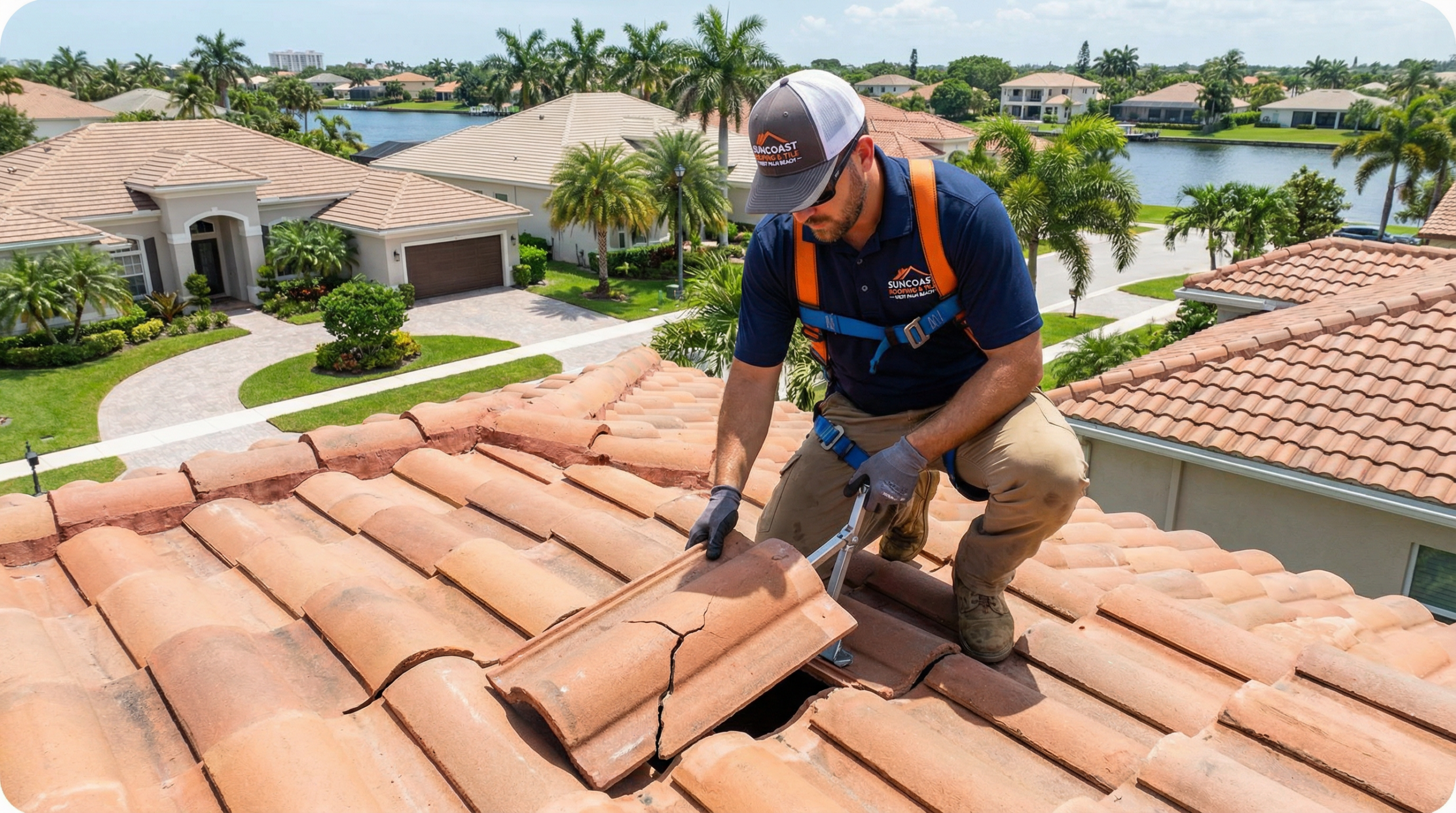
Tile roofing is the hallmark of West Palm Beach architecture. From the Mediterranean-style estates in El Cid to the modern suburban homes in Riverwalk and The Villages, concrete and clay tiles provide a level of durability and aesthetic appeal that other materials simply cannot match. However, even the most robust tile roof is not immune to the harsh South Florida climate.
In 2026, many West Palm Beach homeowners are facing a critical decision: Is it worth repairing a leaking tile roof, or is it time for a full replacement? Understanding the costs and the underlying issues is the first step toward protecting your home and your wallet.
Quick Summary
Tile roof repairs in West Palm Beach typically cost between $700 and $3,500 in 2026, depending on the extent of the damage and the type of tile. While individual tile replacement is affordable, most leaks are caused by failing underlayment beneath the tiles. If your roof is over 20 years old or has multiple leaks, a full replacement is often more cost-effective than repeated repairs.
Table of Contents
- Common Tile Roof Issues in West Palm Beach
- Tile Roof Repair Cost Breakdown (2026)
- The “Underlayment Problem” in South Florida
- Repair vs. Replace: How to Decide
- Factors That Influence Repair Pricing
- Frequently Asked Questions
Common Tile Roof Issues in West Palm Beach
Tile roofs are designed to last 30 to 50 years, but the tiles themselves are only the “armor.” The real waterproofing happens in the underlayment beneath them. In West Palm Beach, we see three primary issues:
- Cracked or Slipped Tiles: High winds, falling debris, or improper foot traffic can crack tiles, allowing water to reach the underlayment.
- Salt Air Corrosion: For homes near the Intracoastal or the ocean, salt air can corrode the metal flashing and fasteners that hold the tiles in place.
- Debris Accumulation: Leaves and pine needles can trap moisture in the roof valleys, leading to rot and underlayment failure.
Tile Roof Repair Cost Breakdown (2026)
Based on our 2026 project data in Palm Beach County, here is what West Palm Beach homeowners can expect to pay for common tile roof repairs:
| Repair Type | Typical Cost Range (2026) | Notes |
|---|---|---|
| Single Tile Replacement | $150 – $500 | Includes labor and material matching. |
| Ridge Cap Repair | $700 – $1,500 | Common after high-wind events. |
| Valley Leak Repair | $2,000 – $3,500 | Involves removing tiles and replacing underlayment. |
| Flashing Repair | $1,500 – $3,000 | Around chimneys, skylights, or wall transitions. |
| Emergency Tarping | $700 – $2,500 | Temporary protection during storm season. |
Note: Many roofing companies have a minimum trip charge for small repairs. See our full roof repair cost guide for more details.
The “Underlayment Problem” in South Florida
The most important thing to understand about tile roofs in West Palm Beach is that the tiles are not waterproof. They are water-shedding. The actual waterproofing is a layer of asphalt-saturated felt or synthetic material called underlayment.
In the intense South Florida heat, underlayment eventually becomes brittle and cracks. “We often see tiles that look perfectly fine from the ground, but the underlayment beneath them has completely failed,” says Peter Menke, owner of BLU Roofing. “This is why a professional roof inspection is so critical before you commit to a repair.”
Repair vs. Replace: How to Decide
If you are dealing with a roof leak in West Palm Beach, you need to weigh the cost of the repair against the remaining life of the roof.
- Repair if: The roof is less than 15 years old, the leak is isolated to a single area (like a valley or flashing), and the rest of the underlayment is still pliable.
- Replace if: The roof is over 20 years old, you have multiple leaks in different areas, or the underlayment is brittle and crumbling. In 2026, a full roof replacement in West Palm Beach may be the better long-term investment.
Factors That Influence Repair Pricing
Several variables can impact the final cost of your tile roof repair:
- Tile Type: Rare or discontinued clay tiles are more expensive and harder to match than standard concrete barrel tiles.
- Roof Pitch: Steeper roofs require more safety equipment and labor time.
- Accessibility: Homes with multiple stories or limited access points for equipment will see higher labor costs.
- Permit Fees: In West Palm Beach, even minor repairs may require a permit from the city or county, which adds to the total cost.
Frequently Asked Questions
Can I walk on my tile roof to inspect it myself?
No. We strongly advise against homeowners walking on their tile roofs. Not only is it dangerous, but improper foot placement can easily crack tiles, creating new leaks where none existed before.
How long does a tile roof repair take?
Most minor repairs can be completed in a single day. Larger projects, like valley or flashing repairs, may take two to three days depending on the weather.
Will my insurance cover tile roof repairs?
If the damage was caused by a “sudden and accidental” event like a hurricane or a fallen tree, it is typically covered. If the leak is due to age or lack of maintenance, the claim may be denied. Check our guide on how to file a roof insurance claim in Florida for more information.
How do I find a reputable tile roofer in West Palm Beach?
Always choose a contractor who is locally based, fully licensed, and insured. You can read our tips on how to choose a roofing contractor in West Palm Beach to avoid common scams.
Written By: Peter Menke
Peter Menke is the owner of BLU Roofing and has been serving the South Florida roofing industry for over 6 years. He founded BLU Roofing to provide homeowners with transparent, accurate data grounded in the reality of Florida’s unique climate and building codes, information that is often missing from generic national roofing advice. License #1337285
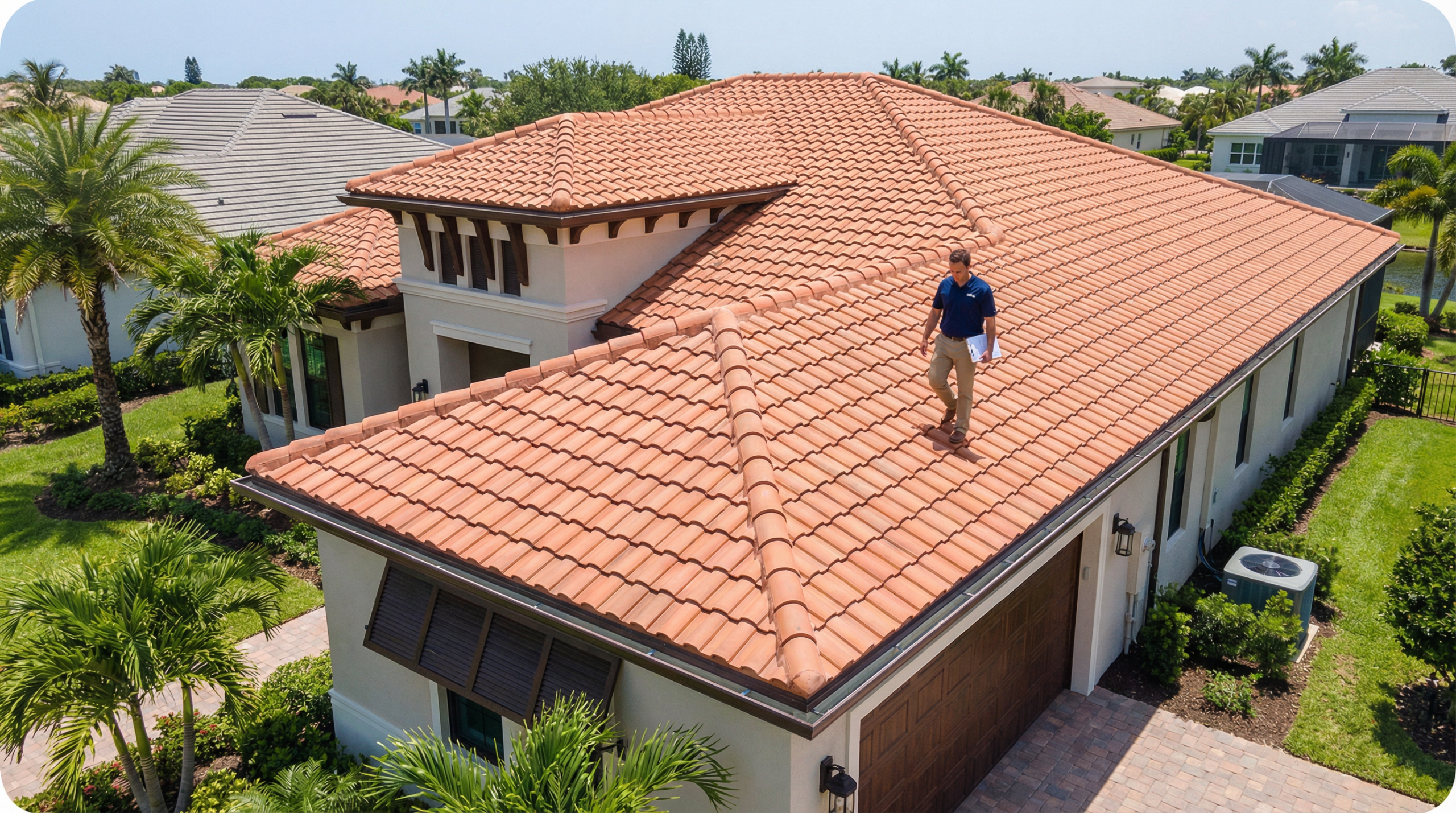
Choosing the right roofing material in Jupiter is about more than just curb appeal. In a coastal city where your home must withstand intense UV radiation, relentless salt air corrosion from the Atlantic, and the potential for 150-mph hurricane winds, your choice of material is a critical financial and safety decision. Whether you are living in a historic home near the Jupiter Inlet Lighthouse or a modern estate in Abacoa, the “best” material depends on your budget, your home’s architecture, and how long you plan to stay in the property.
In 2026, the South Florida roofing market has evolved with new technologies in underlayment and high-impact materials that offer better protection than ever before.
Quick Summary
For Jupiter homeowners in 2026, concrete tile remains the gold standard for durability and aesthetic value, while standing seam metal is the top choice for hurricane resistance and energy efficiency. Architectural shingles offer the most budget-friendly entry point, provided they are installed with high-quality synthetic underlayment to combat South Florida’s humidity and heat.
Table of Contents
- Top 3 Roofing Materials for Jupiter
- Concrete and Clay Tile: The South Florida Classic
- Metal Roofing: The Hurricane Champion
- Architectural Shingles: Budget-Friendly Protection
- Material Comparison: Cost vs. Lifespan
- Factors to Consider for Jupiter Homes
- Frequently Asked Questions
Top 3 Roofing Materials for Jupiter
Based on our 2026 project data in Palm Beach County, three materials dominate the Jupiter landscape. Each serves a different segment of the market, from the modern developments in Abacoa to the coastal estates near the Loxahatchee River.
- Concrete Tile: Favored for its traditional look and 30+ year lifespan.
- Standing Seam Metal: The fastest-growing segment due to its superior wind uplift ratings.
- Architectural Shingles: The most common choice for suburban developments and rental properties.
Concrete and Clay Tile: The South Florida Classic
Tile roofing is synonymous with Jupiter architecture. In coastal neighborhoods, clay tile is often required to maintain the aesthetic integrity. However, for most modern Jupiter homes, concrete tile is the preferred option due to its lower cost and high durability.
- Pros: Exceptional fire resistance, high wind shed, and natural ventilation that helps lower cooling costs.
- Cons: Heavy weight requires a reinforced roof deck; tiles can crack if walked on improperly.
- Jupiter Tip: If you live within five miles of the ocean or the Intracoastal, ensure your tile roof uses stainless steel or high-grade galvanized fasteners to prevent salt air corrosion.
Metal Roofing: The Hurricane Champion
Standing seam metal roofing has become the “gold standard” for hurricane protection in 2026. Unlike older metal roofs with exposed fasteners, standing seam systems hide the screws under the metal panels, eliminating a common leak point.
- Pros: Rated for winds up to 160+ mph, reflects up to 70% of solar heat, and can last 50 years or more.
- Cons: Higher initial roof replacement cost in Jupiter; can be noisier during heavy tropical downpours if not properly insulated.
- Modern Context: We are seeing a massive surge in metal roof installations in newer Jupiter communities, where homeowners prioritize long-term energy savings.
Architectural Shingles: Budget-Friendly Protection
For many homeowners, architectural shingles provide the best balance of cost and performance. Modern shingles in 2026 are far superior to the “3-tab” shingles of the past, featuring multiple layers of material for a dimensional look and better wind resistance.
- Pros: Lowest upfront cost, fastest installation time (usually 1-2 days), and easy to repair.
- Cons: Shortest lifespan in South Florida (15-20 years) due to intense UV degradation.
- Maintenance: Shingle roofs in Jupiter require more frequent roof inspections to check for granule loss and lifted tabs after wind events.
Material Comparison: Cost vs. Lifespan
| Material | Typical Cost (2,500 sq ft) | Lifespan in South Florida | Wind Rating |
|---|---|---|---|
| Architectural Shingles | $12,000 – $25,000 | 15 – 20 Years | Up to 130 mph |
| Concrete Tile | $25,000 – $40,000 | 25 – 35 Years | Up to 150 mph |
| Standing Seam Metal | $30,000 – $50,000 | 40 – 50+ Years | Up to 160+ mph |
Note: Costs are estimates for 2026 and vary based on roof complexity and permit fees. See our full roofing cost guide for more details.
Factors to Consider for Jupiter Homes
When choosing your material, keep these three Jupiter-specific factors in mind:
- Salt Air Proximity: If you are east of I-95 or near the Loxahatchee River, salt air will eat through standard metal and fasteners. Aluminum roofing or high-grade tile fasteners are mandatory for longevity.
- HOA Restrictions: Many Jupiter communities, especially in Abacoa, have strict rules about roof color and material. Always check your HOA bylaws before signing a contract.
- Insurance Discounts: Installing a metal roof or a tile roof with a secondary water resistance (SWR) barrier can significantly lower your homeowners insurance premiums in Florida.
Frequently Asked Questions
What is the most popular roofing material in Jupiter?
Currently, architectural shingles are the most common due to their price point, but concrete tile is the most popular for homeowners looking to increase their property value and long-term protection.
Is metal roofing too hot for South Florida?
Actually, the opposite is true. Metal roofs are “cool roofs” because they reflect solar heat rather than absorbing it like asphalt shingles. This can reduce your AC bills by up to 20% during the summer.
How do I know if my roof can handle the weight of tile?
A licensed roofing contractor must perform a structural assessment. If your home was originally built with shingles, you may need to reinforce the trusses before switching to tile.
Which material is best for hurricane season?
Standing seam metal and concrete tile are the top performers. However, any material is only as good as its installation. Ensuring your roof meets Palm Beach County roofing codes is the most important factor.
Written By: Peter Menke
Peter Menke is the owner of BLU Roofing and has been serving the South Florida roofing industry for over 6 years. He founded BLU Roofing to provide homeowners with transparent, accurate data grounded in the reality of Florida’s unique climate and building codes, information that is often missing from generic national roofing advice. License #1337285
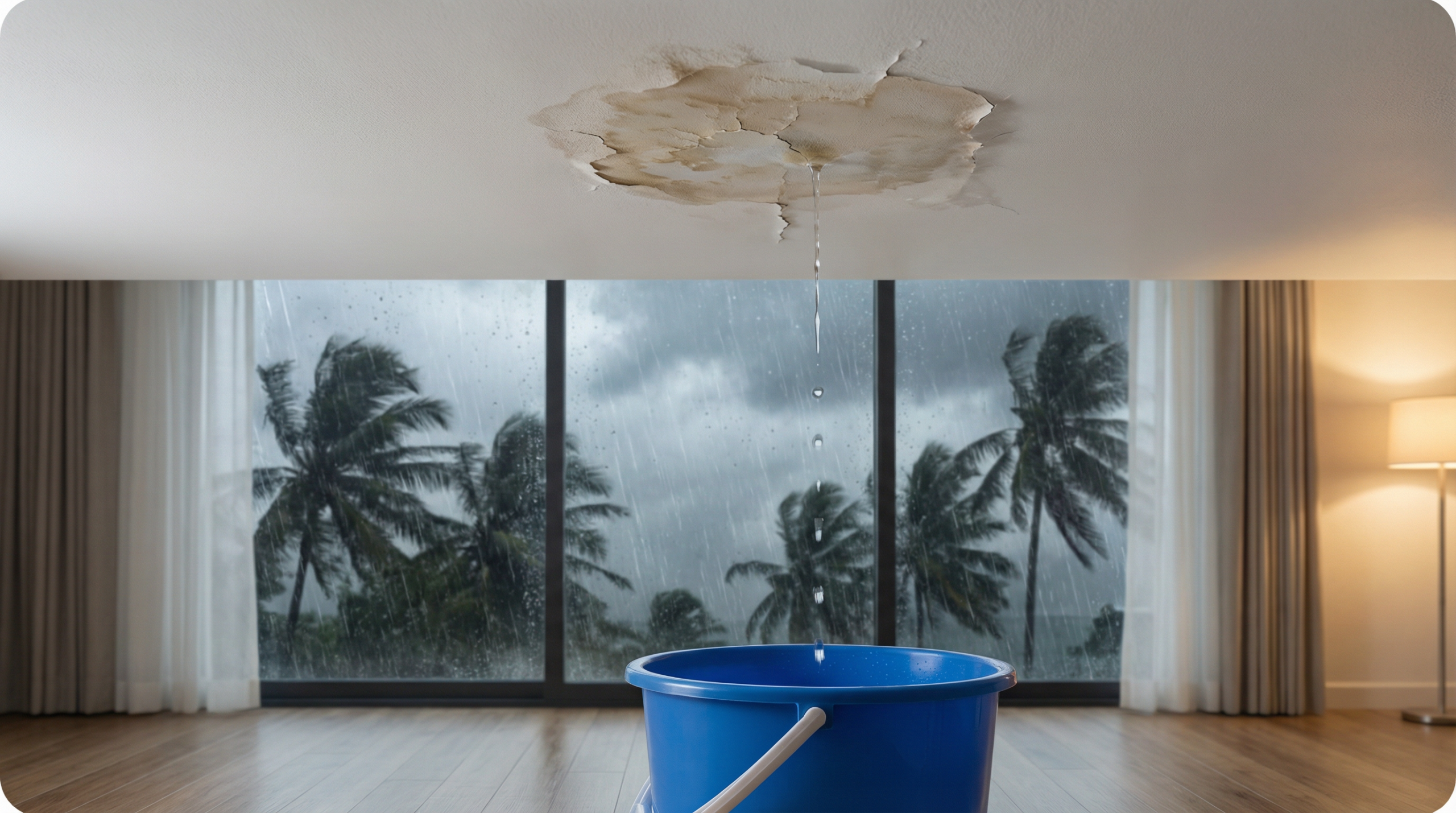
Discovering a water stain on your ceiling or hearing the steady drip-drip-drip of a roof leak is a stressful experience for any West Palm Beach homeowner. In South Florida, where tropical storms and sudden afternoon downpours are the norm, a small leak can quickly escalate into a major structural issue or a mold problem if not handled correctly.
If you find yourself dealing with a leaking roof in West Palm Beach, time is of the essence. Here is exactly what you need to do, in order, to minimize damage and protect your home.
Quick Summary
When your roof is leaking, the first priority is to contain the water and protect your interior. Move furniture, use buckets, and if the ceiling is bulging, carefully poke a small hole to drain the water. Once the immediate threat is managed, call a licensed West Palm Beach roofing contractor for an emergency inspection and tarping to prevent further damage before a permanent repair can be made.
Table of Contents
- Step 1: Contain the Immediate Damage
- Step 2: Relieve Water Pressure
- Step 3: Document Everything for Insurance
- Step 4: Call a Licensed West Palm Beach Roofer
- Step 5: Emergency Tarping vs. Permanent Repair
- Frequently Asked Questions
Step 1: Contain the Immediate Damage
The moment you notice a leak, your first goal is to stop the water from damaging your floors, furniture, and electronics.
- Clear the Area: Move any valuables, rugs, or furniture away from the drip zone.
- Use a Bucket: Place a container under the leak. If the water is splashing, place an old towel in the bottom of the bucket to dampen the sound and prevent splatter.
- Cover Large Areas: If the leak is spreading across a large section of the ceiling, use plastic sheeting or heavy-duty trash bags to protect your flooring.
In West Palm Beach neighborhoods like El Cid or Flamingo Park, many historic homes have plaster ceilings that can absorb a significant amount of water before showing signs of a leak. If you see a dark spot, the water has likely been there for some time.
Step 2: Relieve Water Pressure
If you see a bulge in your ceiling or paint that looks like a water-filled balloon, the water is pooling behind the drywall. This is a dangerous situation because the weight of the water can cause the entire ceiling to collapse.
To prevent a collapse, find the center of the bulge and carefully poke a small hole with a screwdriver or an ice pick. Have a bucket ready underneath. This “controlled leak” relieves the pressure and allows the water to drain safely rather than spreading horizontally across your ceiling.
Step 3: Document Everything for Insurance
Before you start cleaning up, take photos and videos of the leak, the damage to your interior, and any ruined belongings. This documentation is critical if you plan to file a roof insurance claim in Florida.
Be sure to capture:
* The source of the drip.
* The extent of the ceiling damage.
* Any damaged electronics, furniture, or flooring.
* The date and time the leak was discovered.
Step 4: Call a Licensed West Palm Beach Roofer
Once the water is contained, you need a professional to find the source of the leak. In West Palm Beach, leaks are often caused by:
* Salt Air Corrosion: Homes near the Intracoastal or the ocean often see metal flashing and fasteners fail prematurely due to salt air.
* Cracked Tiles: High winds or debris can crack concrete or clay tiles, allowing water to reach the underlayment.
* Aged Underlayment: In South Florida, the underlayment often fails before the tiles themselves. Based on our 2026 project data in Palm Beach County, most tile roof underlayments last 20–30 years before requiring a full roof replacement in West Palm Beach.
“A leak is a symptom, not the disease,” says Peter Menke, owner of BLU Roofing. “Patching a hole without understanding why it happened is just a temporary fix. You need a full roof inspection in West Palm Beach to determine if the rest of the roof is still sound.”
Step 5: Emergency Tarping vs. Permanent Repair
If it is still raining or if a major storm is approaching, your roofer will likely perform an emergency tarping. This involves securing a heavy-duty waterproof tarp over the affected area to stop the water entry immediately.
Once the weather clears, you can discuss a permanent repair. Depending on the age and condition of your roof, you may be looking at:
* Minor Repair: Replacing a few tiles or resealing a piece of flashing.
* Sectional Repair: Replacing a larger area of underlayment and tiles.
* Full Replacement: If the roof is over 20 years old or has multiple leaks, a full replacement may be the most cost-effective long-term solution.
Check our roof repair cost guide for current 2026 pricing on these services.
Frequently Asked Questions
How much does it cost to fix a roof leak in West Palm Beach?
In 2026, most minor roof repairs in West Palm Beach range from $700 to $1,500. However, if the leak has caused significant structural damage or requires a large section of underlayment to be replaced, the cost can be higher.
Will my homeowners insurance cover a roof leak?
It depends on the cause. If the leak was caused by a “sudden and accidental” event like a hurricane or a fallen tree limb, it is typically covered. If the leak is due to age or lack of maintenance, the claim may be denied.
Can I wait until the rain stops to call a roofer?
No. You should call as soon as you notice the leak. Many roofing companies offer 24/7 emergency services and can provide advice over the phone while they are en route to your home.
How do I find a reputable roofer in West Palm Beach?
Always look for a contractor who is locally based, fully licensed, and insured. You can read our guide on how to choose a roofing contractor in West Palm Beach for more tips on avoiding scams.
Written By: Peter Menke
Peter Menke is the owner of BLU Roofing and has been serving the South Florida roofing industry for over 6 years. He founded BLU Roofing to provide homeowners with transparent, accurate data grounded in the reality of Florida’s unique climate and building codes, information that is often missing from generic national roofing advice. License #1337285
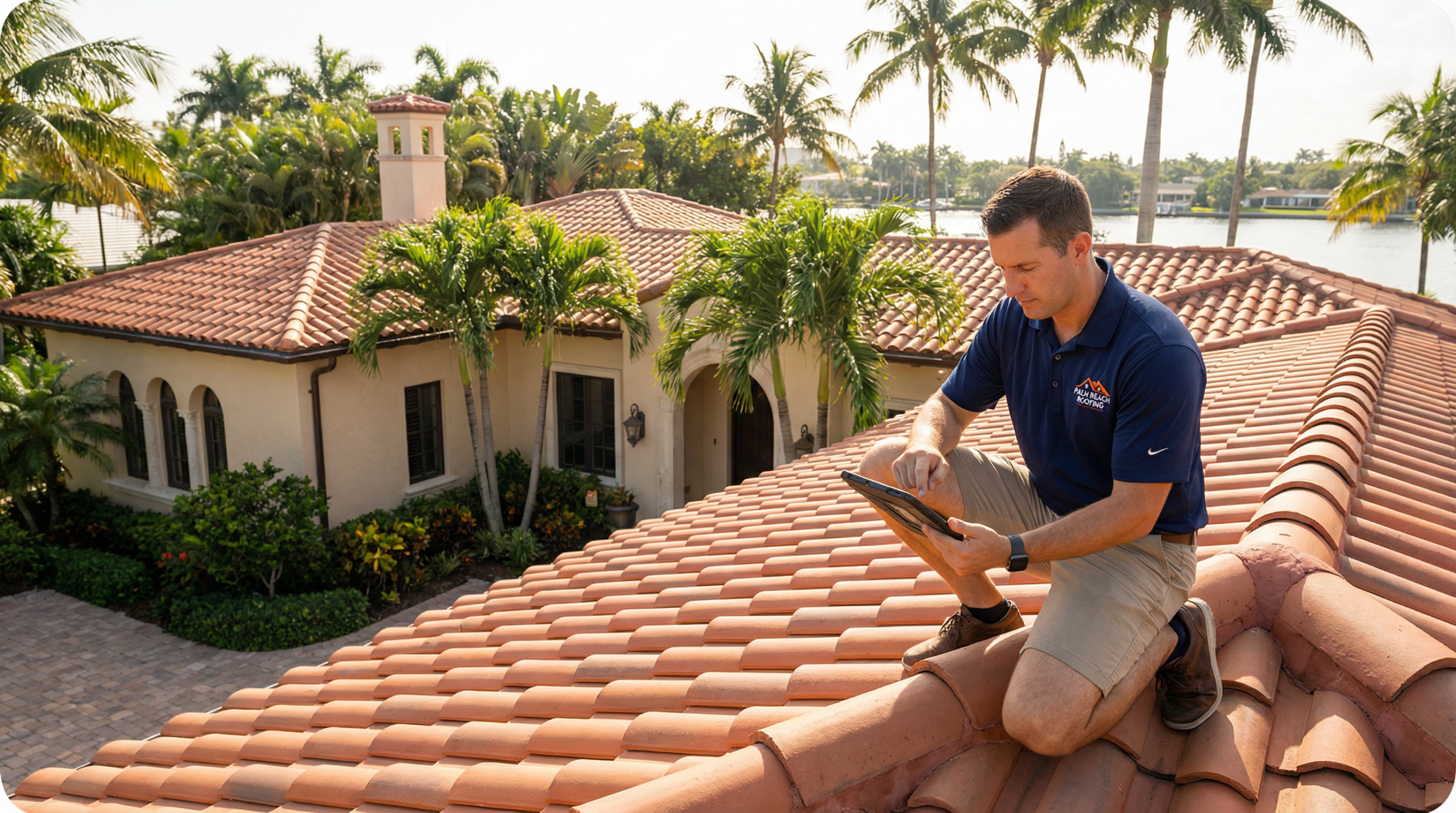
If you are a homeowner in West Palm Beach, your roof is the most important line of defense against South Florida’s intense sun, torrential rains, and hurricane-force winds. Whether you are preparing for storm season, buying a new home in El Cid, or just noticed a suspicious water stain on your ceiling in Flamingo Park, a professional roof inspection is the first step toward protecting your investment.
But how much does a roof inspection cost in West Palm Beach in 2026? While some national websites might give you generic numbers, the reality of the South Florida market is unique.
Quick Summary
A professional roof inspection in West Palm Beach typically costs between $150 and $450 in 2026. Basic visual inspections for insurance purposes (Wind Mitigation) are on the lower end, while comprehensive structural assessments for large tile or metal roofs fall on the higher end. Investing in an inspection can save you thousands by catching minor leaks before they become major structural issues.
Table of Contents
- Average Roof Inspection Costs in West Palm Beach
- Types of Roof Inspections and Their Pricing
- Factors That Influence the Cost
- Why West Palm Beach Homeowners Need Regular Inspections
- What Is Included in a Professional Inspection?
- Frequently Asked Questions
Average Roof Inspection Costs in West Palm Beach
In 2026, West Palm Beach homeowners can expect to pay a range of prices based on the depth of the inspection required. Based on our 2026 project data in Palm Beach County, most residential inspections fall into the following brackets:
| Inspection Type | Typical Cost Range (2026) | Best For |
|---|---|---|
| Wind Mitigation Inspection | $150 – $250 | Insurance discounts and hurricane readiness |
| Standard Visual Inspection | $200 – $350 | General maintenance and peace of mind |
| Real Estate/Buyer Inspection | $300 – $500 | Home sales and detailed structural reports |
| Infrared/Thermal Imaging | $450 – $750+ | Detecting hidden leaks and moisture behind walls |
While these are the standard ranges, the specific architecture of your home, whether it’s a historic 1920s bungalow in Northwood or a modern estate near the Intracoastal, will play a role in the final quote.
Types of Roof Inspections and Their Pricing
Not all inspections are created equal. Depending on your goal, you may need a specific type of report.
Wind Mitigation Inspections ($150 – $250)
In Florida, this is the most common type of inspection. It focuses on how well your roof can withstand high-wind events. Inspectors look at roof-to-wall attachments, nail spacing, and the presence of a Secondary Water Resistance (SWR) barrier. This report is often required by insurance companies and can lead to significant premium discounts.
Standard Maintenance Inspections ($200 – $350)
This is a “check-up” for your roof. A technician will walk the roof, check for cracked tiles, loose shingles, or clogged valleys. In West Palm Beach, salt air corrosion is a major factor for homes within five miles of the ocean. A maintenance inspection identifies these issues before they lead to a roof leak in West Palm Beach.
Real Estate Inspections ($300 – $500)
If you are buying or selling a home, a more rigorous inspection is required. This includes a detailed report on the remaining useful life of the roof, which is critical for mortgage approval and insurance eligibility in Florida.
Factors That Influence the Cost
Several variables can push your inspection cost toward the higher or lower end of the spectrum:
- Roof Material: Inspecting a complex concrete tile roof takes longer than a simple asphalt shingle roof. Tile roofs require careful walking to avoid breaking tiles, which adds to the labor time.
- Roof Size and Pitch: Larger homes or those with very steep pitches require more safety equipment and time to navigate.
- Accessibility: If your home has multiple stories or limited access points, the inspector may charge a premium for the additional risk and equipment needed.
- Specialized Technology: Using drones for high-resolution photos or infrared cameras to find moisture increases the cost but provides a much higher level of accuracy.
Why West Palm Beach Homeowners Need Regular Inspections
The South Florida climate is brutal on roofing materials. Between the 100-degree summer days and the sudden tropical downpours, your roof expands and contracts constantly.
“We often see homeowners wait until they see a brown spot on their ceiling to call us,” says Peter Menke, owner of BLU Roofing. “By that point, the underlayment has likely been failing for months, and you’re looking at a much higher roof repair cost in West Palm Beach.”
Regular inspections are especially critical for:
* Hurricane Readiness: Ensuring your roof meets current Palm Beach County roofing codes before June 1st.
* Insurance Compliance: Many Florida insurers now require proof of a roof’s condition if it is over 15 years old.
* Warranty Protection: Some manufacturers require annual or bi-annual inspections to keep your material warranty valid.
What Is Included in a Professional Inspection?
When you hire a licensed contractor like BLU Roofing for an inspection, you should receive a comprehensive report that covers:
- Surface Condition: Checking for UV damage, granule loss on shingles, or cracks in tiles.
- Flashing and Vents: Inspecting the metal transitions around chimneys, skylights, and plumbing stacks where most leaks begin.
- Gutter and Drainage: Ensuring water is moving off the roof and away from the foundation.
- Interior Assessment: Checking the attic for signs of daylight, moisture, or mold.
- Photo Documentation: A digital gallery of all findings, both good and bad.
Frequently Asked Questions
How often should I have my roof inspected in West Palm Beach?
We recommend a professional inspection once a year, ideally in the spring before hurricane season begins. You should also schedule an inspection after any major wind event or hailstorm.
Does a roof inspection include repairs?
Generally, no. An inspection is a diagnostic service. However, if minor issues like a single cracked tile are found, some contractors may offer to fix them on the spot for an additional fee.
Can I do my own roof inspection?
While you can look for obvious signs of damage from the ground with binoculars, we do not recommend homeowners get on their own roofs. It is dangerous, and without professional training, it is easy to miss the subtle signs of underlayment failure or salt air corrosion.
Will a roof inspection help me get insurance?
Yes. In the current Florida insurance market, a clean “4-Point Inspection” or “Wind Mitigation” report is often the only way to secure or maintain coverage for older homes.
Written By: Peter Menke
Peter Menke is the owner of BLU Roofing and has been serving the South Florida roofing industry for over 6 years. He founded BLU Roofing to provide homeowners with transparent, accurate data grounded in the reality of Florida’s unique climate and building codes, information that is often missing from generic national roofing advice. License #1337285
Quick Summary
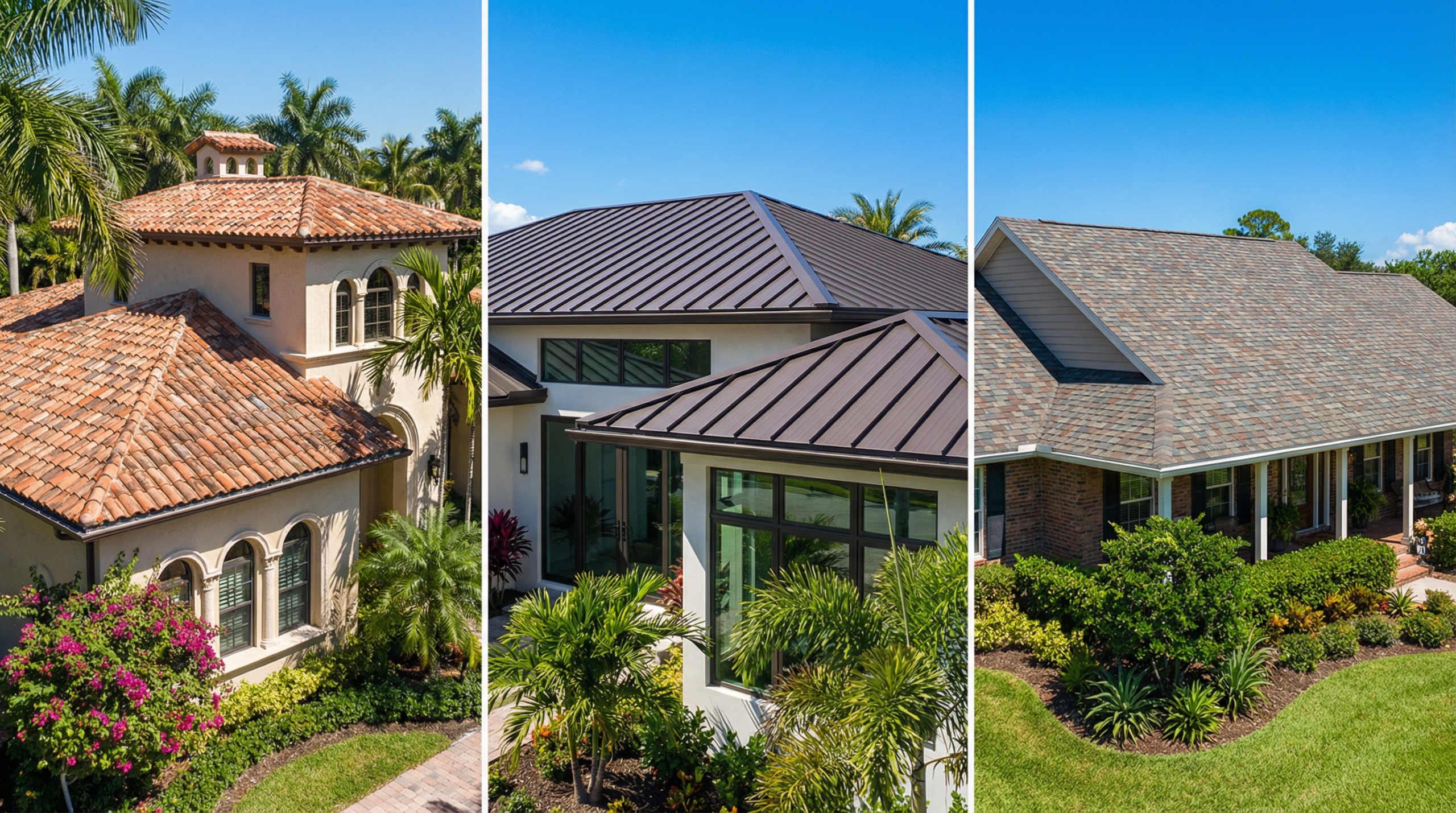
The best roofing materials for West Palm Beach homes in 2026 are concrete tile, standing seam metal, and architectural shingles. Concrete tile dominates historic districts like Old Northwood and Mango Promenade, while standing seam metal offers the ultimate hurricane protection for coastal properties. All materials installed must have a valid Miami-Dade Notice of Acceptance (NOA) to meet local building codes.
Choosing the right roofing material in West Palm Beach is not just about curb appeal, it is a critical structural decision. Your roof is your home’s first line of defense against South Florida’s relentless UV radiation, torrential summer downpours, and the ever-present threat of hurricane-force winds.
Whether you are restoring a 1920s Mediterranean Revival home in Flamingo Park or upgrading a newer CBS build in the western suburbs, the material you choose will dictate your home’s energy efficiency, insurance premiums, and long-term maintenance costs.
Based on our 2026 project data at BLU Roofing, here is a comprehensive guide to the best roofing materials for West Palm Beach homes, ranked by durability, cost, and local performance.
1. Concrete and Clay Tile: The South Florida Standard
Tile roofing is synonymous with South Florida architecture. It is the dominant material in West Palm Beach’s historic districts and premium HOA communities.
- Durability: Exceptional. The tiles themselves can last 50 years or more, easily withstanding Category 5 hurricane winds when properly installed.
- Aesthetics: Unmatched for Mediterranean, Spanish, and Mission-style homes. Available in traditional barrel profiles or modern flat designs.
- The Catch: The waterproofing underlayment beneath the tiles typically fails after 20 to 30 years and must be replaced. Additionally, tile is incredibly heavy (900 to 1,200 lbs per square). If you are upgrading from shingles to tile, your home will require a structural inspection to ensure the trusses can support the weight.
- Cost: Premium ($25,000 – $40,000+ for a standard home).
2. Standing Seam Metal: The Ultimate Hurricane Protection
Metal roofing has surged in popularity across Palm Beach County over the last decade, and for good reason. It offers the highest wind resistance and the longest maintenance-free lifespan of any residential roofing material.
- Durability: Superior. A high-quality standing seam metal roof can last 30 to 50 years. The concealed fasteners mean there are no exposed screws to rust or back out over time.
- Energy Efficiency: Excellent. Metal reflects solar radiant heat, which can reduce cooling costs by 10% to 25% during the brutal Florida summers.
- The Coastal Aluminum Rule: If your home is located east of Olive Avenue, along Flagler Drive, or near the Intracoastal Waterway, you must specify aluminum metal roofing rather than steel. Steel will corrode quickly in the salt air, while aluminum is highly resistant to coastal rust.
- Cost: Premium to Luxury ($30,000 – $50,000+).
3. Architectural Shingles: The Cost-Effective Choice
While tile and metal dominate the premium market, architectural (dimensional) asphalt shingles remain the most popular roofing material in the United States due to their affordability and ease of installation.
- Durability: Moderate. In South Florida’s harsh climate, high-quality architectural shingles typically last 15 to 20 years before UV degradation causes them to become brittle and lose their protective granules.
- Aesthetics: Versatile. Modern architectural shingles offer a thick, multi-dimensional appearance that mimics the look of wood shake or slate.
- Wind Resistance: Good. When installed to current High-Velocity Hurricane Zone (HVHZ) standards with six nails per shingle, premium products like GAF Timberline HDZ or Owens Corning Duration can withstand winds up to 130 mph.
- Cost: Affordable ($12,000 – $25,000+).
4. Flat Roofing Systems (Modified Bitumen and TPO)
Many homes in West Palm Beach, particularly mid-century modern builds and homes with large additions or Florida rooms, feature low-slope or flat roof sections. These areas cannot be shingled or tiled because water will not drain fast enough.
- Modified Bitumen: A durable, asphalt-based rolled roofing system that is heat-welded or self-adhered to the roof deck. It is the traditional choice for residential flat roofs and typically lasts 15 to 20 years.
- TPO (Thermoplastic Polyolefin): A single-ply white reflective membrane that is heat-welded at the seams. TPO is highly energy-efficient and increasingly popular for modern residential applications, lasting 20 to 30 years.
The Miami-Dade NOA Requirement
Regardless of which material you choose, it must be legally approved for use in South Florida. Any roofing product installed in Palm Beach or Broward County must have a valid Miami-Dade Notice of Acceptance (NOA) or Florida Product Approval indicating it meets the strict wind load and impact resistance requirements of the Florida Building Code.
When you hire a licensed contractor, they will submit these NOA documents to the City of West Palm Beach Development Services during the permitting process to prove the materials are compliant.
Frequently Asked Questions
Which roofing material is best for lowering homeowners insurance?
Both standing seam metal and concrete tile offer excellent wind mitigation credits. However, metal often provides the highest discounts because it is highly impact-resistant and does not suffer from the underlayment failure issues associated with tile.
Can I put a metal roof over my existing shingle roof?
While Florida building codes sometimes allow a “recover” (installing a new roof over an old one), it is highly discouraged in South Florida. A full tear-off is necessary to inspect the wooden roof deck for rot, termite damage, and to upgrade the roof-to-wall connections for hurricane mitigation credits.
What is the most energy-efficient roofing material?
A white standing seam metal roof or a white TPO flat roof are the most energy-efficient options, as they reflect the majority of the sun’s radiant heat away from the home.
Get a Free Roof Estimate in West Palm Beach
Choosing the right roofing material is a major financial decision. BLU Roofing provides honest, transparent guidance to help you select the best product for your home’s architecture, your budget, and your long-term goals.
Written By: Peter Menke
Peter Menke is the owner of BLU Roofing and has been serving the South Florida roofing industry for over 6 years. He founded BLU Roofing to provide homeowners with transparent, accurate data grounded in the reality of Florida’s unique climate and building codes, information that is often missing from generic national roofing advice. License #1337285
Quick Summary
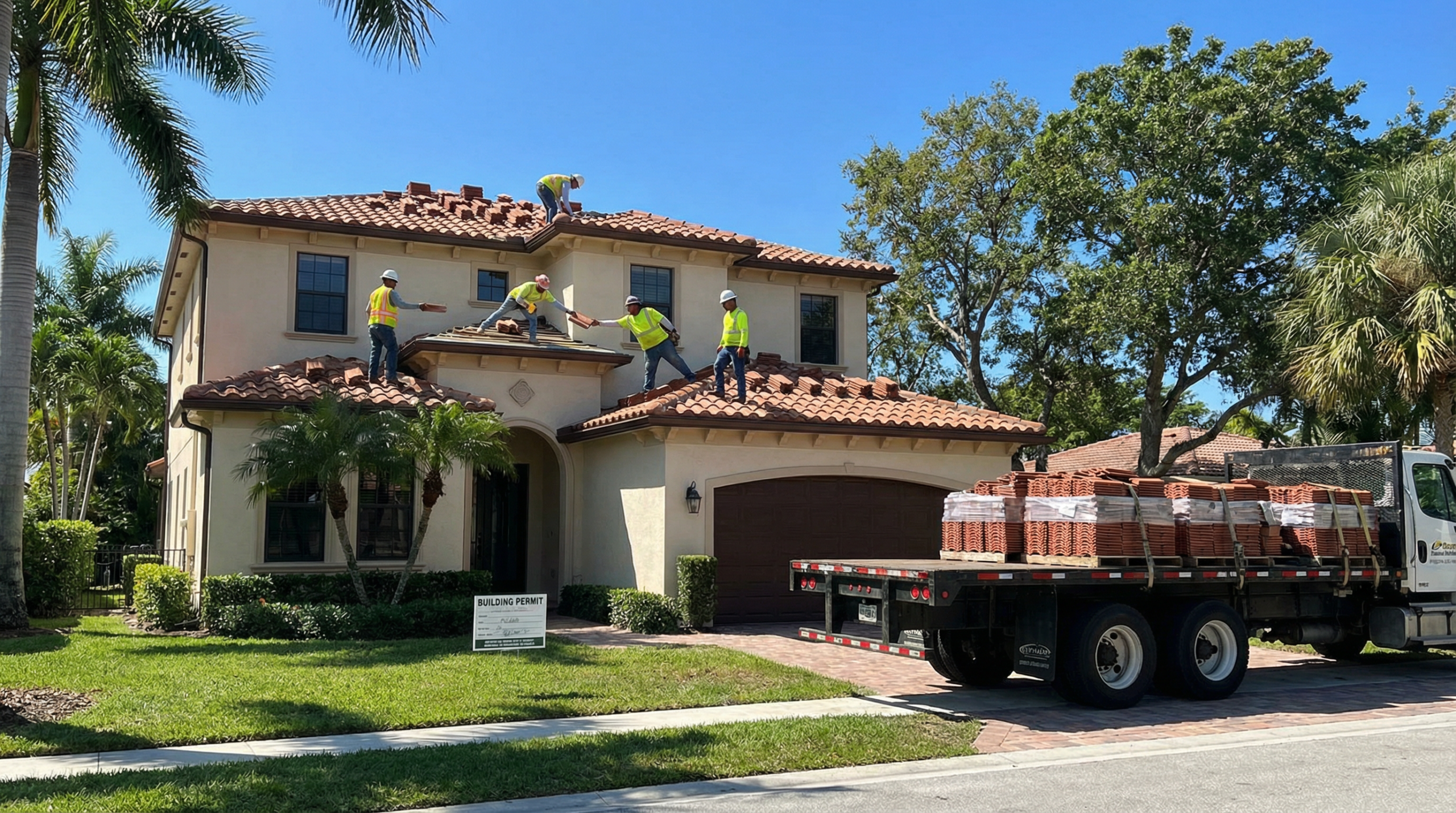
In West Palm Beach, the physical installation of a new roof typically takes 1 to 3 days for shingles and 3 to 6 days for tile or metal. However, the entire process, from signing the contract to passing the final city inspection, usually takes 3 to 6 weeks due to material lead times and the City of West Palm Beach Development Services permitting process.
When you finally decide it is time to replace your roof, the next question is usually: “How long is my house going to be a construction zone?”
For homeowners in West Palm Beach, the answer depends on several factors, including the type of roofing material you choose, the size of your home, and the current backlog at the local building department. Whether you live in a historic Mediterranean Revival home in El Cid or a newer CBS build in the western suburbs, understanding the timeline can help you prepare for the project and minimize disruptions to your daily life.
Based on our 2026 project data at BLU Roofing, here is a realistic breakdown of how long a roof replacement actually takes in West Palm Beach from start to finish.
The 4 Phases of a West Palm Beach Roof Replacement
A roof replacement is not just the days the crew is hammering on your roof. It is a multi-phase process that involves planning, permitting, installation, and final inspections.
Phase 1: Contract and Material Ordering (1 to 2 Weeks)
Once you sign the contract, the first step is ordering your materials. For standard architectural shingles, materials are often in stock locally and can be delivered within a few days. However, if you are ordering custom concrete tiles to match the historic requirements of Flamingo Park or Grandview Heights, or specific standing seam metal panels, lead times can stretch to several weeks depending on the manufacturer’s production schedule.
Phase 2: The Permitting Process (1 to 4 Weeks)
This is often the longest phase of the project. Before any work can begin, your roofing contractor must submit detailed engineering plans to the City of West Palm Beach Development Services. The city reviews these plans to ensure the new roof will meet the strict High-Velocity Hurricane Zone (HVHZ) wind load requirements of the Florida Building Code.
Currently, permit approval in West Palm Beach takes an average of 1 to 4 weeks. If your home is in a historic district, the process may take longer as the plans must also be reviewed by the Historic Preservation Board.
Phase 3: The Physical Installation (1 to 6 Days)
Once the permit is approved and materials are delivered, the actual construction begins. The timeline for this phase depends heavily on the material you selected:
- Architectural Shingles: 1 to 3 days. Shingles are the fastest material to install. A standard 2,500-square-foot home can often be torn off, dried in, and shingled in a single weekend.
- Concrete or Clay Tile: 3 to 6 days. Tile roofs are heavy and labor-intensive. The old roof must be removed, the deck inspected, the heavy underlayment installed, and then each tile must be individually fastened or foamed into place.
- Standing Seam Metal: 3 to 5 days. Metal roofs require precise custom fabrication and careful installation of the concealed fasteners and flashing details.
Note: If the crew discovers extensive wood rot or termite damage once the old roof is removed, repairing the structural decking can add 1 to 2 days to the installation timeline.
Phase 4: Final Inspections and Cleanup (1 to 2 Weeks)
After the roof is installed, the city must perform a final inspection to close out the permit. The timeline for this depends entirely on the city inspector’s schedule, but it typically happens within a week of completion. During this time, your contractor will also perform a final walkthrough, ensure all debris and nails are removed from your property, and provide you with your final warranty documentation.
Factors That Can Delay Your Roof Replacement
While the timelines above are typical for 2026, several factors can cause delays:
- Weather: South Florida’s unpredictable weather is the biggest wildcard. Roofing crews cannot work safely in heavy rain, lightning, or high winds. A string of afternoon thunderstorms can easily push a 2-day job into a 4-day job.
- HOA Approvals: If you live in a managed community, you must obtain approval from your Homeowners Association (HOA) before the project can begin. Some HOAs only meet once a month, which can significantly delay your start date.
- Material Shortages: While supply chains have largely stabilized since the pandemic, specific colors or profiles of premium tile and metal can still experience unexpected manufacturing delays.
The Coastal Aluminum Rule
If your home is located east of Olive Avenue, along Flagler Drive, or near the Intracoastal Waterway, you must factor in the Coastal Aluminum Rule. If you are installing a metal roof in these salt-air environments, you must use aluminum rather than steel to prevent rapid corrosion. Sourcing specific aluminum panels can sometimes add a week or two to the material ordering phase, but it is absolutely essential for the longevity of your roof.
Frequently Asked Questions
Do I need to move out of my house during a roof replacement?
No, you do not need to move out. However, the process is loud, messy, and disruptive. If you work from home, have young children, or have pets that are sensitive to noise, you may want to make alternative arrangements during the active installation days.
What happens if it rains while my roof is being replaced?
Professional roofing contractors closely monitor the weather. They will only tear off as much of the old roof as they can “dry in” (cover with waterproof underlayment) in a single day. If an unexpected storm pops up, they will quickly secure the exposed areas with heavy-duty tarps to protect your home.
How long does a roof inspection take?
A comprehensive roof inspection typically takes 45 minutes to an hour. The inspector will examine the exterior roof surface, the flashing details, the gutters, and the interior attic space to assess the overall health of the roofing system.
Get a Free Roof Estimate in West Palm Beach
If you are ready to replace your roof, the first step is getting an accurate assessment of your property. BLU Roofing provides honest, transparent timelines and expert installation tailored to the specific needs of West Palm Beach homes.
Written By: Peter Menke
Peter Menke is the owner of BLU Roofing and has been serving the South Florida roofing industry for over 6 years. He founded BLU Roofing to provide homeowners with transparent, accurate data grounded in the reality of Florida’s unique climate and building codes, information that is often missing from generic national roofing advice. License #1337285
Quick Summary
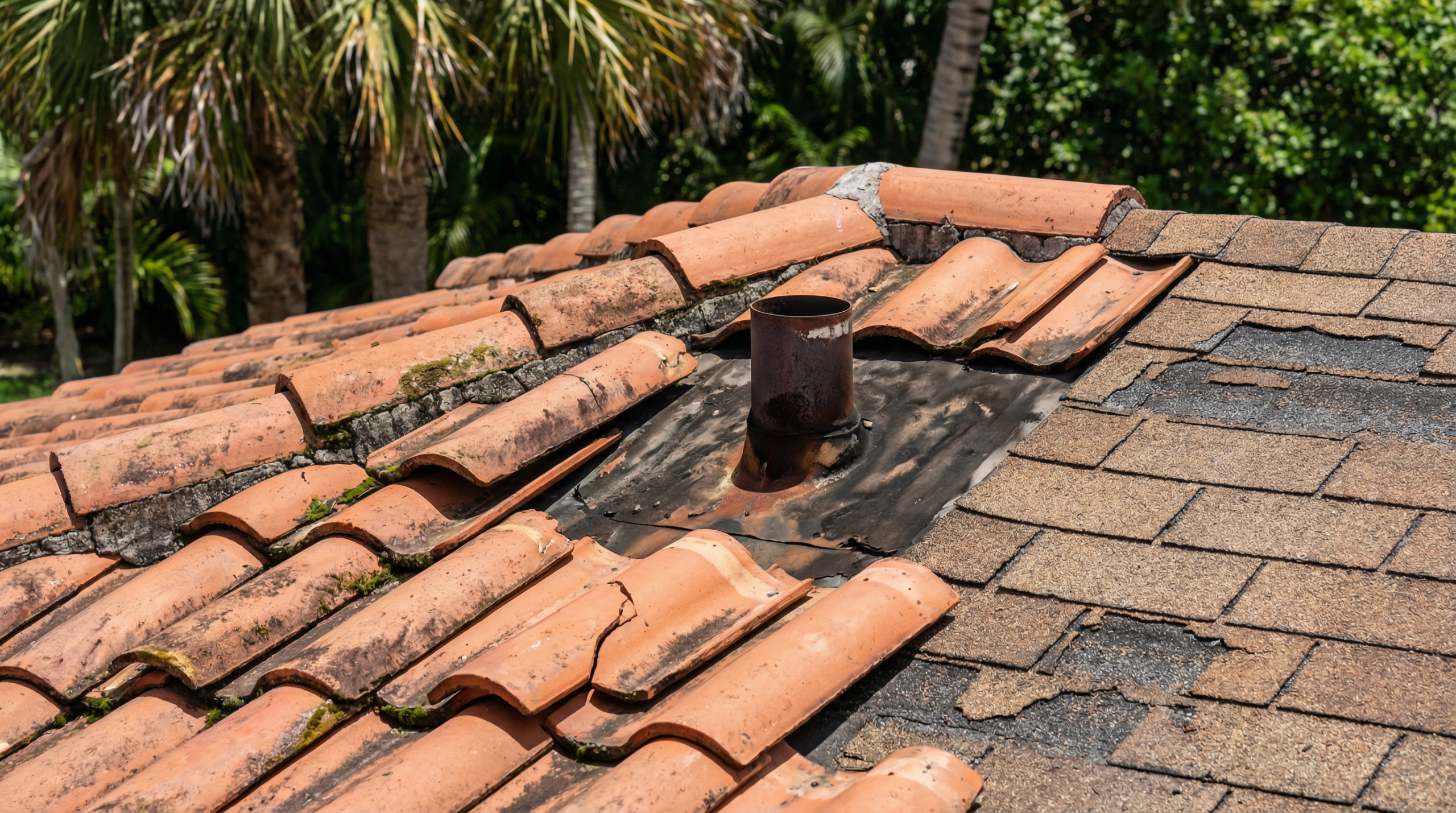
The most common signs you need a new roof in West Palm Beach include granule loss in gutters, cracked or slipping tiles, and interior water stains. However, the biggest driver of roof replacement in 2026 is insurance compliance, most Florida carriers will drop coverage if a shingle roof is over 15 years old or a tile roof is over 20 to 25 years old, regardless of its physical condition.
Living in West Palm Beach means enjoying beautiful weather year-round, but it also means your roof is subjected to some of the harshest conditions in the country. Between the relentless UV radiation, the corrosive salt air near the Intracoastal, and the annual threat of hurricane-force winds, roofs in South Florida age significantly faster than the national average.
Whether you live in a historic 1920s Mediterranean Revival home in El Cid or a newer CBS build out west near the Turnpike, knowing the warning signs of a failing roof can save you thousands of dollars in interior water damage and structural repairs. Here are the most common signs you need a new roof in West Palm Beach in 2026.
1. Your Roof Is Approaching Its Expected Lifespan
The most reliable indicator that you need a new roof is simply its age. In West Palm Beach, the intense sun and heat cycling drastically reduce the lifespan of roofing materials compared to northern climates.
- Architectural Shingles: In South Florida, high-quality architectural shingles typically last 15 to 20 years. If your shingle roof is approaching the 15-year mark, it is time to start planning for a replacement in the years ahead.
- Concrete or Clay Tile: The tiles themselves can last 50 years or more, but the waterproofing underlayment beneath them usually fails after 20 to 30 years. If your home was built or last re-roofed in the late 1990s or early 2000s, the underlayment is likely nearing the end of its useful life.
- Standing Seam Metal: Metal roofs are incredibly durable and can last 30 to 50 years, but the fasteners and sealants may require maintenance or replacement sooner.
2. Granule Loss on Shingle Roofs
If you have an asphalt shingle roof, check your gutters and downspouts after a heavy rain. If you see a significant accumulation of course, sand-like granules, your roof is deteriorating.
These granules protect the asphalt coating from UV rays and provide fire resistance. As the shingles age and bake in the Florida sun, they dry out, become brittle, and lose their protective granules. Once the granules are gone, the shingles will quickly crack, curl, and fail, leaving your home vulnerable to leaks.
3. Cracked, Slipped, or Missing Tiles
Tile roofs are iconic in West Palm Beach, but they are not invincible. While a single cracked tile might seem like a minor issue, it can expose the vulnerable underlayment to the elements.
Over time, the sun’s UV rays degrade the underlayment, making it brittle. If a cracked or missing tile allows water to reach the degraded underlayment, it will quickly penetrate the roof deck and enter your home. If you notice multiple cracked, slipped, or missing tiles, it is a strong sign that the entire roof system needs a professional inspection.
4. Water Stains on Your Ceilings or Walls
This is the most obvious and urgent sign of a failing roof. If you notice brown, yellow, or water-ringed stains on your ceilings or running down your interior walls, you have an active leak.
In West Palm Beach, leaks often occur around complex rooflines, chimneys, skylights, and vent pipes where the metal flashing has rusted or separated. By the time water stains appear inside your home, the water has likely already saturated the roof decking, insulation, and drywall, meaning the damage is more extensive than it appears.
5. Sagging or Drooping Rooflines
A sagging roof is a severe structural issue that requires immediate attention. It indicates that the wooden decking or the underlying trusses have been compromised, usually by long-term water intrusion and rot.
If you notice a visible dip or depression in your roofline, do not wait. A sagging roof is at high risk of partial collapse, especially under the weight of heavy tropical downpours or hurricane-force winds.
6. Your Homeowners Insurance Is Threatening to Drop You
In Florida’s volatile insurance market, your roof’s age is a major factor in your coverage. Based on our 2026 project data at BLU Roofing, insurance compliance is now the number one reason homeowners replace their roofs. Many insurance carriers will refuse to renew a policy or write a new one if a shingle roof is older than 15 years or a tile roof is older than 20 years, regardless of its actual condition.
If you receive a notice from your insurance company requiring a roof replacement to maintain coverage, you have no choice but to act. A new roof installed to current High-Velocity Hurricane Zone (HVHZ) codes will not only secure your coverage but also qualify you for significant wind mitigation discounts on your premiums.
Permitting and Local Compliance
When you do replace your roof, ensure your contractor pulls the proper permits through the City of West Palm Beach Development Services. This guarantees the work meets all local wind load and structural requirements, which is essential for both your safety and your insurance coverage.
Frequently Asked Questions
Can I just repair my roof instead of replacing it?
If the damage is isolated and the roof is relatively new, a repair is often possible. However, if the roof is nearing the end of its lifespan or the damage is extensive, Florida’s 25 Percent Rule may require a full replacement.
How much does a new roof cost in West Palm Beach?
In 2026, a standard roof replacement in West Palm Beach costs between $12,000 and $25,000 for architectural shingles, and $25,000 to $40,000+ for concrete tile, depending on the size and complexity of the roof.
Will a new roof lower my homeowners insurance?
Yes. A new roof installed to current HVHZ standards qualifies your home for wind mitigation credits, which can significantly reduce your annual insurance premiums.
Schedule a Free Roof Inspection in West Palm Beach
If you notice any of these signs, the worst thing you can do is ignore them. A small leak today can turn into a catastrophic failure during the next major storm. BLU Roofing provides honest, comprehensive roof inspections for homeowners in West Palm Beach and throughout Palm Beach County.
Written By: Peter Menke
Peter Menke is the owner of BLU Roofing and has been serving the South Florida roofing industry for over 6 years. He founded BLU Roofing to provide homeowners with transparent, accurate data grounded in the reality of Florida’s unique climate and building codes, information that is often missing from generic national roofing advice. License #1337285
Quick Summary
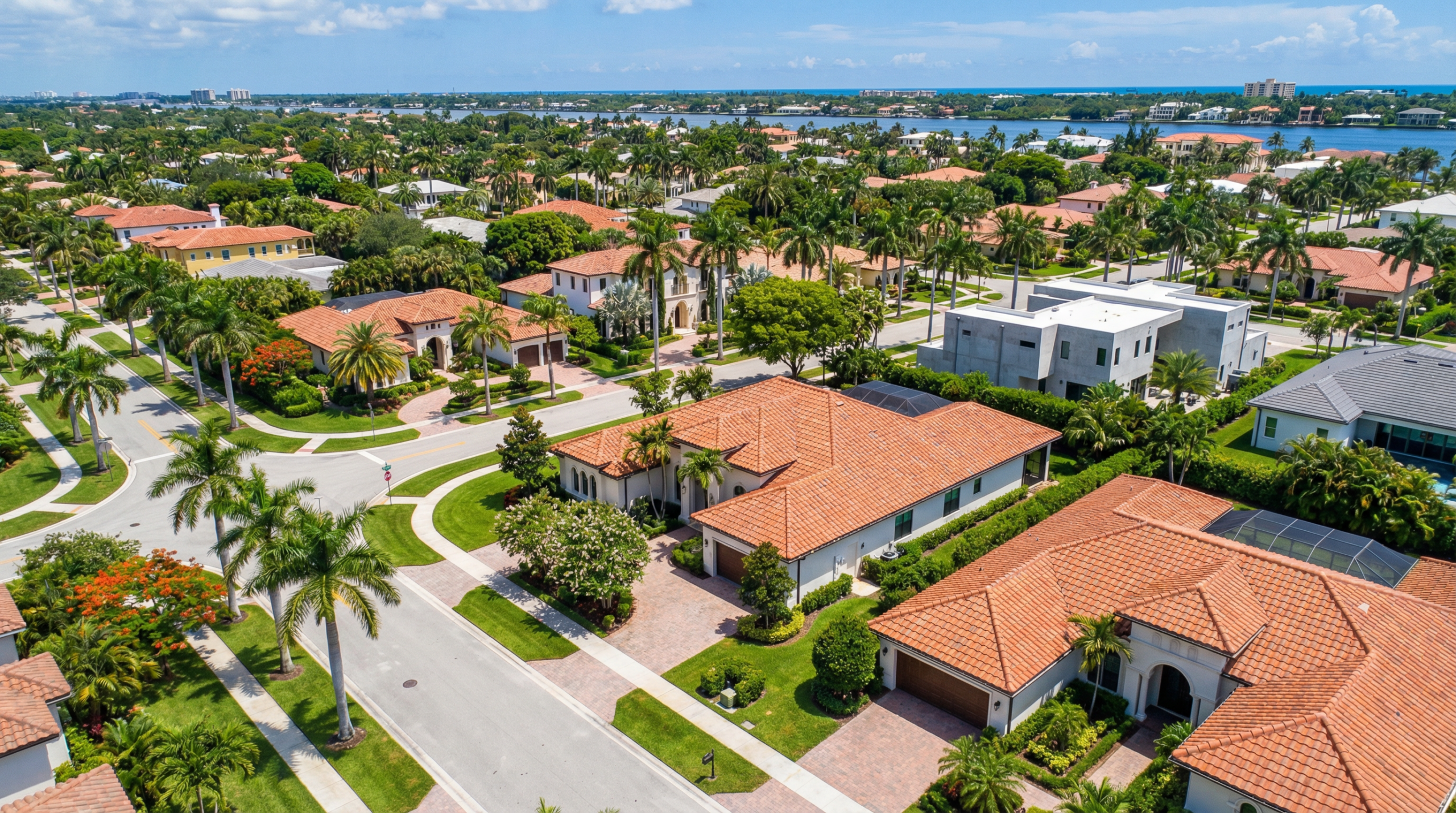
In 2026, a standard roof replacement in West Palm Beach costs between $12,000 and $25,000 for architectural shingles, and $25,000 to $40,000+ for concrete tile. Prices are heavily influenced by the city’s strict High-Velocity Hurricane Zone (HVHZ) building codes and the architectural requirements of historic neighborhoods like El Cid and Flamingo Park. Always ensure your contractor pulls the required permits through the City of West Palm Beach Development Services.
When homeowners in West Palm Beach begin noticing granule loss in their gutters or water stains on their ceilings, the first question is always about the bottom line: how much is a new roof going to cost?
Unlike other parts of the country where a roof is simply a weather barrier, a roof in South Florida is a highly engineered structural component designed to withstand Category 5 hurricane winds. In West Palm Beach, the cost of replacing that roof is dictated by strict local building codes, the specific materials chosen, and the unique architectural style of your neighborhood.
Based on our 2026 project data at BLU Roofing, here is a transparent breakdown of what you can expect to pay for a roof replacement in West Palm Beach this year.
Average Roof Replacement Costs in West Palm Beach (2026)
For a standard 2,000 to 3,000 square foot home in West Palm Beach, the cost of a full roof replacement varies significantly based on the material selected. Below are the current price ranges and per-square-foot estimates.
| Roofing Material | Typical Cost Range | Price Per Square Foot |
|---|---|---|
| Architectural Shingles | $12,000 – $25,000+ | $6.50 – $8.00 |
| Flat Roofs (Modified Bitumen/TPO) | $20,000 – $30,000 | $10.00 |
| Concrete Tile | $25,000 – $40,000+ | $11.00 – $12.00 |
| Standing Seam Metal | $30,000 – $50,000+ | $11.00 – $14.00 |
Note: These ranges represent the total cost of the project, including tear-off, disposal, underlayment, materials, labor, and permitting. They do not include hidden costs such as replacing rotted plywood decking, which is often discovered after the old roof is removed.
Factors That Drive Up the Cost of a New Roof
The base price per square foot is only the starting point. Several local factors specific to West Palm Beach can influence the final cost of your roof replacement.
1. Historic District Requirements
West Palm Beach is known for its beautiful historic districts, including El Cid, Flamingo Park, and Grandview Heights. If your home is located in one of these neighborhoods, the Historic Preservation Board often dictates the type, profile, and color of the roofing material you can use. Maintaining the historic Mediterranean Revival aesthetic usually requires premium clay or concrete barrel tiles, which are significantly more expensive than standard architectural shingles.
2. The Coastal Aluminum Rule
For homes located east of Olive Avenue, along Flagler Drive, or near the Intracoastal Waterway, salt spray corrosion is a major concern. If you are upgrading to a metal roof in these coastal zones, standard galvanized steel will rust quickly. You must specify aluminum or stainless steel metal roofing, which carries a higher material cost but is essential for long-term durability in a salt-air environment.
3. Roof Complexity and Pitch
A simple, walkable gable roof in the western suburbs will cost less to replace than a steep, complex roof with multiple valleys, dormers, and skylights in the historic districts. The more “cut up” the roof is, the more labor and custom flashing work is required, which increases the overall price.
The Hidden Value: Wind Mitigation Credits
While the upfront cost of a new roof in West Palm Beach is substantial, it is important to factor in the long-term savings.
When BLU Roofing installs a new roof, we ensure it meets the latest Florida Building Code (FBC) standards for the High-Velocity Hurricane Zone (HVHZ). This includes upgrading roof-to-wall connections, installing secondary water resistance (SWR) underlayment, and using materials with a valid Miami-Dade Notice of Acceptance (NOA).
These upgrades qualify your home for substantial wind mitigation credits, which can lower your homeowners insurance premiums by thousands of dollars over the lifespan of the roof.
Permitting and Inspections in West Palm Beach
A legitimate roof replacement in West Palm Beach requires a permit pulled through the City of West Palm Beach Development Services Department. The permitting process ensures that the installation meets all local wind load and structural requirements.
Currently, permit approval in West Palm Beach typically takes 1 to 4 weeks, depending on the city’s backlog. Once the permit is approved, the physical installation usually takes 1 to 3 days, followed by a final inspection by city officials to close out the permit.
Frequently Asked Questions
Does a new roof increase my home’s value in West Palm Beach?
Yes. A new, HVHZ-compliant roof is a major selling point in the South Florida real estate market. It not only increases curb appeal but also ensures the home is insurable, which is critical for buyers trying to secure a mortgage.
How long will a new roof last in South Florida?
Architectural shingles typically last 15 to 20 years before UV degradation causes them to fail. Concrete and clay tiles can last 22 to 35 years, though the underlayment beneath them usually needs to be replaced after 20 to 30 years. Standing seam metal roofs offer the longest lifespan, often lasting 30 to 50 years.
Can I finance my roof replacement?
Yes, many West Palm Beach homeowners choose to finance their roof replacement. BLU Roofing offers flexible financing options to help spread the cost of a new roof into manageable monthly payments.
Get a Free Roof Estimate in West Palm Beach
If your roof is nearing the end of its useful life, do not wait for a leak to force your hand. BLU Roofing provides honest, transparent pricing and expert installation tailored to the specific needs of West Palm Beach homes. Contact us today to schedule a free roof estimate in West Palm Beach and find out exactly what a new roof will cost for your property.
Written By: Peter Menke
Peter Menke is the owner of BLU Roofing and has been serving the South Florida roofing industry for over 6 years. He founded BLU Roofing to provide homeowners with transparent, accurate data grounded in the reality of Florida’s unique climate and building codes, information that is often missing from generic national roofing advice. License #1337285