

Plantation Silicone Roof Coating: Secluded Gardens Pool Patio Project
This Plantation silicone roof coating project addressed a leaking pool-patio roof in Plantations Secluded Gardens, also listed in some records as Plantations Secluded Gard, in
Delray Beach Silicone Roof Coating: Colombo Court Patio Roof Restoration
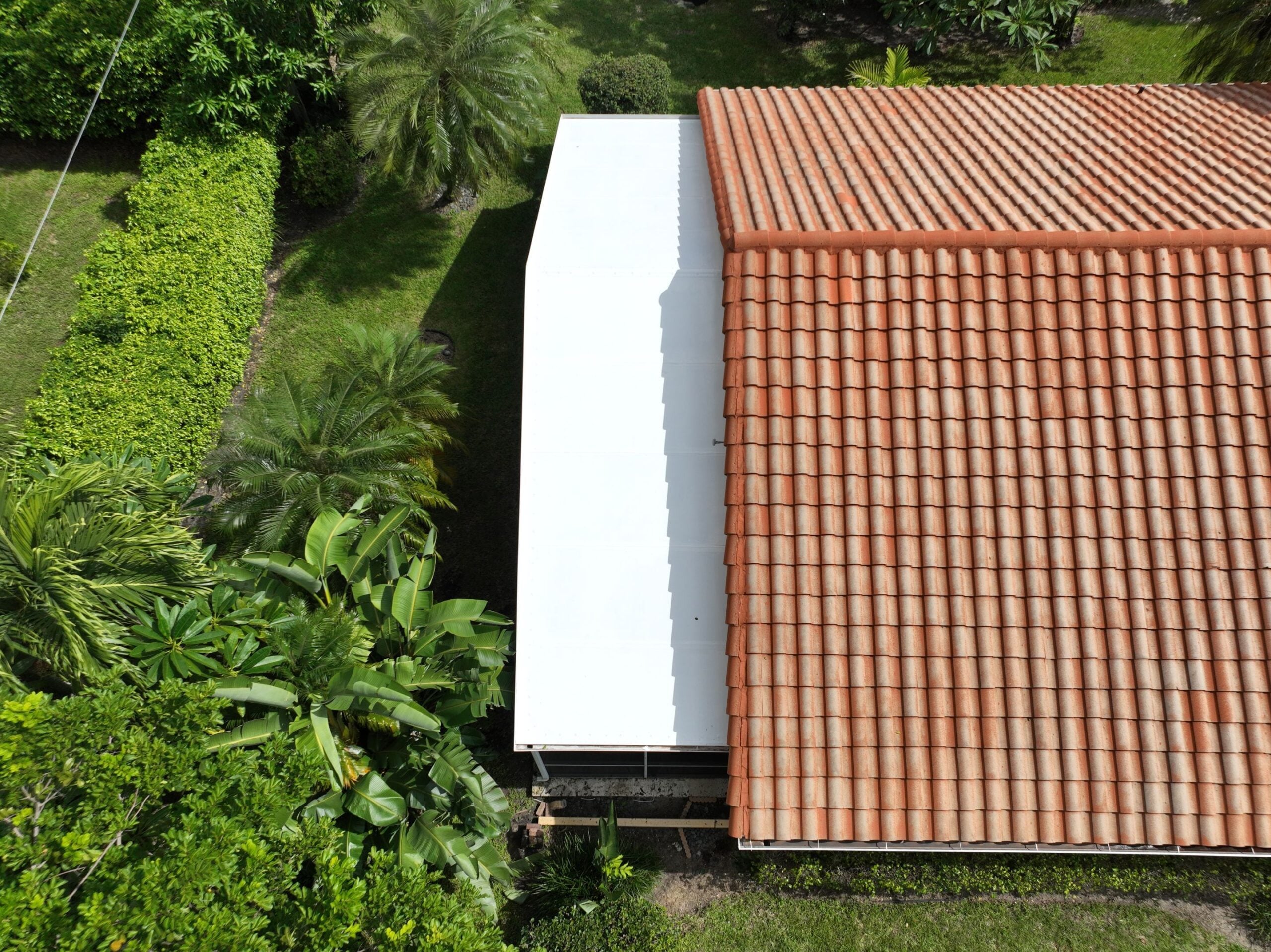
This Delray Beach silicone roof coating project restored an approximately 400 to 500 square-foot aluminum-panel patio roof at a home in the Bel Air community,
West Palm Beach Tile Roof Repair: PortoSol Eyebrow Roof Repair
This West Palm Beach tile roof repair was completed on a small concrete tile eyebrow roof at a home in the gated PortoSol community, ZIP
Emergency Roof Tarp Installation for Insurance Mitigation
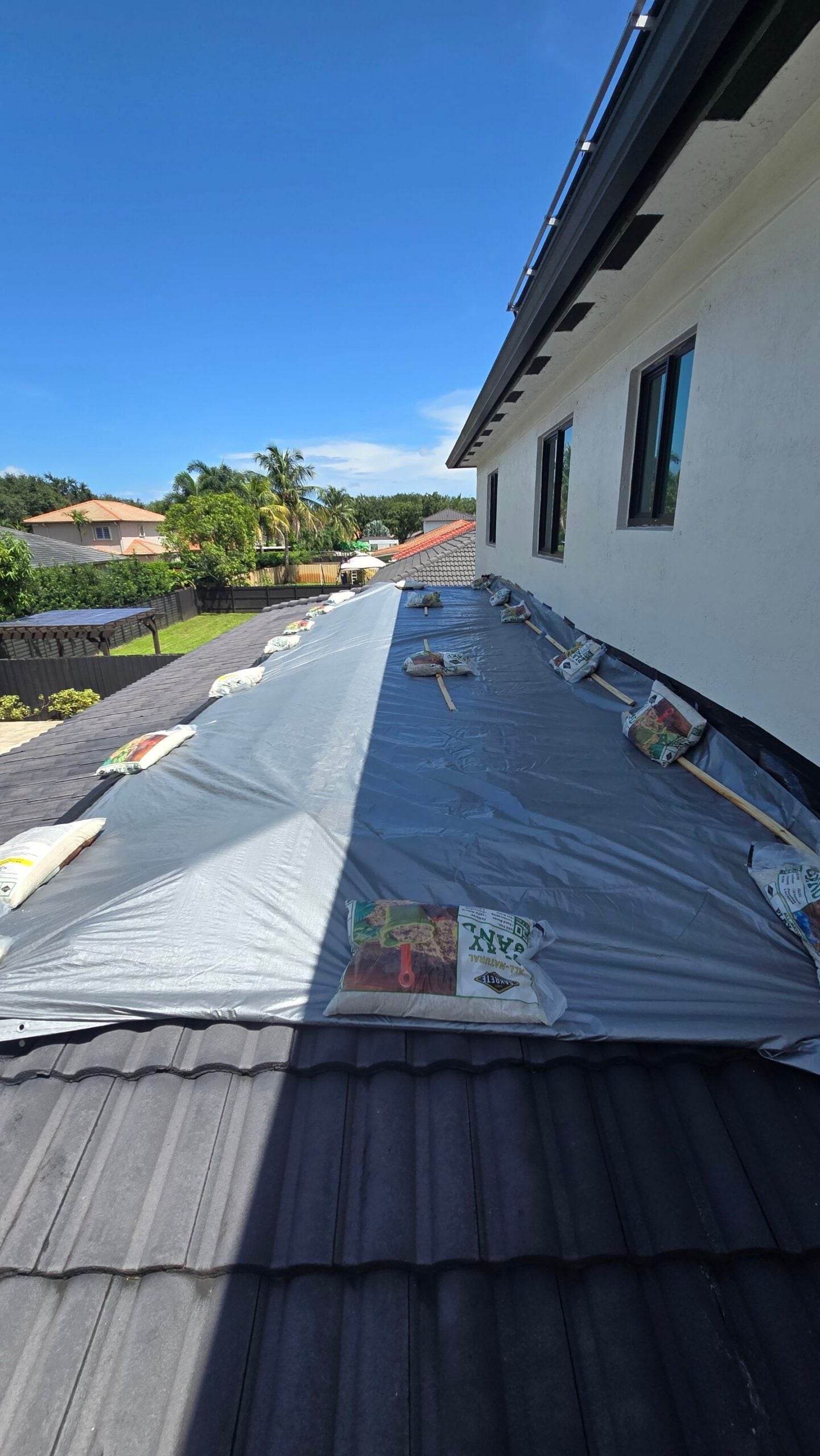
This emergency roof tarp installation was completed for insurance mitigation at a single-family home in Miami Lakes, Florida. The active leak was at the connection
Riviera Beach Tile Roof Repair: Multiple Leaks at a Turtle Cay Townhouse
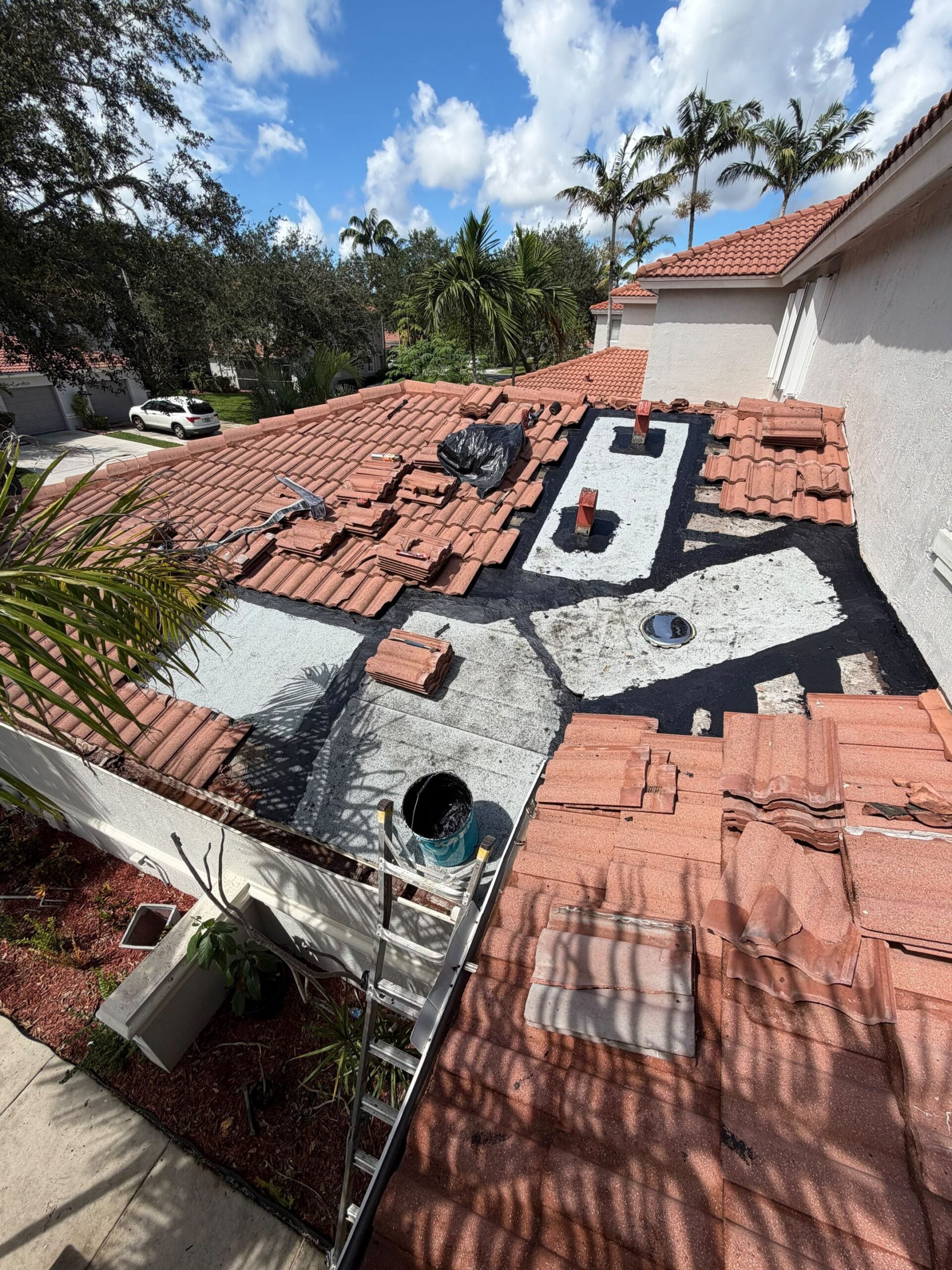
This Riviera Beach tile roof repair addressed multiple leak areas on a concrete tile townhouse roof in Turtle Cay, Riviera Beach, Florida. The rental property
Heritage Farms Shingle Roof Repair: Finding a Leak in a Spray-Foam Attic
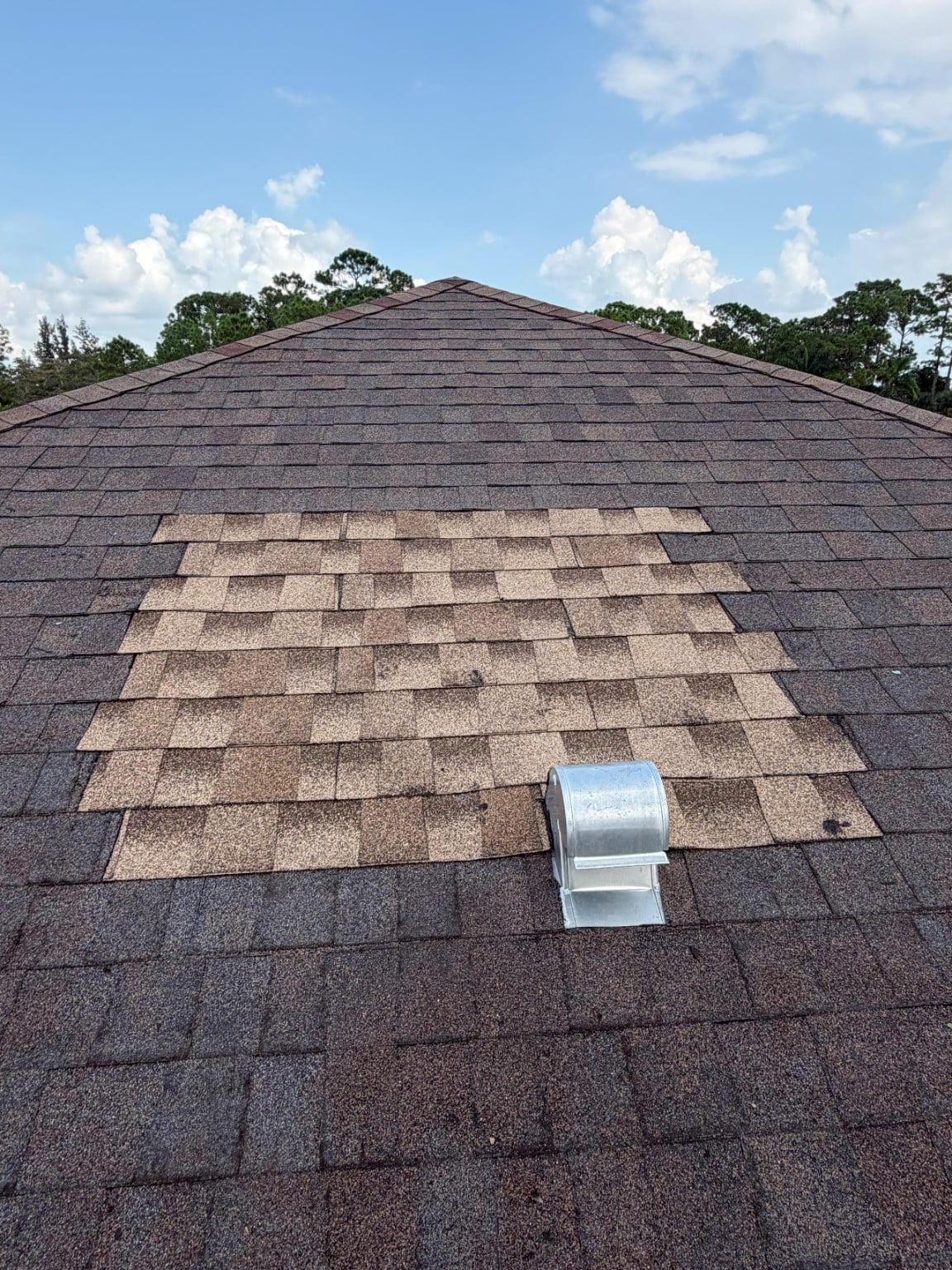
This Heritage Farms shingle roof repair involved a difficult-to-locate leak on an eight-year-old asphalt shingle roof in the Heritage Farms equestrian community near Lake Worth
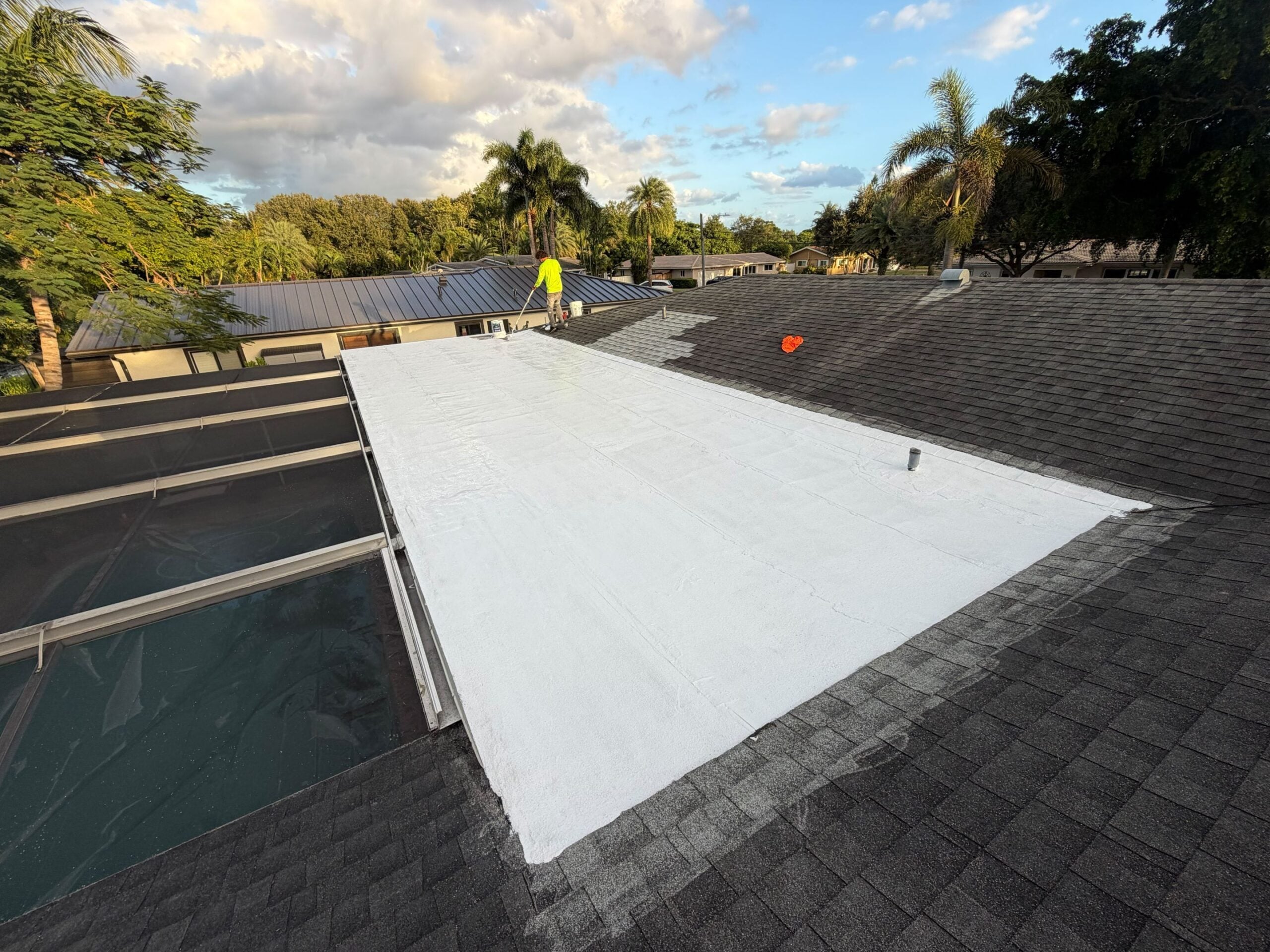
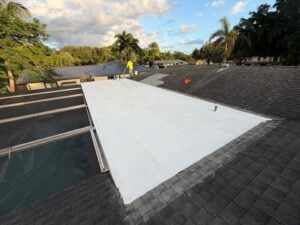
This Plantation silicone roof coating project addressed a leaking pool-patio roof in Plantations Secluded Gardens, also listed in some records as Plantations Secluded Gard, in Plantation, Florida 33317. The homeowner had two roofing concerns in nearby areas: a shingle-roof water entry around a transition near a pipe boot, and a built-up modified roof over the pool deck that was leaking around its perimeter. BLU Roofing repaired both areas during the same scheduled visit and restored the flat roof with silicone coating.
Quick Summary
BLU Roofing repaired two nearby roof issues at a Plantation home in Plantations Secluded Gardens. The shingle-roof investigation found that the main water entry was at a transition near the pipe boot, along with a second nearby leak that had not yet caused an interior stain. The team repaired both areas, replaced the pipe boot, installed Polyglass TU Plus underlayment, and matched the existing shingles with GAF Timberline HDZ shingles. On the pool-patio roof, the modified roofing membrane had begun lifting around the three-inch drip edge. The crew cleaned and dried the roof, rebuilt the full perimeter with new modified roofing cement, membrane, and granules, then applied TRI-BUILT Roof X Tender 985 Super Silicone across the flat roof. The work was completed in one day, allowing the homeowner to address both repairs in one visit.
Table of Contents
- Project Facts
- Two Roofing Issues at One Home
- Investigating the Shingle Roof Leak
- Repairing the Pool-Patio Flat Roof
- Applying the Silicone Coating
- Why Combining the Work Helped
- Completion and Homeowner Feedback
Project Facts
| Subdivision | Plantations Secluded Gardens, also listed as Plantations Secluded Gard |
| Location | Plantation, Broward County, Florida 33317 |
| Property | Single-family home with a pool deck and attached screen enclosure |
| Shingle roof | Approximately 10 years old, with a tongue-and-groove roof deck |
| Flat roof | Built-up modified roof over the rear pool deck, also approximately 10 years old |
| Shingle-side scope | Transition repair, nearby second leak repair, pipe-boot replacement, underlayment, and shingle replacement |
| Shingle materials | Polyglass TU Plus underlayment and GAF Timberline HDZ shingles matched to the existing roof |
| Flat-roof scope | Perimeter rebuild, modified roofing cement, membrane, granules, and silicone coating |
| Coating | TRI-BUILT Roof X Tender 985 Super Silicone Roof Coating |
| Primer and fabric | No primer or polyester fabric was used on the flat roof |
| Timeline | Completed in one day, with Peter and generally two crew members present |
Two Roofing Issues at One Home
The homeowner had a water stain inside the house and two roof areas requiring attention. One issue involved the shingle roof, where the initial concern was near a pipe boot. The other involved the built-up modified roof over the rear pool deck and screen enclosure, where the perimeter was allowing water to seep into the roof edge.
The two systems were close enough that it made sense to inspect and address both during the same project. BLU Roofing’s roof repair service is based on identifying the actual water-entry area rather than assuming that the most visible roof penetration is always the source.
Investigating the Shingle Roof Leak
The shingle roof was approximately 10 years old and had a tongue-and-groove roof deck. The attic crawl space was extremely tight, but the crew was able to reach the relevant area and confirm where the water was entering.
The pipe boot was near the affected area, but the investigation showed that the primary water entry was more closely related to the transition. The crew also identified a second stain approximately two to three feet away. That second area had not yet produced an interior leak, but it was close to the first problem and accessible while the roof was open, so both areas were repaired during the same visit.
The existing pipe boot was replaced rather than reused. The shingle-side work also included Polyglass TU Plus underlayment and GAF Timberline HDZ shingles selected to provide the best available match to the existing shingle roof. The post does not identify the pipe boot as the confirmed source of all the water because the inspection found the transition and the nearby second area also required attention.
Repairing the Pool-Patio Flat Roof
The second roof system was a built-up modified roof over the rear pool deck. A screen enclosure was attached to the patio area. The modified roofing membrane was beginning to lift around the perimeter near the three-inch drip edge. That lifting created a path for water to seep into the edge of the roof and contributed to the early fascia rot that the homeowner had noticed.
The fascia damage was limited and difficult to access because the screen enclosure would have needed to be detached to replace it. The homeowner decided that replacing the small fascia section was not worthwhile under the circumstances. Instead, the roofing perimeter was opened and rebuilt to address the water-entry area and seal the edge of the roof properly.
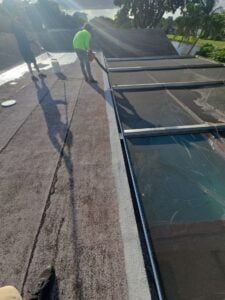
Because the roof was directly over the pool, the pool had to be covered before the crew cleaned the roof. Dirt, loose granules, roofing debris, and other material on the modified roof could otherwise have fallen into the pool during preparation. Covering the entire pool helped protect it while the roof was cleaned, dried, repaired, and coated.
The flat-roof repair sequence was:
- Clean the roof and allow it to dry fully.
- Cut the existing perimeter membrane back beyond the drip edge, approximately four inches for this repair.
- Rebuild the entire perimeter with new modified roofing cement and membrane.
- Apply granules to the repaired perimeter area.
- Apply the silicone coating over the restored flat-roof surface.
The perimeter was repaired before coating. This matters because a coating is not a substitute for rebuilding a failing roof edge. The roof was cleaned and allowed to dry before the seam and perimeter work continued.
Applying the Silicone Coating
After the perimeter was rebuilt, BLU Roofing coated the flat roof with white TRI-BUILT Roof X Tender 985 Super Silicone Roof Coating. No primer was required for this project.
Unlike some aluminum-panel projects where fabric may be used to reinforce seams, this roof was a continuous modified roof surface without panel seams.
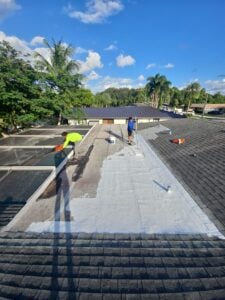
The coating was applied after the roof was cleaned, dried, and repaired. The project-specific sequence was perimeter restoration first, followed by the silicone coating across the flat roof. This is different from applying a coating directly over a damaged or actively vulnerable perimeter without correcting the edge condition.
The roof also had areas of ponding water, which are common on low-slope and flat roof systems when water does not drain completely after rain. Repeated ponding can contribute to faster degradation of a roofing system. Silicone roof coatings are commonly selected for their strong resistance to ponding-water exposure, subject to the requirements of the specific product and roof assembly. On this project, the silicone coating was intended to help protect the restored roof and extend its service life, not to replace the perimeter repairs that had to be completed first.
BLU Roofing’s residential roof coating guide explains why cleaning, drying, repairs, product selection, and system-specific application requirements should be considered before a roof is coated. This project followed that repair-first approach by rebuilding the perimeter before applying the silicone.
Why Combining the Work Helped
The homeowner could have scheduled the shingle-side repair and the pool-patio roof restoration as separate projects. Completing them separately would have meant two scheduled workdays and two trips to the property. Because both issues were identified during the same overall project, BLU Roofing was able to complete both repairs in one visit and bundle the scope into one scheduled job.
The bundled approach also allowed the crew to address the nearby second shingle-roof leak while the area was already open. That type of coordination can be useful when a homeowner has more than one roof system or more than one water-entry concern at the same property.
Completion and Homeowner Feedback
The project was completed in one day. Peter was present, with generally two crew members working on the project and a third worker helping for part of the day while handling other errands. The homeowner was very happy with the completed work and left an excellent review.
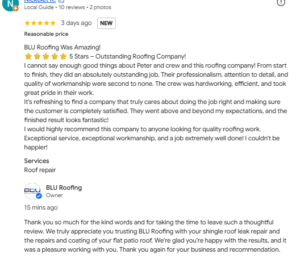
This Plantation silicone roof coating project shows why a roof coating should be part of a complete repair plan rather than a shortcut around damaged roof edges. BLU Roofing repaired the modified roof perimeter, addressed the nearby shingle-roof water-entry areas, replaced the pipe boot, and then applied silicone coating over the restored pool-patio roof.
This type of repair did not require a permit or HOA approval, according to the project information supplied for this job. No project price is included.
BLU Roofing provides roof inspections, repairs, restoration, and replacement for shingle, tile, metal, and flat or low-slope roof systems across Palm Beach, Martin, and Broward Counties. The company works with homeowners to identify the actual roof condition and select a practical scope rather than treating every leak as an automatic full replacement.
Written By: Peter Menke
Peter Menke is the owner of BLU Roofing and has been serving the South Florida roofing industry for over 6 years. He founded BLU Roofing to provide homeowners with transparent, accurate information grounded in real Florida roofing conditions and building practices. License #CCC1337285.
BLU Roofing provides roof inspections, repairs, restoration, and replacement for shingle, tile, metal, and flat or low-slope roof systems across Palm Beach, Martin, and Broward Counties.
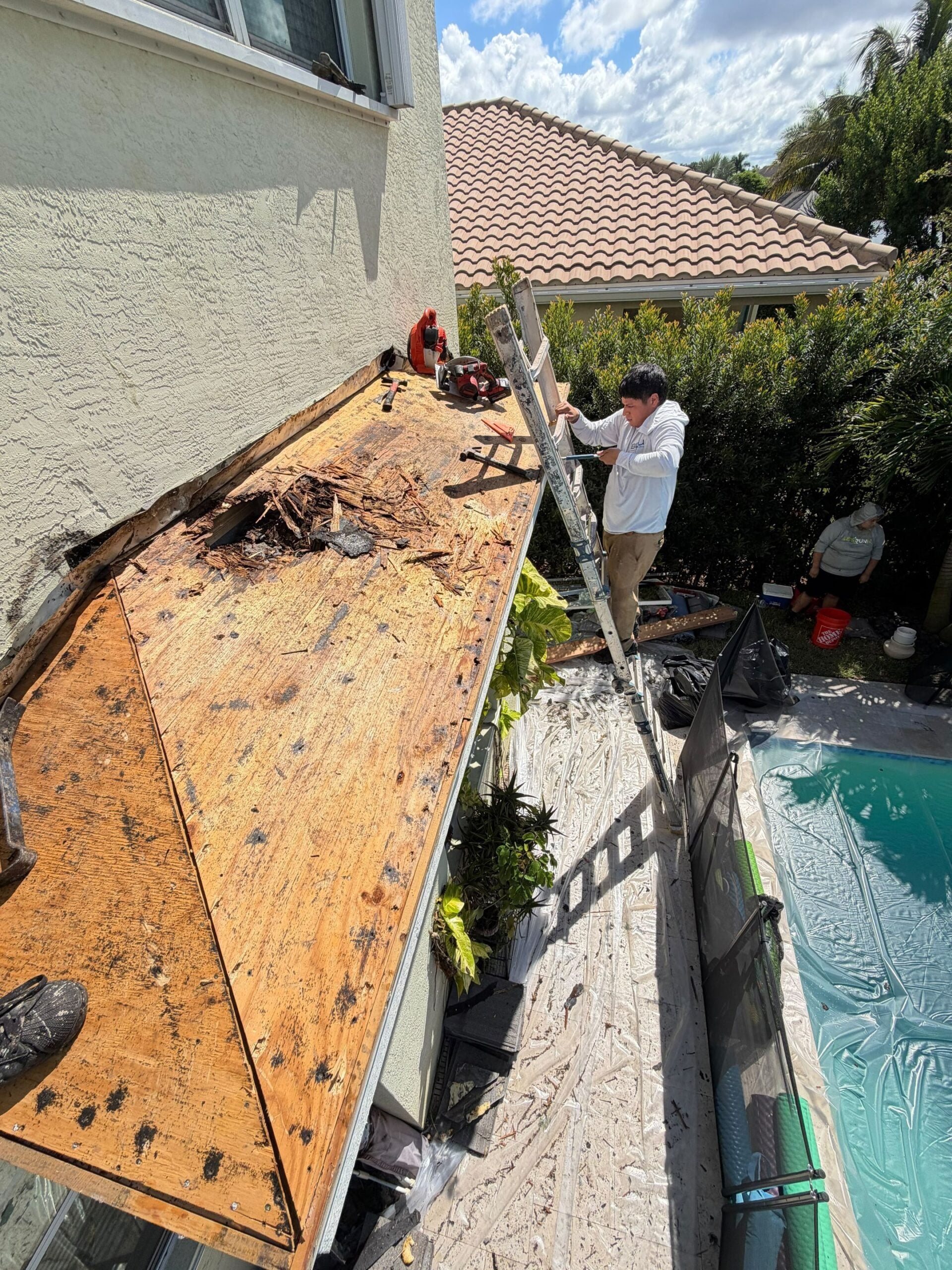
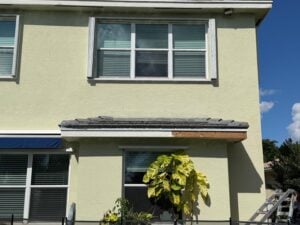
This West Palm Beach tile roof repair was completed on a small concrete tile eyebrow roof at a home in the gated PortoSol community, ZIP code 33411. The homeowner noticed water coming through a kitchen light, and an interior restoration company used an infrared moisture scan to identify where moisture was present in the wall. The scan pointed to the rear eyebrow roof, where BLU Roofing found a significant area of deteriorated plywood and a separate rotted fascia section.
Quick Summary
BLU Roofing repaired a leaking concrete tile eyebrow roof in PortoSol, West Palm Beach. The approximately 12-year-old roof had a small interior leak but a much larger area of damaged plywood than expected, along with rotted cedar fascia at the right corner. The crew removed and reused the concrete tiles, replaced the damaged decking and fascia, installed a six-inch peel-and-stick perimeter strip, new white drip edge, eave enclosure, and CertainTeed SA granulated cap sheet, then reinstalled the tiles with ICP Polyset AH-160 adhesive foam and color-matched mortar. The pool and patio were fully protected during the work.
Table of Contents
- Project Facts
- How the Leak Was Located
- Opening the Eyebrow Roof
- Replacing the Decking and Cedar Fascia
- Rebuilding the Roof System
- Protecting the Pool and Patio
- Completion and Follow-Up
Project Facts
| Community | PortoSol, West Palm Beach, Florida 33411 |
| Property | Single-family home in a gated community |
| Roof section | Small rear concrete tile eyebrow roof overhang |
| Approximate roof age | Approximately 12 years |
| Interior symptom | Water coming through a kitchen light |
| Leak location | Middle-to-left side of the rear eyebrow roof |
| Wood repairs | Damaged roof decking and the entire right corner of the cedar fascia |
| Underlayment | CertainTeed SA granulated cap sheet over a six-inch perimeter peel-and-stick membrane strip |
| Edge details | New white drip edge and eave enclosure, also called bird stop |
| Tile installation | Existing tiles reused and reset with ICP Polyset AH-160 adhesive foam |
| Timeline | Full-day repair with Peter, two crew members, and one helper |
| Follow-up | Completed almost one month before publication, with substantial rain and no callbacks reported |
How the Leak Was Located
The homeowner noticed water coming through a kitchen light. An interior restoration company that has worked with BLU Roofing for years was involved first and used an infrared moisture scan to identify where moisture was present in the wall. The scan helped point the investigation toward the small rear eyebrow roof overhang.
There was no attic in this roof section, so an attic inspection was not possible. A hose test was not needed because the moisture scan identified the affected area and the roof condition could be inspected directly. The leak was on the middle-to-left side of the eyebrow roof.
BLU Roofing’s roof repair service focuses on tracing the actual water-entry area and determining what must be opened to complete the repair correctly. In this case, the visible interior symptom was small, but the roof opening showed that the underlying damage was more extensive than the kitchen leak suggested.
Opening the Eyebrow Roof
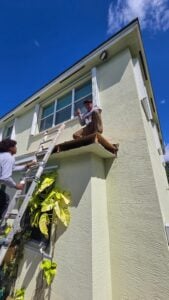
To repair the leak properly and replace the fascia, the crew removed the concrete tiles and the existing underlayment system down to the roof decking. The team worked carefully and successfully removed the tiles without breaking them, allowing the existing tile to be reused.
The roof was approximately 12 years old, so the tile covering was still suitable for reuse. The damaged area was not a reason to replace the entire main roof. Instead, the small eyebrow roof section was opened so the decking, fascia, perimeter edge, and underlayment could be inspected and rebuilt.
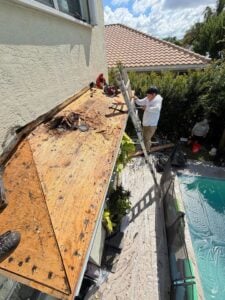
The crew was surprised by the size of the damaged plywood area compared with the relatively small amount of water that had entered the kitchen. A small interior leak does not always indicate a small roof problem. Water can travel through a roof assembly and continue affecting the decking before the interior symptom becomes obvious.
Replacing the Decking and Cedar Fascia
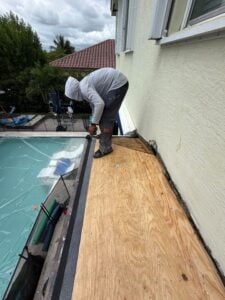
The deteriorated plywood was cut out and replaced with new roof decking. The new decking was nailed according to the applicable requirements for the repair. The damaged fascia was also removed from the entire right corner of the eyebrow roof and replaced with cedar.
The fascia repair was part of the reason the entire small roof section needed to be opened. Replacing the fascia while leaving the surrounding roof system closed would not have allowed the damaged edge and adjacent decking to be properly inspected. Completing both repairs together allowed the crew to rebuild the roof edge as one connected system.
Rebuilding the Roof System
Once the damaged plywood and fascia were replaced, BLU Roofing rebuilt the roof system in sequence:
- A six-inch-wide peel-and-stick membrane strip was installed around the roof edge as added protection beneath the drip edge.
- New white drip edge was installed over the perimeter membrane strip.
- The drip edge was primed before the next membrane layer was applied.
- CertainTeed SA granulated cap sheet was installed as the new tile-roof underlayment.
- The new underlayment was integrated with the existing roof-to-wall flashing, which was in excellent condition.
- The separate eave enclosure, also called bird stop, was reinstalled along the eave.
- The existing concrete tiles were placed back in position with ICP Polyset AH-160 two-part polyurethane adhesive foam.
- Color-matched mortar was installed to finish the tile details and match the existing roof.
The eave enclosure includes small weep openings that allow water beneath the tile covering to escape at the eave. Concrete tile is water-shedding rather than the primary waterproofing layer, so the underlayment and properly detailed edge components are important parts of the roof system beneath the tiles.
The roof-to-wall flashing did not need to be replaced. It was inspected and found to be in excellent condition, so the new repair was tied into the existing flashing rather than disturbing a sound component unnecessarily.
Protecting the Pool and Patio
The eyebrow roof was directly above a pool and patio area, so the crew protected the entire pool and the patio below before removing tile, decking, fascia, and underlayment. This preparation helped contain roofing debris and protect the homeowner’s property while the work was underway.
Protection is especially important when a localized tile roof repair is performed above a pool, patio, landscaping, or other finished areas. The work area was cleaned carefully after the roof and fascia repairs were completed.
Completion and Follow-Up
This was a full-day repair completed with Peter, two crew members, and one helper. The work was scheduled for a sunny day, and the weather cooperated. The completed roof section was checked, the existing tiles were successfully reused, and the property was cleaned before the crew left.
The repair was completed almost one month before this Project Spotlight was prepared. The area has received substantial rain since the work was finished, and there have been no callbacks.
PortoSol repairs of this type did not require HOA approval, and a permit was not required for this localized repair. The work addressed a specific eyebrow roof section rather than replacing the home’s entire concrete tile roof.
This West Palm Beach tile roof repair shows why a small interior leak can require a broader roof opening. Once the tiles were removed, BLU Roofing could inspect the decking and fascia, replace the damaged wood, protect the roof edge, reconnect the new underlayment to sound existing flashing, and reinstall the tile covering as part of a complete repair.
For homeowners comparing repair and replacement options, BLU Roofing’s broader roofing service information explains the types of shingle, tile, metal, and flat or low-slope roofing work provided across South Florida.
Written By: Peter Menke
Peter Menke is the owner of BLU Roofing and has been serving the South Florida roofing industry for over 6 years. He founded BLU Roofing to provide homeowners with transparent, accurate information grounded in real Florida roofing conditions and building practices. License #CCC1337285.
BLU Roofing provides roof inspections, repairs, restoration, and replacement for shingle, tile, metal, and flat or low-slope roof systems across Palm Beach, Martin, and Broward Counties.
This Heritage Farms shingle roof repair involved a difficult-to-locate leak on an eight-year-old asphalt shingle roof in the Heritage Farms equestrian community near Lake Worth and Wellington, Florida. Because the home has a spray-foam-insulated attic, water was moving through and being held by the foam before dripping into the attic. The first suspected source was the nearby kitchen hood gooseneck vent, but controlled hose testing showed that the leak was actually farther up the roof.
Quick Summary
BLU Roofing diagnosed and repaired a field leak on an eight-year-old shingle roof in Heritage Farms. The crew tested the gooseneck vent first, then worked upward row by row until the leak was isolated approximately five feet above and to the left of the vent. The repair included removing shingles and old 30-pound felt, installing Polyglass Polystick TU Plus, tying it into the existing system with Polyglass PG 500 and APOC 470 reinforcing fabric, reinstalling GAF HDZ Shakewood shingles, resealing the gooseneck vent, and completing a final 15 to 20-plus-minute hose test.
Table of Contents
- Project Facts
- Why the Leak Was Hard to Find
- Controlled Hose Testing
- Repairing the Shingle Roof
- Final Testing and Documentation
- Customer Feedback
Project Facts
| Community | Heritage Farms, an equestrian community near Lake Worth and Wellington, Florida 33449 |
| Property | Single-family home |
| Roof system | Eight-year-old asphalt shingle roof from new construction |
| Reason for service | Dripping noise and water entering the attic during heavy rain |
| Initial suspected source | Kitchen hood gooseneck vent |
| Confirmed leak area | Approximately five feet above and to the left of the gooseneck vent, in the shingle field |
| Underlayment repair | Polyglass Polystick TU Plus tied into the existing system with Polyglass PG 500 and APOC 470 reinforcing fabric |
| Shingles | GAF HDZ shingles in a Shakewood color selected to match the existing roof as closely as possible |
| Testing | Initial and final controlled hose tests, with the final test lasting approximately 15 to 20 minutes or longer |
| Timeline | Half-day repair completed in the morning by Peter and his foreman |
Why This Leak Was Hard to Find
The homeowner first noticed a dripping noise in the attic and initially suspected the kitchen hood gooseneck vent. That was a reasonable assumption because the vent was visible near the area where the sound appeared to be coming from. A first hose test around the vent did not produce water inside the attic.
The situation became more complicated when the roof was inspected from inside. This home has a spray-foam-insulated attic, so the foam covers the underside of the roof deck and prevents the normal visual inspection that is possible in an unfinished or conventionally insulated attic. The foam was also holding water and allowing it to travel before releasing it as a drip. That meant the point where water appeared inside was not necessarily the point where water entered the roof.
There was also buckling in portions of the plywood roof deck where expanding spray foam appears to have pushed through seams between decking panels. The buckling was observed in multiple areas of the roof and was not corrected as part of this localized leak repair. It was documented as an existing roof condition, not identified as a confirmed cause of this particular leak.
Controlled Hose Testing Isolating the Leak
Because the roof could not be fully evaluated from below, the diagnosis required a controlled hose test with one person on the roof and one person in the attic. The test began at the gooseneck vent. The crew worked upward row by row, applying water to a controlled area and then checking the attic for a response.
That process isolated the leak approximately five feet above and to the left of the gooseneck vent. The water was entering through the shingle field rather than the vent itself. There was an exposed nail in the area, sometimes called a shiner in roofing, along with wet plywood below the repair area. The plywood was damp, but it was not rotted or deteriorated because the leak was caught quickly.
The homeowner had previously experienced another leak on this relatively young roof. This project illustrates why a roof leak should be diagnosed instead of automatically repairing the nearest penetration. The closest vent may be dry while water is entering higher on the roof and traveling through the assembly before appearing inside.
Repairing the Shingle Roof
The repair area was opened from the shingle surface down to the roof deck. The shingles were removed, along with the existing 30-pound roofing felt. The exposed deck was inspected, and the damp plywood was found to be serviceable. No plywood replacement was necessary.
New Polyglass Polystick TU Plus self-adhered underlayment was installed over the repair area. The new material was tied into the existing underlayment system with Polyglass PG 500 modified cement and four-inch APOC 470 asphalt-saturated reinforcing fabric. PG 500 is a trowel-grade bonding and waterproofing material that Polyglass identifies for flashing details and membrane repairs. APOC 470 is an asphalt-saturated cotton reinforcing fabric used to reinforce roof repair areas.
The repair area was extended down to the top of the gooseneck vent so the surrounding transition could be addressed as part of the work. The top of the gooseneck vent flashing was also resealed and tied into the membrane repair with PG 500 and reinforcing fabric. This did not mean the vent was the confirmed source of the leak. It was included because the repair area reached the vent and the surrounding detail needed to be properly closed back up.
After the underlayment work was completed, the crew reinstalled the shingles using GAF HDZ shingles in a Shakewood color selected to match the existing roof as closely as possible. The repair was tied into the surrounding shingle field so the roof could be closed and tested before the crew left.
Final Testing and Documentation
After the initial repair, the crew performed another hose test. Water had stopped in three of the four areas that had been dripping, but one area continued to release a small amount of water. Because the spray foam attic was holding water, a small section of foam had to be removed to release the trapped water and expose the remaining active area.
The crew then tested directly above that location, found the last remaining leak point, repaired it, and performed another hose test. The final test lasted approximately 15 to 20 minutes or longer, long enough to allow water to reach the repaired area and confirm the result. No further water entry was observed after the final repair.
Testing roof repairs before leaving is good practice when the roof area can be safely tested. It gives the contractor an opportunity to find a remaining leak before the job is closed out and can help reduce the chance of an unnecessary callback. In this case, the additional test found a small amount of water that had remained trapped in the spray foam, allowing the crew to correct the final issue the same morning.
Peter and his foreman completed the repair in approximately half a day. The work was finished before the afternoon showers arrived. Before, during, and after photos were recorded in a CompanyCam report, and the work area was cleaned carefully before the crew left. No HOA approval or permit was required for this localized repair.
Customer Feedback
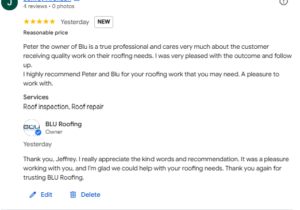
The homeowner supplied the following review after the repair:
A difficult-to-trace leak does not always come from the closest roof penetration. Spray foam, roof pitch, decking conditions, and water migration can all affect where a leak appears inside a home. A controlled inspection and testing process can help identify the actual entry point before a repair is recommended.
Written By: Peter Menke
Peter Menke is the owner of BLU Roofing and has been serving the South Florida roofing industry for over 6 years. He founded BLU Roofing to provide homeowners with transparent, accurate information grounded in real Florida roofing conditions and building practices. License #CCC1337285.
BLU Roofing provides roof inspections, repairs, restoration, and replacement for shingle, tile, metal, and flat or low-slope roof systems across Palm Beach, Martin, and Broward Counties.
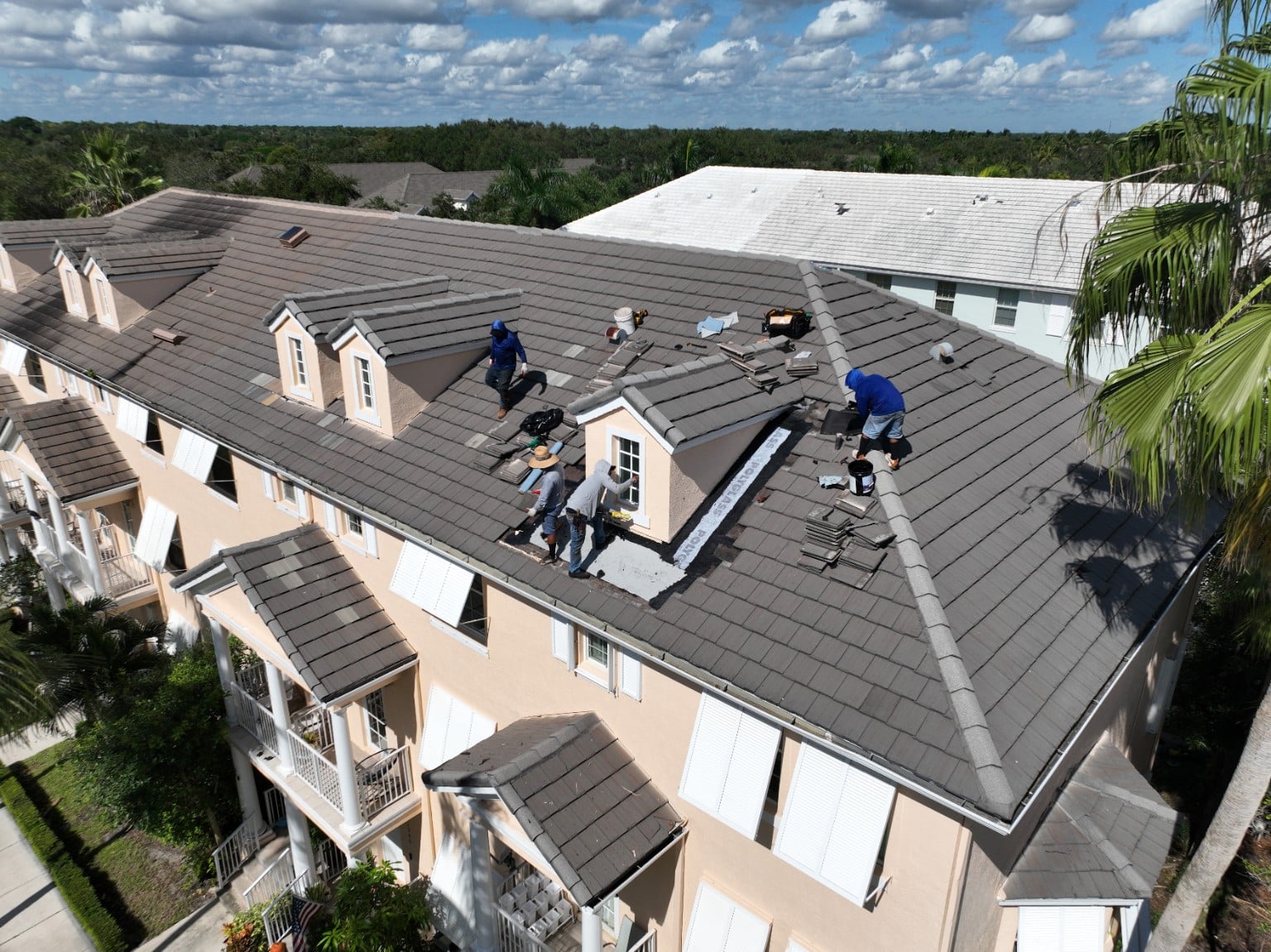
This Abacoa tile roof repair addressed a leak around a dormer on a three-story townhouse in Antigua at Abacoa, Jupiter, Florida. The approximately 20 to 25-year-old concrete tile roof was still serviceable, but the roof-to-wall flashing around one dormer had received an earlier repair that did not properly rebuild the flashing and underlayment detail.
Quick Summary
BLU Roofing repaired a dormer flashing leak on a three-story concrete tile roof in Antigua at Abacoa. The crew carefully removed the tiles and old underlayment down to the plywood deck, confirmed that the deck was sound, installed new underlayment, resealed the dormer flashing, replaced one tile that broke during the repair, secured the tiles with APOC Polyset AH-160 roof tile adhesive foam, sealed cracked stucco and a worn window seal, and completed the work in approximately four hours with a four-person crew.
Table of Contents
- Project Facts
- Finding the Dormer Leak
- Why Repair Made Sense
- Rebuilding the Flashing Detail
- Additional Window and Stucco Sealing
- Completed Abacoa Tile Roof Repair
Project Facts
| Community | Antigua at Abacoa, Jupiter, Florida 33458 |
| Building | Three-story townhouse |
| Roof system | Concrete tile roof, approximately 20 to 25 years old |
| Reason for service | Interior water stain and cracked stucco ceiling below one dormer |
| Confirmed repair area | Dormer roof-to-wall flashing and the related underlayment detail |
| Decking condition | Plywood roof deck was inspected and did not require replacement |
| Materials | CertainTeed SA granulated cap sheet, Polyglass Polystick TU Plus, roofing cement and membrane, and APOC Polyset AH-160 roof tile adhesive foam |
| Timeline | Approximately four hours with a four-person crew, completed in one day |
| Access | A 40-foot ladder was required for the three-story townhouse |
Finding the Dormer Leak
The homeowner noticed a water stain inside the townhouse along with a cracked stucco ceiling. Because the leak was around a dormer and there was no attic space in that area, the inspection focused on the roof surface, the dormer walls, and the visible flashing details above the affected interior area.
The dormer flashing had apparently been repaired before. Based on the condition observed, the earlier work appears to have involved lifting tiles and applying roofing cement over the existing flashing. That may cover a visible symptom temporarily, but it does not necessarily address the complete roof assembly below the tiles. A durable tile roof repair requires careful access to the flashing and underlayment so the contractor can inspect what is actually below the surface.
Why Repair Made Sense on This Tile Roof
Concrete tile roofs can remain repairable even when they are approaching 25 years of age, depending on the condition of the tiles, underlayment, decking, flashings, and other roof components. In this case, the roof was still serviceable, and the problem was concentrated at one dormer flashing detail rather than a reason to replace the entire roof.
The inspection also confirmed that the plywood roof deck did not need replacement. That allowed the repair to focus on rebuilding the water-shedding and waterproofing details around the dormer instead of expanding the project unnecessarily. This is an important distinction for homeowners. A roof’s age matters, but age alone does not determine whether a targeted tile roof repair is responsible.
For comparison, BLU Roofing’s broader roof repair service includes diagnosis of leaks, flashing problems, broken tiles, and other localized issues across South Florida roof systems.
Rebuilding the Dormer Flashing Detail
The crew carefully removed the concrete tiles around the dormer so the underlying assembly could be inspected. The old underlayment was cut out down to the plywood roof deck. Because the deck was sound, no plywood replacement was necessary.
New underlayment was then installed and tied into the existing roof system using roofing cement and membrane. The primary repair area used CertainTeed SA granulated cap sheet. The lower dormer apron area and side sections used Polyglass Polystick TU Plus, a self-adhered waterproofing underlayment designed for use beneath adhesive-set or mechanically fastened concrete and clay tile roof coverings.
In dormer terminology, the lower section where the sloped roof meets the front wall is commonly called the apron or headwall flashing area. The side sections are generally referred to as sidewall flashing. The exact flashing layout varies by construction, but the goal is the same: direct water away from the dormer and keep it from reaching the underlayment and roof opening below.
After the new underlayment was tied into the existing system, the dormer flashing was resealed. The removed tiles were then put back in place with APOC Polyset AH-160 roof tile adhesive foam. Only one tile broke during the work, and that tile was replaced. The surrounding roof was also checked for other broken tiles, and any existing broken tiles identified during the inspection were repaired.
The underlayment products used on this project are described by their manufacturers as waterproofing materials for tile applications. Polyglass describes Polystick TU Plus as a self-adhered, dual-reinforced underlayment for adhesive foam or mechanically fastened roof tile applications. CertainTeed describes Flintlastic SA Cap as a self-adhered SBS-modified bitumen membrane. Product use remains subject to the approved roof assembly and project conditions.
Additional Window and Stucco Sealing
While working around the dormer, the crew also observed cracked stucco around the window sill area and worn caulking around the window seal. These conditions could allow water to enter around the dormer, even though the confirmed repair area was the roof-to-wall flashing.
BLU Roofing sealed the stucco cracks and recaulked the window area. The work was treated as additional water-entry prevention and detail maintenance, not as a claim that those conditions were the confirmed source of the interior stain. Addressing related vulnerabilities while the crew is already working at a dormer can help avoid leaving another obvious path for water intrusion.
Completed Abacoa Tile Roof Repair
The repair required a 40-foot ladder because the work was on a three-story townhouse. Four crew members completed the project in approximately four hours. The work was scheduled around the weather so the roof could be opened, repaired, and closed without rain during the process.
After the tiles, flashing, underlayment, stucco, and window seal work were completed, the crew inspected the surrounding area, picked up the work materials, and cleaned the property carefully. Before, during, and after photos were documented in a CompanyCam photo report for the homeowner’s records. The leak was resolved after the repair,
and the homeowner left us a great review!

For this project, no HOA approval or permit was required for the localized repair. Requirements can vary by municipality, project scope, and community rules, so homeowners should confirm the requirements for their own property before work begins.
A dormer leak does not automatically mean a full roof replacement is necessary. The right recommendation depends on the age and condition of the tile, the underlayment, the decking, the flashing, and the extent of the damage. A careful inspection can determine whether the roof remains repairable or whether broader replacement planning is more appropriate. BLU Roofing also provides a broader guide to repair-first roof restoration decisions, although coating is not the solution for every tile roof or flashing problem.
Written By: Peter Menke
Peter Menke is the owner of BLU Roofing and has been serving the South Florida roofing industry for over 6 years. He founded BLU Roofing to provide homeowners with transparent, accurate information grounded in real Florida roofing conditions and building practices. License #CCC1337285.
BLU Roofing provides roof inspections, repairs, restoration, and replacement for shingle, tile, metal, and flat or low-slope roof systems across Palm Beach, Martin, and Broward Counties.
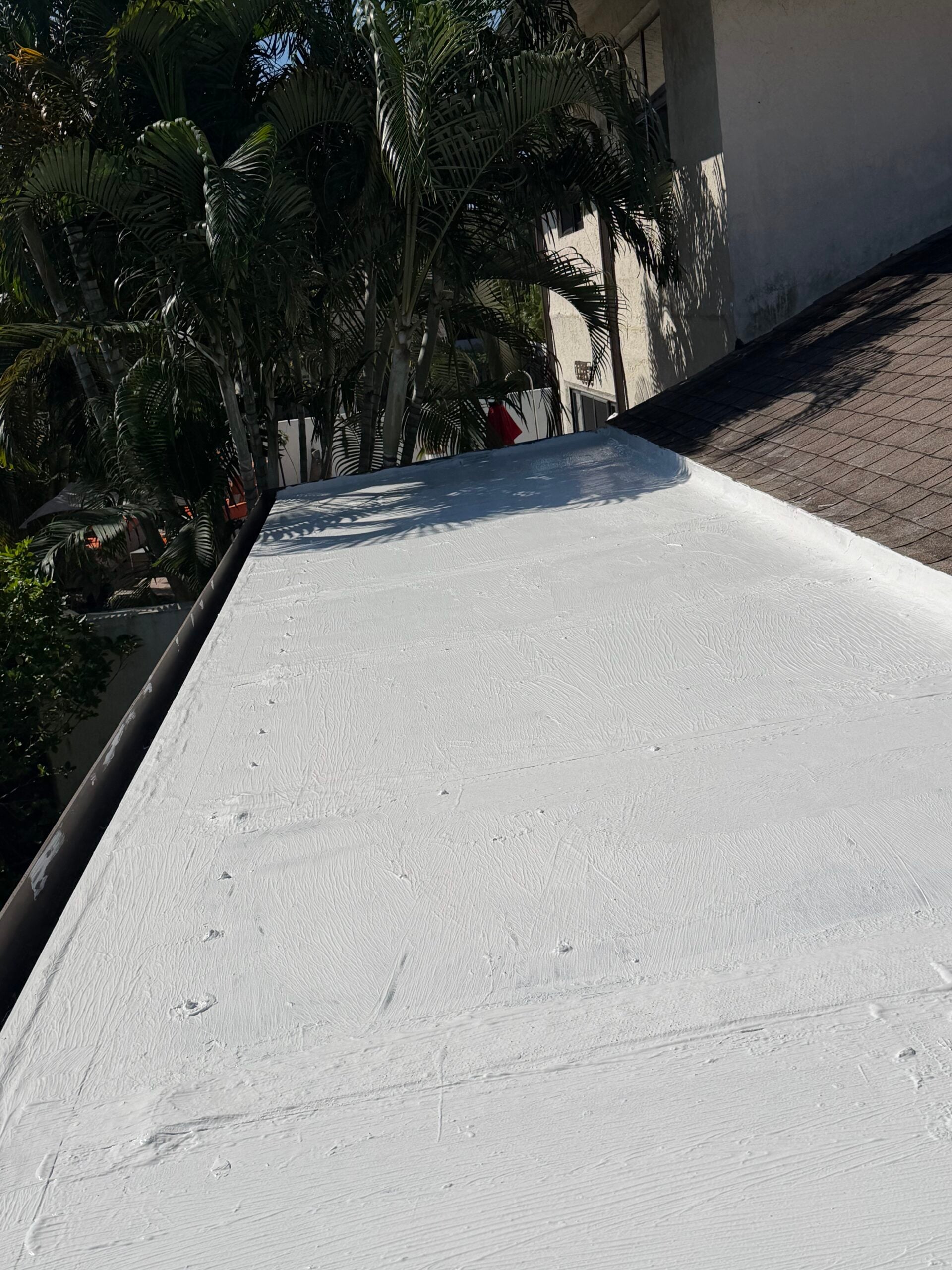
A Delray Beach Silicone Roof Coating restored this low-slope aluminum-panel roof at a home in Woodlake, Delray Beach. The main shingle roof near the low-slope section was only about eight years old, but it was not the source of the water intrusion. The actual issue was deteriorated tape at the aluminum-panel seams and at the transition where the low-slope roof meets the main roof.
Quick Summary
BLU Roofing restored this qualifying aluminum-panel roof rather than replacing sound panels. After pressure cleaning and preparing the roof, the deteriorated tape at the seams and roof transition was replaced and reinforced with silicone and polyester fabric. The crew then applied one full white field coat of TRI-BUILT Roof X Tender 985 Super Silicone Roof Coating.
Table of Contents
- Project Facts
- Inspection Finding: The Shingle Roof Was Not the Leak Source
- Why Restoration Made Sense
- The Silicone Restoration Process
- Before and After
Project Facts
| Location | Woodlake, Delray Beach, Florida 33445 |
| Roof section | Low-slope aluminum-panel roof adjacent to the main shingle roof |
| Confirmed issue | Deteriorated tape at panel seams and at the roof-transition detail |
| What was ruled out | The nearby main shingle roof, approximately eight years old, was not the source of the water intrusion |
| Restoration work | Pressure cleaning, new seam tape, silicone and polyester-fabric reinforcement at seams and transition details, then one white silicone field coat |
| Coating | TRI-BUILT Roof X Tender 985 Super Silicone Roof Coating, white |
| Primer | Not required for this restoration scope after cleaning, drying, and surface evaluation |
Inspection Finding: The Shingle Roof Was Not the Leak Source
When a low-slope roof section sits beside a main shingle roof, it can be easy to assume the water is coming from the larger roof above. That was not the case on this Delray Beach project. The nearby shingle roof was about eight years old and was not identified as the source of the problem.
Instead, the failure was at the aluminum-panel roof itself. The existing tape had deteriorated at the panel seams and at the transition detail where the low-slope roof meets the main roof. Tape at these details does not last forever. Once it loses adhesion or breaks down, water can work into the seam or transition even while the aluminum panels remain serviceable.
This is why an inspection should identify the actual leak path before a coating recommendation is made. A coating cannot responsibly be used to hide a failing roof assembly, but it can be a practical restoration option when the underlying roof is sound and the known vulnerabilities can be properly repaired. For a broader explanation of that decision, read our guide to residential flat roof coating.
Why Restoration Made Sense
The aluminum panels on this roof did not need to be replaced. The work was concentrated where the roof needed it most: at the aging seam tape and the roof-transition detail. Replacing sound panels would not have been the right first solution when the problem was localized and the roof could be prepared for a coating restoration system.
That distinction matters for homeowners with patios, lanais, additions, and other low-slope roof sections. The question is not simply whether the roof leaks. The question is whether the roof is structurally sound, whether the water-entry point can be identified, and whether seams, flashings, and transitions can be restored correctly.
The Silicone Restoration Process
As with the Palm City aluminum patio roof restoration, the work began with proper cleaning and preparation. The roof was pressure cleaned and allowed to dry. The deteriorated tape at the seams and at the transition to the main roof was replaced before the field coating was applied.
The restoration sequence was:
- Pressure clean and prepare the aluminum-panel roof.
- Install new tape at deteriorated seams and the roof-transition detail.
- Apply white silicone over the taped details.
- Embed polyester fabric at the reinforced seams and transition areas.
- Apply a final silicone overcoat over the embedded fabric.
- Apply one full white field coat across the sound aluminum panels.
The product used was TRI-BUILT Roof X Tender 985 Super Silicone Roof Coating in white. The coating system was used as part of a repair-first restoration, not as a substitute for correcting a compromised roof below it.
Before and After: Delray Beach Aluminum Roof Restoration
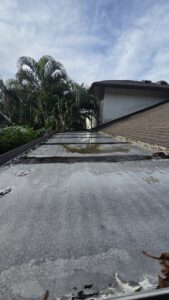
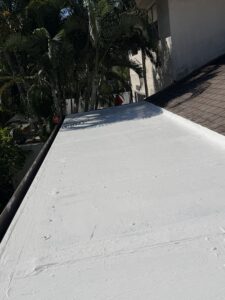
The before photo documents the weathered roof and deteriorated detail areas before restoration. The after photo shows the completed white silicone surface over the sound aluminum panels, with the seams and transition area reinforced as part of the work.
For low-slope roofs, the best recommendation depends on the actual roof condition, not a one-size-fits-all answer. If a roof is leaking at a seam, flashing, transition, or penetration, a targeted inspection can determine whether repair and restoration are responsible options. Learn more about BLU Roofing roof repair services for South Florida homes.
Written By: Peter Menke
Peter Menke is the owner of BLU Roofing and has been serving the South Florida roofing industry for over 6 years. He founded BLU Roofing to provide homeowners with transparent, accurate information grounded in real Florida roofing conditions and building practices. License #CCC1337285.
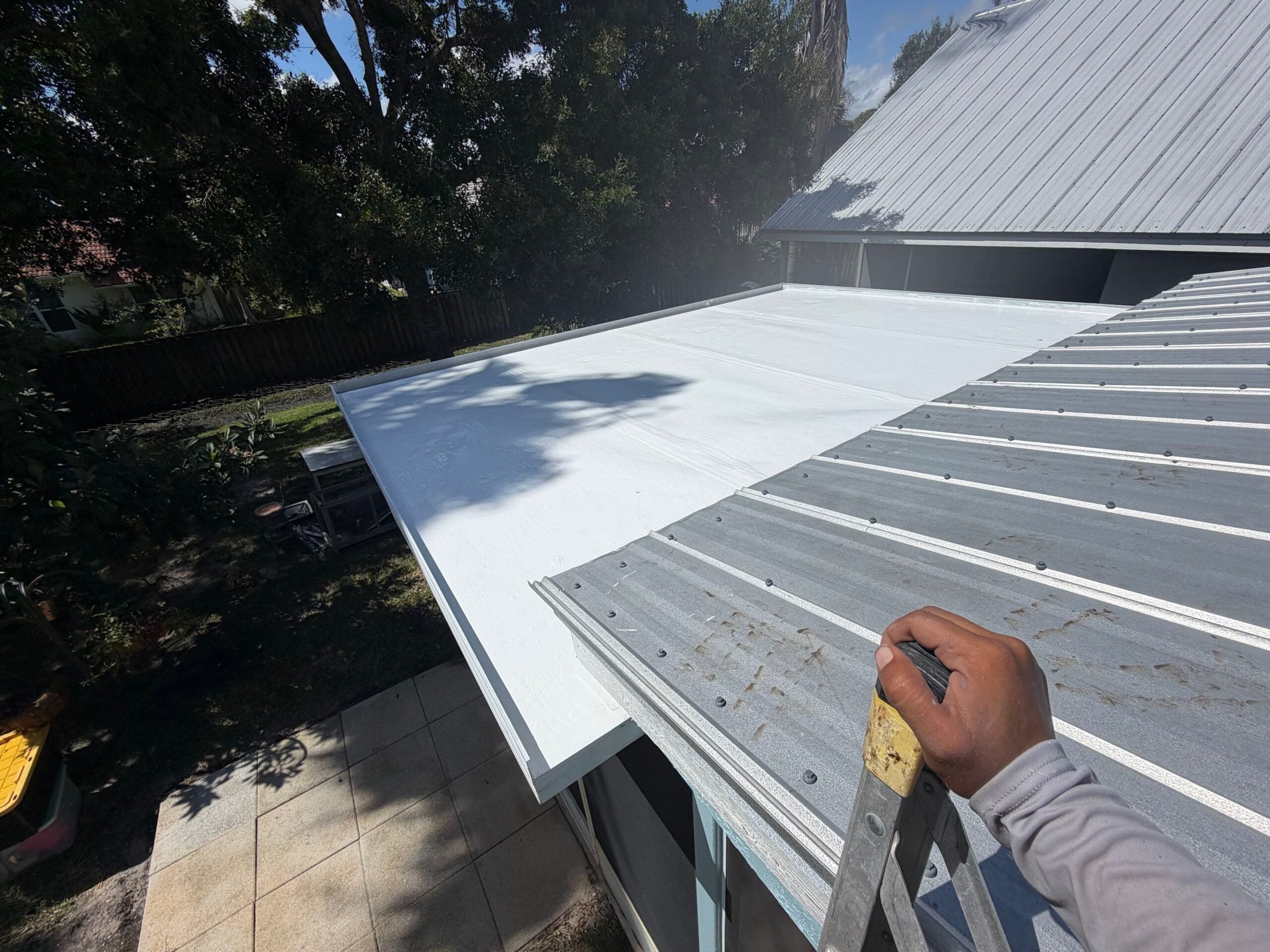
A Palm City Silicone Roof Coating restored this leaking aluminum-panel back patio roof in Palm Pointe at Martin Downs. The aluminum panels themselves were still serviceable. The active leaks were coming through aging panel seams, where the original seam tape had deteriorated and lost adhesion. Instead of replacing sound panels, BLU Roofing cleaned and prepared the roof, reinforced the vulnerable seams and flashing areas, and applied a white silicone coating system.
Quick Summary
This Palm City back patio roof was actively leaking onto the concrete patio floor through deteriorated seams. The restoration included pressure cleaning the roof and clogged gutters, new aluminum-panel seam tape, silicone and polyester-fabric reinforcement at the seams, and one full white field coat of TRI-BUILT Roof X Tender 985 Super Silicone Roof Coating. The work was completed in one day, and the sound aluminum panels did not need to be replaced.
Table of Contents
- Project Facts
- Why the Patio Roof Was Leaking
- Cleaning and Preparation
- Reinforcing the Seams and Flashing Areas
- Applying the Silicone Coating
- Completed Palm City Patio Roof
- Client Feedback
Project Facts
| Community | Palm Pointe at Martin Downs, Palm City, Florida |
| Roof section | Low-slope aluminum-panel back patio roof |
| Reason for service | Active water intrusion through deteriorated panel seams |
| Inspection findings | Lifting and failed seam tape, surface dirt, clogged gutters, and deteriorating caulk around screw locations. The aluminum panels remained serviceable. |
| Restoration scope | Pressure cleaning, gutter cleaning, new seam tape, silicone and polyester-fabric seam reinforcement, and one white silicone field coat |
| Coating | TRI-BUILT Roof X Tender 985 Super Silicone Roof Coating, white |
| Primer | Not required for this restoration scope after preparation and evaluation of the surface |
| Timeline | Completed in one day |
Why This Patio Roof Was Leaking
The client, a local real estate agent who works with BLU Roofing, called because the back patio roof was actively leaking. This was not an interior sunroom leak. Water was coming through the roof system and landing on the concrete patio floor below.
On an aluminum-panel patio roof, the panel field can remain in good condition while the seams between panels become the weak point. In this case, the original tape at those seams had reached the end of its useful life, lifted in areas, and lost adhesion. There was also surface buildup across the roof, clogged gutters around the patio roof, and deteriorating caulk around screw locations. The panels themselves were still sound, so replacement was not the responsible first recommendation.
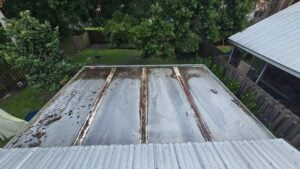
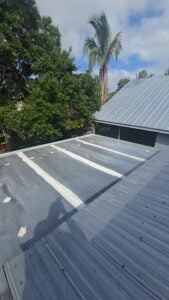
Coating is not a shortcut for a roof that has widespread failure, deteriorated panels, or deeper structural problems. But when a low-slope patio roof has a sound substrate and localized vulnerabilities at seams and details, a carefully prepared restoration can be a practical maintenance solution. Homeowners who want the broader decision process can read our guide to residential flat roof coating.
Cleaning and Preparation Came First
Preparation determines whether a coating system has a dependable surface to bond to. The crew pressure cleaned the patio roof and cleared the clogged gutters around it. The roof was then allowed to dry before the seam-restoration work began. No primer was required for this particular restoration scope.
Cleaning also made it possible to see the actual condition of the panel seams and work methodically rather than simply applying coating over dirt or loose material. The goal was to restore the roof where it was vulnerable, not to cover over unresolved conditions.
Reinforcing the Seams and Flashing Areas
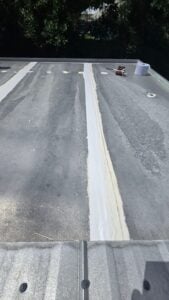
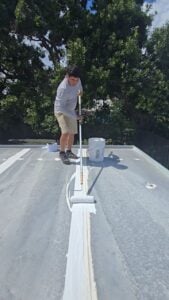
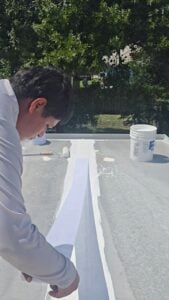
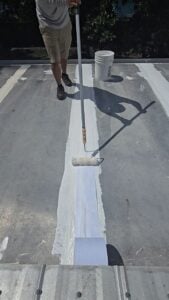
The seams were the primary leak path, so they received a more substantial treatment than the panel field. New aluminum-panel seam tape was installed over the deteriorated seam areas. White silicone coating was then applied over the taped seams, polyester reinforcing fabric was embedded, and a final silicone overcoat was applied over the fabric.
This created a reinforced detail at the seams and flashing areas while allowing the sound aluminum panels to receive the appropriate field coating. The existing fasteners did not require replacement as part of this project.
Applying the White Silicone Field Coat
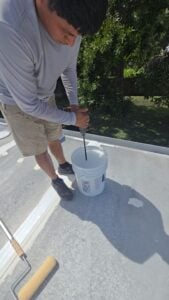
After the seam and flashing areas were reinforced, the crew applied one full white field coat of TRI-BUILT Roof X Tender 985 Super Silicone Roof Coating across the sound aluminum-panel field. The coating was applied working back to front so the completed coating surface could be finished without unnecessary foot traffic.
Roof X Tender publishes a target application rate of 2 gallons per 100 square feet for one field coat. The important distinction on this roof is that the full panel field received one coat, while seams and flashing areas received the localized tape, silicone, fabric, and silicone reinforcement described above. That approach reflects the actual water-entry points rather than treating every part of the roof as if it had the same condition.
Completed Palm City Patio Roof Restoration
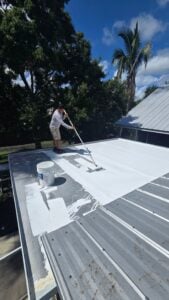
The completed restoration gave this patio roof a clean, uniform white silicone surface, with the areas most likely to leak reinforced first. The work was completed in one day, including cleaning the gutters and final cleanup. The result was a restoration of a qualifying patio roof, not an attempt to coat over a failing system.
If a patio, lanai, porch, garage, or other low-slope roof section is leaking, the first step is an inspection that identifies whether the panels or membrane are sound, where water is entering, and whether restoration is a responsible option. For active leaks that need diagnosis and repair, visit our roof repair service page or contact BLU Roofing to discuss the roof condition.
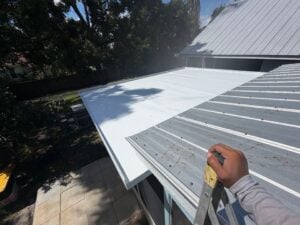
Client Feedback and Project Documentation
Every project should be documented clearly, especially when a roof is being restored rather than replaced. BLU Roofing provided before, during, and after documentation of this one-day project for the client’s home-maintenance records.
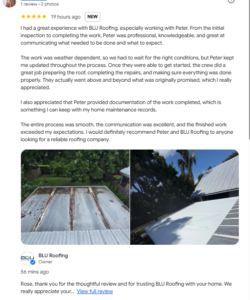
“From the initial inspection to completing the work, Peter was professional, knowledgeable, and great at communicating what needed to be done and what to expect.”
“The entire process was smooth, the communication was excellent, and the finished work exceeded my expectations.”
Client’s five-star Google review
Written By: Peter Menke
Peter Menke is the owner of BLU Roofing and has been serving the South Florida roofing industry for over 6 years. He founded BLU Roofing to provide homeowners with transparent, accurate information grounded in real Florida roofing conditions and building practices. License #CCC1337285.