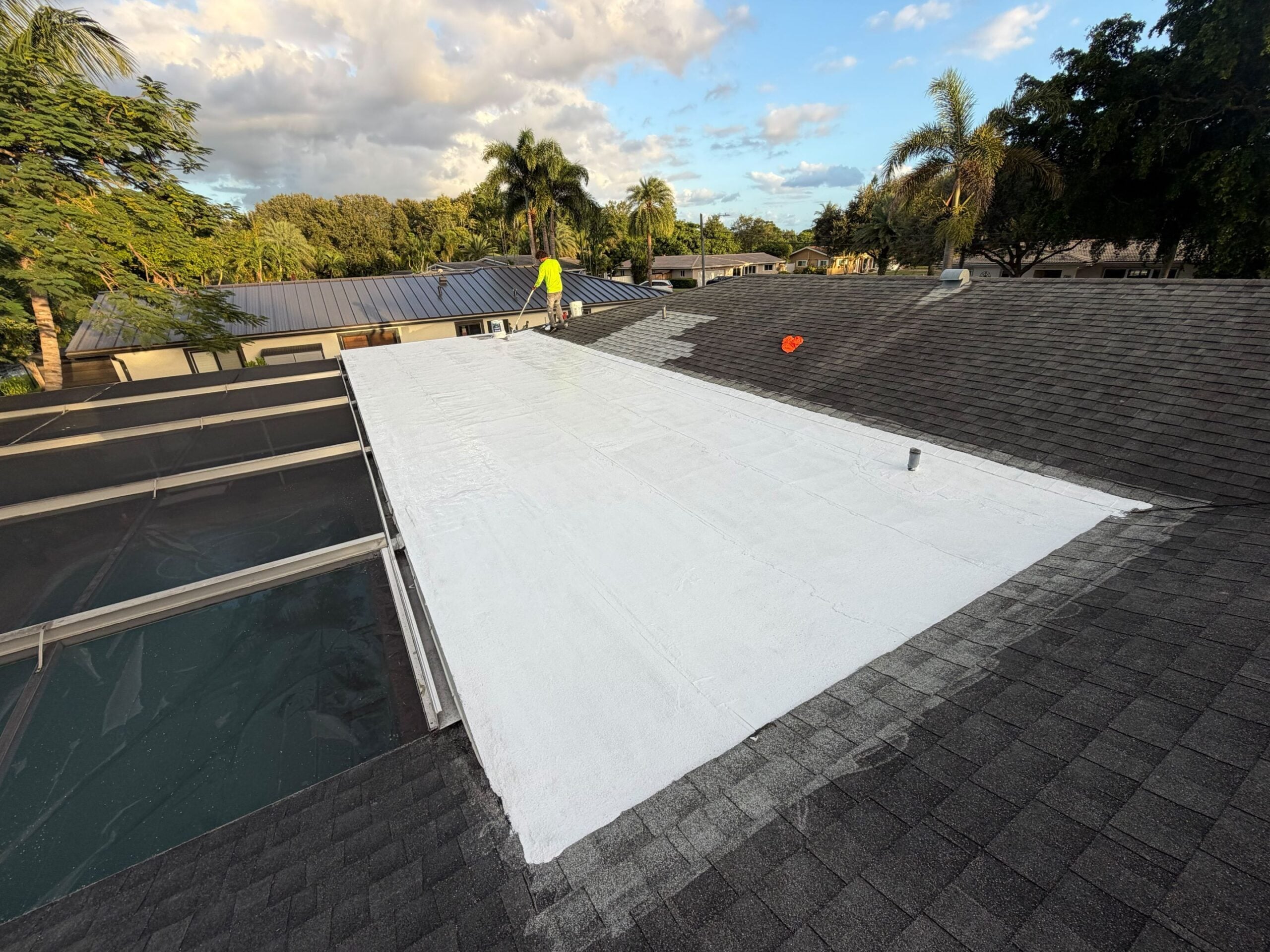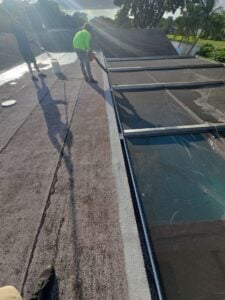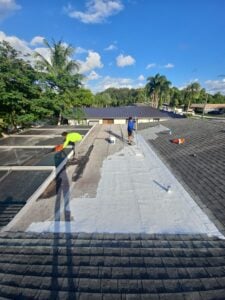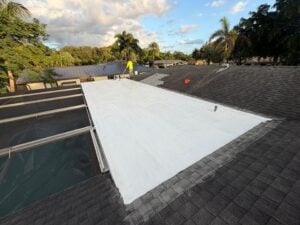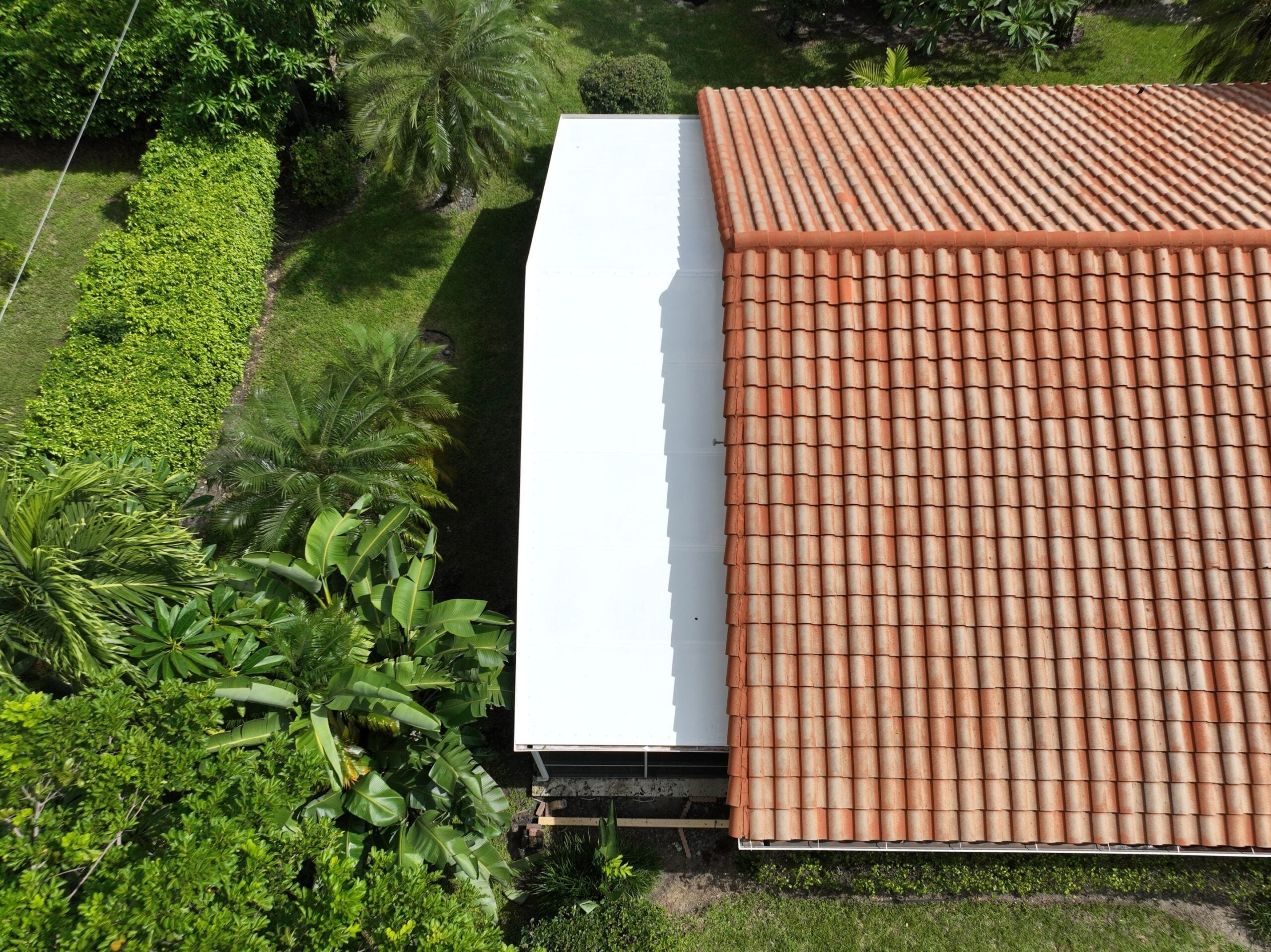
A residential flat roof coating Palm Beach County homeowners are considering can be an excellent way to restore a qualifying low-slope roof, but it is not a universal substitute for replacement. BLU Roofing performs coating work on both residential and commercial low-slope roofs, including residential back patio, lanai, garage, carport, porch, and addition roof sections. In Southeast Florida, the right recommendation depends on the roof’s substrate, drainage, moisture condition, flashings, prior repairs, and the specific coating system being proposed. The goal is not to sell a coating on every roof. The goal is to determine whether a coating is a responsible maintenance and restoration option, or whether the existing roof has reached the point where replacement is the safer investment.
Quick Summary
BLU Roofing applies coating systems to qualifying residential and commercial low-slope roofs, but repairs always come first. A properly specified coating system can restore a sound roof and add a seamless, reflective weathering surface. Silicone often deserves serious consideration in Palm Beach County where ponding water, high humidity, intense UV exposure, and frequent rain are common. Acrylic can be a practical option on roofs with reliable positive drainage and a sound, compatible substrate. Neither material should be used to conceal saturated materials, failed drainage, widespread membrane deterioration, rotted decking, or unresolved flashing problems.
Table of Contents
- What Is a Residential Roof Coating?
- Which Residential Roofs Can Be Considered for Coating?
- Silicone vs. Acrylic for Southeast Florida
- Why Southeast Florida Changes the Decision
- When a Coating Is Appropriate, and When Replacement Is Better
- Residential and Commercial Roof Coating Cost
- What a Proper Coating Project Includes
- Permits, Product Approvals, and Warranties
- A Real Palm Beach Gardens Coating Repair
- Frequently Asked Questions
What Is a Residential Roof Coating?
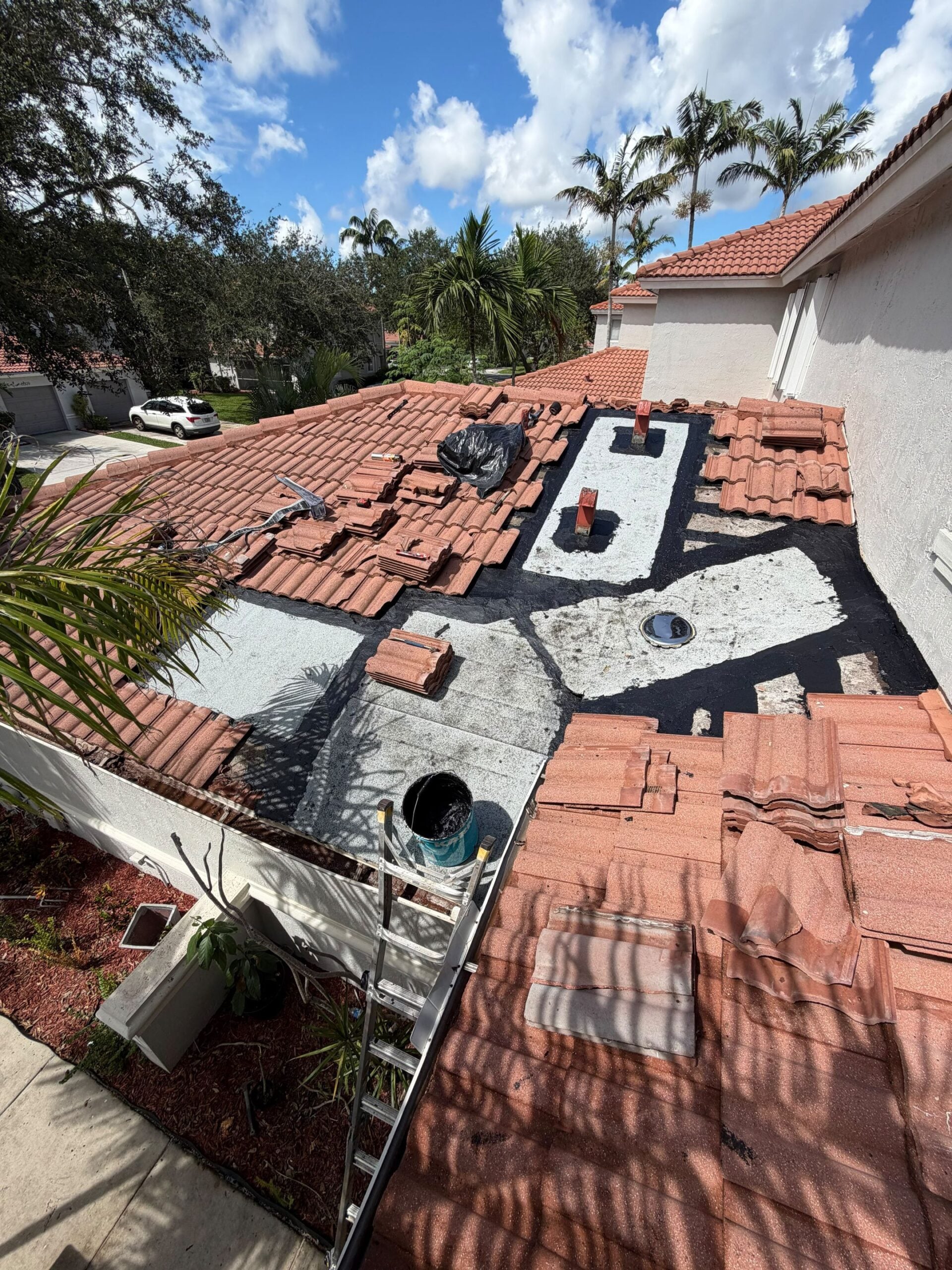
A roof coating is a liquid-applied restoration system that cures into a seamless membrane over an existing roof surface. It is most often considered for flat and low-slope residential sections, such as roofs over garages, patios, lanais, additions, porches, carports, and modern architectural sections with minimal slope. Depending on the approved system and existing substrate, a coating may be applied over sound modified bitumen, mineral cap sheet, metal, concrete, spray foam, or certain weathered single-ply systems.
The word system matters. A proper coating project is more than applying material across a roof. It includes inspection, cleaning, repairs, compatible primers or adhesion testing where required, reinforcement at seams and details, the correct wet and dry film thickness, and a verified weather window for installation. The coating only performs as well as the roof beneath it and the preparation supporting it.
A coating is not the same as a cosmetic sealant application, and it should not be sold as one. It is also not a cure for a roof that has wet insulation, widespread substrate failure, poor drainage, deteriorated decking, or a membrane that has lost its integrity across the whole roof.
Which Residential Roofs Can Be Considered for Coating?
The first question is not, “Which coating should I use?” It is, “Is this roof a legitimate candidate for restoration?” A residential low-slope roof may be considered when the substrate is structurally sound, the existing membrane is generally intact, known leaks can be repaired, flashings can be properly detailed, and there is no evidence of widespread trapped moisture or failure below the surface.
For homeowners, this frequently means a flat or low-slope section over a back patio, lanai, garage, addition, carport, porch, or architectural transition rather than the main steep-slope shingle or tile roof. The same evaluation principles apply on commercial roofs, but a homeowner should not assume that a small patio roof needs the same scope or price as a large commercial building.
| Roof condition | Coating may be worth evaluating | Replacement is more likely appropriate |
|---|---|---|
| Existing membrane | Weathered but still sound, with localized repairable defects | Broad cracking, splitting, delamination, membrane failure, or incompatible prior coatings |
| Moisture and structure | Dry, stable deck and insulation, with no signs of systemic damage | Saturated roof components, soft areas, rotted decking, or structural deterioration |
| Drainage | Positive drainage, or a condition that can be responsibly corrected as part of the scope | Persistent drainage failure that has not been diagnosed or corrected |
| Leaks and details | Known leaks are localized and repairable at seams, penetrations, flashings, or transitions | Leaks appear in multiple unrelated areas, or detail failures are too extensive for a reliable restoration |
Concrete tile, clay tile, shingle, and most steep-slope residential roofs are not what this guide is about. Those systems use fundamentally different water-shedding designs. A coating decision should start with a qualified inspection of the exact roof type and assembly, not with a product bucket.
Silicone vs. Acrylic for Southeast Florida
Both acrylic and silicone coatings have a place in roofing, but they behave differently. CertainTeed describes acrylic coatings as water-based and notes their adhesion, cost-effectiveness, and color flexibility. It also notes that cure is more dependent on suitable temperature and dry conditions. Silicone is described as moisture-cured, highly UV-stable, and better suited to long-term ponding-water exposure. CertainTeed’s acrylic versus silicone overview is a useful technical reference for homeowners comparing the two chemistries.
| Decision factor | Silicone coating | Acrylic coating |
|---|---|---|
| Ponding water | Often the stronger candidate when the approved system is designed for ponding-water exposure | Generally better where there is reliable positive drainage and no persistent standing water |
| South Florida humidity and rain | Moisture-cured chemistry can be advantageous, subject to the manufacturer’s application instructions | Requires closer attention to the dry weather window and cure conditions |
| UV and heat | Strong UV resistance, often a compelling option for exposed low-slope roofs | Reflective acrylic systems can also perform well on sound roofs with positive drainage |
| Appearance and upkeep | Can attract surface dirt over time, particularly in bright white finishes | Often offers more color flexibility and a cleaner-looking surface over time |
| System selection | Adhesion testing and approved preparation remain essential | Substrate compatibility, preparation, and cure requirements remain essential |
There is no automatic winner based on material name alone. Gaco, for example, states that its acrylic systems are intended for sound low-slope roof restoration when ponding water is not an issue, while its silicone systems are designed to withstand permanent ponding water under their applicable specifications. That is a useful distinction, but it is not permission to ignore drainage. Standing water can still signal a structural slope issue, blocked drainage, or a roof condition that needs correction before any coating is applied.
Why Southeast Florida Changes the Decision
Palm Beach County roofs see the combination that makes coating selection important: high UV exposure, long heat cycles, humidity, wind-driven rain, tropical weather, and frequent afternoon storms. The National Weather Service maintains climate records for West Palm Beach going back to 1888, including years with nearly 80 inches of rainfall. Those conditions are why a coating’s cure requirements, water tolerance, adhesion, and film thickness should be evaluated carefully, not treated as generic details.
For many Southeast Florida residential flat roofs, silicone will be the more logical material to evaluate first when ponding water is part of the condition. That is not because acrylic is a bad product. It is because a humid, rain-prone market with low-slope roof sections requires a realistic conversation about drainage and application timing. Acrylic can still be a sound, cost-conscious restoration material when the roof has positive drainage, the substrate is compatible, and the installation can be completed within the correct weather window.
When a Coating Is Appropriate, and When Replacement Is Better
A coating can make sense when it extends the service life of a roof that still has a good foundation. It is often a better value than premature replacement when the existing membrane is dry and serviceable, repair areas are localized, and the roof can be properly prepared for the selected system.
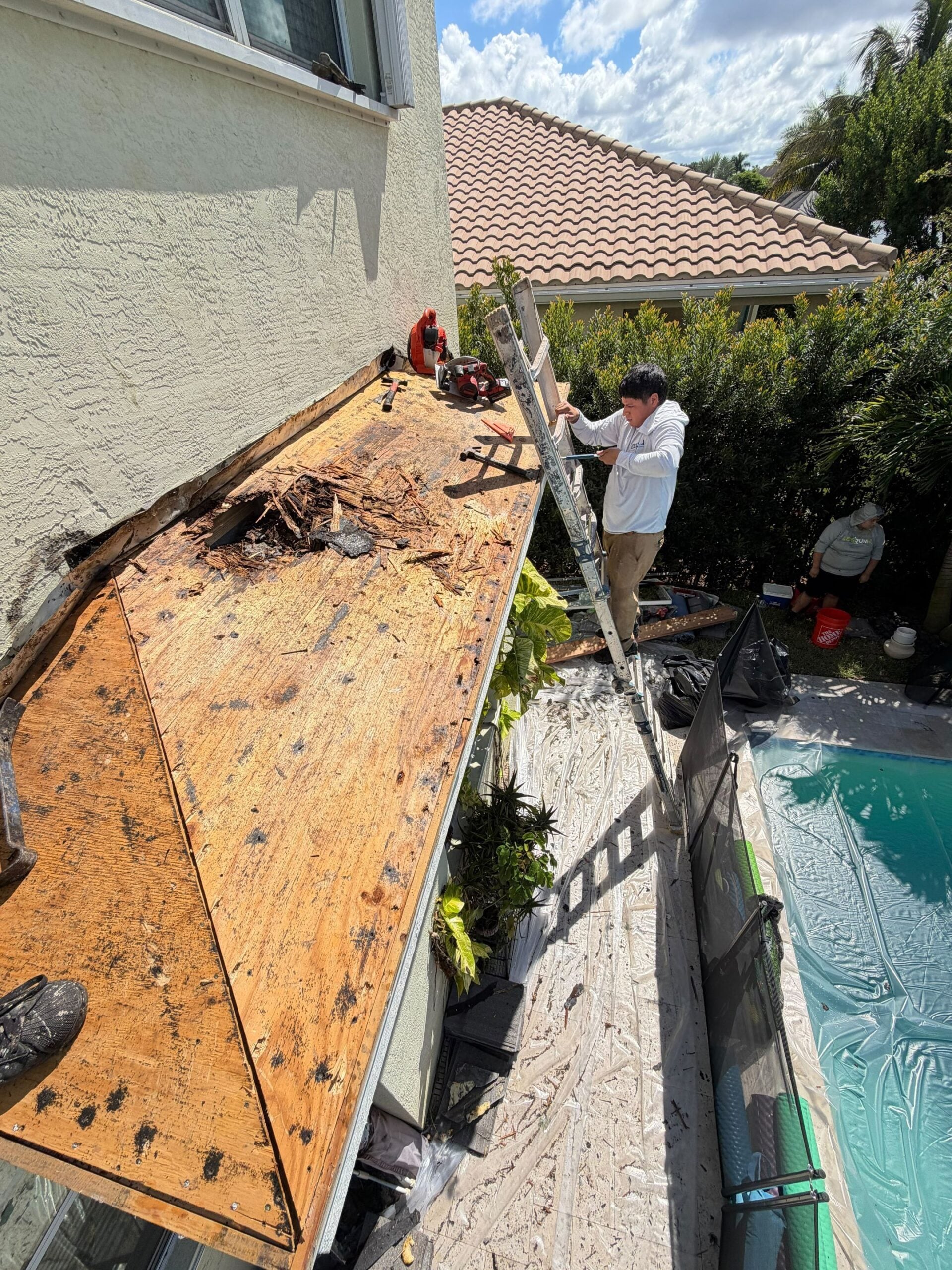
Replacement is the better recommendation when coating would merely hide a deeper problem. Examples include wet or saturated insulation, rotted decking, widespread membrane failure, soft areas, a large number of unrelated active leaks, compromised wall flashings, recurring drainage problems, or a substrate that cannot meet the selected manufacturer’s system requirements. No coating can responsibly turn a failing roof assembly into a reliable roof by covering it up.
Residential and Commercial Roof Coating Cost
For a properly prepared roof-coating project in Palm Beach County, a realistic working range is generally about $5 to $10 per square foot, plus any required repairs. That range is not a flat price list. The final cost depends on the size and access of the roof, the existing substrate, cleaning and preparation needs, primer requirements, seams and flashing details, drainage, repair scope, coating chemistry, required film thickness, product approval requirements, and warranty level.
Smaller residential patio and garage roofs can cost more per square foot than a larger roof because mobilization, protection, detail work, and setup are still required. Conversely, a sound, accessible roof with limited repairs may be priced near the lower end of the range. BLU Roofing is often competitive near $5 per square foot when the roof condition and scope support it, but we will not skip needed repairs or reduce the specified coating thickness just to force a number. An inspection comes first, then a defined scope and transparent price.
What a Proper Coating Project Includes
For a residential coating to perform, the process needs to be disciplined from the first inspection through the final walk-through. The exact sequence and materials vary by system, but the following elements should be part of the conversation.
Inspection and diagnosis: We identify the existing substrate, inspect flashings and transitions, look for signs of trapped moisture or structural deterioration, evaluate drainage, and distinguish a repairable leak from a broad system failure.
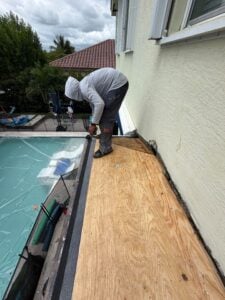
Repairs before coating: Seams, penetrations, transitions, flashing laps, and known leak areas are repaired and reinforced first. If a repair reveals wet materials, rotted decking, widespread membrane failure, or a condition that cannot be reliably restored, the recommendation changes from coating to a more appropriate repair or replacement scope. A coating is the weathering surface, not a substitute for proper flashing detail.
Cleaning, testing, and primer: After needed repairs are complete, dirt, oxidation, biological growth, loose material, and incompatible residue are removed so they cannot compromise adhesion. The roof must then be cleaned and allowed to dry as required by the system. Where the manufacturer requires it, the contractor performs an adhesion test and applies the compatible primer. Primer is not automatically required on every coating system or substrate, but when the approved assembly calls for it, it goes on after preparation and before the field coating. It is part of the waterproofing system, not an optional upgrade.
Correct application thickness: The material must be applied at the manufacturer-required coverage rate and in the required number of passes. Film thickness matters. A thin, uneven application can fail even if the correct product name is printed on the pail.
Detail work and clean-up: The perimeter, drains, scuppers, wall flashings, penetrations, and seams receive special attention. The property should be protected before work begins and left clean when the project is complete.
Permits, Product Approvals, and Warranties
Florida approval is not a blanket label that applies to every coating project. The exact system matters: product, substrate, preparation, reinforcement, application rate, roof assembly, and jurisdiction all matter. Florida’s Product Approval database shows that coating systems may be approved both inside and outside the High Velocity Hurricane Zone, but each approval directs the user back to its Notice of Acceptance or other documentation for the conditions and limitations of use. The contractor should verify the exact system, not simply state that a material is “Florida approved.”
Permit requirements also vary by municipality, jurisdiction, and project scope. The Palm Beach County Building Division processes permits for unincorporated Palm Beach County, while incorporated cities have their own processes. Before work begins, the permit path and the product-approval requirements should be confirmed for the particular address and scope.
Warranty language deserves the same care. Some manufacturers offer system warranties only when the specified assembly, preparation, coverage rate, inspections, and installer qualifications are met. A homeowner should receive a clear explanation of what is warranted, by whom, for how long, and what maintenance or conditions may affect that warranty.
A Real Palm Beach Gardens Coating Repair
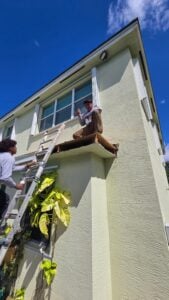
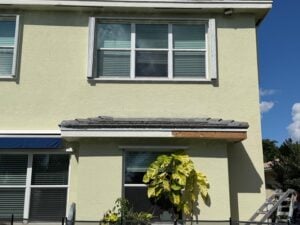
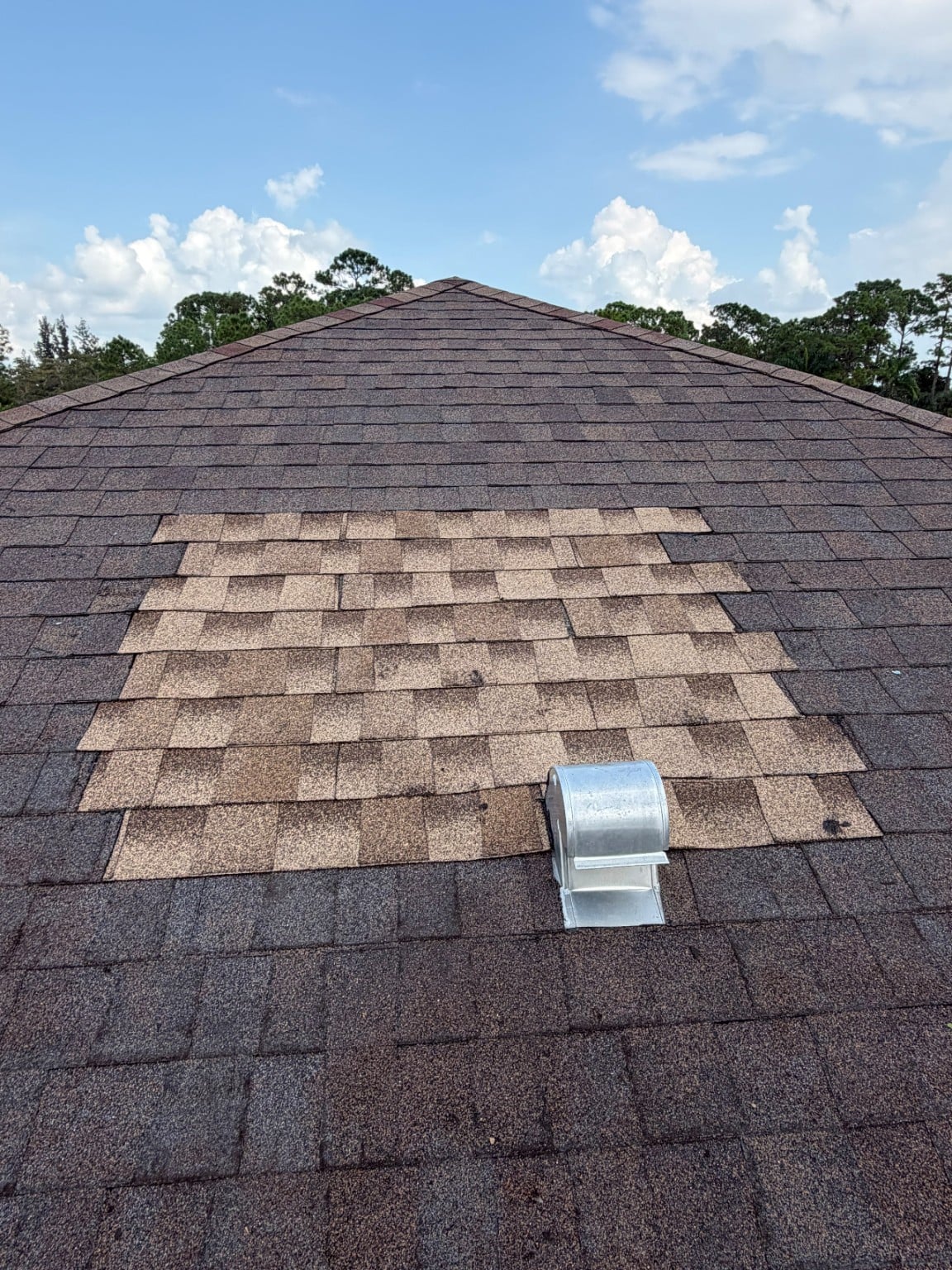
Not every coating project is a full restoration system. Sometimes a localized silicone coating repair is the right answer after a detailed leak diagnosis. In our Garden Oaks roof leak repair case study, we identified cracking in old coating and sealant around an aluminum roof detail in Palm Beach Gardens. The repair included cleaning the area, addressing the vulnerable details, and applying a professional silicone coating system to create a continuous water-tight seal in the repair area.
That project illustrates the right order of operations: find the actual source of water entry, repair and prepare the detail, then use the coating as part of a defined waterproofing solution. It was not a situation where a coating was used to guess at a leak or cover up a failing roof.
Frequently Asked Questions
Is silicone always better than acrylic in Palm Beach County?
No. Silicone is often the stronger system to evaluate when ponding water and high humidity are part of the condition. Acrylic may be appropriate on a sound, compatible roof with reliable positive drainage and an acceptable weather window. The roof condition and the manufacturer’s approved system determine the answer.
Can a coating stop an active roof leak?
It can be part of a properly designed repair, but a coating should not be applied over an undiagnosed leak. BLU Roofing first identifies and repairs the source, evaluates the substrate, seams, flashings, and moisture condition, then determines whether coating is appropriate as the restoration surface.
Does primer always go on before a roof coating?
Primer goes on after cleaning and preparation, but only when the selected manufacturer’s approved system calls for it on that substrate. Some high-adhesion coating systems may not need primer on a particular roof after adhesion testing. The product data, approved assembly, and actual roof condition determine the sequence.
How much does a residential flat roof coating cost in Palm Beach County?
A typical working range is about $5 to $10 per square foot, plus required repairs. Smaller back-patio, lanai, garage, and carport roofs may carry a higher per-square-foot cost because the same preparation, detail work, protection, and setup are required on a smaller area. A detailed inspection is the only responsible way to price a project.
Does BLU Roofing apply coatings on commercial roofs too?
Yes. BLU Roofing performs coating work on qualifying residential and commercial low-slope roofs. The material recommendation, preparation, product approval, and scope are tailored to the specific roof system.
Does silicone eliminate the need to fix ponding water?
No. Some silicone systems are designed to tolerate ponding water better than acrylic, but standing water still needs to be diagnosed. It may point to blocked drainage, an insufficient slope, or a structural condition that must be addressed.
Can a residential flat roof be coated over an existing coating?
Possibly. The existing coating must be identified, sound, clean, compatible with the proposed system, and able to pass any required adhesion testing. The answer is never automatic.
Can a coating be used on a tile or shingle roof?
This guide is focused on flat and low-slope roof assemblies. Tile and shingle roofs are water-shedding systems with different materials and details. A coating should not be used as a generic shortcut over a steep-slope roof.
Will a white coating lower cooling costs?
A reflective coating can reduce solar heat absorbed by the roof surface, but the actual effect on a home’s utility costs depends on insulation, attic ventilation, HVAC condition, roof assembly, and many other variables. It should be viewed as one potential benefit, not a guaranteed savings figure.
Does a coating make a roof hurricane-proof?
No. A coating can contribute to a water-tight restoration system when it is properly specified and installed, but it does not change the roof’s structural attachment or make a home hurricane-proof. For more on roof damage after storms, see our Palm Beach County hurricane roof damage guide.
How do I know whether a coating or replacement is right for my home?
Start with a thorough inspection. BLU Roofing will evaluate the existing roof system, drainage, substrate condition, flashings, repairs, and the realistic life that remains in the roof before recommending a coating, repair, or replacement.
Talk Through Your Flat Roof Options
If you have a flat or low-slope residential back patio, lanai, garage, carport, porch, or addition roof in Palm Beach County, or a qualifying commercial low-slope roof, and want a straight answer about coating versus replacement, contact Peter Menke at 561-379-5364. We will inspect the roof, repair what needs to be repaired first, explain the correct coating sequence if restoration makes sense, and recommend the option that fits the actual condition of the system.
Written By: Peter Menke
Peter Menke is the owner of BLU Roofing and has been serving the South Florida roofing industry for over 6 years. He founded BLU Roofing to provide homeowners with transparent, accurate data grounded in the reality of Florida’s unique climate and building codes, information that is often missing from generic national roofing advice. License #CCC1337285