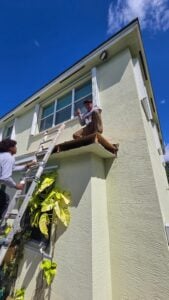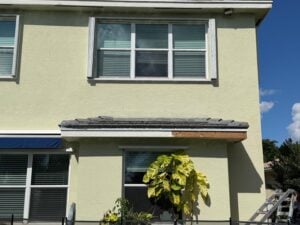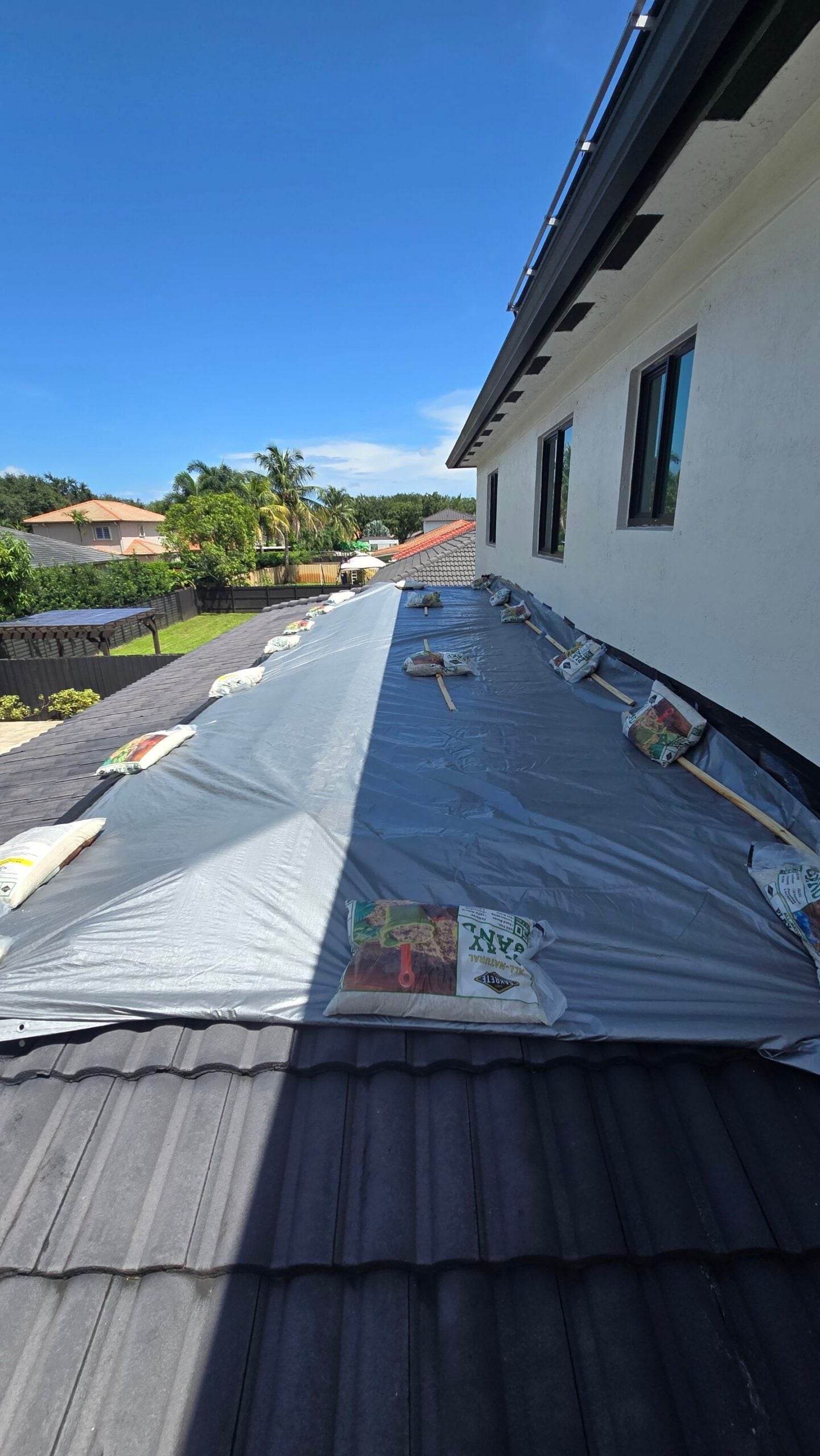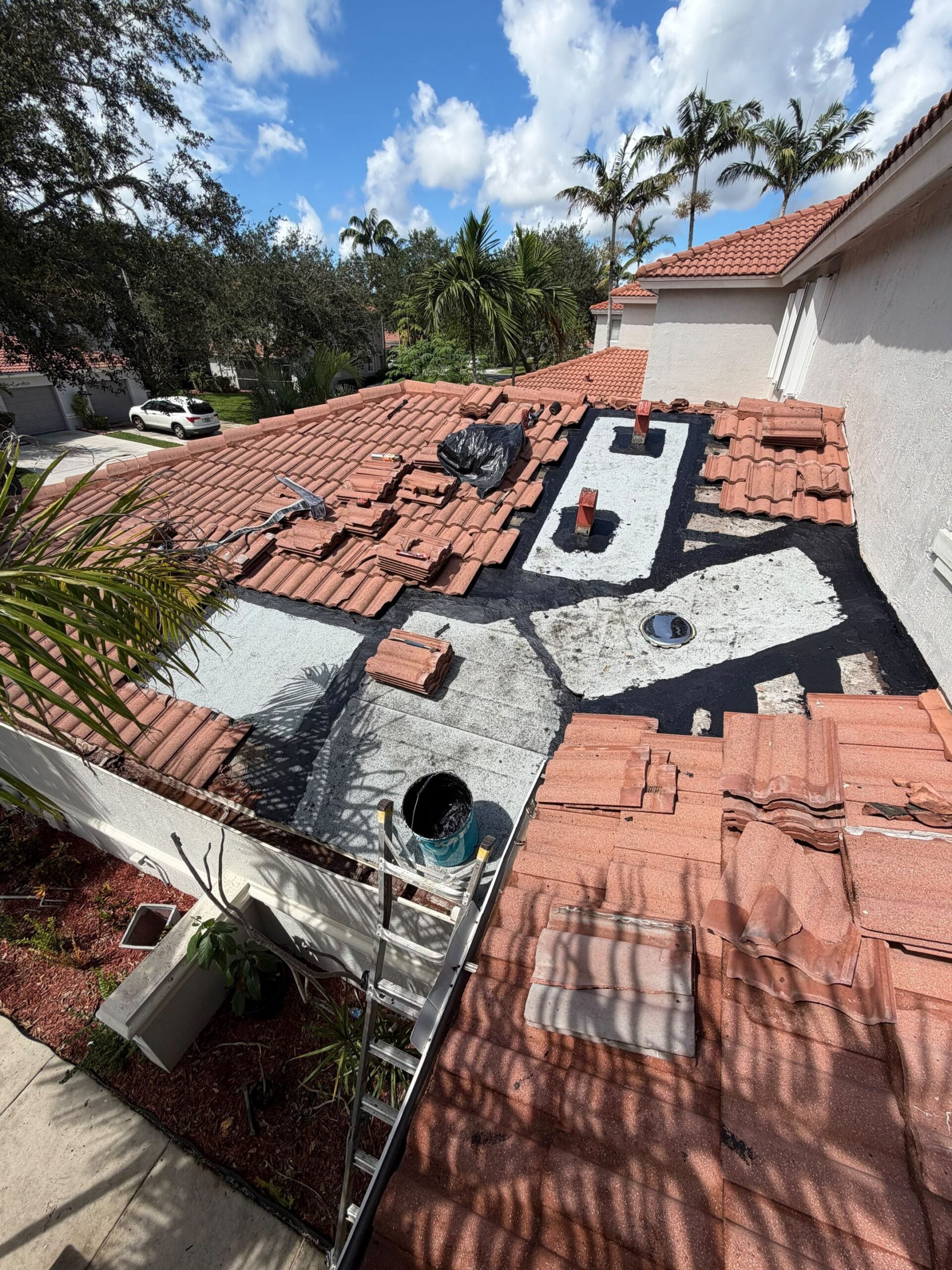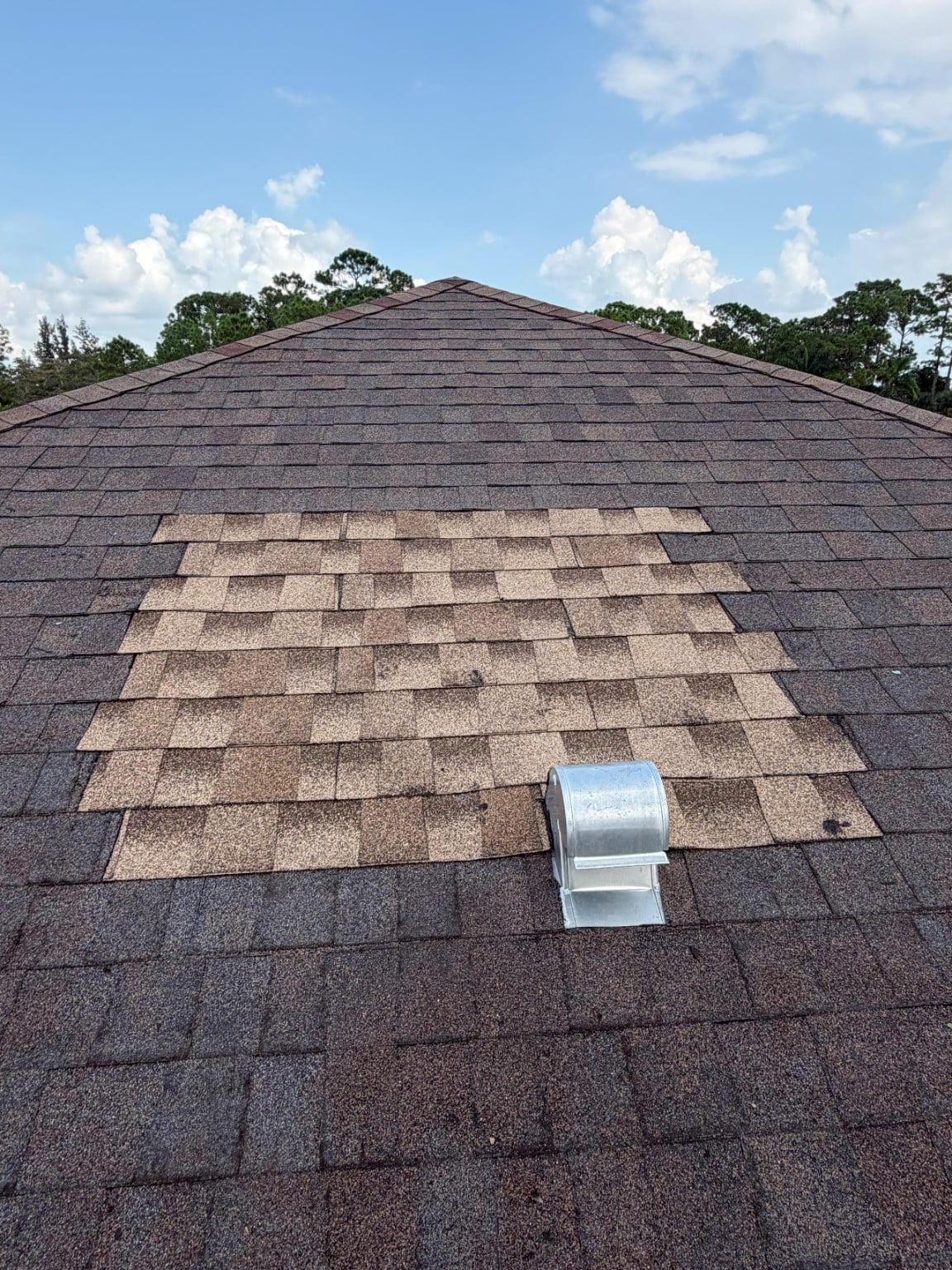
Multiple previous repairs. An active leak. Slipping tiles. Rotted fascia. If you described those findings to most homeowners, they would assume the answer is a full roof replacement. On a recent inspection in the Steeplechase community of Palm Beach Gardens, that was not my recommendation. This post walks through exactly what we found, why I voted repair over replace, and what that decision process should look like for any homeowner facing a similar situation.
Quick Summary
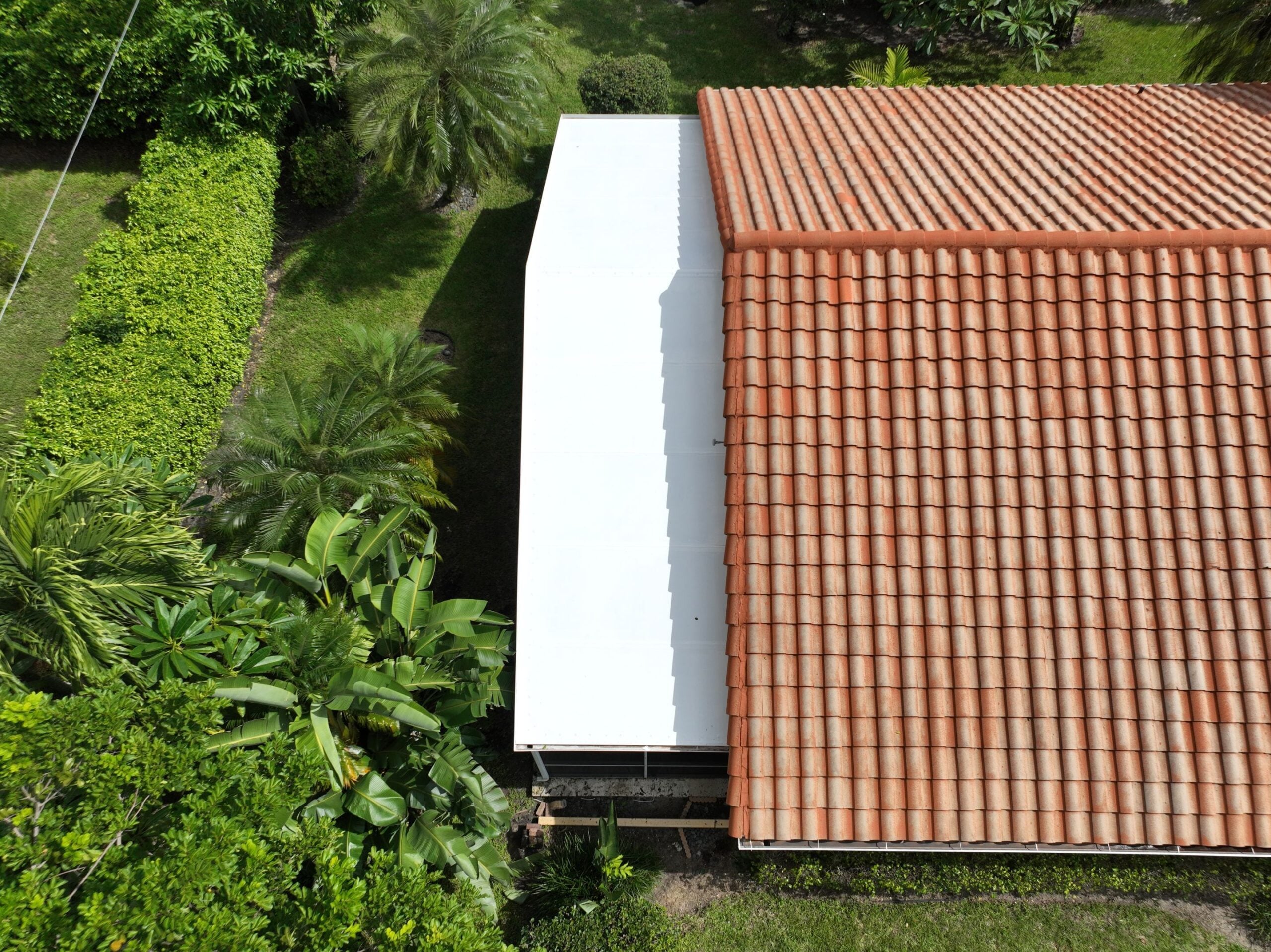
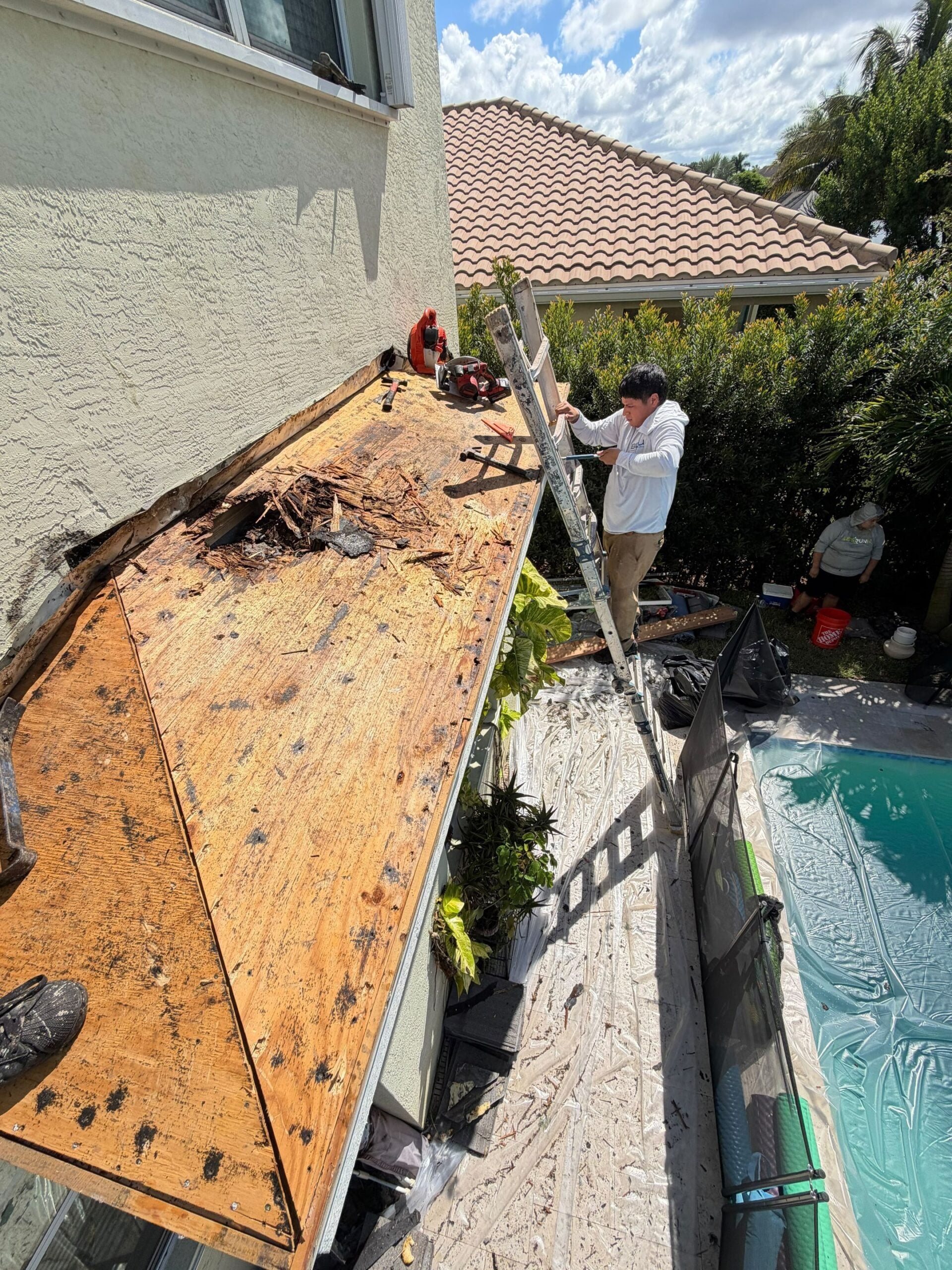
BLU Roofing was referred by a real estate agent to inspect a home in Steeplechase, Palm Beach Gardens. The original call was to assess and bid the flat roof, which does need replacement. While on the property, we walked the entire main concrete tile roof and found three previous repairs, one active leak, slipping tiles, and fascia that needs attention. Despite that repair history, the recommendation for the 18-year-old tile roof is repair, not replacement. All four leak areas are concentrated at high-flow water areas and penetrations, not spread across the field of the roof. That distinction matters.
Watch the full roof inspection walkthrough in Steeplechase, Palm Beach Gardens.
Inspection Facts
| Community | Steeplechase, Palm Beach Gardens, FL |
| Roof Type | Concrete Tile (main roof) and Flat Roof (separate section) |
| Tile Roof Age | Approximately 18 years old |
| Tile Roof Pitch | 7/12 |
| Existing Tile System | Mechanically fastened (one screw per tile), single-ply self-adhered underlayment direct-to-deck, no foam adhesive |
| Findings | 3 previous repairs, 1 active leak, slipping tiles, fascia damage |
| Leak Pattern | All 4 leak areas at high-flow water areas and penetrations (3 returns, 1 penetration) |
| Recommendation | Repair the tile roof. Replace the flat roof section. |
| Referral Source | Real estate agent (pre-listing inspection) |
Table of Contents
- How We Got There: The Flat Roof Call
- What We Found on the Tile Roof
- Why I Voted Repair, Not Replace
- What the Leak Pattern Actually Tells You
- How BLU Roofing Installs Differently
- The Takeaway for Homeowners
How We Got There: The Flat Roof Call
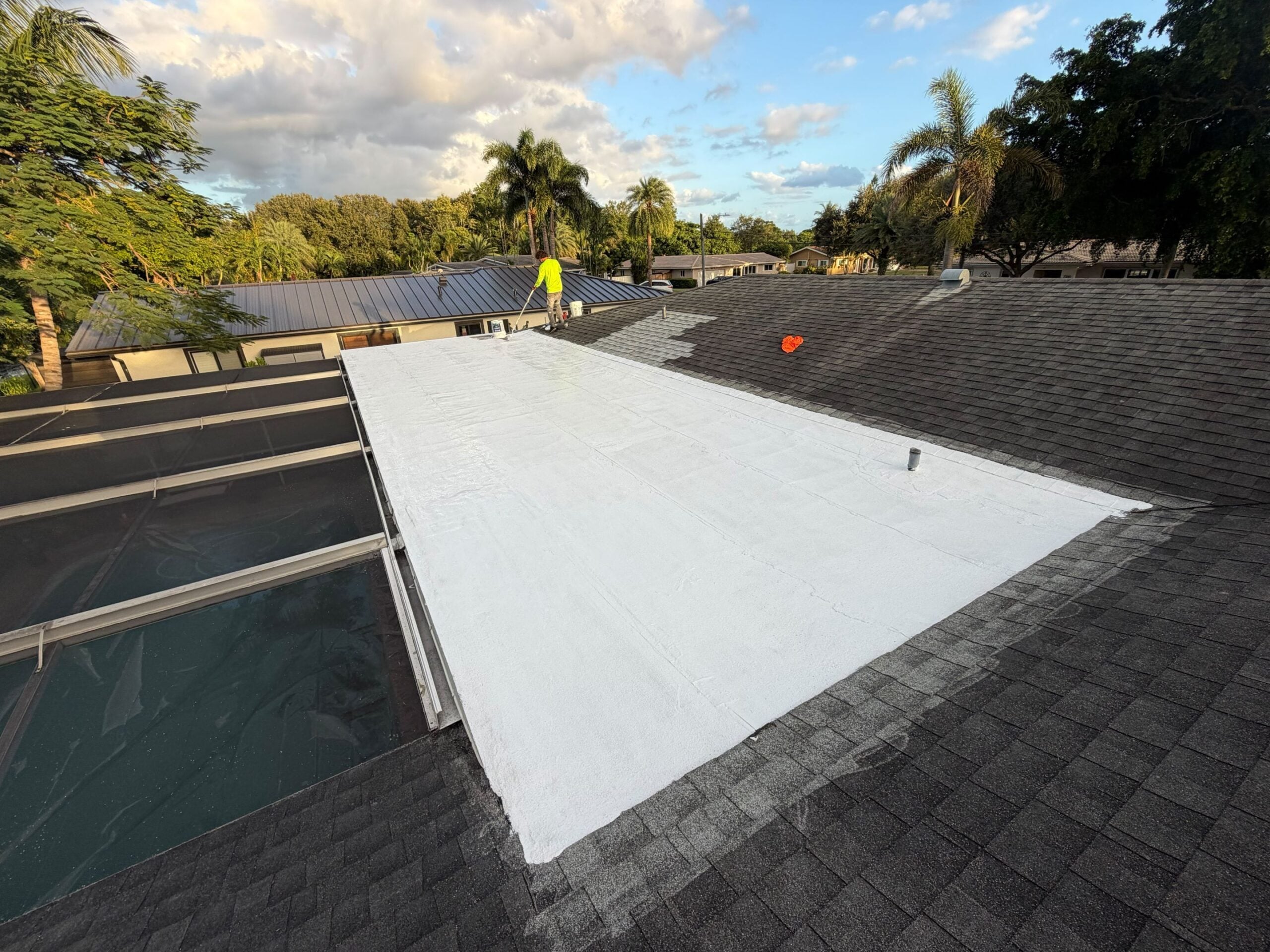
This visit started with a referral from a real estate agent partner. The home is being prepared for sale in Steeplechase, and the agent identified that the flat roof section needed to be replaced before listing. That is a common scenario in Palm Beach Gardens, where many homes have a combination of a pitched concrete tile roof and a flat section over a garage, patio, or addition. We came out, assessed the flat roof, and submitted a bid for that replacement.
While we were already on the property, we did what any thorough roofing contractor should do: we walked the entire roof and the full property perimeter. If you are going to get on a roof, there is no reason to look at only one section. A complete walkthrough takes a relatively small amount of additional time and gives the homeowner a full picture of everything going on above their heads, not just the one issue that prompted the call.
At the end of the visit, we provided a full written inspection report documenting every finding on the property, with photos, condition notes, and our honest assessment of what needs immediate attention versus what can be monitored over time. The flat roof needs to be replaced. The main tile roof, despite its repair history, does not, and here is why.
What We Found on the Tile Roof
The main tile roof is approximately 18 years old and sits at a 7/12 pitch, which is a steeper-than-average pitch for South Florida. Here is what the inspection turned up:
- Three previous repairs: Evidence of prior repair attempts at three separate locations on the roof.
- One active leak: One location with an ongoing water intrusion issue.
- Slipping tiles: Several tiles that have shifted out of position, which can create gaps and expose the underlayment to direct water flow.
- Fascia damage: Sections of fascia board that need attention, likely from water exposure over time.
- Mechanically fastened tile system: The tiles are attached with one screw per tile, with no foam adhesive. There is a single layer of self-adhered underlayment installed direct-to-deck beneath them.
On paper, that list sounds like a roof that is at the end of its useful life. In practice, the picture is more nuanced.
Why I Voted Repair, Not Replace
The recommendation here is to repair the tile roof, not replace it, and the reasoning comes down to two things: age and leak pattern.
At 18 years old, a concrete tile roof in South Florida is not old. Concrete tile is one of the most durable roofing materials available, with a properly installed system capable of lasting 40 to 50 years or more. The tile itself on this roof is not failing. The field of the roof is intact. There is no widespread granule loss, no systemic cracking, and no evidence that the tile as a material has reached the end of its serviceable life. Recommending a full replacement on an 18-year-old tile roof with no systemic failure would not be an honest assessment.
The second factor is the repair history. Four leak areas over 18 years sounds like a lot until you look at where those leaks occurred.
What the Leak Pattern Actually Tells You
Every single one of the four leak areas on this roof occurred at a high-flow water area or a roof penetration: three returns and one penetration. Not one of the leaks originated in the open field of the roof. That is a critical distinction.
A roof that is leaking in random locations across the field, with no clear pattern, is a roof where the underlayment system is failing broadly. That is a replacement conversation. A roof where every single leak has occurred at a return, a valley, a penetration, or a transition point is a roof where the installation details at those specific locations were not built to a high enough standard. That is a repair and reinforcement conversation.
High-flow water areas are exactly what the name implies: locations on the roof where water concentrates, accelerates, and exerts significantly more pressure on the roofing system than the open field does. Returns, valleys, roof-to-wall transitions, and penetrations all fall into this category. When these areas are built to the minimum code requirement and nothing more, they are the first places a roof will develop problems over time. That appears to be what happened here.
How BLU Roofing Installs Differently
This inspection is a useful illustration of why we build our roofing systems the way we do. Building code establishes the minimum requirement. We do not want the most vulnerable areas of a roof built to the minimum.
On every BLU Roofing reroof, the high-flow water areas receive additional layers of protection beyond what code requires. Valleys get ice and water shield as a first layer, then valley metal, then CertainTeed SA granulated cap sheet on top. Returns and roof-to-wall flashings get ice and water shield underneath them before the flashing is installed. Penetrations get additional peel-and-stick membrane applied around the full perimeter of the base flashing. The perimeter eave gets ice and water shield before the drip edge and before the field underlayment.
The field of the roof gets Polyglass TU Plus single-ply self-adhered underlayment installed direct-to-deck, and the tiles are set with ICP Polyset AH-160 two-part polyurethane foam adhesive rather than mechanical fasteners. Foam adhesive means no screws or nails penetrating the underlayment across the field of the roof. The only mechanical fasteners in the field are at the perimeter row, where code requires a higher wind uplift resistance.
The roof we inspected in Steeplechase was built with one screw per tile and a single layer of self-adhered underlayment, with no additional reinforcement at the high-flow areas. That system meets the minimum code requirement. It is also the reason this roof has had four leaks in 18 years, all at the exact locations where the system was most vulnerable.
The Takeaway for Homeowners
If you are a homeowner in Steeplechase or anywhere in Palm Beach Gardens dealing with a tile roof that has had multiple repairs, the most important question is not how many repairs there have been. It is where the repairs have been and why.
Multiple repairs concentrated at high-flow water areas and penetrations tell a different story than repairs scattered across the field of the roof. The first scenario points to installation details that were not built to last. The second points to a system that is failing broadly. Before agreeing to a full roof replacement, make sure you understand which situation you are actually in.
A proper inspection documents every finding with photos, identifies the pattern of failures, assesses the age and overall condition of the roofing system, and gives you an honest recommendation based on all of that information, not just a quote for the most expensive option. That is what we did here, and it is what we do on every roof we inspect.
If you are in Steeplechase, Palm Beach Gardens, or anywhere in Palm Beach County and want an honest assessment of your tile roof’s condition, contact Peter Menke at 561-379-5364. We will tell you what we find and what we actually recommend, even if that recommendation is not a full replacement.
Written By: Peter Menke
Peter Menke is the owner of BLU Roofing and has been serving the South Florida roofing industry for over 6 years. He founded BLU Roofing to provide homeowners with transparent, accurate data grounded in the reality of Florida’s unique climate and building codes, information that is often missing from generic national roofing advice. License #CCC1337285