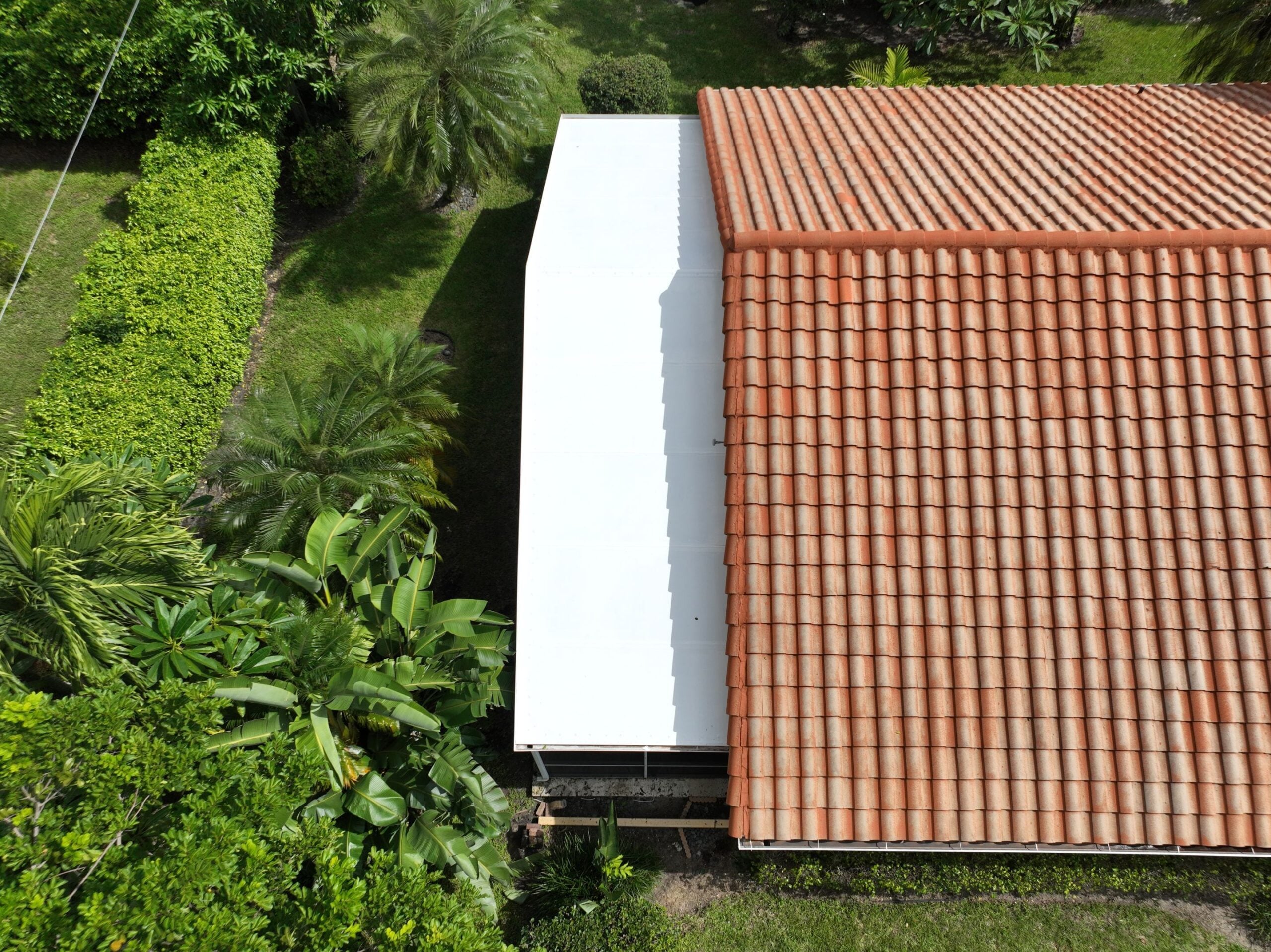
Metal roofs are often marketed as low-maintenance and long-lasting, and for the most part, that is true. But even the best metal roof system has one vulnerability: the penetrations. Wherever something passes through a metal roof, whether it is a pipe, a vent, or an electrical mast, the seal around that penetration is only as good as the installation. On a recent job in Loxahatchee (The Acreage) in Palm Beach County, we found an 8-year-old standing seam snaplock metal panel roof that had likely been leaking for years, all because of a zipper boot that was installed without caulking or butyl tape underneath it. This case study walks through the full diagnosis and repair.
Quick Summary
BLU Roofing completed a Loxahatchee metal roof repair on an 8-year-old 1-inch standing seam snaplock metal panel roof in The Acreage. The leak originated at the electrical mast penetration, where a zipper boot had been installed with no caulking and no butyl tape underneath it. The repair required removing the ridge caps, Z channel, two panels, and damaged underlayment, replacing rotted plywood decking, installing new Polyglass TU Plus underlayment, fabricating two custom-matched replacement panels, and reinstalling everything with proper sealing at the boot.
Watch Peter Menke walk through the diagnosis and repair of a zipper boot leak on a standing seam metal roof in Loxahatchee.
Project Facts
| City | Loxahatchee, FL (The Acreage) |
| Roof Type | 1-Inch Standing Seam Snaplock Metal Panel |
| Roof Age | 8 Years |
| Leak Source | Electrical mast zipper boot installed without caulking or butyl tape, rotted plywood decking |
| Repair Type | Partial repair, new plywood, new underlayment, two custom-fabricated replacement panels |
| Products Used | Polyglass TU Plus underlayment, 5/8-inch plywood, custom-fabricated matching metal panels, new zipper boot with proper caulking and butyl tape |
| Location | The Acreage, Loxahatchee, Palm Beach County, FL |
Table of Contents
- The Root Cause: A Zipper Boot with No Seal
- What Is a Zipper Boot and Why Does It Matter?
- The Scope of Damage: Years of Hidden Water Intrusion
- The Repair Process: Step by Step
- What Loxahatchee Metal Roof Owners Should Know
The Root Cause: A Zipper Boot with No Seal
When we arrived at this Loxahatchee property, the homeowner had been dealing with a persistent leak near the electrical mast for some time. On a standing seam metal roof, the electrical mast passes through the roof deck and is sealed with a rubber fitting called a zipper boot. This boot is designed to create a water-tight seal around the mast and prevent any moisture from entering the roof system at that penetration point.
When we removed the old zipper boot, the cause of the leak was immediately obvious. There was no caulking underneath the boot, and no butyl tape anywhere on the installation. Butyl tape is a butyl-based, self-adhering tape used to create a secondary seal between the boot flange and the metal panel surface. Without it, and without caulking beneath the boot, the only thing keeping water out was the physical pressure of the boot flange sitting on the panel, which is not a reliable seal in South Florida’s heavy rain environment. Water had been finding its way underneath the boot and into the roof system for what appeared to be a significant portion of the roof’s 8-year life.
What Is a Zipper Boot and Why Does It Matter?
A zipper boot, sometimes called a pipe boot or mast boot, is a rubber or silicone fitting that slides over a pipe or mast penetrating through a roof and seals the opening. On a standing seam metal roof, the boot must be properly sized to the mast diameter, set with a butyl or silicone caulk bead underneath the flange, and secured with butyl tape around the perimeter to ensure a complete, water-tight seal.
This is not a complex installation, but it requires attention to detail. A boot installed without the proper sealants underneath it may look correct from the outside but will allow water to migrate under the flange during wind-driven rain. On a metal roof, where water can travel significant distances horizontally before finding a path downward, a small unsealed penetration can cause damage far from the visible entry point.
The Scope of Damage: Years of Hidden Water Intrusion
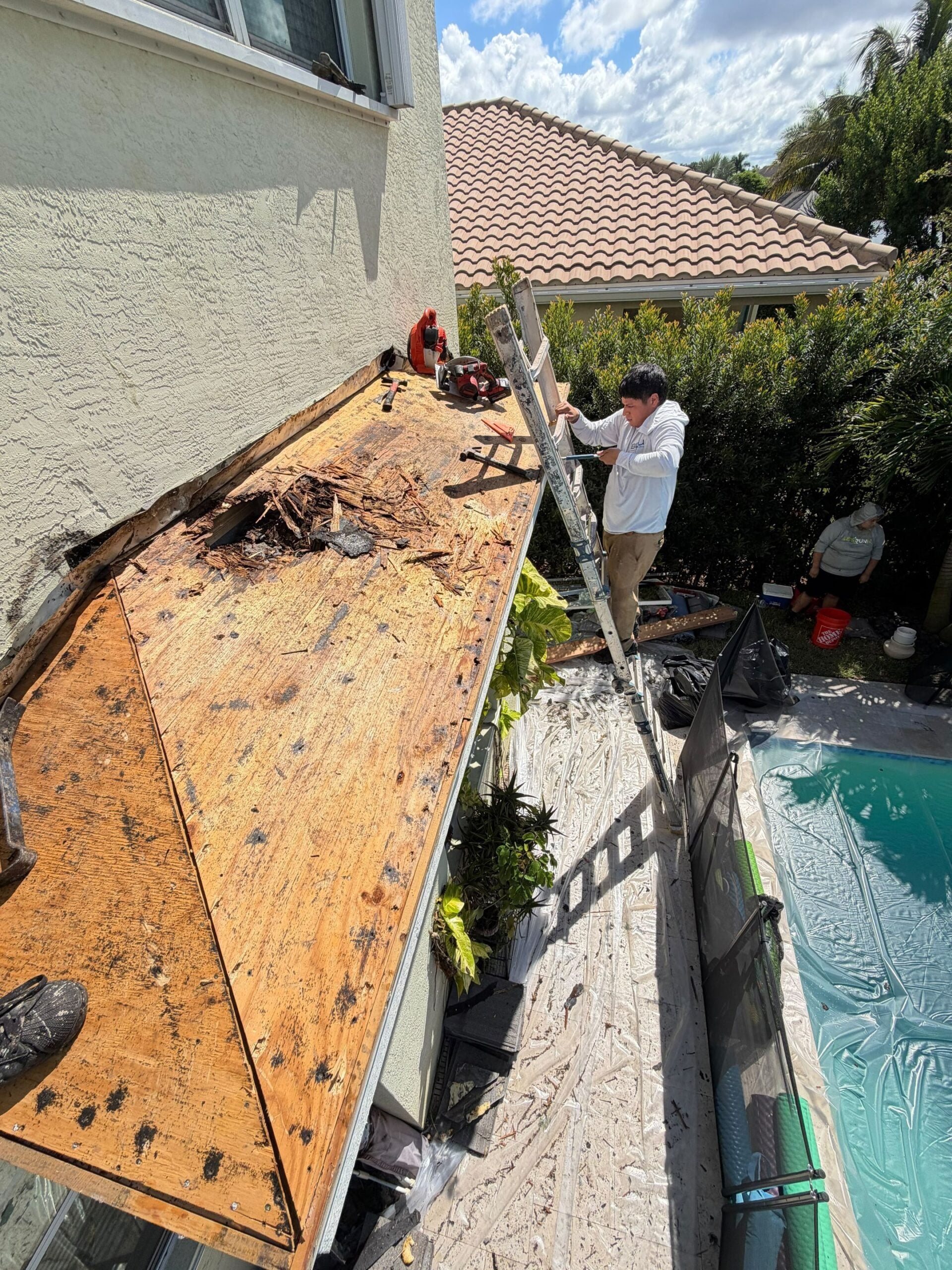
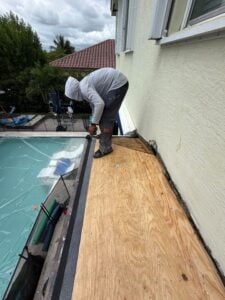
Once we removed the two metal panels adjacent to the mast, the extent of the damage became clear. The underlayment beneath the panels consisted of two layers of 30-pound felt topped with Polyglass TU Plus, but the long-term water intrusion had compromised the plywood roof decking beneath it. The rot was significant enough that we could tell this had not been a recent leak. The decking had been absorbing moisture for an extended period.
We also noted something unusual during the panel removal: there were no screws in one of the panels for approximately the first four feet up from the eave. This is a detail worth flagging, as proper fastening of standing seam panels is critical to maintaining the wind resistance of the system. A panel that is not properly secured at the base is more susceptible to uplift during high-wind events.
The Repair Process: Step by Step
Repairing a standing seam metal roof requires a different approach than tile or shingle work. The panels interlock with one another, meaning you cannot simply replace one section without carefully disassembling the surrounding system and sourcing panels that match the original profile exactly.
- Remove the ridge caps and Z channel by unscrewing them to access the top of the affected panels.
- Remove the old zipper boot and document the absence of caulking and beetle tape as the primary failure point.
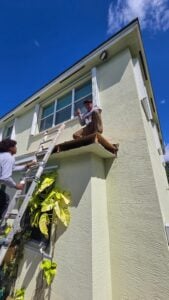
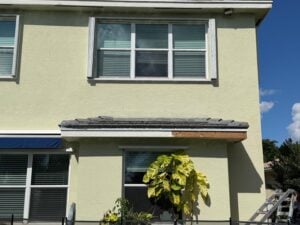
- Remove the two affected metal panels, carefully unscrewing and unsnapping them from the standing seam system.
- Remove the damaged underlayment, exposing the rotted plywood decking beneath.
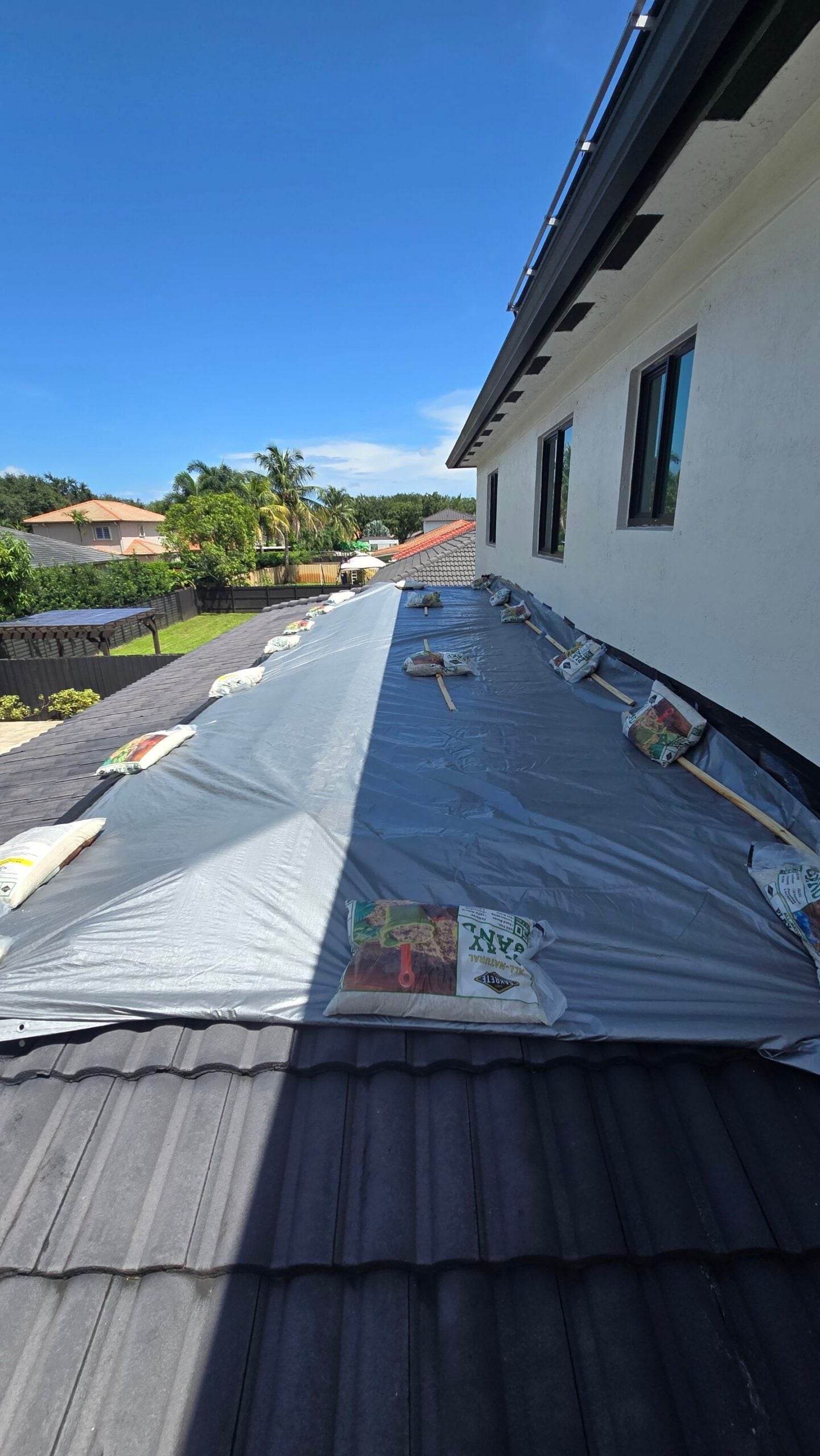
- Cut out and replace the rotted 5/8-inch plywood with new decking, restoring the structural integrity of the roof deck. The work area was covered during a brief rain event to protect the open deck, which is standard practice for Florida weather conditions should a rain shower pop up.
- Install new Polyglass TU Plus underlayment, matching the existing system and rolling it from the top of the ridge all the way down to the eave across the full width of the two removed panels.
- Take an original panel to a metal fabricator to have two custom-matched replacement panels fabricated to the exact profile, width, and finish of the existing roof system.
- Measure, cut, and install the new panels, screwing them down at the proper fastening schedule and snapping them into the standing seam locks on either side.
- Install the new zipper boot with a full bead of caulk underneath the flange and beetle tape around the entire perimeter, creating the proper water-tight seal that was missing from the original installation.
- Reinstall the Z channel and ridge caps and perform a thorough clean up of the work area.
What Loxahatchee Metal Roof Owners Should Know
Standing seam metal roofs are an excellent choice for The Acreage and surrounding Loxahatchee properties. They are durable, wind resistant, and when properly installed and maintained, can last 40 to 50 years. However, the penetrations in any metal roof system are the most vulnerable points, and they deserve regular attention.
If your home has an electrical mast, plumbing vents, or any other penetration through a standing seam metal roof, it is worth having a professional inspect the boots and seals around those penetrations, especially if the roof is more than five years old. A failed boot seal is an inexpensive repair when caught early. Left unaddressed, as this case demonstrates, it can result in significant plywood replacement and panel fabrication costs that far exceed the cost of a simple re-seal.
If you have noticed any signs of a leak, a water stain on your ceiling, moisture in your attic, or discoloration around a penetration on the roof surface, contact Peter Menke at 561-379-5364 for a professional inspection. BLU Roofing serves Loxahatchee, Westlake, and all of Palm Beach County with honest assessments and repairs that are built to last.
Written By: Peter Menke
Peter Menke is the owner of BLU Roofing and has been serving the South Florida roofing industry for over 6 years. He founded BLU Roofing to provide homeowners with transparent, accurate data grounded in the reality of Florida’s unique climate and building codes, information that is often missing from generic national roofing advice. License #CCC1337285