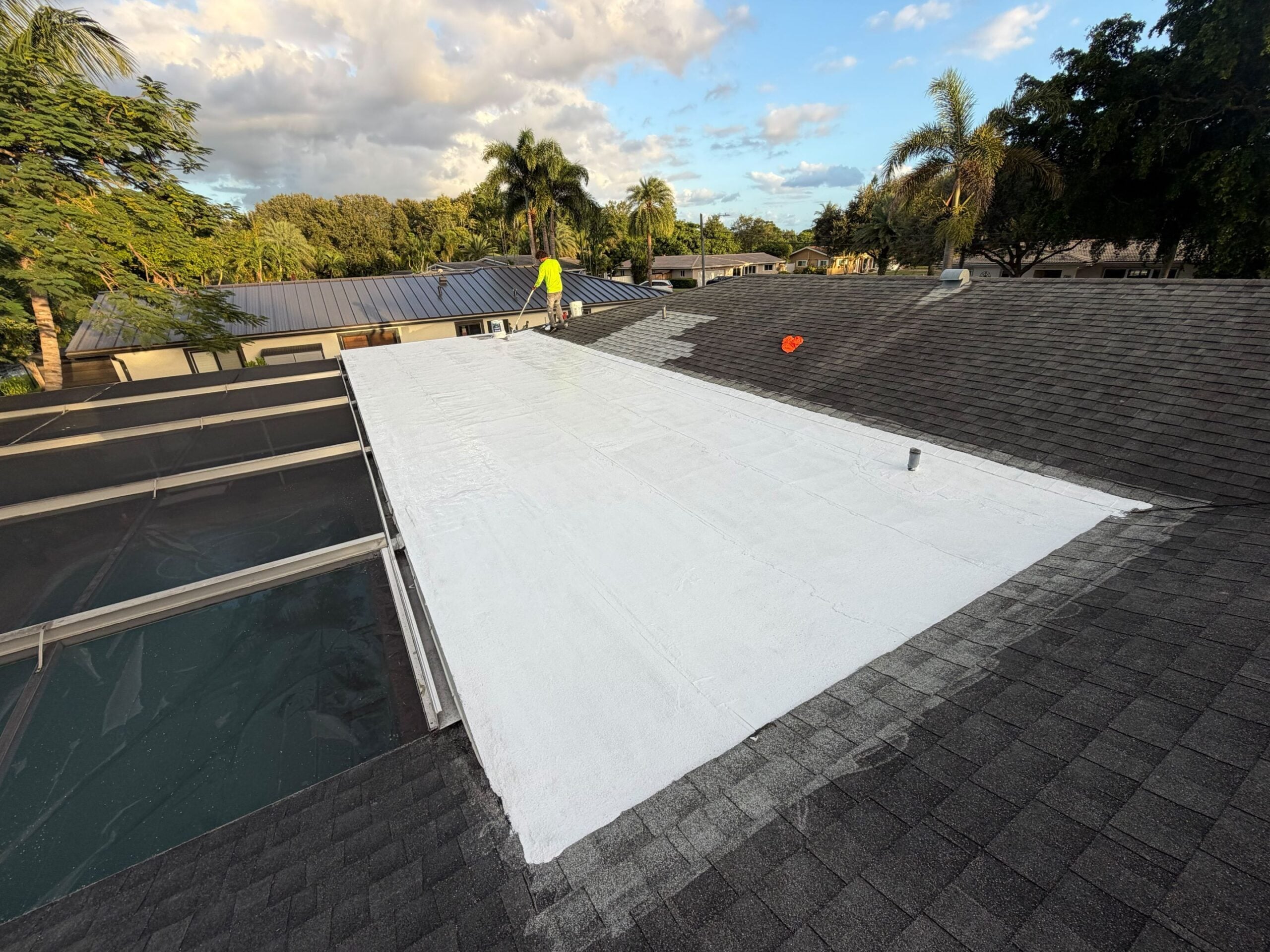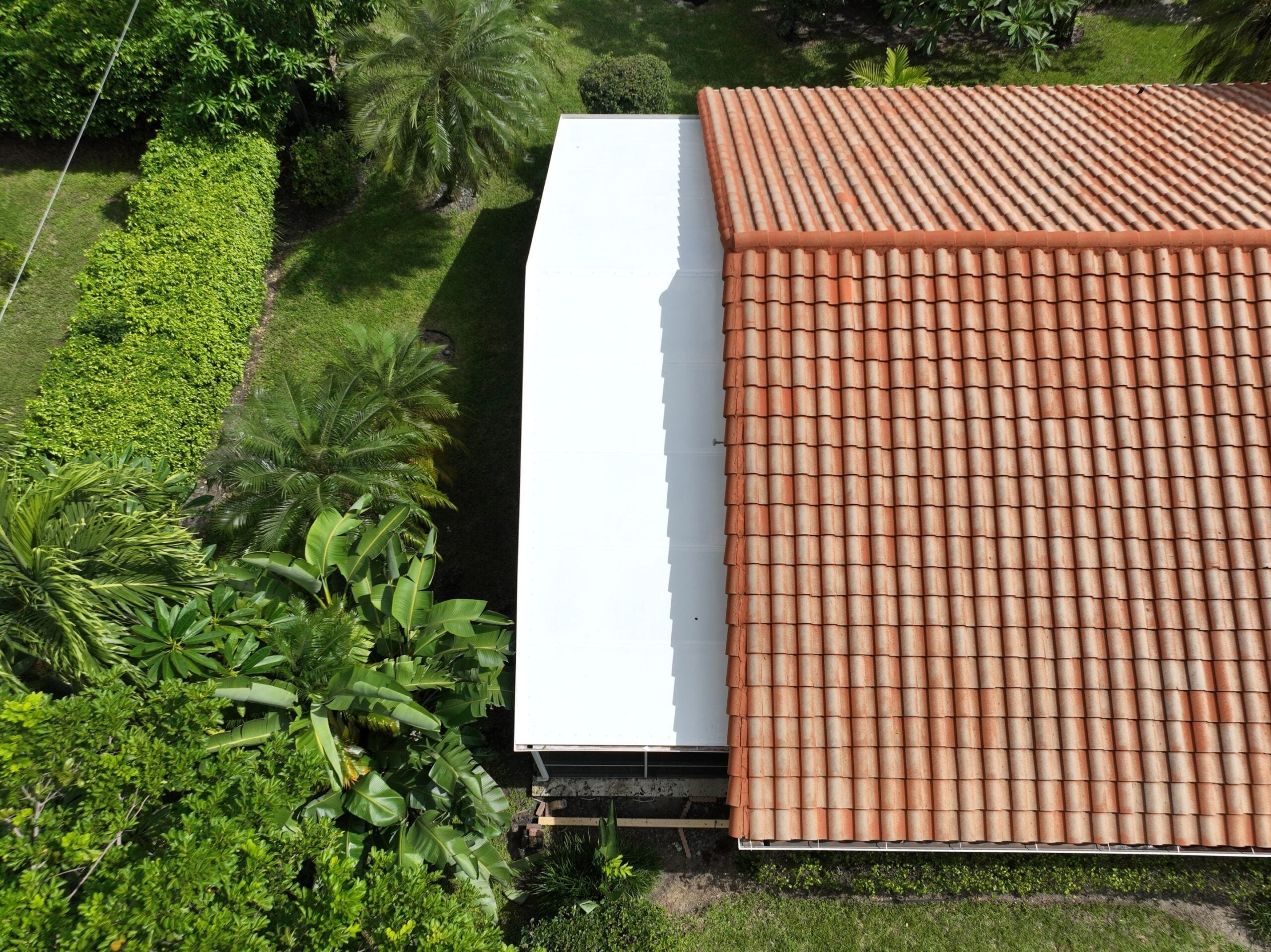
This Abacoa tile roof repair addressed a leak around a dormer on a three-story townhouse in Antigua at Abacoa, Jupiter, Florida. The approximately 20 to 25-year-old concrete tile roof was still serviceable, but the roof-to-wall flashing around one dormer had received an earlier repair that did not properly rebuild the flashing and underlayment detail.
Quick Summary
BLU Roofing repaired a dormer flashing leak on a three-story concrete tile roof in Antigua at Abacoa. The crew carefully removed the tiles and old underlayment down to the plywood deck, confirmed that the deck was sound, installed new underlayment, resealed the dormer flashing, replaced one tile that broke during the repair, secured the tiles with APOC Polyset AH-160 roof tile adhesive foam, sealed cracked stucco and a worn window seal, and completed the work in approximately four hours with a four-person crew.
Table of Contents
- Project Facts
- Finding the Dormer Leak
- Why Repair Made Sense
- Rebuilding the Flashing Detail
- Additional Window and Stucco Sealing
- Completed Abacoa Tile Roof Repair
Project Facts
| Community | Antigua at Abacoa, Jupiter, Florida 33458 |
| Building | Three-story townhouse |
| Roof system | Concrete tile roof, approximately 20 to 25 years old |
| Reason for service | Interior water stain and cracked stucco ceiling below one dormer |
| Confirmed repair area | Dormer roof-to-wall flashing and the related underlayment detail |
| Decking condition | Plywood roof deck was inspected and did not require replacement |
| Materials | CertainTeed SA granulated cap sheet, Polyglass Polystick TU Plus, roofing cement and membrane, and APOC Polyset AH-160 roof tile adhesive foam |
| Timeline | Approximately four hours with a four-person crew, completed in one day |
| Access | A 40-foot ladder was required for the three-story townhouse |
Finding the Dormer Leak
The homeowner noticed a water stain inside the townhouse along with a cracked stucco ceiling. Because the leak was around a dormer and there was no attic space in that area, the inspection focused on the roof surface, the dormer walls, and the visible flashing details above the affected interior area.
The dormer flashing had apparently been repaired before. Based on the condition observed, the earlier work appears to have involved lifting tiles and applying roofing cement over the existing flashing. That may cover a visible symptom temporarily, but it does not necessarily address the complete roof assembly below the tiles. A durable tile roof repair requires careful access to the flashing and underlayment so the contractor can inspect what is actually below the surface.
Why Repair Made Sense on This Tile Roof
Concrete tile roofs can remain repairable even when they are approaching 25 years of age, depending on the condition of the tiles, underlayment, decking, flashings, and other roof components. In this case, the roof was still serviceable, and the problem was concentrated at one dormer flashing detail rather than a reason to replace the entire roof.
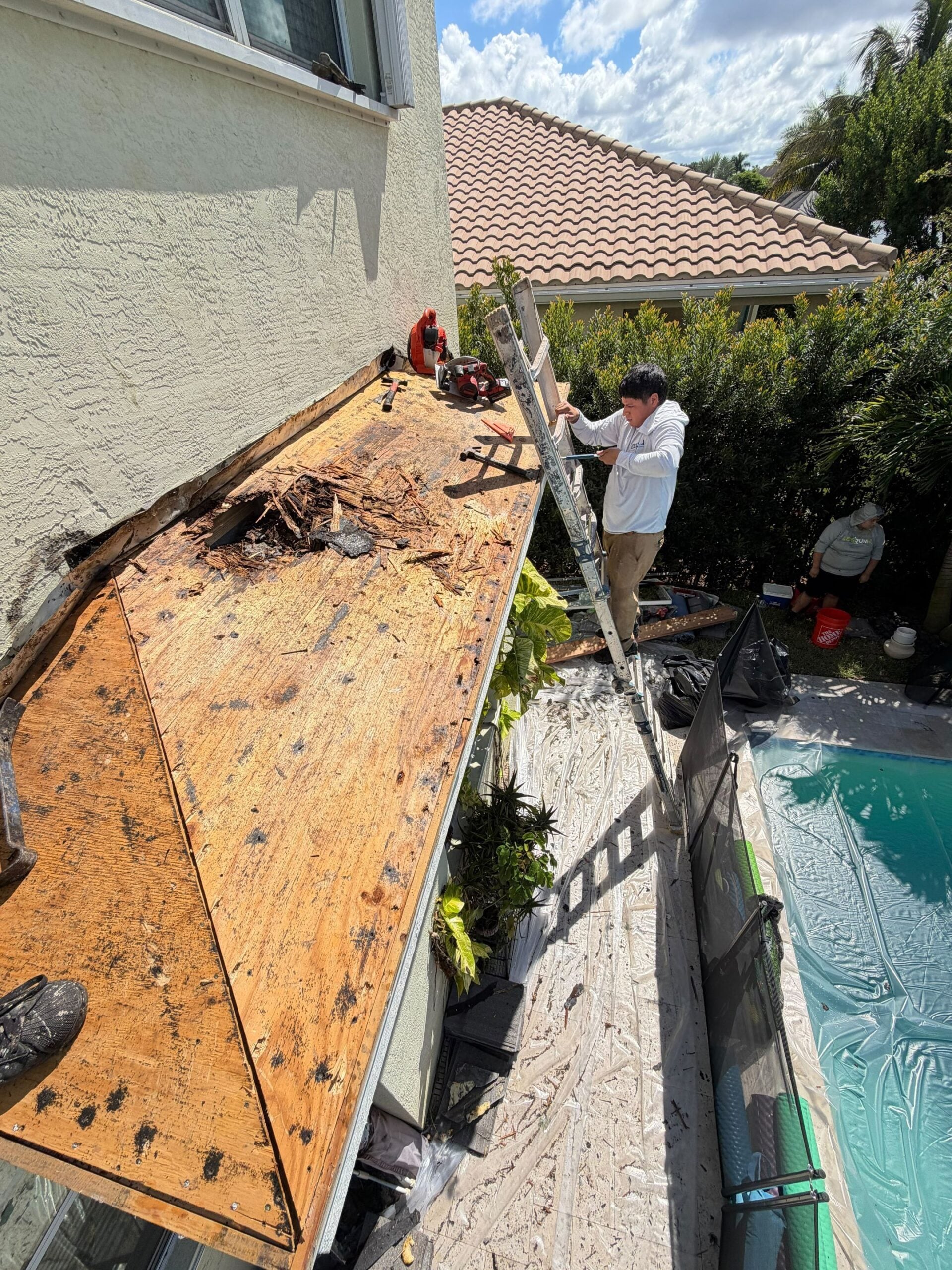
The inspection also confirmed that the plywood roof deck did not need replacement. That allowed the repair to focus on rebuilding the water-shedding and waterproofing details around the dormer instead of expanding the project unnecessarily. This is an important distinction for homeowners. A roof’s age matters, but age alone does not determine whether a targeted tile roof repair is responsible.
For comparison, BLU Roofing’s broader roof repair service includes diagnosis of leaks, flashing problems, broken tiles, and other localized issues across South Florida roof systems.
Rebuilding the Dormer Flashing Detail
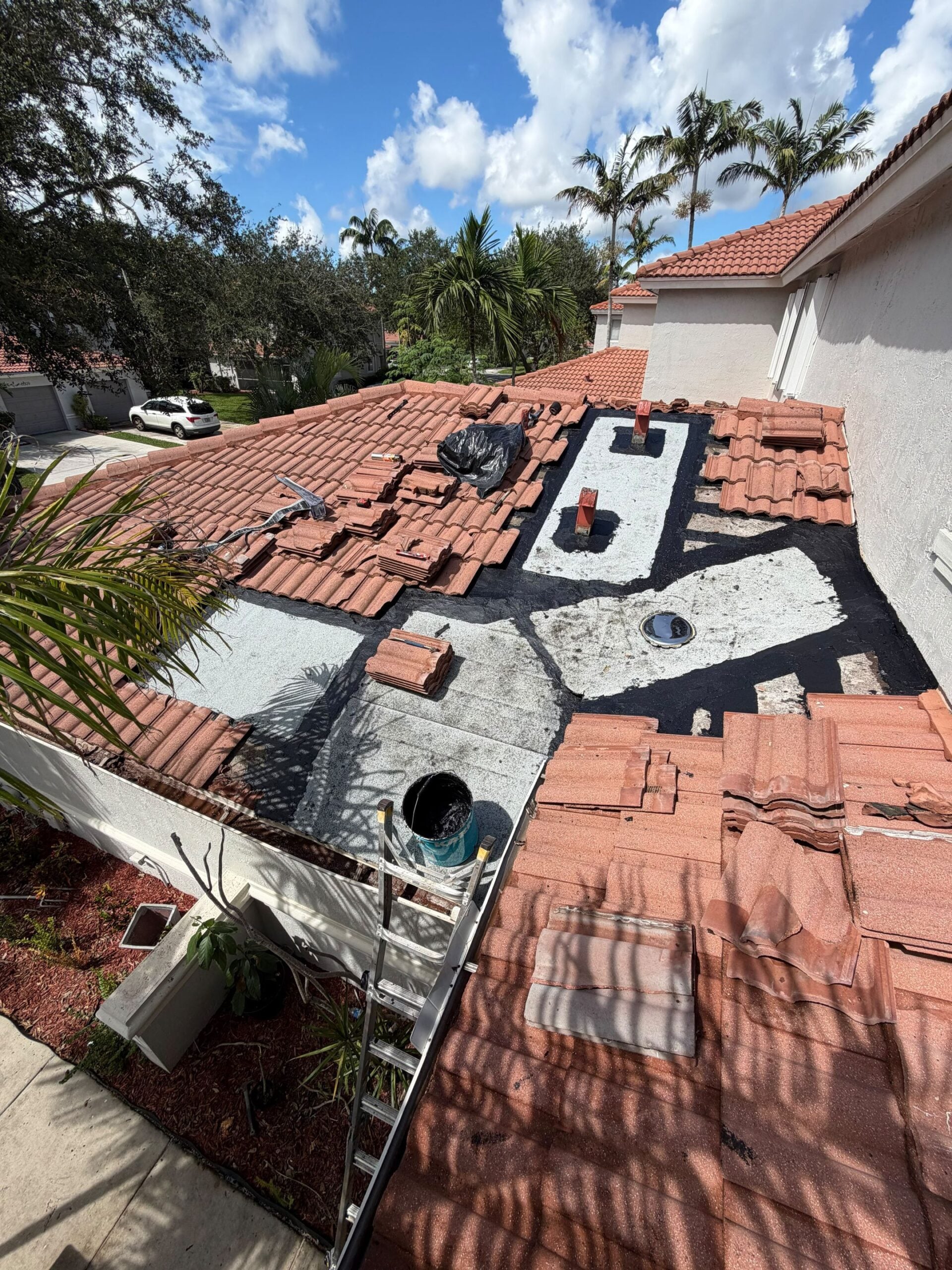
The crew carefully removed the concrete tiles around the dormer so the underlying assembly could be inspected. The old underlayment was cut out down to the plywood roof deck. Because the deck was sound, no plywood replacement was necessary.
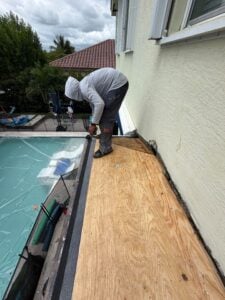
New underlayment was then installed and tied into the existing roof system using roofing cement and membrane. The primary repair area used CertainTeed SA granulated cap sheet. The lower dormer apron area and side sections used Polyglass Polystick TU Plus, a self-adhered waterproofing underlayment designed for use beneath adhesive-set or mechanically fastened concrete and clay tile roof coverings.
In dormer terminology, the lower section where the sloped roof meets the front wall is commonly called the apron or headwall flashing area. The side sections are generally referred to as sidewall flashing. The exact flashing layout varies by construction, but the goal is the same: direct water away from the dormer and keep it from reaching the underlayment and roof opening below.
After the new underlayment was tied into the existing system, the dormer flashing was resealed. The removed tiles were then put back in place with APOC Polyset AH-160 roof tile adhesive foam. Only one tile broke during the work, and that tile was replaced. The surrounding roof was also checked for other broken tiles, and any existing broken tiles identified during the inspection were repaired.
The underlayment products used on this project are described by their manufacturers as waterproofing materials for tile applications. Polyglass describes Polystick TU Plus as a self-adhered, dual-reinforced underlayment for adhesive foam or mechanically fastened roof tile applications. CertainTeed describes Flintlastic SA Cap as a self-adhered SBS-modified bitumen membrane. Product use remains subject to the approved roof assembly and project conditions.
Additional Window and Stucco Sealing
While working around the dormer, the crew also observed cracked stucco around the window sill area and worn caulking around the window seal. These conditions could allow water to enter around the dormer, even though the confirmed repair area was the roof-to-wall flashing.
BLU Roofing sealed the stucco cracks and recaulked the window area. The work was treated as additional water-entry prevention and detail maintenance, not as a claim that those conditions were the confirmed source of the interior stain. Addressing related vulnerabilities while the crew is already working at a dormer can help avoid leaving another obvious path for water intrusion.
Completed Abacoa Tile Roof Repair
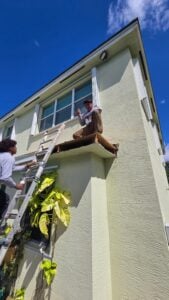
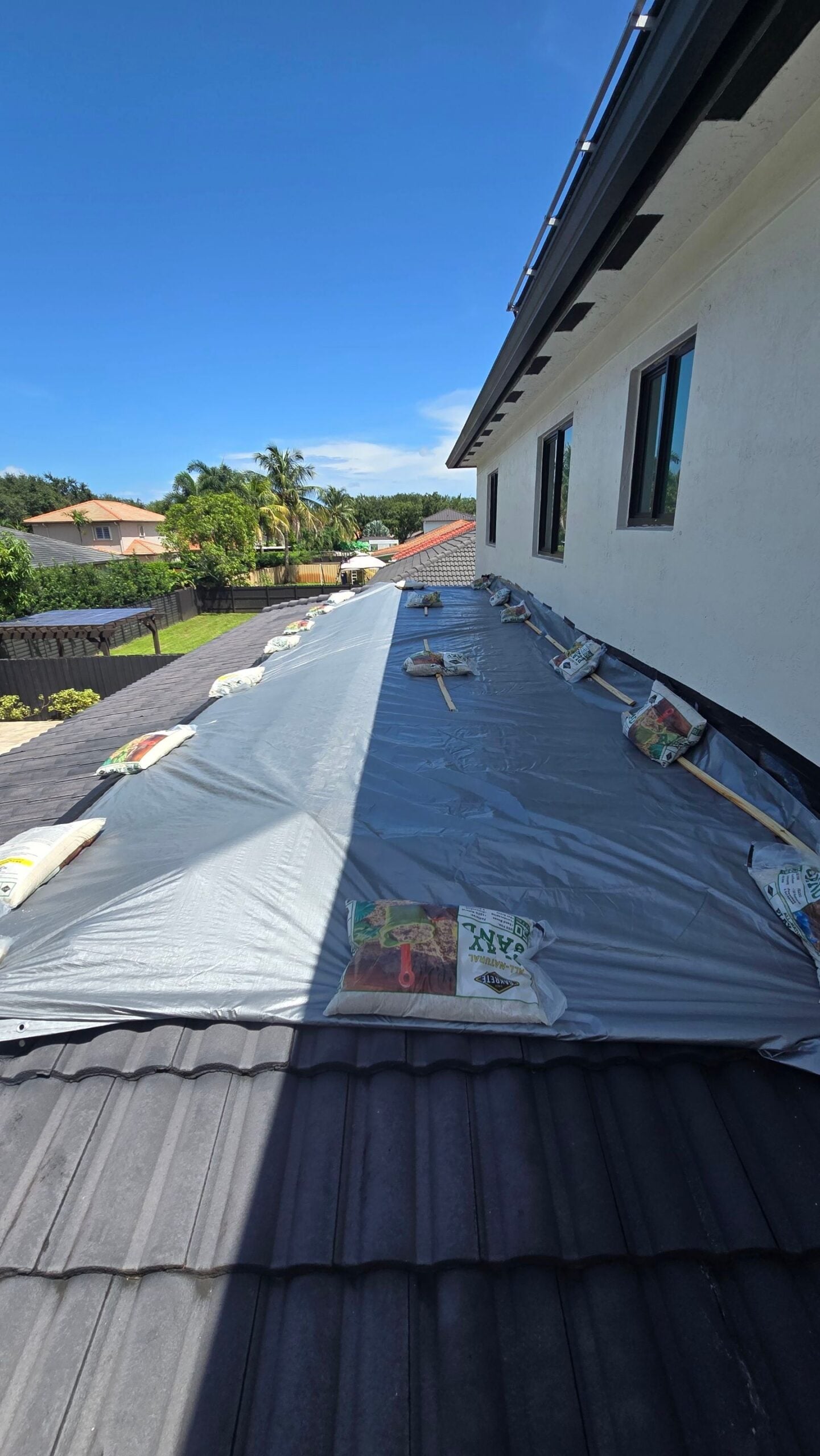
The repair required a 40-foot ladder because the work was on a three-story townhouse. Four crew members completed the project in approximately four hours. The work was scheduled around the weather so the roof could be opened, repaired, and closed without rain during the process.
After the tiles, flashing, underlayment, stucco, and window seal work were completed, the crew inspected the surrounding area, picked up the work materials, and cleaned the property carefully. Before, during, and after photos were documented in a CompanyCam photo report for the homeowner’s records. The leak was resolved after the repair,
and the homeowner left us a great review!

For this project, no HOA approval or permit was required for the localized repair. Requirements can vary by municipality, project scope, and community rules, so homeowners should confirm the requirements for their own property before work begins.
A dormer leak does not automatically mean a full roof replacement is necessary. The right recommendation depends on the age and condition of the tile, the underlayment, the decking, the flashing, and the extent of the damage. A careful inspection can determine whether the roof remains repairable or whether broader replacement planning is more appropriate. BLU Roofing also provides a broader guide to repair-first roof restoration decisions, although coating is not the solution for every tile roof or flashing problem.
Written By: Peter Menke
Peter Menke is the owner of BLU Roofing and has been serving the South Florida roofing industry for over 6 years. He founded BLU Roofing to provide homeowners with transparent, accurate information grounded in real Florida roofing conditions and building practices. License #CCC1337285.
BLU Roofing provides roof inspections, repairs, restoration, and replacement for shingle, tile, metal, and flat or low-slope roof systems across Palm Beach, Martin, and Broward Counties.