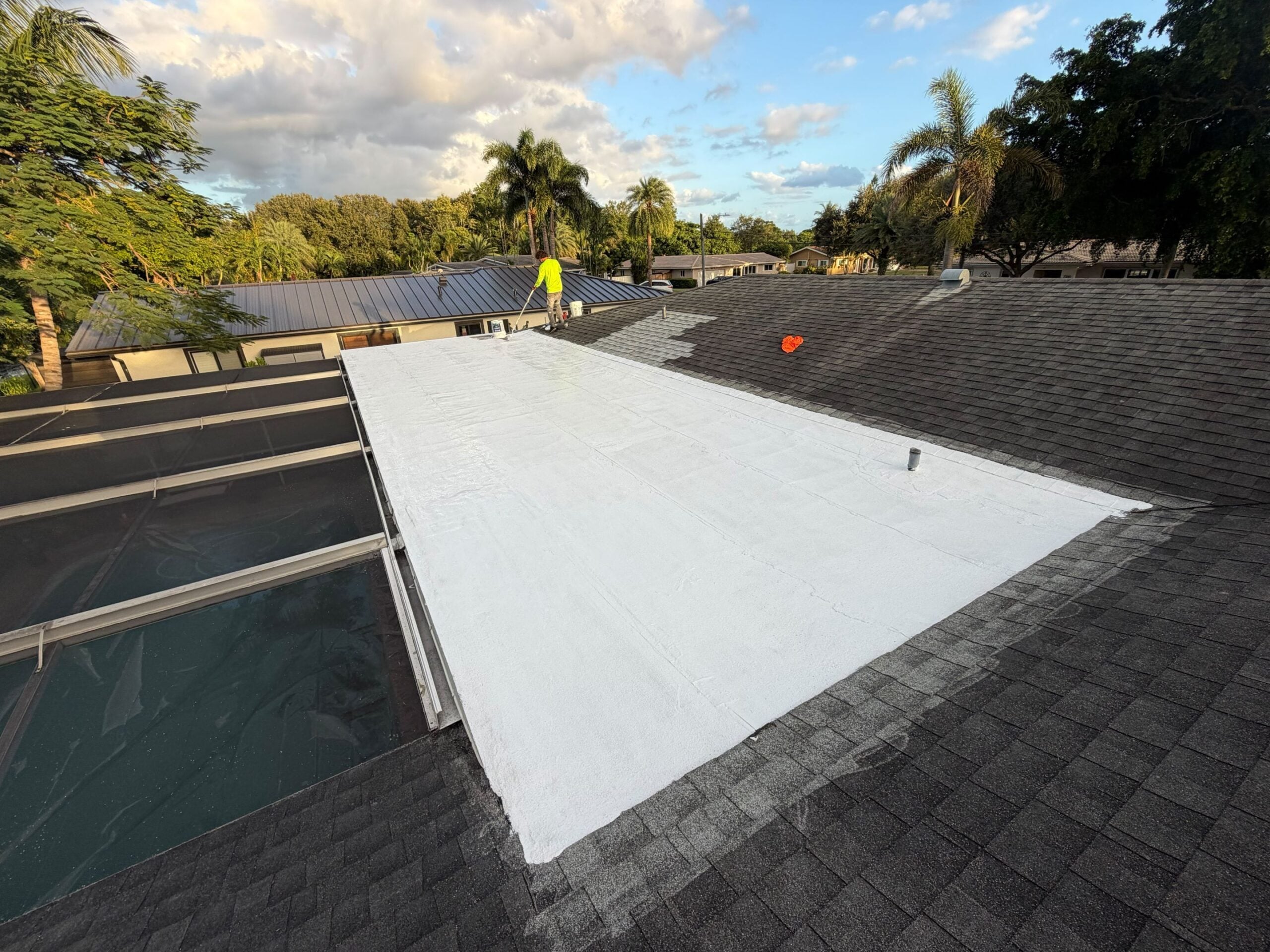
If you notice a water stain on your ceiling near your kitchen, there is a good chance the problem is not the tile itself. More often than not, it is the flashing around a roof penetration that is allowing water into the home. This was precisely the situation we encountered during a recent repair in the Winston Trails community of Lake Worth / Greenacres. This case study walks you through our process, the materials used, and why timely intervention is critical for tile roofs.
Quick Summary
BLU Roofing successfully repaired a roof leak around a kitchen hood vent on a 25-year-old concrete tile roof in Winston Trails, Lake Worth. The repair involved removing tiles, replacing damaged underlayment with CertainTeed SA granulated cap sheet, properly sealing the flashing with concrete mortar, and re-installing tiles with ICP two-part polyurethane foam adhesive for a wind resistant and water-tight seal.
Video Walkthrough: Winston Trails Roof Repair
Table of Contents
- The Home and the Initial Problem
- The “30-Year Rule” for Tile Roof Repairability
- Our Thorough Inspection Process
- The BLU Roofing Repair Solution
- Why This Repair Was Effective
- BLU Roofing: Your Trusted Partner for Roof Repairs in Winston Trails
The Home and the Initial Problem
Our client in the Winston Trails community of Lake Worth / Greenacres contacted us after noticing a persistent water stain on their kitchen ceiling. The home features a concrete tile roof, originally installed in 2001, making the roof approximately 25 years old. In the South Florida climate, a roof of this age is entering a critical phase. While the concrete tiles themselves are incredibly durable, the underlying waterproofing system, the underlayment and flashing, is often where the first signs of failure appear.
The homeowner’s decision to seek a professional inspection immediately was a wise one. By acting quickly, this Winston Trails resident set the stage for a successful and cost-effective repair rather than a premature full roof replacement.
The “30-Year Rule” for Tile Roof Repairability
At BLU Roofing, we often refer to the “30-year rule” as a general guideline for tile roof repairability. Concrete tile roofs can often be repaired effectively well into their twenties. However, once a roof approaches or exceeds the 30-year mark, repairs become much less practical as the overall roof system is typically nearing the end of its service life. For this 25-year-old roof in Winston Trails, the system was still in a condition that allowed for a high-quality, lasting repair.
Our Thorough Inspection Process
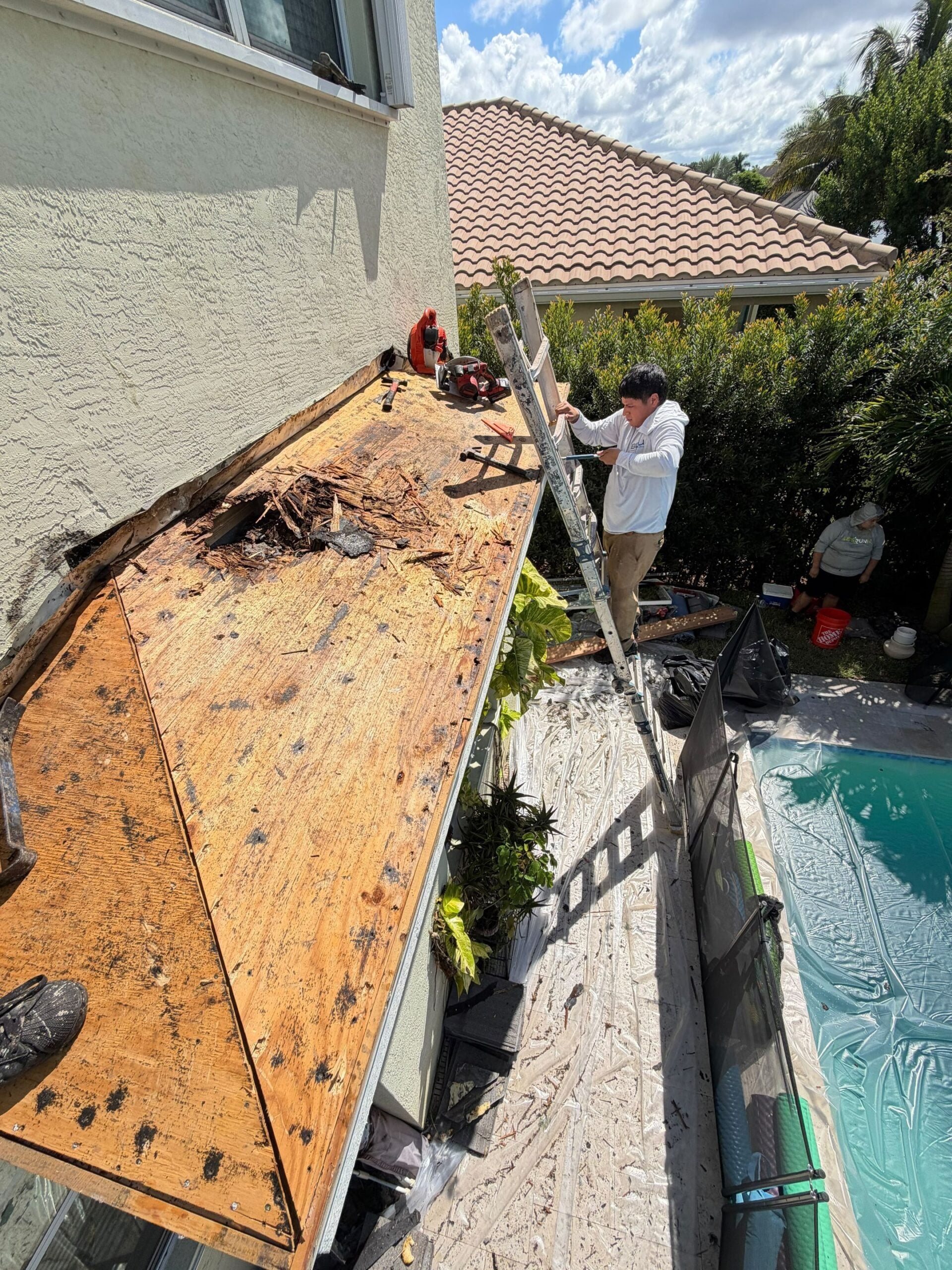
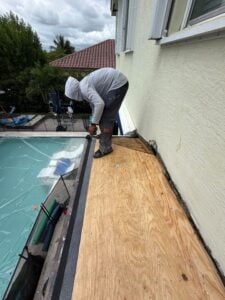
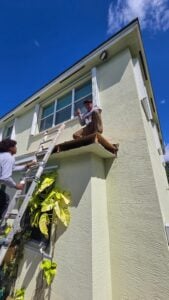
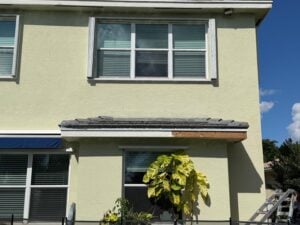
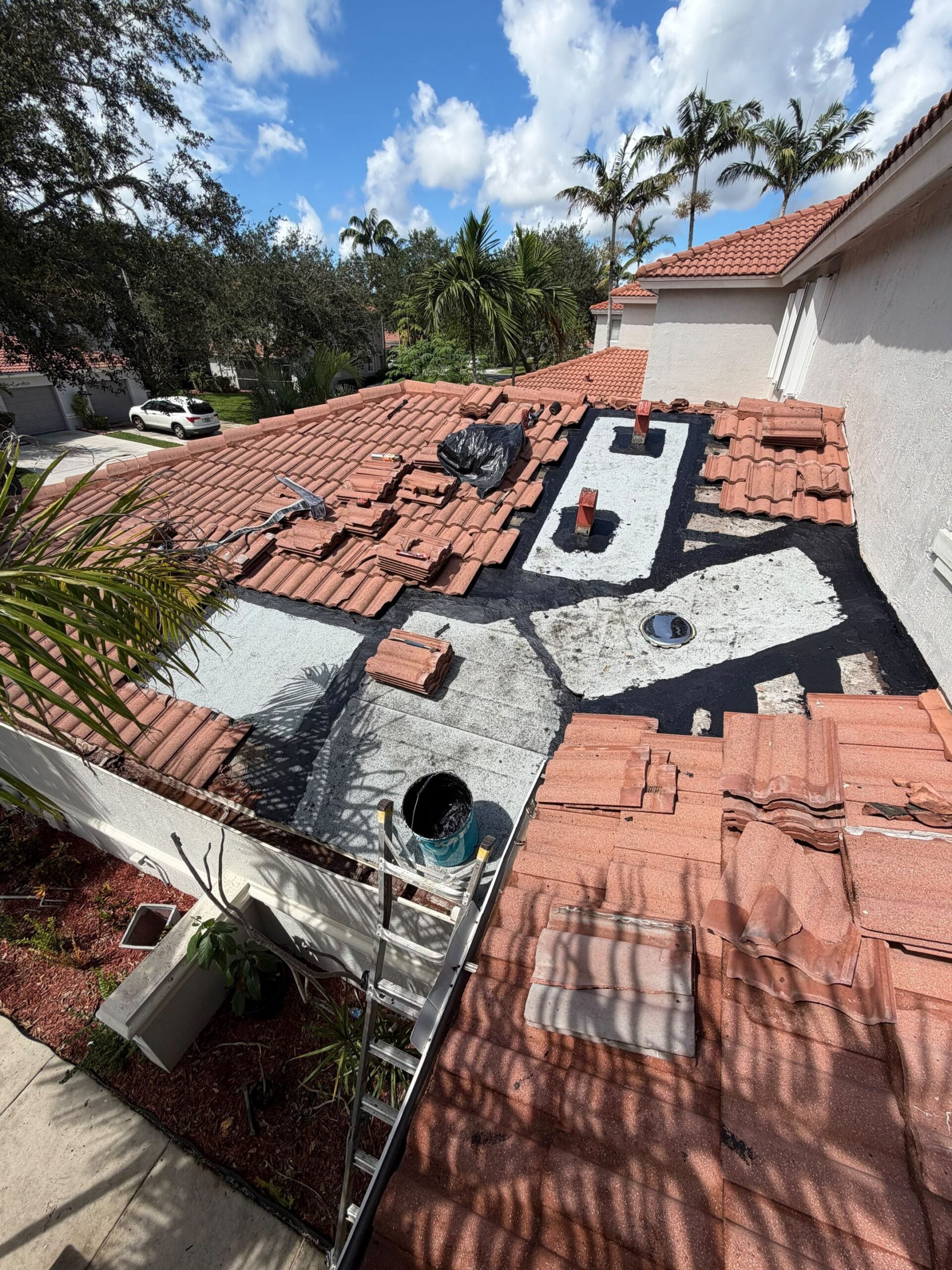
Our inspection quickly pinpointed the source of the leak: a failed flashing around the kitchen hood vent on the roof. This allowed water to bypass the primary waterproofing layer and enter the home’s interior. Before proceeding with any repairs, we performed a “tear-back” to fully understand the extent of the issue. This involved:
- Tile Removal: Carefully removing the existing concrete roof tiles around the affected area.
- Underlayment Removal: Cutting out the old, compromised peel-and-stick underlayment.
- Decking Inspection: Thoroughly inspecting the plywood roof decking for any signs of moisture damage or rot.
Because the leak was addressed promptly, the plywood roof decking was still in excellent condition and did not require replacement. This early detection saved the homeowner significant money by avoiding the need for costly structural repairs.
The BLU Roofing Repair Solution
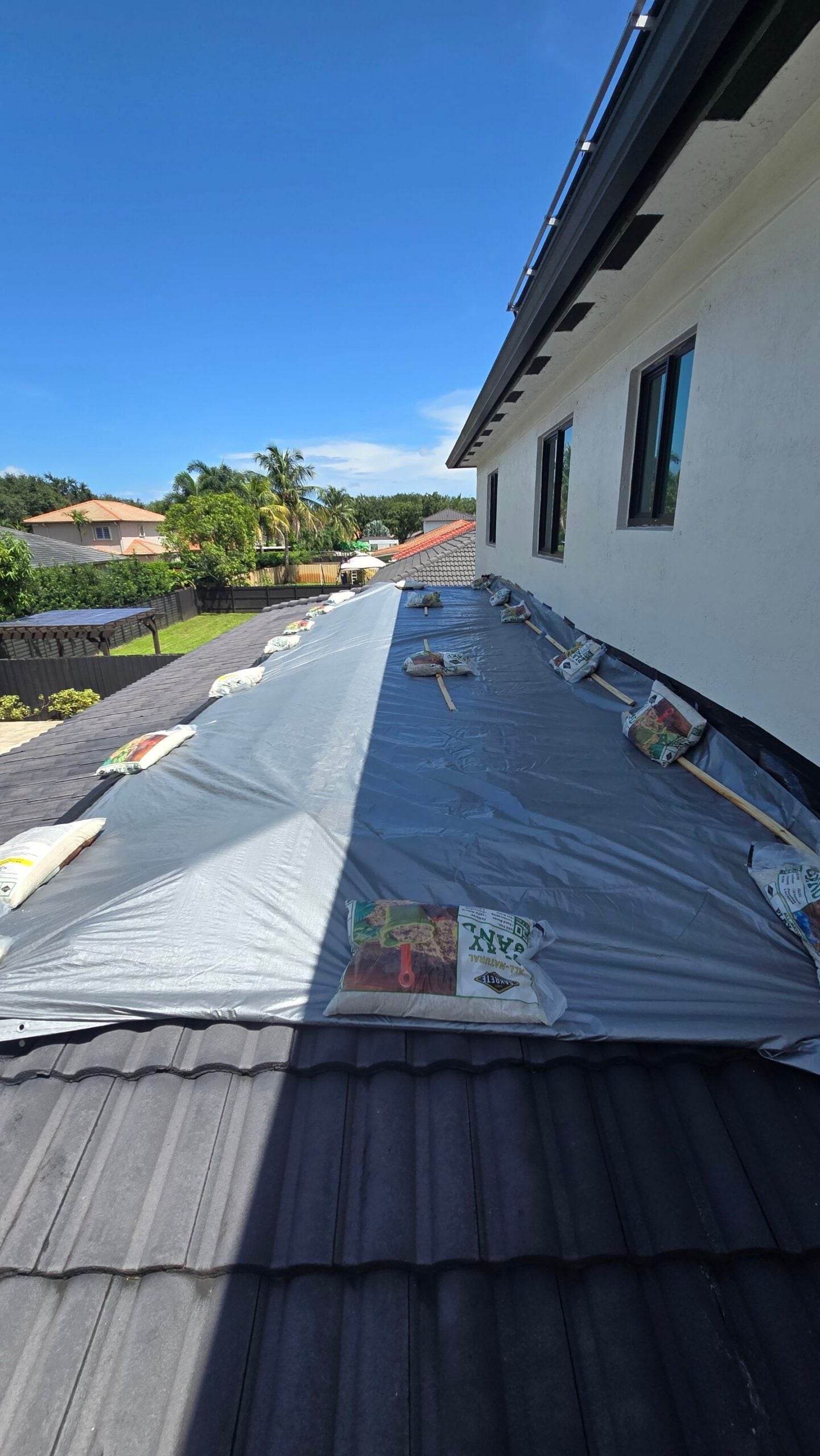
Once the damaged materials were removed and the decking confirmed to be sound, we meticulously rebuilt the waterproofing system around the kitchen vent:
| Repair Component | Material Used | Benefit |
|---|---|---|
| Waterproofing Layer | CertainTeed SA Granulated Cap Sheet | Provides a robust, self-adhered secondary water barrier. |
| Sealing & Integration | Compatible Self-Adhered Membrane | Ensures a seamless, water-tight tie-in between the new repair and the existing underlayment. |
| Tile Adhesive | ICP Two-Part Polyurethane Foam | Secures tiles without creating new penetrations (nails/screws ). |
| Final Seal | New Concrete Mortar | Applied around the flashing to properly seal and finish the repair. |
The use of ICP two-part polyurethane roof tile adhesive is a critical detail. Unlike traditional methods that involve nailing or screwing tiles back into place, which creates new holes in your brand-new waterproofing, this foam adhesive creates a powerful bond without any penetrations. To complete the repair, we mixed up new concrete mortar and applied it around the flashing to properly seal everything up, ensuring a durable, wind resistant, and water-tight finish. As with every BLU Roofing project, we performed a proper clean up at the end, leaving the property in pristine condition.
Why This Repair Was Effective
Localized flashing failures, particularly around penetrations like kitchen vents, are among the most common causes of leaks on tile roofs. When the surrounding roof system is still in good condition, and the leak is detected and addressed quickly, a properly executed repair can fully restore the waterproofing integrity without the need for a full roof replacement. This was precisely the case for this Winston Trails home.
BLU Roofing: Your Trusted Partner for Roof Repairs in Winston Trails
When faced with a roof leak in Winston Trails, Lake Worth, or Greenacres, you need a roofing partner you can trust. BLU Roofing specializes in accurate leak detection and durable, code-compliant repairs for all types of roofing systems. Contact Peter Menke at 561-379-5364 for a free inspection and honest assessment of your roof’s condition.
Written By: Peter Menke
Peter Menke is the owner of BLU Roofing and has been serving the South Florida roofing industry for over 6 years. He founded BLU Roofing to provide homeowners with transparent, accurate data grounded in the reality of Florida’s unique climate and building codes, information that is often missing from generic national roofing advice. License #CCC1337285