Discovering a water stain on your ceiling or hearing the steady drip-drip-drip of a roof leak is a stressful experience for any West Palm Beach homeowner. In South Florida, where tropical storms and sudden afternoon downpours are the norm, a small leak can quickly escalate into a major structural issue or a mold problem if not handled correctly.
If you find yourself dealing with a leaking roof in West Palm Beach, time is of the essence. Here is exactly what you need to do, in order, to minimize damage and protect your home.
Quick Summary
When your roof is leaking, the first priority is to contain the water and protect your interior. Move furniture, use buckets, and if the ceiling is bulging, carefully poke a small hole to drain the water. Once the immediate threat is managed, call a licensed West Palm Beach roofing contractor for an emergency inspection and tarping to prevent further damage before a permanent repair can be made.
Table of Contents
- Step 1: Contain the Immediate Damage
- Step 2: Relieve Water Pressure
- Step 3: Document Everything for Insurance
- Step 4: Call a Licensed West Palm Beach Roofer
- Step 5: Emergency Tarping vs. Permanent Repair
- Frequently Asked Questions
Step 1: Contain the Immediate Damage
The moment you notice a leak, your first goal is to stop the water from damaging your floors, furniture, and electronics.
- Clear the Area: Move any valuables, rugs, or furniture away from the drip zone.
- Use a Bucket: Place a container under the leak. If the water is splashing, place an old towel in the bottom of the bucket to dampen the sound and prevent splatter.
- Cover Large Areas: If the leak is spreading across a large section of the ceiling, use plastic sheeting or heavy-duty trash bags to protect your flooring.
In West Palm Beach neighborhoods like El Cid or Flamingo Park, many historic homes have plaster ceilings that can absorb a significant amount of water before showing signs of a leak. If you see a dark spot, the water has likely been there for some time.
Step 2: Relieve Water Pressure
If you see a bulge in your ceiling or paint that looks like a water-filled balloon, the water is pooling behind the drywall. This is a dangerous situation because the weight of the water can cause the entire ceiling to collapse.
To prevent a collapse, find the center of the bulge and carefully poke a small hole with a screwdriver or an ice pick. Have a bucket ready underneath. This “controlled leak” relieves the pressure and allows the water to drain safely rather than spreading horizontally across your ceiling.
Step 3: Document Everything for Insurance
Before you start cleaning up, take photos and videos of the leak, the damage to your interior, and any ruined belongings. This documentation is critical if you plan to file a roof insurance claim in Florida.
Be sure to capture:
* The source of the drip.
* The extent of the ceiling damage.
* Any damaged electronics, furniture, or flooring.
* The date and time the leak was discovered.
Step 4: Call a Licensed West Palm Beach Roofer
Once the water is contained, you need a professional to find the source of the leak. In West Palm Beach, leaks are often caused by:
* Salt Air Corrosion: Homes near the Intracoastal or the ocean often see metal flashing and fasteners fail prematurely due to salt air.
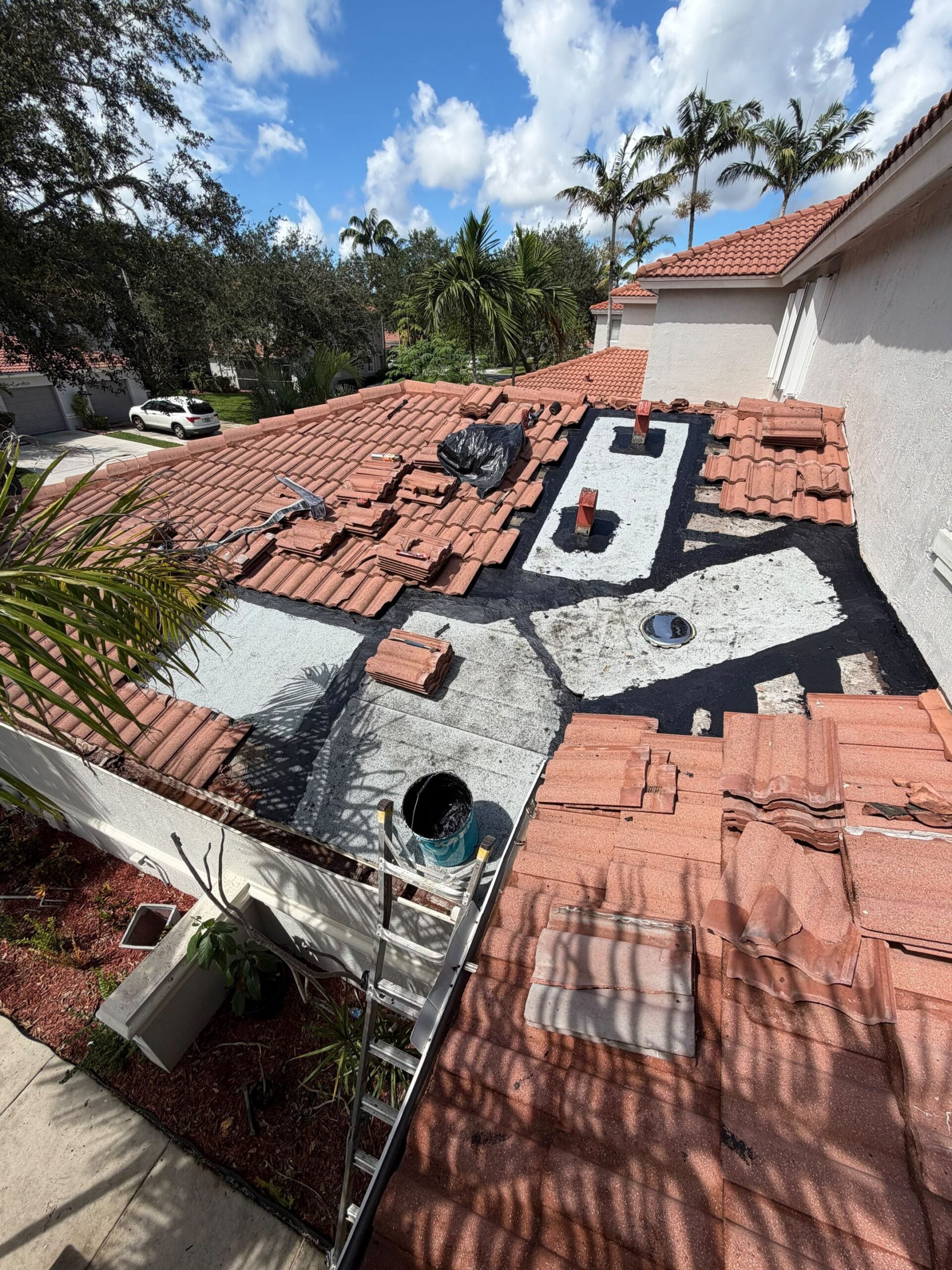
* Cracked Tiles: High winds or debris can crack concrete or clay tiles, allowing water to reach the underlayment.
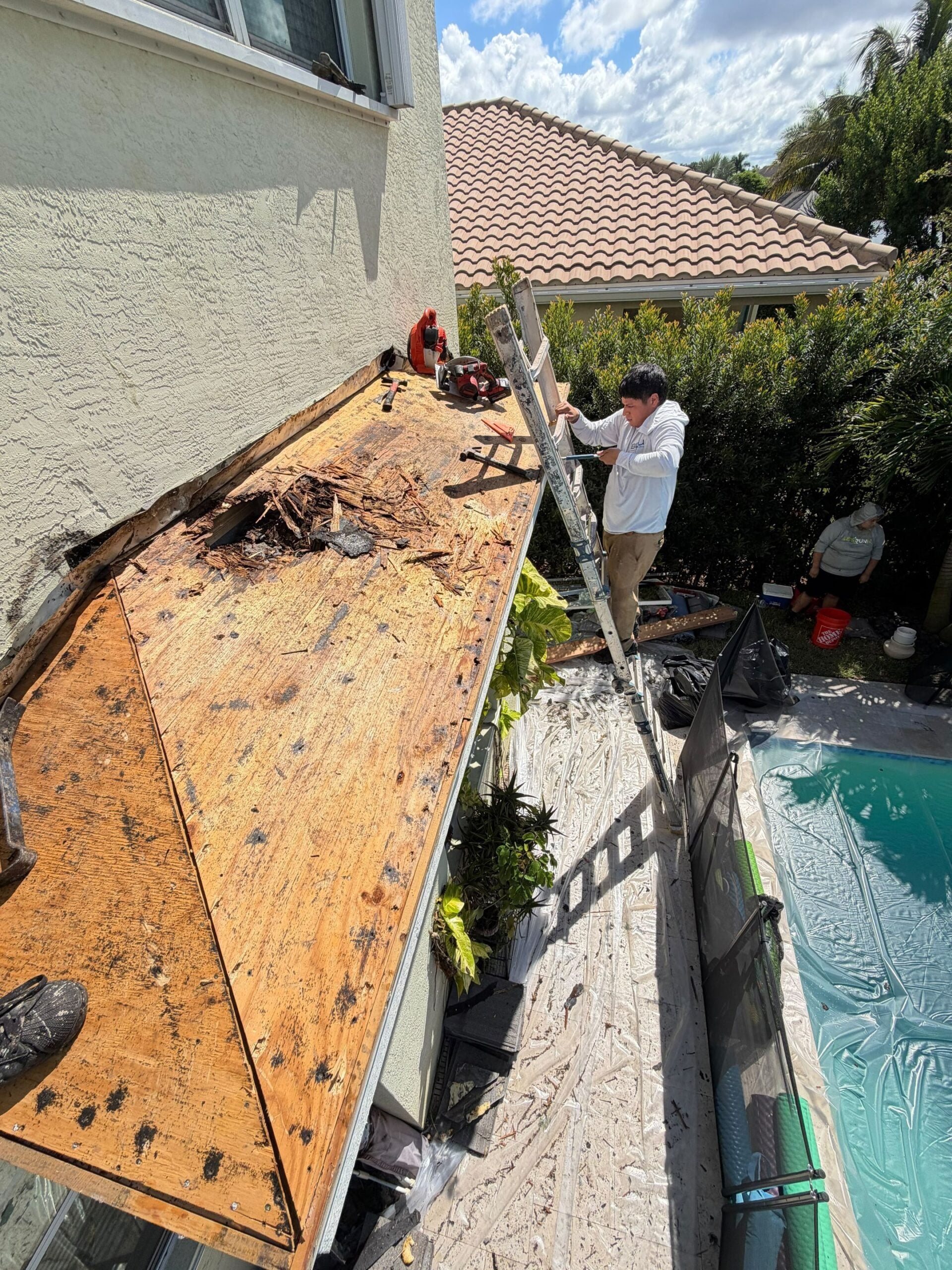
* Aged Underlayment: In South Florida, the underlayment often fails before the tiles themselves. Based on our 2026 project data in Palm Beach County, most tile roof underlayments last 20–30 years before requiring a full roof replacement in West Palm Beach.
“A leak is a symptom, not the disease,” says Peter Menke, owner of BLU Roofing. “Patching a hole without understanding why it happened is just a temporary fix. You need a full roof inspection in West Palm Beach to determine if the rest of the roof is still sound.”
Step 5: Emergency Tarping vs. Permanent Repair
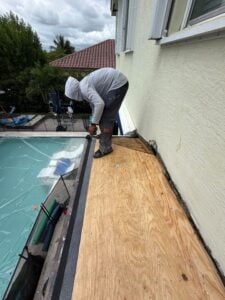
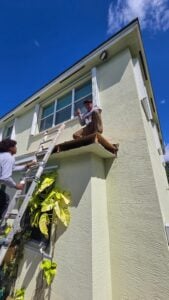
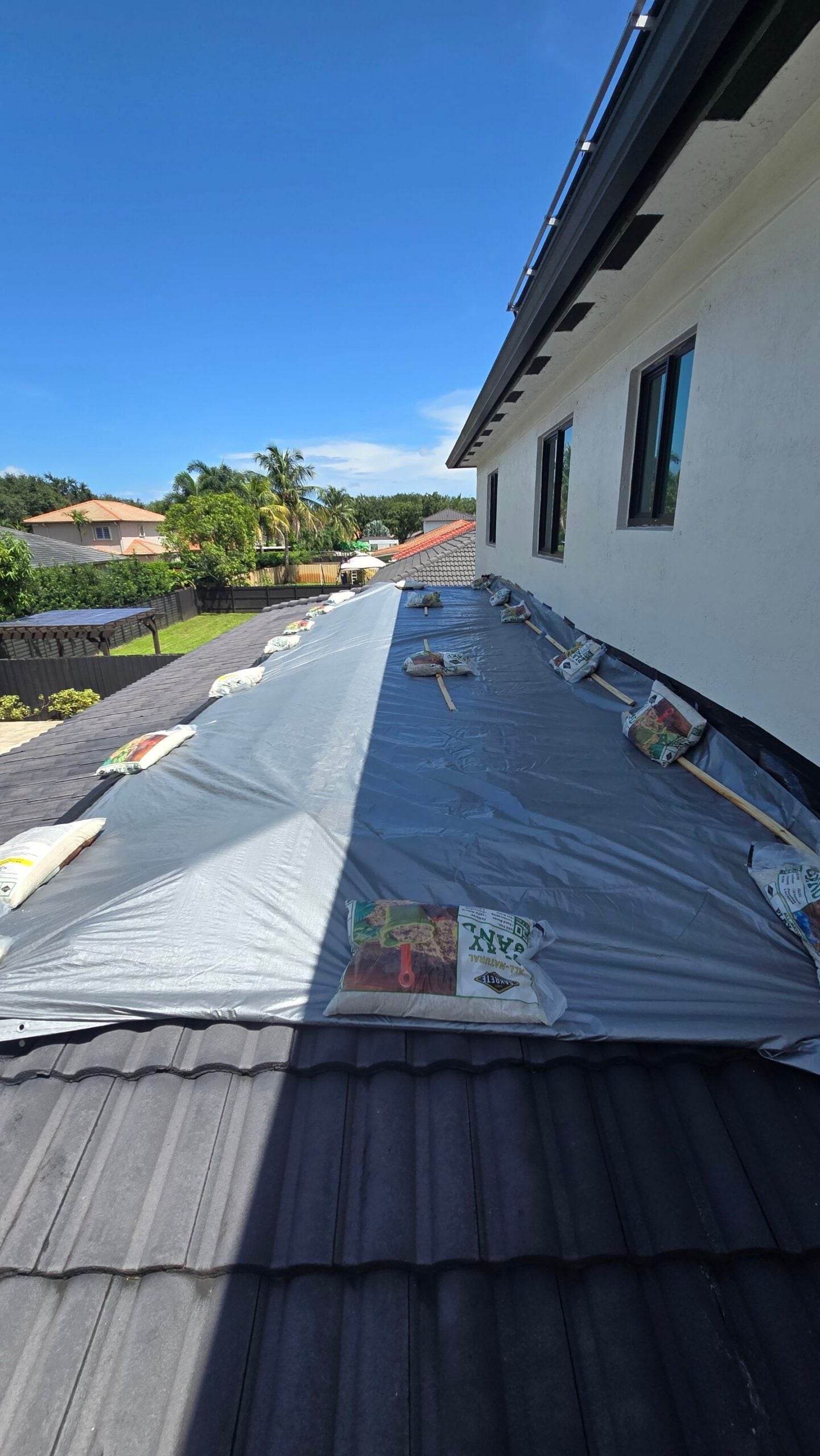
If it is still raining or if a major storm is approaching, your roofer will likely perform an emergency tarping. This involves securing a heavy-duty waterproof tarp over the affected area to stop the water entry immediately.
Once the weather clears, you can discuss a permanent repair. Depending on the age and condition of your roof, you may be looking at:
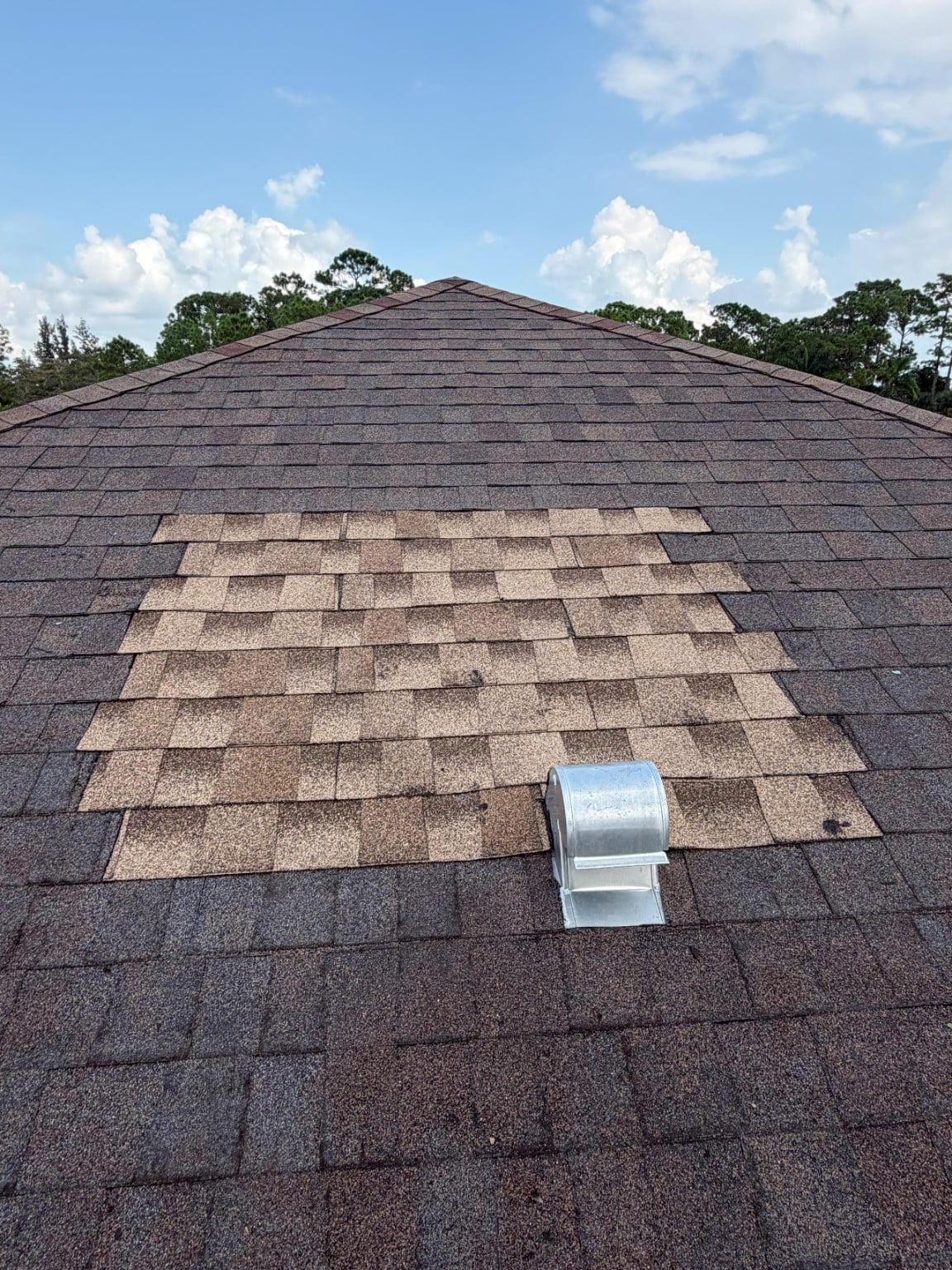
* Minor Repair: Replacing a few tiles or resealing a piece of flashing.
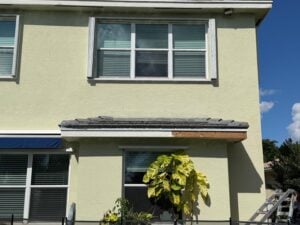
* Sectional Repair: Replacing a larger area of underlayment and tiles.
* Full Replacement: If the roof is over 20 years old or has multiple leaks, a full replacement may be the most cost-effective long-term solution.
Check our roof repair cost guide for current 2026 pricing on these services.
Frequently Asked Questions
How much does it cost to fix a roof leak in West Palm Beach?
In 2026, most minor roof repairs in West Palm Beach range from $700 to $1,500. However, if the leak has caused significant structural damage or requires a large section of underlayment to be replaced, the cost can be higher.
Will my homeowners insurance cover a roof leak?
It depends on the cause. If the leak was caused by a “sudden and accidental” event like a hurricane or a fallen tree limb, it is typically covered. If the leak is due to age or lack of maintenance, the claim may be denied.
Can I wait until the rain stops to call a roofer?
No. You should call as soon as you notice the leak. Many roofing companies offer 24/7 emergency services and can provide advice over the phone while they are en route to your home.
How do I find a reputable roofer in West Palm Beach?
Always look for a contractor who is locally based, fully licensed, and insured. You can read our guide on how to choose a roofing contractor in West Palm Beach for more tips on avoiding scams.
Written By: Peter Menke
Peter Menke is the owner of BLU Roofing and has been serving the South Florida roofing industry for over 6 years. He founded BLU Roofing to provide homeowners with transparent, accurate data grounded in the reality of Florida’s unique climate and building codes, information that is often missing from generic national roofing advice. License #1337285