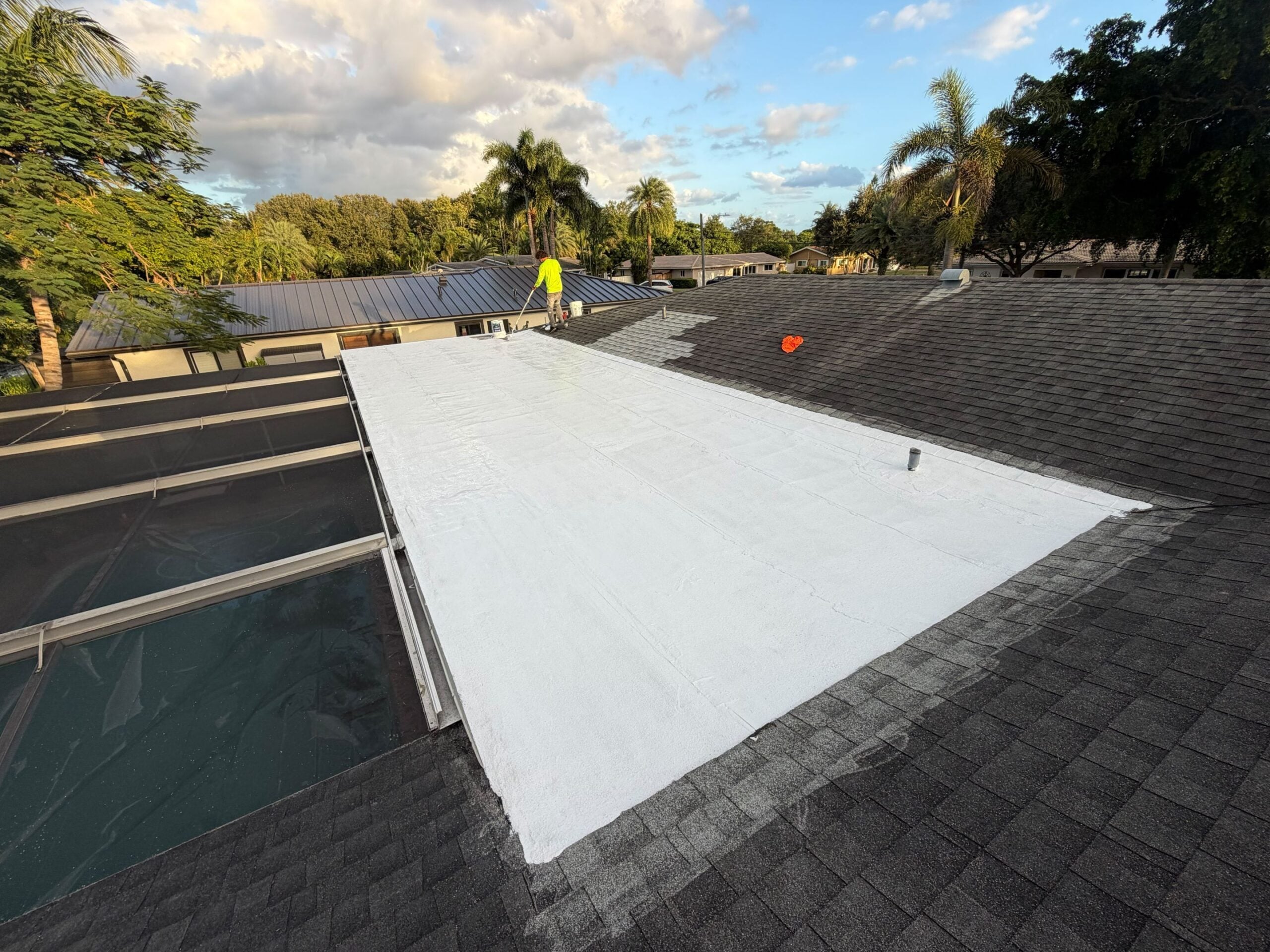
When Palm Beach County homeowners invest in a new roof, the two premium options that come up most often are metal and tile. Both outlast asphalt shingles by decades, both handle South Florida’s hurricane season, and both carry significant upfront costs. Based on our 2026 project data across Palm Beach Gardens, Jupiter, and Wellington, metal and tile together account for more than 70 percent of all premium roof replacements we complete. But they serve different homeowners for different reasons.
This guide breaks down the real differences between metal and tile roofs in South Florida so you can make an informed decision before committing to either.
Table of Contents
- Lifespan and Durability
- Hurricane and Wind Resistance
- Miami-Dade NOA Requirements
- Salt Air and Coastal Corrosion
- Tile Weight and Structural Requirements
- Energy Efficiency
- Aesthetics and HOA Restrictions
- Cost Comparison
- Which Is Right for You?
- FAQ
South Florida Material Lifespan Guide
The single most important factor for most homeowners is how long the roof will last. Both materials are long-lived, but they age differently in South Florida’s climate.
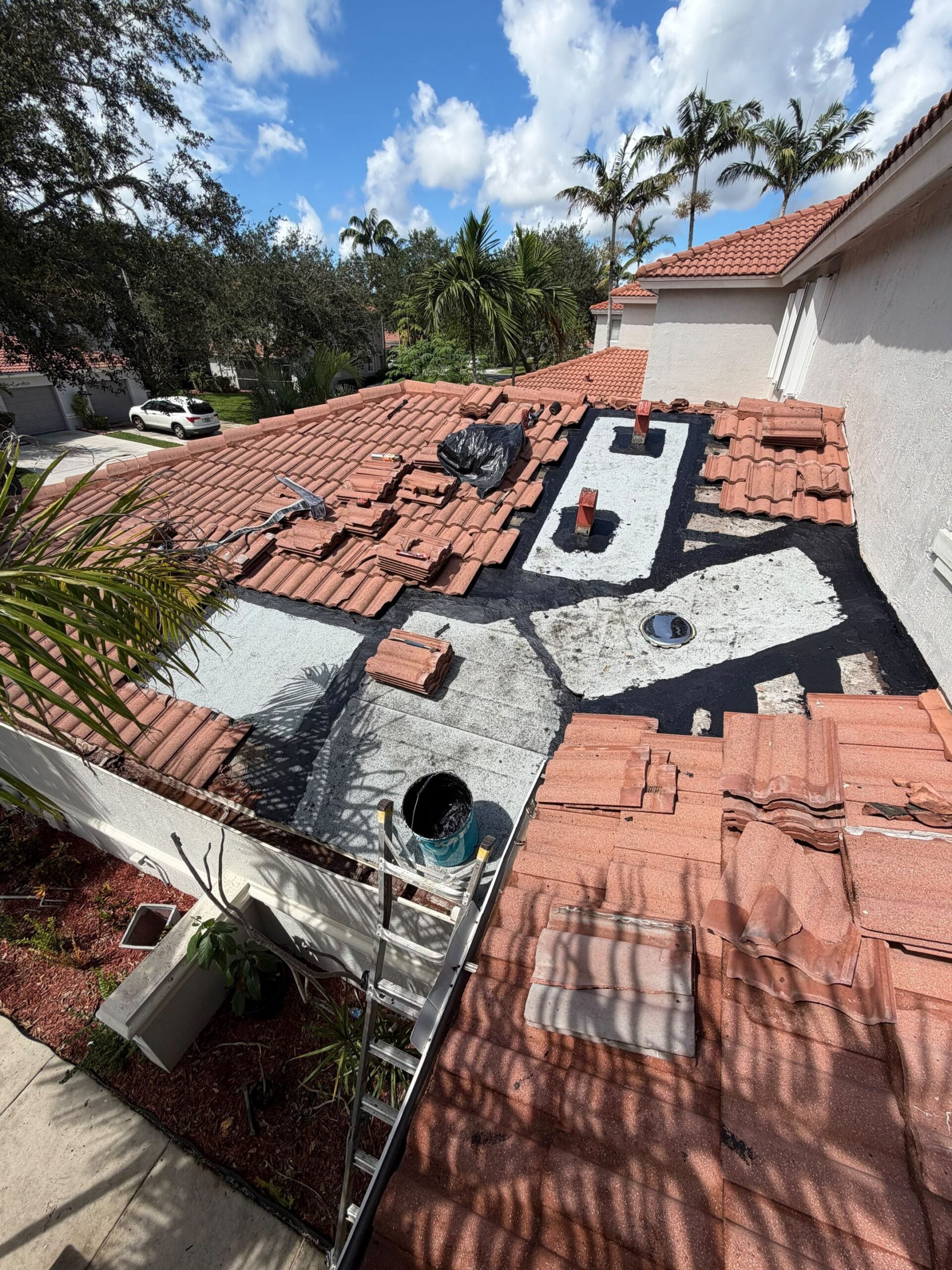
Tile Roofs: Concrete and clay tiles are extremely durable. The tiles themselves can last 50 years or more. However, the waterproof underlayment beneath the tiles is the weak point. In South Florida, the intense heat and UV exposure cause underlayment to fail between 20 and 30 years. When the underlayment fails, the entire roof must be removed and re-underlaid, even if the tiles are still intact. This is a significant mid-life expense that many homeowners do not anticipate.
Metal Roofs: A high-quality standing seam metal roof lasts 30 to 50 years in South Florida. Unlike tile, metal does not rely on a separate heat-sensitive underlayment for its primary waterproofing. The interlocked panels shed water directly. While the finish may fade over decades of UV exposure, the structural integrity of a metal roof typically outlasts the homeowner’s time in the property.
| Material | Tile Lifespan | Underlayment Lifespan | Metal Lifespan |
|---|---|---|---|
| Concrete Tile | 20-30 years | 20-30 years | N/A |
| Clay Tile | 20-30 years | 20-30 years | N/A |
| Standing Seam Metal | N/A | N/A | 30-50 years |
The practical takeaway: tile roofing systems require a mid-life underlayment replacement, while metal systems typically do not.
Hurricane and Wind Resistance
South Florida roofs must withstand hurricane-force winds. Both metal and tile are excellent choices, but they perform differently under extreme stress.
Tile Roofs: The weight of a tile roof makes it highly resistant to wind uplift. Properly installed concrete or clay tiles can withstand winds of 130 to 150 mph. However, tiles are brittle. Flying debris during a hurricane can crack or shatter individual tiles, leading to water intrusion even if the overall roof structure holds.
Metal Roofs: Standing seam metal roofs are engineered to withstand winds up to 160 mph. Because the panels are interlocked and fastened directly to the roof deck, they resist uplift effectively. Metal is also impact-resistant. Flying debris may dent a panel, but it is unlikely to puncture it or cause a leak.
Both materials meet Florida Building Code requirements for High-Velocity Hurricane Zones (HVHZ), which apply to Miami-Dade and Broward counties and influence standards across Palm Beach County as well.
Miami-Dade Notice of Acceptance (NOA) Requirements
One detail that separates a knowledgeable South Florida roofing contractor from a generic one is familiarity with the Miami-Dade Notice of Acceptance, commonly called the NOA. In South Florida, any roofing product installed in Broward or Palm Beach County must carry a valid Miami-Dade NOA, which certifies that the product has been tested and approved to meet the region’s extreme wind and impact standards.
This applies to both metal roofing systems and tile products. Before any installation, your contractor should be able to provide the NOA documentation for the specific product being installed on your home. If a contractor cannot produce this document or is unfamiliar with the requirement, that is a significant red flag. BLU Roofing installs only NOA-approved products on every project in Palm Beach County.
Salt Air and Coastal Corrosion
For homeowners within approximately 1,500 to 3,000 feet of the Atlantic Ocean or the Intracoastal Waterway, the choice of metal roofing material matters more than most contractors will tell you. Salt air accelerates corrosion on standard steel roofing products, including some Galvalume-coated panels that perform well in inland areas.
In coastal Palm Beach County communities such as Juno Beach, Palm Beach Shores, and oceanfront sections of Boca Raton and Delray Beach, we recommend aluminum roofing panels over steel. Aluminum does not rust and is naturally resistant to salt air corrosion, making it the correct specification for homes near the water. A metal roof installed with the wrong alloy in a coastal environment can begin showing surface rust within 10 to 15 years, well short of the 30 to 50 year lifespan you are paying for. Always ask your contractor specifically what alloy they are proposing for your location.
Tile Weight and Structural Requirements
Concrete and clay tile are among the heaviest roofing materials available. A standard concrete tile roof can weigh 900 to 1,200 pounds per square (100 square feet), compared to roughly 150 to 300 pounds per square for metal. Before installing tile on any South Florida home, a structural inspection is required to confirm that the roof framing and wall systems can support the added load.
This is especially relevant for older homes in Palm Beach Gardens, Lake Worth Beach, and West Palm Beach that were originally built with lighter roofing materials. If a structural upgrade is needed, it adds cost and time to the project. BLU Roofing always conducts a structural assessment before recommending tile on any home where the original roofing material was asphalt shingles or metal.
Energy Efficiency
Keeping a home cool in Palm Beach County is a year-round expense. Your roof material plays a meaningful role in your HVAC system’s efficiency.
Tile Roofs: The curved shape of barrel tiles creates a natural air gap between the tile and the roof deck. This ventilation gap reduces heat transfer into the attic and helps keep the home cooler. Tile also has natural thermal mass, absorbing heat slowly during the day and releasing it slowly at night.
Metal Roofs: Light-colored metal roofs reflect the majority of the sun’s radiant heat away from the home. Many modern metal roofing systems use specialized cool-roof coatings that maximize this reflectivity. Homes in Boca Raton and Delray Beach with light-colored metal roofs often see measurable reductions in cooling costs compared to dark-colored shingle roofs.
Both materials are significantly more energy-efficient than standard asphalt shingles in South Florida conditions.
Aesthetics and HOA Restrictions
In Palm Beach Gardens, Jupiter, and Wellington, your roofing choice is often dictated by your Homeowners Association.
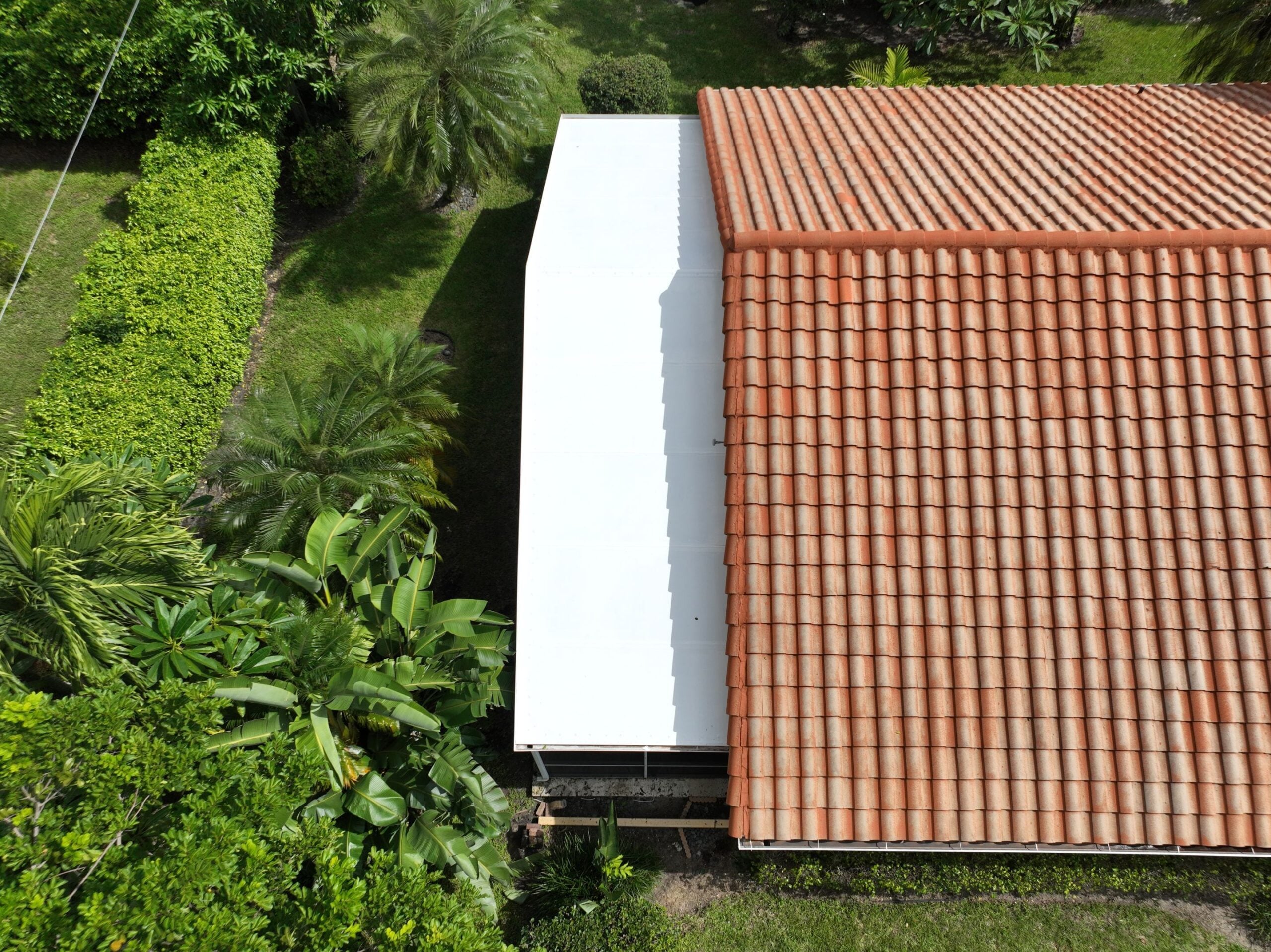
Tile Roofs: Tile is the quintessential South Florida roofing material. It defines the Mediterranean and Spanish architectural style found throughout upscale communities like PGA National, Mirasol, and Ibis Golf and Country Club. If you live in an HOA community in Palm Beach County, there is a high probability that tile is the only approved roofing material.
Metal Roofs: Metal roofs offer a sleek, modern, or coastal aesthetic that is becoming more popular. However, many established HOAs in Palm Beach County still prohibit metal roofing or restrict it to specific profiles and colors. Always verify with your HOA before selecting metal.
Cost Comparison
Both materials represent a significant investment. Based on our 2026 project data for a 2,000 to 3,000 square foot home in Palm Beach County:
| Material | Typical Cost Range | Lifespan | Maintenance Level |
|---|---|---|---|
| Asphalt Shingles | $12,000 – $25,000+ | 15-20 years | Moderate |
| Concrete Tile | $25,000 – $40,000+ | System: 20-30 yrs | Moderate-High |
| Clay Tile | $25,000 – $40,000+ | System: 20-30 yrs | Moderate-High |
| Standing Seam Metal | $30,000 – $50,000+ | 30-50 years | Low |
Tile is generally less expensive upfront than standing seam metal. However, tile requires more maintenance over time: mortar and adhesive can degrade, tiles crack from foot traffic, and concrete tile is prone to algae growth requiring periodic soft washing. Metal is virtually maintenance-free once installed.
When you factor in the cost of a mid-life underlayment replacement on a tile roof (typically $8,000 to $15,000 or more), the long-term cost difference between tile and metal narrows considerably.
Which Is Right for Your Home?
If you live in an HOA community in Palm Beach Gardens, Boca Raton, or Jupiter, your decision may already be made for you. Verify your HOA’s approved materials list before moving forward.
If you have the freedom to choose, consider these factors:
- Choose tile if you want the classic South Florida aesthetic, your HOA requires it, or you prefer a lower upfront cost and are comfortable with periodic maintenance.
- Choose metal if you want maximum longevity, minimal maintenance, and the best impact resistance during hurricane season. If your home is near the coast, specify aluminum panels rather than steel.
BLU Roofing installs both premium tile and metal roofing systems throughout Palm Beach County. We can help you evaluate your home’s architecture, your HOA requirements, and your long-term goals to determine the best material for your specific situation. For more context on overall replacement costs, see our guide to roof replacement cost in Palm Beach Gardens.
For permit timelines and what to expect during the installation process, see our Palm Beach County homeowner’s guide to roof replacement.
Frequently Asked Questions
Can I put a metal roof over my existing tile roof in Florida?
No. Florida Building Code does not permit installing a new roof over an existing tile roof. The old tiles must be removed before a new roofing system can be installed. This is true for both metal and tile replacements.
Does a metal roof increase home value in Palm Beach County?
Yes, in most cases. Metal roofs are viewed favorably by buyers and appraisers because of their long lifespan and low maintenance requirements. However, in HOA communities where tile is the standard, a metal roof may not command the same premium.
How long does a tile roof underlayment replacement take in Palm Beach County?
A full underlayment replacement on a tile roof typically takes 3 to 5 days for a standard single-family home, plus 1 to 4 weeks for permit approval from Palm Beach County. The total project timeline from contract to completion is usually 3 to 6 weeks.
Do I need a structural inspection before installing tile on my home?
Yes, if your home was previously covered with asphalt shingles or metal. Concrete and clay tile can weigh 900 to 1,200 pounds per square, significantly more than lighter materials. A structural assessment confirms your roof framing can support the load before installation begins.
Written By: Peter Menke
Peter Menke is the owner of BLU Roofing and has been serving the South Florida roofing industry for over 6 years. He founded BLU Roofing to provide homeowners with transparent, accurate data grounded in the reality of Florida’s unique climate and building codes, information that is often missing from generic national roofing advice.